
Skirts are a staple in wardrobes across the world, offering endless possibilities for self-expression and style refinement. But when it comes to choosing between plain and patterned skirts, many find themselves caught in a subtle dilemma. Is a floral print truly more eye-catching than a solid navy? Does a geometric design elevate an outfit—or distract from it? While trends come and go, the real question remains: does the pattern on a skirt genuinely influence its impact, or is it simply fashion noise?
The answer lies not in absolutes but in context—how patterns interact with your body type, lifestyle, color palette, and confidence. Understanding the functional and psychological differences between plain and patterned skirts empowers you to make intentional choices that reflect both aesthetics and practicality.
The Psychology of Pattern: Why Design Influences Perception
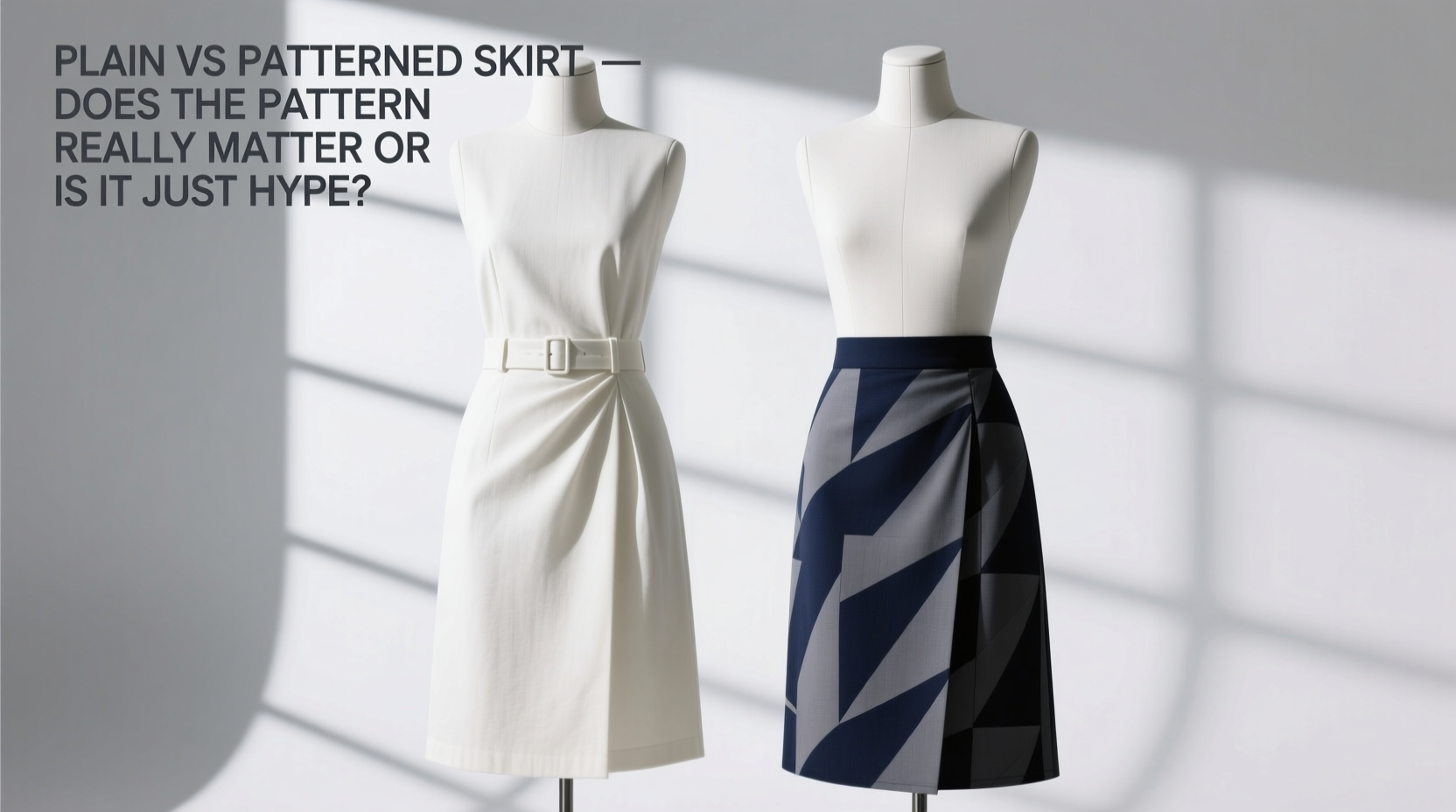
Fashion isn’t just about fabric—it’s about communication. Patterns send subconscious signals. A bold tribal print may suggest adventure and boldness, while a minimalist houndstooth whispers sophistication. Research in consumer behavior shows that people subconsciously associate patterns with personality traits. For instance, those who wear florals are often perceived as creative and approachable, whereas solid neutrals project reliability and calm.
Patterns also affect visual proportions. Vertical stripes elongate, large prints can overwhelm petite frames, and small geometrics add texture without volume. In contrast, plain skirts offer clean lines that emphasize silhouette over surface detail. This makes them ideal for creating streamlined looks, especially in professional settings where subtlety is valued.
“Pattern is never arbitrary. It either enhances the wearer’s presence or competes with it.” — Lila Monroe, Fashion Psychologist & Author of *Dressing the Mind*
Versatility Compared: Which Skirt Works Harder?
A common argument in favor of plain skirts is their unmatched versatility. A black midi skirt, for example, pairs effortlessly with a crisp white shirt, a chunky sweater, or a sequined top for evening wear. Its neutrality acts as a canvas, allowing other elements—like accessories or footwear—to take center stage.
Patterned skirts, however, require more thoughtful coordination. A paisley maxi skirt might clash with a striped blouse, and even color-matching isn't always enough. Yet, when styled correctly, they become statement pieces that define an entire outfit. A well-chosen pattern can eliminate the need for bold jewelry or intricate layering—because the skirt itself becomes the focal point.
Consider this: a plain skirt is like a reliable supporting actor, while a patterned one is the lead role. One ensures consistency; the other commands attention.
Plain vs Patterned: Functional Comparison
| Factor | Plain Skirt | Patterned Skirt |
|---|---|---|
| Outfit Coordination | Easy to match with any top or jacket | Requires careful color and style pairing |
| Wearability Across Seasons | High – adaptable to layering | Moderate – some prints feel season-specific (e.g., florals = spring) |
| Durability of Style | Timeless; rarely goes out of fashion | Trend-dependent; may date quickly |
| Visual Impact | Subtle, elegant | Bold, expressive |
| Care & Maintenance | Less likely to show minor stains | Patterns can mask spills but may fade unevenly |
When Pattern Matters—and When It Doesn’t
There are moments when pattern is essential. At a garden party, a botanical-print skirt harmonizes with the environment. During cultural celebrations, traditional motifs honor heritage and deepen connection. In creative industries, wearing patterned clothing can signal innovation and individuality.
But there are also times when pattern adds little value. In corporate environments, overly busy prints can be seen as unprofessional. For capsule wardrobes focused on minimalism, a single patterned skirt may limit mixing options. And for individuals who prefer understated elegance, a loud print might feel incongruent with their identity.
In these cases, the “hype” around patterned fashion fades. The trend-driven excitement doesn’t translate into daily usefulness. That said, dismissing all patterns risks overlooking their emotional power. Wearing something you love—even if it's unconventional—can boost confidence and mood, which in turn enhances overall presence.
Mini Case Study: Emma’s Wardrobe Shift
Emma, a 34-year-old architect, built her wardrobe around neutral-toned plain skirts—black, gray, and camel. She prided herself on polished, efficient styling. But after attending a design conference where bold textiles were celebrated, she bought a navy skirt with abstract gold brushstrokes. Initially hesitant, she wore it with a simple black turtleneck. Colleagues complimented her look, and clients described her as “refreshingly dynamic.” Over time, Emma incorporated two more patterned pieces. Not only did her style evolve, but her self-perception shifted: she began speaking up more in meetings, attributing part of her newfound assertiveness to feeling visually distinct.
This illustrates a key truth: sometimes, pattern isn’t about fashion at all—it’s about permission to be seen.
How to Choose Based on Your Lifestyle
Selecting between plain and patterned skirts should align with your routine, environment, and comfort level. Here’s a step-by-step guide to help you decide:
- Assess your daily context. Do you work in a conservative office, or do you have creative freedom? Plain skirts often integrate more seamlessly into formal spaces.
- Evaluate your existing wardrobe. Count your tops. If most are patterned or colorful, a plain skirt will balance the look. If your closet is monochrome, a patterned skirt adds needed energy.
- Consider maintenance. Are you willing to hand-wash delicate prints, or do you need machine-friendly fabrics? Some patterns crack or bleed after repeated washing.
- Test for confidence. Try on both types. Which makes you stand taller? Fashion functions best when it aligns with inner assurance.
- Plan for longevity. Ask: Will I still love this print in six months? Trends fade, but personal resonance lasts.
Checklist: Choosing the Right Skirt Type
- ☐ Identify your dominant wardrobe colors
- ☐ Determine your primary dressing context (work, casual, events)
- ☐ Assess your willingness to experiment
- ☐ Try both styles in natural lighting
- ☐ Match patterns to your seasonal color palette (e.g., warm tones for autumn types)
- ☐ Prioritize fit and fabric—no pattern compensates for poor tailoring
FAQ
Can I wear a patterned skirt to a job interview?
Yes, but choose subtle patterns—like micro-checks or tonal jacquards—over loud florals or cartoonish designs. Pair with a solid-colored blouse and neutral shoes to maintain professionalism.
Do plain skirts look boring?
Not if styled intentionally. Add interest through texture (pleats, leather, wool), asymmetrical cuts, or striking footwear. A plain skirt in an unexpected fabric—like metallic or velvet—becomes a quiet statement.
How do I stop a patterned skirt from clashing?
Stick to one dominant color from the skirt in your top or accessories. Avoid competing patterns unless they’re in the same color family and scale (e.g., small polka dots with thin pinstripes).
Conclusion
The debate between plain and patterned skirts isn’t about superiority—it’s about intentionality. Patterns aren’t inherently better or worse; their value depends on how they serve you. A plain skirt offers timeless utility, while a patterned one can spark joy, draw admiration, or mark a turning point in self-expression. The real mistake isn’t choosing pattern over plain, or vice versa—it’s selecting without considering purpose.
Next time you stand before your closet, ask not “What’s in style?” but “What do I want to communicate today?” Whether you reach for a sleek black pencil skirt or a vibrant ikat wrap, let your choice be deliberate. Fashion thrives not on trends, but on authenticity.




 浙公网安备
33010002000092号
浙公网安备
33010002000092号 浙B2-20120091-4
Comments
No comments yet. Why don't you start the discussion?