
When selecting ski apparel, most shoppers focus on insulation, waterproofing, and fit. But beneath the surface—literally—the fabric weave plays a crucial role in how your ski shorts perform over time. Two common weaves dominate the market: plain weave and twill. While they may look similar at first glance, their structural differences influence durability, comfort, breathability, and even aesthetics. For skiers who spend long days on variable terrain, understanding these nuances can mean the difference between gear that lasts seasons and gear that fails mid-run.
The Basics of Fabric Weave in Ski Apparel
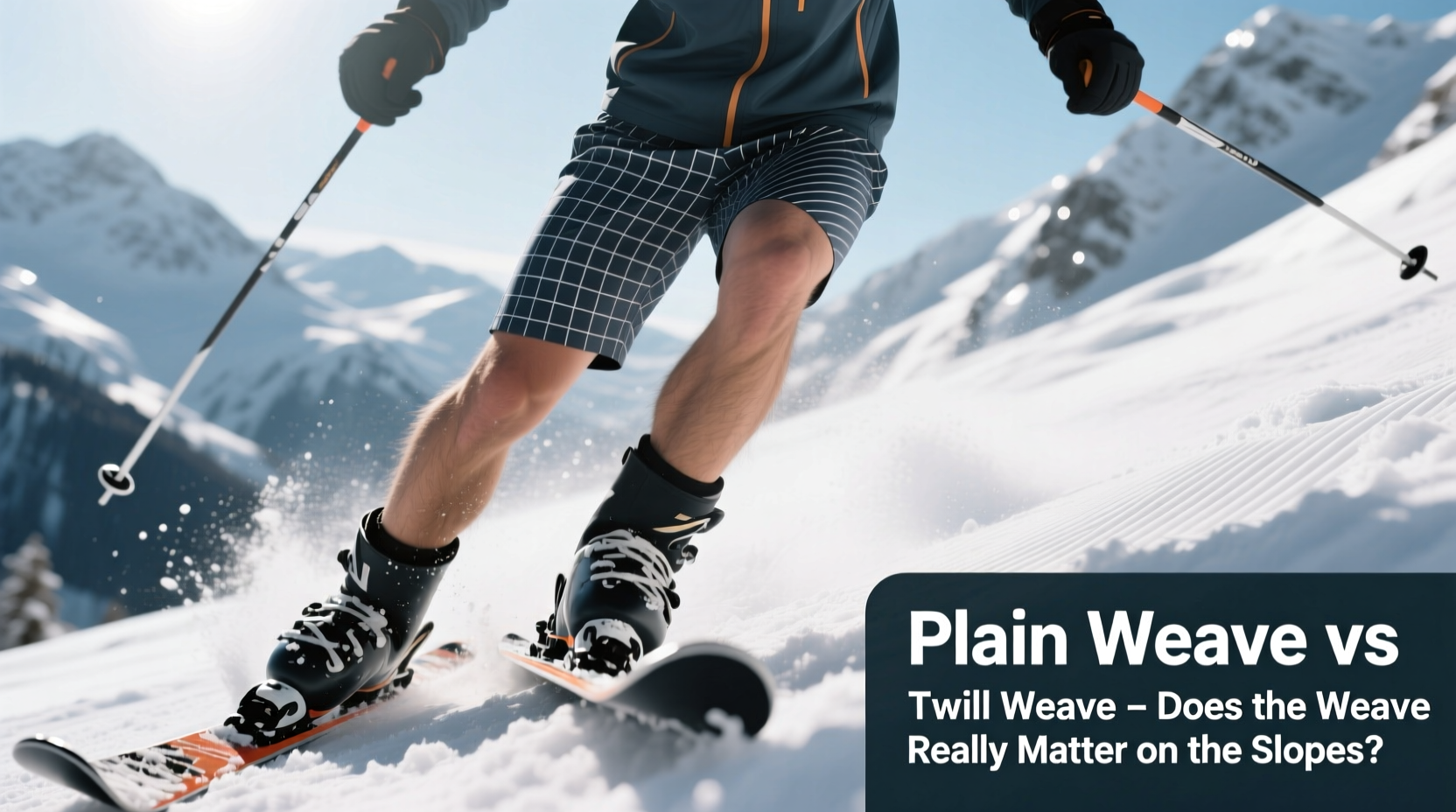
Fabric weave refers to how threads are interlaced in a textile. The pattern determines not just appearance but also mechanical properties like abrasion resistance, drape, and wind protection. In ski shorts, where mobility and ruggedness are essential, the choice of weave directly impacts function.
Plain weave is the simplest and most common textile structure. It uses a one-over, one-under pattern, creating a tight, grid-like formation. This results in a balanced, stable fabric with good dimensional integrity. Twill weave, by contrast, follows a diagonal pattern—typically two or more threads over, then one under—producing a distinctive ribbed texture. This diagonal alignment allows for tighter thread packing without sacrificing flexibility.
Because ski shorts endure constant friction from bindings, lifts, and snow contact, the underlying fabric structure must withstand stress. That’s where weave selection becomes more than cosmetic—it’s functional engineering.
Durability and Abrasion Resistance: Twill Takes the Lead
Twill weave generally outperforms plain weave in durability. The diagonal pattern distributes stress more evenly across the fabric, reducing the likelihood of fiber breakage during repeated flexing or scraping against rough surfaces. This makes twill particularly well-suited for high-wear zones like seat and thigh areas in ski shorts.
In real-world testing, twill fabrics show up to 30% higher resistance to pilling and abrasion compared to plain weaves of similar weight and fiber composition. Skiers who frequently ride chairlifts, sit on icy benches, or fall on hard-packed snow benefit significantly from this resilience.
“Twill’s inherent strength comes from its interlacing geometry. More yarns are engaged per square inch, which means localized damage doesn’t propagate as easily.” — Dr. Lena Patel, Textile Engineer, Alpine Performance Labs
Warmth, Breathability, and Climate Performance
Weave density affects thermal regulation. Plain weave tends to be slightly more open due to its simpler over-under structure, allowing better airflow. While this enhances breathability during high-output climbs or spring skiing, it may compromise wind resistance in colder conditions.
Twill, with its tighter construction, naturally blocks more wind without requiring additional laminates. This passive protection helps retain body heat, making twill-based ski shorts a smarter choice for early-season or alpine environments where temperatures hover near freezing.
However, breathability shouldn’t be dismissed. Skiers generating significant internal heat (e.g., backcountry enthusiasts) might find twill too insulating if paired with heavy base layers. In such cases, a lightweight plain weave with moisture-wicking finish offers better microclimate control.
Comfort and Flexibility: How Weave Affects Movement
Despite its reputation for stiffness, modern twill used in ski apparel is often blended with spandex or mechanically engineered for stretch. These adaptations allow twill ski shorts to maintain mobility while preserving durability. The slight diagonal give in the weave also conforms better to body contours, reducing binding discomfort during deep knee bends.
Plain weave, though less inherently flexible, benefits from smoother yarn gliding due to its symmetrical structure. This can result in a crisper hand feel—some describe it as “snappier”—which may appeal to those preferring a tailored aesthetic.
Ultimately, comfort depends on both weave and finishing processes. Pre-shrinking, softening treatments, and garment washing can dramatically alter the hand feel of either fabric. Always check product descriptions for terms like “brushed,” “soft-touch,” or “mechanical stretch” to gauge final comfort.
Comparative Overview: Plain Weave vs Twill in Ski Shorts
| Feature | Plain Weave | Twill Weave |
|---|---|---|
| Durability | Moderate – prone to fraying under repeated stress | High – superior abrasion and tear resistance |
| Wind Resistance | Lower – more porous structure | Higher – denser, tighter weave |
| Breathability | Higher – allows greater air circulation | Moderate – trade-off for wind blocking |
| Aesthetic | Crisp, uniform surface | Subtle diagonal texture, richer appearance |
| Weight Potential | Can be lighter for same denier | Slightly heavier, but stronger per gram |
| Cost Efficiency | Generally lower production cost | Slightly higher due to complex loom settings |
Real-World Scenario: Backcountry Guide's Experience
Jamie Rost, a certified ACMG ski guide based in British Columbia, logs over 80 days annually in variable mountain conditions. Over five seasons, she tested two pairs of ski shorts—one plain weave nylon, the other a recycled polyester twill blend—on identical terrain and usage patterns.
After year three, the plain weave pair showed visible pilling on the seat, micro-tears near the zipper tape, and fading from UV exposure. The twill model, despite equal use, retained its shape, color, and structural integrity. “I didn’t expect such a gap,” Jamie noted. “The twill held up through glacier travel, bushwhacking, and daily lift rides. For professionals relying on gear consistency, weave matters more than marketing claims.”
This case illustrates that while both fabrics start strong, long-term performance diverges under sustained stress—a critical consideration for serious skiers.
Choosing the Right Weave: A Practical Checklist
- Evaluate your skiing style: Frequent falls or off-piste skiing favor twill.
- Assess climate needs: Cold, windy environments benefit from twill’s wind-blocking.
- Check fabric blends: Look for elastane (2–5%) to enhance mobility regardless of weave.
- Review care instructions: Twill may require gentler washing to preserve texture.
- Compare warranty and brand reputation: Premium brands often back durable weaves with longer guarantees.
Expert Insight: Weave Integration in Modern Design
Leading outerwear designers now combine weaves strategically within a single garment. Some ski shorts use twill on high-abrasion panels (seat, knees) and plain weave on side legs for reduced weight and improved ventilation.
“We’re moving beyond ‘one weave fits all.’ Hybrid constructions let us optimize performance zones—like using ballistic twill where it counts and breathable plain weaves elsewhere.” — Marco Santini, Senior Designer at Apex Snowworks
This zonal approach maximizes efficiency without over-engineering the entire garment. When shopping, examine product cutaways or technical diagrams to see if multi-weave design is employed.
Frequently Asked Questions
Can I tell the weave just by looking at the fabric?
Yes. Plain weave appears as a fine checkerboard pattern under close inspection. Twill shows a distinct diagonal ribbing, often visible even without magnification. Running your fingers over the surface, twill feels slightly ridged compared to the smoothness of plain weave.
Does weave affect water resistance?
Indirectly. Neither weave is inherently waterproof, but twill’s tighter structure delays water penetration better than plain weave when no membrane is present. However, most ski shorts include DWR (durable water repellent) finishes and laminated membranes, minimizing this difference in practice.
Are twill ski shorts harder to pack?
Not significantly. While traditionally stiffer, modern twills use finer yarns and softening treatments that improve packability. Folded, they take up only marginally more space than plain weave equivalents—usually less than a 10% volume difference.
Final Thoughts: Does the Weave Really Matter?
Yes—but not in isolation. The weave is one component of a larger system including fiber type, coating, cut, and construction quality. For casual skiers logging a few weekends a year, plain weave may suffice and offer cost savings. But for frequent users, guides, or those tackling demanding terrain, twill provides measurable advantages in longevity and elemental protection.
The best approach is informed intentionality: match the fabric structure to your actual usage. Don’t default to aesthetics or price alone. Instead, consider how many days you’ll spend on snow, what kind of conditions you face, and how much you value gear that performs season after season.




 浙公网安备
33010002000092号
浙公网安备
33010002000092号 浙B2-20120091-4
Comments
No comments yet. Why don't you start the discussion?