
When it comes to footwear that blends fashion with function, platform boots and block heels often top the list. Both styles offer height, structure, and a bold aesthetic—but when you're on your feet for hours, comfort becomes just as important as style. The real question isn’t just about which looks better, but which lets you move through your day without foot fatigue, blisters, or back pain. For professionals, travelers, event-goers, or anyone who spends long stretches standing or walking, understanding the biomechanics behind these two popular heel types can make all the difference.
This comparison dives into the structural design, weight distribution, stability, and user experience of platform boots versus block heels. Whether you’re choosing shoes for a wedding, a workday, or a night out, knowing what keeps you comfortable over time is essential.
Anatomy of Support: How Platform Boots Are Built
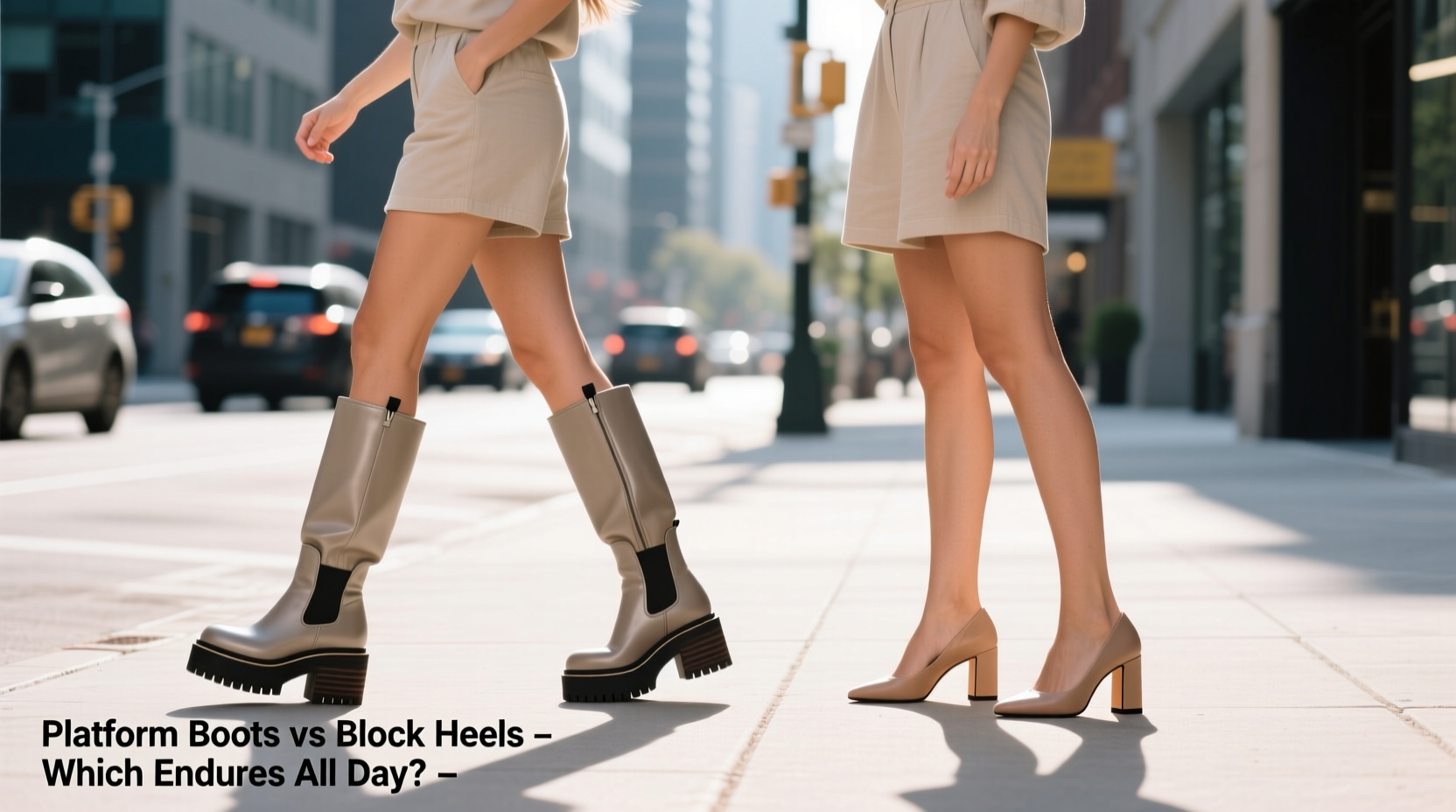
Platform boots feature an elevated sole under both the heel and the ball of the foot, creating a thick base that reduces the incline of the foot. This design significantly alters the angle between your foot and calf, minimizing strain on the Achilles tendon and forefoot. Most modern platform boots range from 1.5 to 4 inches in total height, with 0.75 to 1.5 inches of lift under the toe area.
The even elevation helps distribute body weight more evenly across the entire foot. Unlike traditional high heels, where pressure concentrates on the ball of the foot—sometimes up to 75% of body weight—platforms mitigate this by lifting the front of the foot along with the heel. As a result, many wearers report less cramping and fewer hot spots during extended use.
Materials also play a role. High-quality platform boots often include cushioned insoles, arch support, and flexible outsoles made from rubber or composite materials that absorb impact. Brands like Dr. Martens, Jeffrey Campbell, and Solovair have refined their construction over decades, balancing durability with wearability.
Stability and Structure: The Block Heel Advantage
Block heels, characterized by a wide, solid heel (usually rectangular or slightly tapered), provide superior balance compared to stilettos or needle heels. Their broader base lowers the center of gravity, reducing lateral instability and making them less likely to sink into soft surfaces like grass or carpet.
While block heels still elevate the heel higher than the forefoot, they typically come in moderate heights—between 2 and 3.5 inches—which makes them manageable for prolonged wear. The key benefit lies in surface area: a larger contact point between the heel and ground means less sinking, tipping, or wobbling.
However, because most block heels lack a platform under the toe, the foot remains in a downward slope. This increases tension in the calf muscles and places more load on the metatarsal heads—the bones at the base of the toes. Over time, this can lead to discomfort, especially on hard floors or uneven terrain.
“From a podiatrist’s standpoint, block heels are safer than stilettos, but they don't solve the fundamental issue of forefoot overload unless paired with a platform.” — Dr. Lena Torres, Foot Biomechanics Specialist
Direct Comparison: Platform Boots vs Block Heels
| Feature | Platform Boots | Block Heels |
|---|---|---|
| Heel Height Range | 1.5–4 inches (with platform) | 2–3.5 inches (no platform) |
| Forefoot Pressure | Reduced due to toe lift | High; concentrated on ball of foot |
| Stability | Excellent; wide base + full-foot support | Good; stable heel but sloped foot position |
| Long-Term Wear Comfort | Higher; balanced posture, less fatigue | Moderate; calf strain after 3+ hours |
| Best For | Walking, travel, outdoor events | Office wear, dinners, semi-formal occasions |
The data shows that while both styles improve upon traditional heels, platform boots generally offer better overall comfort for full-day use due to their engineered reduction in foot slope and improved shock absorption.
Real-World Test: A Week in Both Styles
Maria, a museum curator based in Chicago, tested both styles during her typical workweek. Her job involves long gallery tours, standing lectures, and frequent movement between exhibition halls. She wore a pair of black leather platform boots (2.8” total height, 1” platform) Monday through Wednesday and switched to classic nude block heels (3” heel, no platform) Thursday and Friday.
On the platform days, Maria reported feeling “grounded” and able to stand for 90-minute tours without needing to sit. She noted only mild fatigue by the end of the day and no blistering. In contrast, the block heels caused noticeable tightness in her calves by mid-afternoon. By Friday, she developed a small blister near her second toe and found herself shifting weight frequently to relieve pressure.
“I love how sleek the block heels look with my work dresses,” she said, “but I had to carry flats by day’s end. With the platforms, I never reached for backup shoes.”
Her experience reflects a common trend: block heels win in formal elegance, but platform boots dominate in endurance.
Choosing Based on Your Day: Practical Guidelines
Your ideal shoe depends heavily on your daily demands. Consider the following checklist before selecting either style:
- Will you be walking more than 5,000 steps? → Choose platform boots.
- Is the flooring mostly concrete, tile, or hardwood? → Opt for cushioned platform boots to reduce impact.
- Do you need to project professional formality? → Sleek block heels may be more appropriate, especially in conservative environments.
- Are stairs, gravel, or grass part of your route? → Platforms offer better traction and ankle stability.
- Can you add inserts? → If yes, both styles become more wearable, but platforms will still distribute pressure better.
Step-by-Step: How to Maximize Comfort in Either Style
- Measure your foot at the end of the day – Feet swell slightly after activity, so sizing later ensures a proper fit.
- Try shoes with the socks or hosiery you plan to wear – Thickness affects fit and friction points.
- Walk on a hard surface during fitting – Pay attention to heel slip, toe crowding, and arch alignment.
- Add gel pads or metatarsal cushions – These reduce pressure on the ball of the foot, especially helpful in block heels.
- Use heel grips or anti-slip inserts – Prevent sliding inside the shoe, which causes blisters.
- Alternate footwear throughout the week – Avoid repetitive strain on the same joints and tendons.
- Stretch calves and feet daily – Simple routines like towel scrunches and downward dog help counteract tightness from elevated heels.
Even the best-designed shoes require some adaptation. Gradual conditioning of foot muscles and connective tissues improves tolerance over time.
Frequently Asked Questions
Can platform boots be professional enough for office wear?
Yes, especially in creative industries or business-casual environments. Black or neutral-toned platform boots with minimal detailing pair well with tailored pants, midi skirts, or shift dresses. Avoid overly chunky or combat-style designs in formal corporate settings.
Do block heels cause long-term foot damage?
Occasional wear is unlikely to cause harm, but regular use of non-platform block heels can contribute to shortened Achilles tendons, hammertoes, or plantar fasciitis over time—especially if worn for more than four hours daily without breaks. Moderation and supportive insoles help reduce risk.
Are platform boots harder to run in if needed?
Surprisingly, many people find platform boots easier to move quickly in due to their stable base. While not designed for sprinting, their flat front section and rubber soles allow for safer emergency dashes across intersections or train platforms compared to narrow-heeled block styles.
Final Verdict: Which Is Easier to Walk In All Day?
When it comes to enduring a full day on your feet, platform boots hold a clear advantage. Their integrated toe lift reduces muscular strain, enhances balance, and spreads impact more evenly across the foot. They’re particularly effective for those navigating urban environments, attending festivals, or working in roles that demand mobility.
Block heels, while more elegant and versatile in formal wardrobes, impose greater biomechanical stress over time. Without a platform, they maintain the traditional high-heel posture that shifts weight forward—a trade-off between aesthetics and ergonomics.
That doesn’t mean block heels should be discarded. For shorter durations, polished events, or when pairing with floor-length garments, they remain a stylish and stable option within the heel family. But for true all-day wearability, especially involving walking, standing, or unpredictable terrain, platform boots are the superior choice.
“The future of fashionable footwear lies in reengineering elevation for human anatomy—not forcing feet into outdated ideals.” — Dr. Arjun Mehta, Gait Analysis Researcher, University of Oregon




 浙公网安备
33010002000092号
浙公网安备
33010002000092号 浙B2-20120091-4
Comments
No comments yet. Why don't you start the discussion?