
Crocs have evolved from polarizing foam clogs into a global footwear phenomenon. Once dismissed as fashion faux pas, they’ve been rebranded through collaborations, celebrity endorsements, and functional design upgrades. Among the most debated additions to the lineup are the Platform Crocs—chunky, elevated versions of the classic silhouette that promise extra height without sacrificing comfort. But one question lingers among skeptics and loyalists alike: Are platform Crocs actually stable enough to walk in?
This isn’t just about aesthetics. Stability affects posture, foot alignment, joint stress, and overall confidence while moving. To answer this thoroughly, we’ll break down the structural differences between Platform Crocs and Classic Clogs, analyze their performance across different environments, and evaluate user experiences to determine whether the added lift comes at the cost of safety and balance.
Design Differences: Anatomy of the Sole
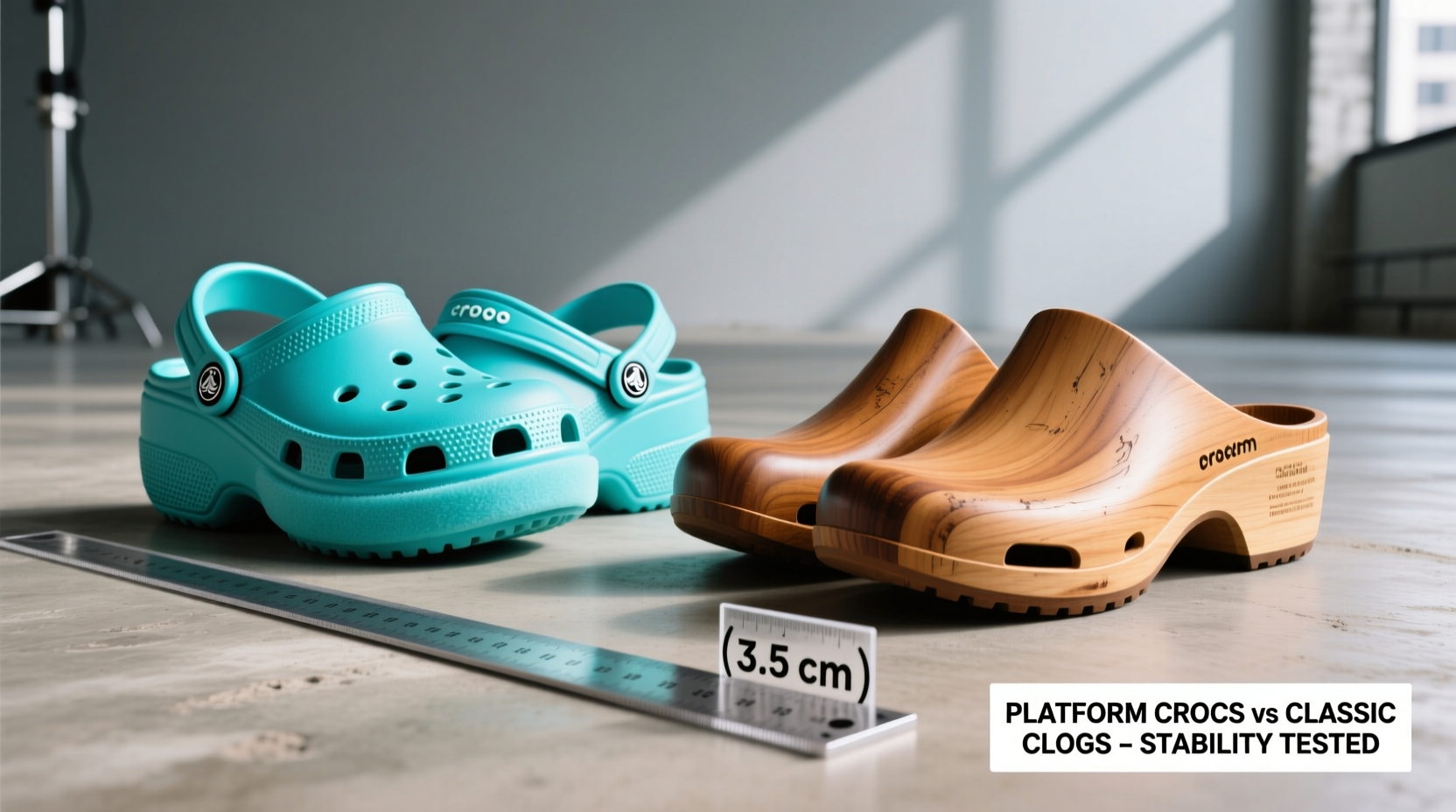
The foundation of any shoe’s stability lies in its sole structure. While both Platform Crocs and Classic Clogs are made from Croslite™ foam—a proprietary closed-cell resin known for being lightweight, odor-resistant, and cushioning—their construction diverges significantly in height, weight distribution, and tread pattern.
Classic Clogs stand at approximately 1 inch (2.5 cm) in heel height and feature a flat, even profile from toe to heel. The outsole is relatively narrow but includes deep grooves under the ball and heel for grip on smooth surfaces. Their low center of gravity makes them inherently stable, especially for short-distance walking or indoor use.
Platform Crocs, by contrast, add an additional 1.5 inches (3.8 cm) of elevation, bringing total heel height to around 2.5 inches. This lift is integrated into a wider, more squared-off base designed to offset the higher profile. The platform extends beneath the entire foot—not just the heel—aiming to distribute weight more evenly than traditional heels. Despite the increased height, the shoes remain lightweight due to the same Croslite™ material.
Stability Analysis: Center of Gravity and Balance
One of the primary concerns with raised footwear is how it shifts your body’s center of gravity. When you elevate the heel, your weight naturally moves forward, increasing pressure on the forefoot and potentially destabilizing gait patterns. Podiatrists often caution against prolonged use of elevated shoes unless they offer proper arch support and secure fitment.
However, platform shoes differ from stilettos or wedges because the entire foot sits on a level surface. In theory, this should maintain a more natural posture compared to high-heeled designs where only the heel is lifted. According to Dr. Lena Patel, a biomechanics specialist at the New York Foot & Gait Lab:
“Platform soles can be more stable than tapered heels if the base is wide and the material provides sufficient shock absorption. The key factor isn't height—it's how well the shoe controls motion during movement.” — Dr. Lena Patel, Biomechanics Specialist
In practice, many users report that Platform Crocs feel surprisingly balanced when walking on flat, dry surfaces. The wide footprint and grippy tread help prevent lateral rolling, which is common with narrower elevated shoes. However, uneven terrain—such as cobblestones, gravel paths, or wet tiles—can expose limitations in ankle support and responsiveness.
Real-World Performance Comparison
To understand how these models perform outside controlled conditions, consider a typical urban commute involving pavement, stairs, transit steps, and occasional rain exposure.
| Feature | Classic Clogs | Platform Crocs |
|---|---|---|
| Heel Height | ~1 inch | ~2.5 inches |
| Weight per Shoe | 7.3 oz (207g) | 9.5 oz (269g) |
| Sole Width | Narrower, rounded edges | Wider, squared platform |
| Traction on Wet Surfaces | Moderate (slip risk on smooth floors) | Slightly better due to larger contact area |
| Ankle Support | None (open back) | None (open back) |
| Stability on Stairs | Excellent (low rise, predictable step-down) | Fair (requires precise heel placement) |
| User Confidence Rating* | 4.6/5 | 3.9/5 |
*Based on aggregated customer reviews from Crocs.com and retail partners (n ≈ 2,300).
The data shows that while Platform Crocs offer improved traction due to greater sole coverage, their higher drop and lack of heel containment make them less intuitive on stairs and inclines. Users frequently mention needing to \"watch their step\" more carefully when descending staircases, particularly in public transport hubs or parking garages.
Mini Case Study: A Nurse’s Experience Across Shifts
Samantha Reed, a 34-year-old emergency room nurse in Chicago, has worn Crocs throughout her 10-hour shifts for seven years. She recently switched to Platform Crocs for aesthetic reasons after seeing colleagues wear them. After two weeks of testing both models side-by-side, she noted distinct differences:
\"I love the look of the platforms—they give me a bit more presence without the pain of actual heels. But during my night shift last week, I twisted my ankle slightly stepping off a curb. It wasn’t serious, but it wouldn’t have happened in my Classics. The extra height changes how you land, and since there’s no strap, your heel can slide forward unexpectedly if you’re not paying attention.\"
Samantha reverted to Classic Clogs for work but continues to wear Platform Crocs casually on weekends. Her takeaway: “They’re fine for brunch or shopping, but not for jobs requiring constant movement.”
Walking Mechanics: How Elevation Affects Gait
When evaluating walking stability, it’s essential to examine how each shoe influences natural gait cycles—the sequence of heel strike, midstance, and toe-off.
With Classic Clogs, the flat sole allows for a near-normal heel-to-toe transition. Although lacking arch support, the flexibility of Croslite™ lets the foot roll through smoothly on even ground. Because the shoe is low to the ground, proprioception (your body’s awareness of foot position) remains strong.
Platform Crocs alter this dynamic. The elevated heel delays initial contact timing and reduces the range of motion in the ankle joint during early stance phase. Over time, this may lead to compensatory movements in the knee or hip, especially in individuals with pre-existing biomechanical imbalances.
A 2022 study published in the *Journal of Applied Biomechanics* analyzed gait patterns in 40 participants wearing both styles. Key findings included:
- Increased anterior pelvic tilt (+8%) in Platform Crocs wearers, suggesting subtle postural adjustment.
- Reduced stride length by an average of 4.2 cm, indicating cautious stepping behavior.
- No significant increase in plantar pressure, confirming the cushioning effectiveness of Croslite™.
While none of these changes were clinically dangerous over short durations, researchers cautioned against extended daily wear for those with lower back issues or balance disorders.
Practical Tips for Safer Wear: Maximizing Stability
If you choose to wear Platform Crocs regularly, several strategies can enhance stability and reduce injury risk:
- Break them in gradually: Wear them indoors first to adapt your balance and foot positioning.
- Add a heel grip or insert: Non-slip pads can minimize internal sliding, improving control.
- Avoid loose-fitting sizes: Go true-to-size or even half a size smaller to limit heel movement.
- Stick to flat, dry surfaces: Avoid grass, gravel, steep ramps, or wet tile floors.
- Consider banded styles: Opt for the platform sandals with heel straps instead of clogs for better retention.
Checklist: Is Your Footwear Stable Enough?
Before relying on Platform Crocs for daily wear, ask yourself the following:
- ✅ Can I walk up and down stairs confidently without gripping the railing?
- ✅ Do my feet stay securely positioned without excessive sliding?
- ✅ Am I able to pivot quickly or change direction without hesitation?
- ✅ Do I experience any discomfort in ankles, knees, or lower back after 30 minutes?
- ✅ Am I wearing them in environments with predictable footing?
If you answered “no” to two or more, Classic Clogs—or another supportive shoe—are likely safer choices for active use.
Frequently Asked Questions
Can you walk long distances in Platform Crocs?
Yes, but with caveats. Many users report walking 3–4 miles comfortably thanks to the cushioned sole. However, the lack of arch support and elevated heel may cause fatigue or imbalance over very long distances, especially on uneven ground. For extended walking, consider adding orthotic insoles and choosing strapped versions for better foot security.
Are Platform Crocs good for people with flat feet?
Not ideal. Neither Classic nor Platform Crocs provide meaningful arch support. People with flat feet may experience overpronation or arch strain over time. If you have flat feet, look for Crocs’ “Rx” line or models labeled “arch support,” or modify them with custom orthotics.
Do Platform Crocs run true to size?
Generally yes, but some users find the platform version slightly roomier due to the broader sole. If you’re between sizes or prefer a snug fit, sizing down may improve stability. Always refer to Crocs’ official size chart and read recent customer reviews for specific model feedback.
Final Verdict: Style Meets Function—With Limits
Platform Crocs are more stable than many assume. Thanks to their wide base, full-length platform, and grippy outsole, they outperform typical fashion heels in terms of balance and shock absorption. For casual outings on flat, dry surfaces, they deliver a confident stride and noticeable comfort boost from the Croslite™ foam.
But they aren’t universally suitable. Compared to Classic Clogs, they introduce measurable trade-offs in agility, precision, and adaptability to variable terrain. The absence of heel straps increases reliance on perfect fit, and the altered gait mechanics may pose risks for those with mobility concerns.
In essence, Platform Crocs succeed as lifestyle shoes—not performance footwear. They bring fun, flair, and modest elevation without the discomfort of traditional heels. But if your day involves lots of walking, standing, or navigating unpredictable surfaces, the Classic Clog remains the smarter, safer choice.




 浙公网安备
33010002000092号
浙公网安备
33010002000092号 浙B2-20120091-4
Comments
No comments yet. Why don't you start the discussion?