
When it comes to footwear that blends style with practicality, few debates are as common among fashion-conscious walkers as platform sandals versus block heels. Both styles offer elevated silhouettes, but their comfort, balance, and suitability for extended wear differ significantly. Whether you're navigating city streets, attending a summer wedding, or standing through a long event, choosing the right shoe can mean the difference between confidence and discomfort. Understanding the structural and ergonomic distinctions between these two popular options helps you make an informed decision based on your daily needs—not just trends.
Anatomy of Comfort: What Makes a Shoe Walkable?
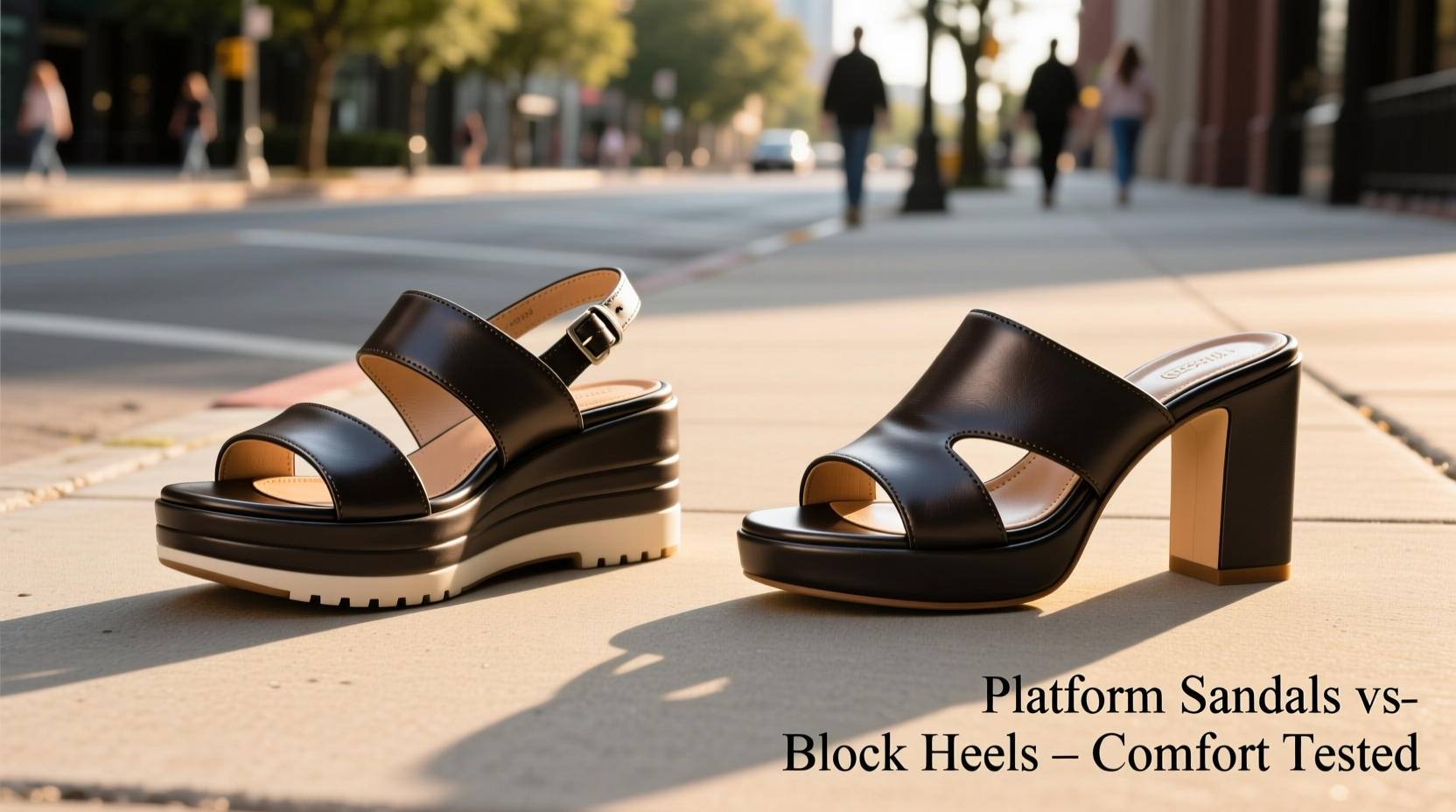
Before comparing platform sandals and block heels, it’s essential to define what \"comfortable for walking\" actually means. Comfort isn’t solely about softness; it involves several biomechanical factors:
- Arch support: Proper alignment reduces strain on the feet and lower back.
- Heel stability: A secure heel cup and balanced base prevent rolling or slipping.
- Weight distribution: How evenly pressure is spread across the foot.
- Shoe flexibility: Natural movement during gait improves comfort over time.
- Cushioning: Impact absorption, especially on hard surfaces like concrete.
- Toe box space: Room for toes to splay prevents cramping and blisters.
Both platform sandals and block heels attempt to address these elements, but they do so in fundamentally different ways. One prioritizes height and visual drama, while the other aims to merge elevation with functional design.
Platform Sandals: Elevated Soles and Their Trade-offs
Platform sandals feature thick soles that elevate both the heel and forefoot simultaneously. This design reduces the natural incline of traditional heels, theoretically making them easier to walk in. The raised front portion decreases the angle between the ball of the foot and the heel, minimizing calf strain.
However, not all platforms are created equal. Some ultra-thick versions (especially those exceeding 2 inches) add significant weight and stiffness, turning each step into a clunky motion. Additionally, many fashion-forward platform sandals lack internal arch support or adequate cushioning, relying purely on external aesthetics.
The open design of most platform sandals—straps across the toes and ankle—can also lead to instability if not properly secured. Feet may slide forward, causing toes to grip the sole, which leads to fatigue. Adjustable straps help, but poorly placed buckles or thin bands can dig into sensitive areas.
“Platforms redistribute pressure better than stilettos, but without proper midsole structure, they become rigid boards strapped to your feet.” — Dr. Lena Torres, Podiatrist & Footwear Consultant
Pros and Cons of Platform Sandals for Walking
| Advantages | Drawbacks |
|---|---|
| Reduced foot pitch (less strain on Achilles tendon) | Bulky design increases leg fatigue over long distances |
| Often wider base provides moderate lateral stability | Limited arch support in non-athletic styles |
| Ventilation keeps feet cooler in warm weather | Straps may rub or loosen during movement |
| Can accommodate orthotics in some models | Poor shock absorption on hard surfaces |
Block Heels: Stability Through Structure
Block heels derive their name from the solid, chunky heel construction that supports the rear of the shoe. Unlike needle-thin stilettos, block heels distribute weight across a broader surface area, enhancing balance and reducing pressure on the heel bone. Many modern designs incorporate contoured footbeds, padded insoles, and rubberized outsoles for improved traction.
While traditionally enclosed in pumps or ankle boots, block heels now appear in sandal formats—offering breathability without sacrificing structure. These hybrid styles often include supportive ankle straps and cushioned midsoles, bridging the gap between elegance and endurance.
The primary advantage lies in biomechanics: a wide heel base lowers the center of gravity, improving stability. This makes block heels particularly suitable for uneven terrain, cobblestones, or grass—surfaces where platform sandals might twist or catch.
That said, comfort depends heavily on heel height and placement. A 4-inch block heel still elevates the body significantly, increasing forward lean and requiring greater muscular engagement. Lower blocks (1.5 to 2.5 inches) tend to be far more walkable than taller versions, even if the latter look more dramatic.
Real-World Example: The Wedding Guest Dilemma
Sophia attended an outdoor garden wedding wearing strappy black platform sandals with a 3-inch lift. Despite looking elegant, she found herself limping by hour three. The thick sole didn't flex, and her feet ached from trying to maintain balance on slightly uneven ground. Two weeks later, at a friend’s rooftop dinner party, she wore nude block-heel mules—also 3 inches high—but reported feeling “confident all night.” The difference? The block heel had a cushioned insole, a grippy rubber bottom, and allowed natural roll-through when walking. She walked twice as far without discomfort.
This scenario illustrates that height alone doesn’t determine comfort—structure and materials matter just as much.
Direct Comparison: Key Factors Side-by-Side
To clarify which style wins in terms of walking comfort, let's compare them across critical performance categories.
| Feature | Platform Sandals | Block Heels |
|---|---|---|
| Balance & Stability | Moderate – wider sole helps, but top-heavy feel possible | High – broad heel base enhances equilibrium |
| Arch Support | Low to none in most fashion styles | Fair to good, especially in premium or orthopedic brands |
| Shock Absorption | Poor – rigid soles transmit impact | Moderate to good – foam layers and rubber soles help |
| Terrain Adaptability | Low – prone to catching on cracks or grass | High – less likely to sink or twist |
| All-Day Wear Potential | Short to medium duration (2–4 hours) | Medium to long duration (4–8+ hours with proper fit) |
| Cooling & Breathability | Excellent – open design promotes airflow | Varies – closed backs trap heat; sandals offer relief |
In general, block heels perform better in structured environments requiring prolonged standing or walking. Platform sandals excel in casual, warm-weather settings where style and ventilation take precedence over mileage.
How to Choose Based on Your Lifestyle
Your ideal shoe depends less on universal rankings and more on how you plan to use it. Consider these scenarios:
- You’re touring a city all day: Opt for low-to-mid block heel sandals with adjustable straps and rubber soles. Prioritize cushioning and ankle support.
- You’re going to a beachside cocktail event: Lightweight platform sandals with EVA foam soles can be surprisingly comfortable for short walks on sand or pavement.
- You work in retail or hospitality: Avoid both unless specifically designed for occupational wear. Instead, seek medical-grade footwear disguised as fashion—some brands now offer stylish block heels with orthotic compliance.
- You have plantar fasciitis or flat feet: Neither style is inherently safe, but block heels with built-in arch contouring are generally safer than flat, rigid platforms.
Checklist: Picking the Most Walkable Version of Either Style
- ✅ Heel height under 3 inches
- ✅ Non-slip outsole (rubber or textured material)
- ✅ Contoured footbed with visible arch curve
- ✅ Adjustable straps at ankle or instep
- ✅ Weight under 12 oz per shoe (lighter = less fatigue)
- ✅ Minimal overhang at the toe or heel edge
- ✅ Break-in period tested before full-day use
Frequently Asked Questions
Are platform sandals bad for your knees?
Not inherently, but poorly designed ones can alter gait mechanics. If the sole is too stiff or excessively thick, it limits natural foot flexion, potentially increasing stress on the knees over time. Look for flexible soles and moderate height to minimize risk.
Can block heels be worn every day?
Yes—if chosen wisely. Daily wear block heels should be no higher than 2.5 inches, feature cushioned insoles, and have a roomy toe box. Brands like Clarks, Naturalizer, and Rothy’s offer professional-looking options engineered for comfort.
Do thicker heels hurt less than thin ones?
Generally, yes. Thicker heels, including blocks, provide superior weight distribution and lateral support. They reduce pressure concentration on the heel pad and decrease the chance of ankle rolls compared to stilettos or spindly heels.
Final Verdict: Which Is More Comfortable for Walking?
For most people, in most situations, **block heels are more comfortable for walking** than platform sandals. Their structural integrity, better weight distribution, and adaptability to varied surfaces give them a clear edge in endurance and safety. While platform sandals offer visual appeal and breathability, they often compromise on internal support and dynamic flexibility—key components of long-term wearability.
That said, advancements in materials science are blurring the lines. Some athletic-inspired platform sandals now include memory foam, rocker soles, and flexible shanks, rivaling traditional heels in comfort. Similarly, minimalist block heels with flimsy construction can fail just as quickly as cheap platforms.
The takeaway isn’t to reject one style entirely, but to prioritize engineering over aesthetics when walking matters. Seek hybrid features: a modest platform under a block heel, breathable uppers, and podiatrist-approved contours. Comfort doesn’t have to come at the cost of style—it should enhance it.




 浙公网安备
33010002000092号
浙公网安备
33010002000092号 浙B2-20120091-4
Comments
No comments yet. Why don't you start the discussion?