
As temperatures rise and barefoot season approaches, many people reach for open footwear that keeps their feet cool and stylish. Platform sandals and flat slides are two of the most popular choices for summer wear—but when it comes to comfort and long-term foot health, not all styles are created equal. One critical factor often overlooked is arch support. For those who spend hours on their feet or have pre-existing foot conditions like plantar fasciitis or flat feet, choosing between platform sandals and flat slides can mean the difference between a pain-free day and lingering discomfort.
This article breaks down the structural differences between these two styles, evaluates their capacity for arch support, and helps you make an informed decision based on biomechanics, design, and real-world use. Whether you're walking city streets, vacationing at the beach, or commuting across a campus, understanding how each shoe supports your foot will guide you toward smarter, healthier choices this summer.
Anatomy of Summer Footwear: What Defines Each Style?
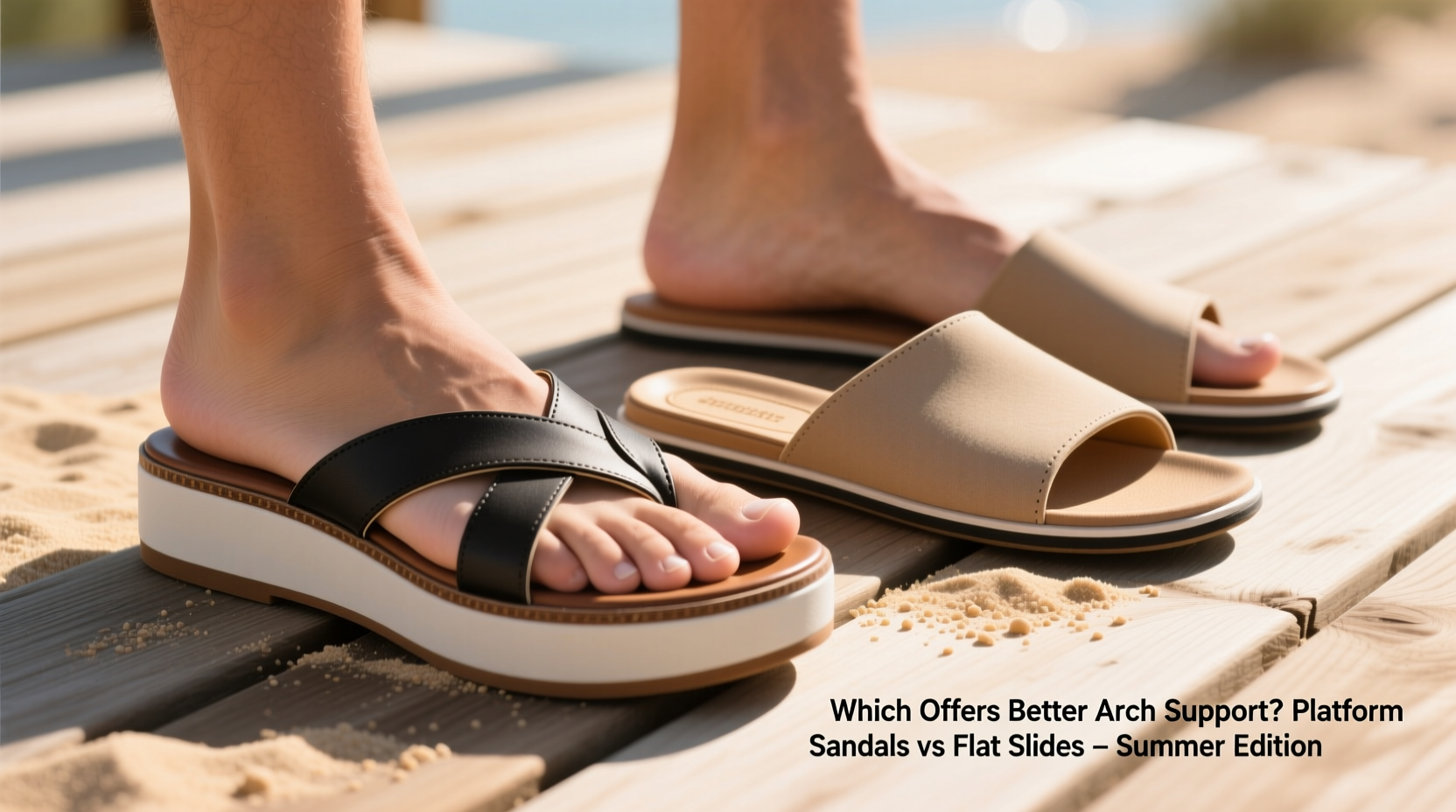
To understand which shoe offers better arch support, we must first define what constitutes a platform sandal versus a flat slide.
Platform Sandals are characterized by thick soles—typically 1 to 3 inches high—that elevate the entire foot uniformly. They often feature multiple straps (around the ankle, instep, or toes) and may include cushioned footbeds. The elevated sole allows for more internal structure, including built-in arch contours, heel cups, and shock-absorbing midsoles. Brands like Birkenstock, Ecco, and Teva offer platform versions designed specifically for support and durability.
Flat Slides, in contrast, sit close to the ground with minimal elevation—usually less than half an inch. They slip on easily without fastenings and typically cover only part of the foot, usually the forefoot and heel. While some premium models incorporate molded EVA foam or memory foam footbeds, most basic slides lack structured support entirely. Their appeal lies in convenience and breathability rather than biomechanical alignment.
The fundamental distinction isn’t just height—it’s engineering. Platform sandals allow space and material for anatomical shaping; flat slides prioritize simplicity and speed of wear over supportive features.
Arch Support Explained: Why It Matters in Warm Weather
Your arches act as natural shock absorbers, distributing weight and reducing stress on joints from the feet up through the knees, hips, and lower back. When unsupported, especially during prolonged standing or walking, the arches can collapse over time—a condition known as overpronation. This leads to fatigue, inflammation, and chronic issues such as plantar fasciitis, tendonitis, or even shin splints.
In summer, risk factors increase. People tend to walk more—on vacations, outdoor events, urban explorations—and often do so on hard surfaces like concrete or pavement. At the same time, lightweight footwear becomes the norm, and many popular options sacrifice support for style or ease.
Effective arch support does three things:
- Distributes body weight evenly across the foot
- Maintains the foot’s natural curvature
- Reduces strain on ligaments and tendons during movement
Without adequate support, even short walks can become painful, particularly for individuals with low or high arches. This makes evaluating footwear beyond aesthetics essential.
“Footwear worn daily—even occasionally—should never be chosen solely on appearance. Poorly supported shoes contribute directly to musculoskeletal problems.” — Dr. Lena Patel, Podiatrist & Biomechanics Specialist
Comparative Analysis: Platform Sandals vs Flat Slides
To assess which type of shoe provides superior arch support, consider the following criteria:
| Feature | Platform Sandals | Flat Slides |
|---|---|---|
| Sole Thickness | 1–3 inches; allows room for structured midsoles | Under 0.5 inches; limited space for support layers |
| Arch Contouring | Common in quality models; molded to foot anatomy | Rare; mostly flat or gently curved |
| Heel Stability | Often includes deep heel cup and strap retention | Minimal; heel moves freely with no anchoring |
| Strap Security | Multiple points of contact (ankle, instep) | Single front strap; foot shifts inside shoe |
| Cushioning Quality | Frequent use of EVA, cork, or latex blends | Basic foam; compresses quickly under load |
| Weight Distribution | Better balance due to elevated, wide base | Concentrated pressure on ball of foot and heel |
The data shows a clear advantage for platform sandals in nearly every category related to foot support. Their thicker construction enables manufacturers to integrate orthopedic-grade components, while the added straps improve foot positioning and reduce slippage—key for maintaining proper gait mechanics.
That said, not all platform sandals are created equal. Bargain versions made from rigid plastic or overly soft foam may look similar but fail to deliver functional benefits. Similarly, some high-end flat slides—such as those from Olukai or Vionic—include surprisingly robust arch profiles and durable materials, narrowing the gap slightly.
Real-World Scenario: A Week of Walking in Both Styles
Sophie, a 34-year-old graphic designer from Austin, Texas, spends her summers traveling between coffee shops, client meetings, and weekend markets. Last June, she decided to test two pairs of shoes over seven days: a pair of cork-platform Birkenstocks (Arizona model) and a popular brand of minimalist flat slides.
She walked approximately 5–7 miles per day on mixed terrain—sidewalks, grass, and tile floors—and tracked her comfort levels, foot fatigue, and any pain onset.
By day three, she noticed sharpness in her left heel when wearing the flat slides—especially after standing at an outdoor market for two hours. She also felt her toes gripping the front strap constantly to keep the shoe from slipping off, leading to cramping.
In contrast, the platform sandals required no toe-clenching, stayed securely on her feet, and provided noticeable lift and padding under her arches. Even after full-day use, she reported only mild tiredness, no pain, and greater confidence on uneven surfaces.
Her takeaway: “I thought the slides were easier because I could just slip them on. But I ended up limping by Friday. The platforms took two minutes longer to put on—but saved me hours of discomfort.”
This mirrors clinical observations: shoes requiring active muscular compensation (like gripping with toes) increase fatigue and alter natural stride patterns, accelerating wear on soft tissues.
How to Choose the Right Shoe for Your Feet
Selecting summer footwear shouldn’t be guesswork. Use this checklist to ensure you’re prioritizing support without sacrificing style:
- Evaluate the footbed: Press your thumb into the arch area. Does it resist slightly, mimicking the curve of your foot? Or does it flatten instantly?
- Check heel depth: A shallow heel cup lets your foot slide; look for one that wraps around at least half the heel height.
- Test stability: Stand on a slight incline. Do your feet roll inward? If yes, the shoe likely lacks sufficient medial support.
- Assess strap function: Straps should hold the shoe firmly without pinching. Ankles and insteps benefit from adjustable closures.
- Walk in them: Take a five-minute test walk on hard flooring. Listen to your body—any pressure points or instability?
- Avoid completely flat soles: Even a small lift (¾ inch) improves posture and reduces forefoot strain.
Expert-Backed Recommendations for Summer Wear
Podiatrists and footwear engineers agree: if you plan to walk more than a few blocks regularly, flat slides should be treated as occasional-use footwear—not daily drivers.
Dr. Arjun Mehta, a sports medicine specialist, advises: “We see a spike in foot injuries every July—plantar fasciitis, metatarsalgia, even stress fractures—all linked to unsupportive summer shoes. Patients say, ‘It’s just a quick errand,’ but cumulative impact matters.”
For those committed to comfort and long-term foot health, he recommends:
- Opt for adjustable platform sandals with contoured footbeds and rear support.
- Add custom orthotics if needed—many platform styles have removable insoles to accommodate inserts.
- Limited slide usage to beach-to-water transitions, showers, or recovery days at home.
- Rotate footwear to prevent repetitive strain on specific foot zones.
Additionally, materials matter. Natural cork molds to the foot over time, offering personalized support. EVA foam is lightweight and shock-absorbent but degrades faster under UV exposure and heat. Leather uppers breathe better than synthetics and reduce friction-related blisters.
Frequently Asked Questions
Can flat slides ever provide good arch support?
Some premium flat slides—particularly those labeled “orthotic-friendly” or “anatomically designed”—do include molded arches and cushioned heels. However, due to their thin profile and lack of secure fit, they still fall short compared to properly engineered platform sandals. They may work for light use but aren't ideal for extended walking or standing.
Are higher platforms bad for ankles?
Not necessarily. A well-designed platform distributes height evenly across the foot, minimizing ankle strain. Unlike stilettos or wedge heels that shift weight forward, platform sandals maintain a level foot position. Just ensure the sole isn’t excessively thick or stiff, which can limit natural foot flexion.
I have high arches—what should I look for?
High arches require deeper, more pronounced support to prevent under-contact and lateral instability. Seek out models with high medial arch peaks and firm cushioning. Avoid soft, flat foam that collapses under pressure. Brands like Vionic, Dansko, and Naot specialize in high-arch-compatible designs.
Final Verdict: Which Offers Better Arch Support?
The evidence strongly favors **platform sandals** as the superior choice for arch support during summer months. Their structural advantages—greater sole depth, enhanced footbed engineering, improved stability, and better weight distribution—make them far more capable of supporting healthy foot function over time.
While flat slides win in convenience and casual versatility, they consistently underperform in biomechanical performance. Relying on them for daily wear increases the risk of avoidable foot pain and long-term damage, especially for individuals with existing foot concerns or active lifestyles.
That doesn’t mean you can’t own both. Think of flat slides as poolside companions or post-workout recovery footwear. Reserve platform sandals—for errands, travel, sightseeing, and everyday outings where your feet bear the brunt of your day.
Ultimately, summer should be about enjoyment, not foot pain. By choosing supportive footwear upfront, you invest in mobility, comfort, and joint health—all without compromising on style.




 浙公网安备
33010002000092号
浙公网安备
33010002000092号 浙B2-20120091-4
Comments
No comments yet. Why don't you start the discussion?