
When it comes to warm-weather footwear, two styles consistently rise to the top: platform slides and wedge sandals. Both offer height, style, and a relaxed vibe perfect for summer outings, city strolls, or beach vacations. But when you're on your feet for hours—navigating cobblestone streets, touring museums, or standing in long queues—one question becomes critical: which is actually more comfortable for walking all day?
The answer isn’t as simple as “one is better.” Comfort depends on foot anatomy, arch type, heel-to-ball balance, and even how the shoe is constructed. To help you make an informed choice, we’ll compare platform slides and wedge sandals across key factors like support, stability, cushioning, weight, and long-term wearability.
Understanding the Anatomy of Each Style
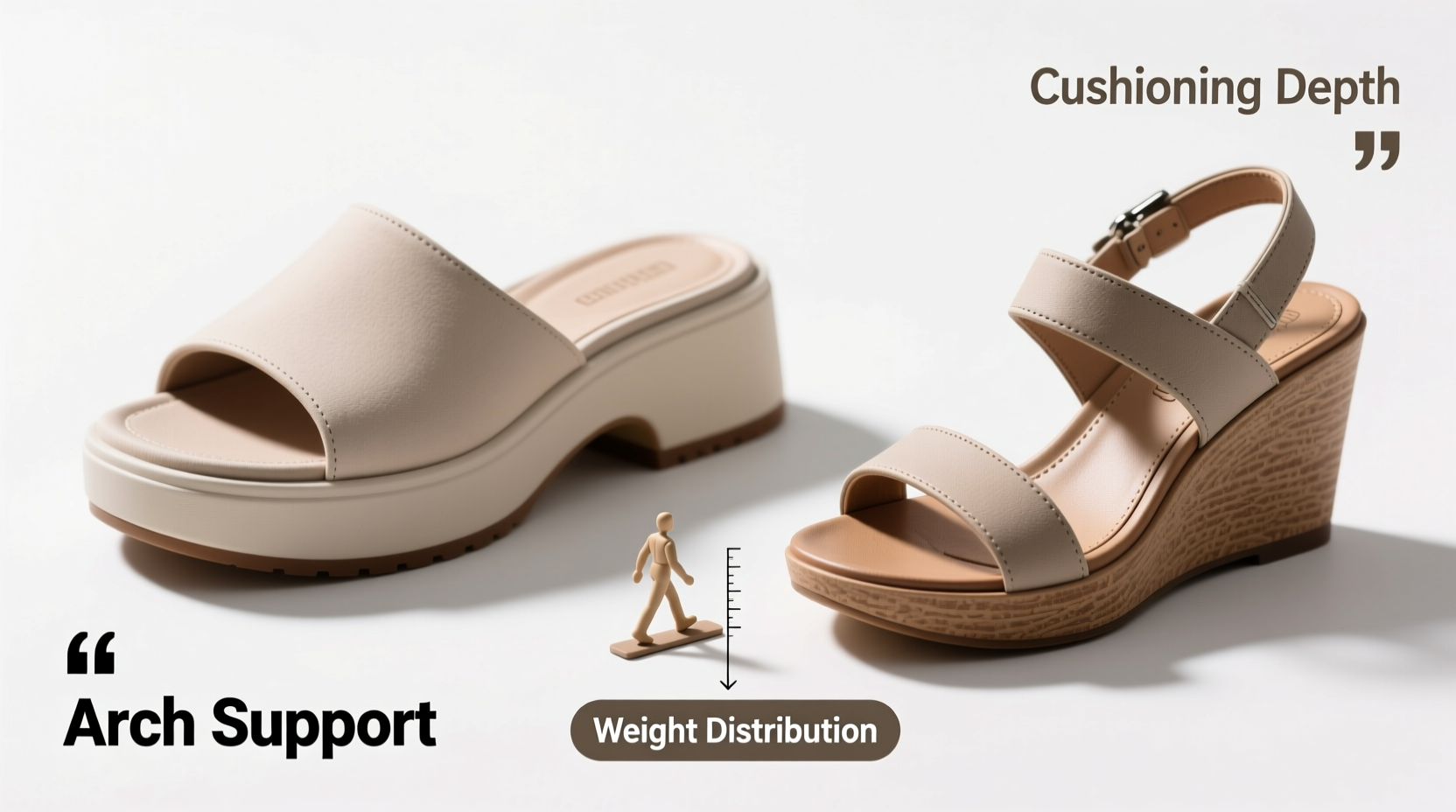
Before diving into comfort, it’s essential to understand what defines each shoe.
- Platform Slides: Characterized by a flat, thick sole that lifts the entire foot evenly from the ground. They typically feature a single wide strap over the instep and slide on without fasteners. The outsole is often chunky but uniform in height from toe to heel.
- Wedge Sandals: Feature a continuous heel that extends from the back of the shoe under the arch, creating a sloped elevation. They usually have multiple straps for secure fit and come in low, mid, or high wedge variations.
The structural difference plays a major role in how weight is distributed and how much strain is placed on your feet, ankles, and lower back during extended wear.
Support & Arch Distribution: Where Wedges Shine
One of the most significant advantages of wedge sandals is their inherent ability to provide better arch support. Because the wedge extends under part of the arch, it helps maintain a more natural foot alignment compared to flat platforms.
In contrast, many platform slides—especially budget-friendly or fashion-forward versions—offer minimal internal structure. The thick sole may feel soft at first, but if there's no contoured footbed or arch reinforcement, your foot sinks into a flat plane. Over time, this can lead to fatigue, especially for people with flat feet or overpronation.
“From a biomechanical standpoint, a well-constructed wedge provides superior load distribution across the midfoot, reducing pressure on the ball of the foot,” says Dr. Lena Torres, podiatrist and footwear ergonomics consultant.
That said, not all wedges are created equal. A poorly made wedge with a rigid, straight slope can still cause discomfort. Look for models with a slight curvature that mirrors the natural arch of the foot.
Stability & Foot Security: Why Straps Matter
Walking all day demands stability. Every step creates micro-movements inside the shoe, and if your foot isn't held securely, you compensate with muscle tension in your toes and calves.
Platform slides, by design, rely on friction and foot width to stay on. This works fine for short distances, but during prolonged walking—especially uphill or on uneven terrain—your toes naturally clench to keep the shoe from slipping off. This toe-gripping motion leads to cramping and fatigue.
Wedge sandals, particularly those with ankle straps or T-straps, lock the foot in place. Even slip-on wedges with cross-ankle bands offer more security than a single-slide strap. The result? Less muscular effort required to stabilize your gait.
| Feature | Platform Slides | Wedge Sandals |
|---|---|---|
| Foot Security | Moderate (depends on foot width) | High (with proper straps) |
| Arch Support | Low to moderate (varies by brand) | Moderate to high |
| Cushioning | Often high (thick soles) | Variable (depends on material) |
| Weight | Lighter (foam-based) | Heavier (especially cork or wood) |
| Long-Walk Viability | Fair to good (if well-cushioned) | Good to excellent (if properly fitted) |
Real-World Test: A Day at the Festival
Sophie, a 32-year-old event planner from Austin, tested both styles during a full-day music festival. She walked over six miles across grassy fields, stood in food lines, and danced between sets.
She started in a pair of trendy white platform slides with a 2-inch foam sole. By mid-afternoon, her forefeet ached, and she noticed swelling in her toes from constant gripping. “I kept adjusting them, and my calves were tight by evening.”
The next day, she switched to leather wedge sandals with a 3-inch cork wedge and double ankle straps. Despite the higher heel, she reported less fatigue. “They felt sturdier. My foot didn’t move around, and the arch support made a huge difference on uneven ground.”
Her takeaway: “The wedge looked less ‘trendy,’ but I could actually enjoy the day instead of counting steps until I could sit down.”
Cushioning vs. Structure: The Platform Advantage
While wedges win in support and stability, platform slides often excel in immediate cushioning. Many are made with EVA foam, memory foam insoles, or rubber compounds designed to absorb impact. This makes them feel “softer” underfoot at first glance.
However, softness doesn’t always equal comfort over time. Excessively squishy soles can lack rebound, leading to instability. Think of it like walking on a mattress—comfortable for lounging, but inefficient for movement.
The best platform slides for walking combine cushioning with firmness in the midsole. Brands like Birkenstock, Teva, and ECCO now offer slide styles with anatomically shaped footbeds that mimic the benefits of orthopedic shoes.
Step-by-Step Guide: Choosing the Right Shoe for All-Day Wear
- Assess Your Foot Type: Do you have high arches, flat feet, or neutral alignment? This determines whether you need extra support (favor wedges) or just cushioning (some platforms may suffice).
- Check the Insole: Press your thumb into the footbed. It should resist deep indentation but offer slight give. Avoid completely flat or overly soft bases.
- Test the Fit: Your heel should not lift more than 5mm when walking. There should be no side-to-side slippage.
- Evaluate Strap Design: Multiple straps = more stability. For slides, look for padded heel counters or adjustable straps.
- Walk on Different Surfaces: Try walking on tile, carpet, and outdoor pavement before committing. Pay attention to toe grip and ankle wobble.
- Break Them In: Wear new shoes indoors for 30–60 minutes daily for a week before relying on them for long walks.
FAQ: Common Questions About Walking Comfort
Can platform slides be good for walking if they’re supportive?
Yes. Some high-quality platform slides—like the Birkenstock Boston or Oofos OOmg—feature medical-grade footbeds with arch support and deep heel cups. These can rival dedicated walking sandals in comfort.
Are wedge sandals harder to walk in because of the heel?
Not necessarily. A well-designed wedge distributes height gradually, minimizing the pitch of the foot. Unlike stilettos, wedges keep the entire sole close to the ground, enhancing balance.
Which is better for travel?
It depends on your itinerary. For urban exploration with lots of walking, supportive wedges are ideal. For beach resorts or casual getaways with minimal walking, lightweight platform slides are convenient and packable.
Final Verdict: Which Is More Comfortable for Walking All Day?
For most people, **wedge sandals are more comfortable for walking all day**—provided they are well-constructed and properly fitted. Their superior arch support, foot security, and balanced weight distribution make them a smarter choice for extended wear.
That said, modern platform slides have evolved significantly. If you prioritize ease of wear and prefer a minimalist aesthetic, choose a slide with proven ergonomic features. Don’t sacrifice structure for style.
Ultimately, comfort is personal. What works for one foot may not work for another. The key is to prioritize function without compromising on fit. Whether you go for a sleek wedge or a cushy slide, make sure your shoe supports your stride—not fights against it.




 浙公网安备
33010002000092号
浙公网安备
33010002000092号 浙B2-20120091-4
Comments
No comments yet. Why don't you start the discussion?