
When it comes to casual footwear, comfort is non-negotiable. As warm weather rolls in and indoor-outdoor living becomes the norm, slippers have evolved from bedroom-only staples to full-day companions. Among the most popular styles are platform slippers and wedge slippers—both offering elevated soles, but with distinct structural differences that affect how they feel underfoot. While both promise height and style, the real question remains: are platform slippers actually more comfortable than their wedge counterparts?
The answer isn’t as simple as “yes” or “no.” It depends on foot anatomy, intended use, arch support needs, and even walking mechanics. This article breaks down the key differences between platform and wedge slippers, evaluates their long-term comfort, and offers practical insights for choosing the right pair based on lifestyle and biomechanics.
Understanding the Structural Differences
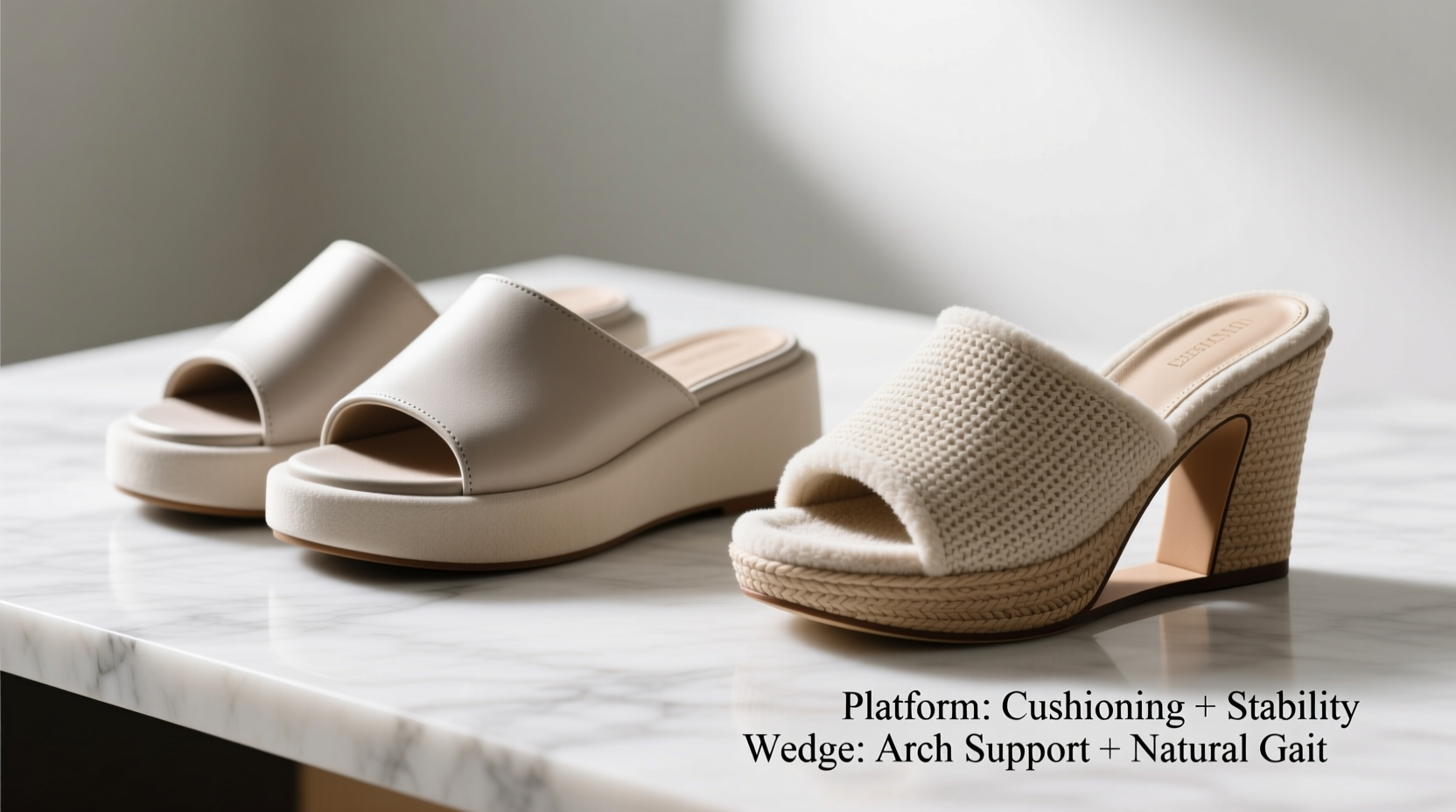
Before comparing comfort, it’s essential to understand what sets platform and wedge slippers apart structurally.
- Platform Slippers: Feature a uniformly thick sole from heel to toe. The elevation is consistent across the entire footbed, reducing the angle between heel and forefoot.
- Wedge Slippers: Have a sloped sole that gradually rises from the ball of the foot to the heel. This creates a continuous incline, similar to a low-heeled sandal.
The difference may seem subtle, but it has significant implications for posture, weight distribution, and joint alignment.
“Even a half-inch change in heel-to-toe drop can alter your gait pattern over time,” says Dr. Lena Torres, podiatrist and biomechanics specialist. “The structure of the shoe dictates how force travels through your foot and up your leg.”
Comfort Breakdown: Support, Stability, and Pressure Distribution
Comfort isn’t just about softness—it’s about how well a shoe supports natural movement. Let’s examine three core aspects where platform and wedge slippers differ.
1. Arch and Heel Support
Wedge slippers often feature built-in contouring along the midsole, which can offer moderate arch support. However, because the heel sits higher than the forefoot, there’s increased pressure on the metatarsal heads—the balls of the feet. This can lead to discomfort during prolonged standing or walking.
Platforms, by contrast, maintain a level base. This reduces forward foot slide and minimizes strain on the Achilles tendon. For people with flat feet or mild plantar fasciitis, this neutral positioning can provide relief, especially if the platform includes cushioned insoles.
2. Stability and Balance
Wedges distribute weight along a continuous slope, which can feel stable at first. But because the heel is elevated without a defined heel cup, lateral (side-to-side) instability increases, particularly on uneven surfaces like grass or gravel.
Platforms offer a broader, flatter footprint. This wider base improves balance and reduces the risk of ankle rolling. For older adults or those recovering from foot injuries, this added stability makes platforms a safer daily option.
3. Long-Term Wearability
If you're wearing slippers around the house all day, or stepping out for errands, durability under extended use matters. Wedge slippers tend to compress unevenly—especially in the heel area—leading to a loss of structural integrity after several months.
Platforms, thanks to their uniform sole thickness, wear more evenly. High-density rubber or polyurethane platforms can last years with regular use, maintaining consistent cushioning throughout.
Comparison Table: Platform vs. Wedge Slippers
| Feature | Platform Slippers | Wedge Slippers |
|---|---|---|
| Heel-to-Toe Drop | Minimal (0–5mm) | Moderate to High (15–30mm) |
| Ball-of-Foot Pressure | Low | High |
| Ankle Stability | High (flat base) | Moderate (slope increases roll risk) |
| Suitable for Flat Feet | Yes, especially with arch inserts | Limited (slope may strain arch) |
| Durability | High (even wear) | Moderate (heel compression common) |
| Best For | All-day wear, indoor/outdoor use | Short outings, fashion-forward looks |
Real-World Example: A Week in Both Styles
Sarah, a freelance graphic designer who works from home, tested both types of slippers over seven days. She spends 8–10 hours daily on her feet—moving between her desk, kitchen, and backyard patio.
She started with wedge slippers made of molded EVA foam. By day two, she noticed tightness in her calves and a dull ache under the balls of her feet. “They looked cute,” she said, “but I felt like I was walking downhill all day.”
Switching to a pair of cork-based platform slippers with contoured footbeds, she reported immediate improvement. “My feet didn’t feel compressed, and I could walk outside without worrying about twisting an ankle on the lawn.” By day seven, she had decided to keep the platforms permanently.
This mirrors feedback seen in customer reviews across major footwear brands: platforms consistently score higher for all-day comfort, while wedges are praised more for aesthetics than ergonomics.
Choosing Based on Your Lifestyle
Your ideal slipper depends on how you plan to use it. Consider these scenarios:
- You work from home and move frequently: Platforms win. Their balanced design supports dynamic movement and reduces fatigue.
- You want a stylish slip-on for quick errands: Wedges can be suitable if worn occasionally. Choose ones with padded footbeds and non-slip soles.
- You have foot pain or medical conditions: Opt for platforms with orthotic-friendly insoles. Avoid steep wedges, which can exacerbate plantar fasciitis or tendonitis.
- You live in a multi-level home: Platforms offer better traction and stability on stairs compared to sloped wedges.
Frequently Asked Questions
Can wedge slippers cause back pain?
Yes. The elevated heel shifts your center of gravity forward, which can lead to over-arching of the lower back (lordosis). Over time, this altered posture may contribute to chronic back discomfort, especially during extended wear.
Are platform slippers good for seniors?
Absolutely. Their flat, wide base enhances balance and reduces fall risk. Look for models with slip-resistant outsoles and easy-on designs for maximum accessibility.
Do platform slippers look bulky?
Modern designs have minimized bulk with lightweight materials like EVA and aerated rubber. Many brands now offer sleek, minimalist platforms that resemble casual sneakers rather than clunky footwear.
Action Checklist: How to Pick the Right Slipper
- ✅ Assess your daily activity level—do you need all-day support?
- ✅ Measure heel-to-toe drop; aim for less than 10mm for optimal comfort.
- ✅ Check for removable insoles if you use orthotics.
- ✅ Test stability by rocking side to side on a flat surface.
- ✅ Prioritize material breathability (cork, mesh, or leather) for hygiene.
- ✅ Walk on carpet, tile, and outdoor surfaces before committing.
Final Verdict: Are Platforms Actually More Comfortable?
In nearly every measurable category—pressure distribution, stability, biomechanical alignment, and endurance—platform slippers outperform wedge slippers for everyday comfort. While wedges offer a fashionable silhouette and slight height boost, they compromise natural foot function. Platforms, especially those engineered with ergonomic footbeds, align more closely with podiatric recommendations for low-impact, supportive footwear.
This doesn’t mean wedges have no place. They serve a niche in seasonal fashion and short-duration wear. But if comfort, health, and functionality are priorities, platforms are the superior choice.
“The goal of footwear should be to enhance, not hinder, natural movement,” says Dr. Torres. “When given the choice between a slope and a level base, the body almost always benefits from neutrality.”




 浙公网安备
33010002000092号
浙公网安备
33010002000092号 浙B2-20120091-4
Comments
No comments yet. Why don't you start the discussion?