
Keychains are more than just functional—they’re personal. Whether clipped to a bag, keys, or used as a gift, they carry sentiment and style. Two of the most popular types are plush and enamel keychains. One offers soft charm, the other polished resilience. But when it comes to longevity—specifically, which survives daily wear without breaking—the answer isn’t always obvious.
While plush keychains bring comfort and whimsy, enamel ones boast a sleek, collectible appeal. Yet durability depends on more than appearance. Material composition, construction quality, environmental exposure, and how they're handled all play critical roles. Let’s break down what really happens over time and determine which type stands up best to the test of everyday use.
Material Composition: The Foundation of Durability
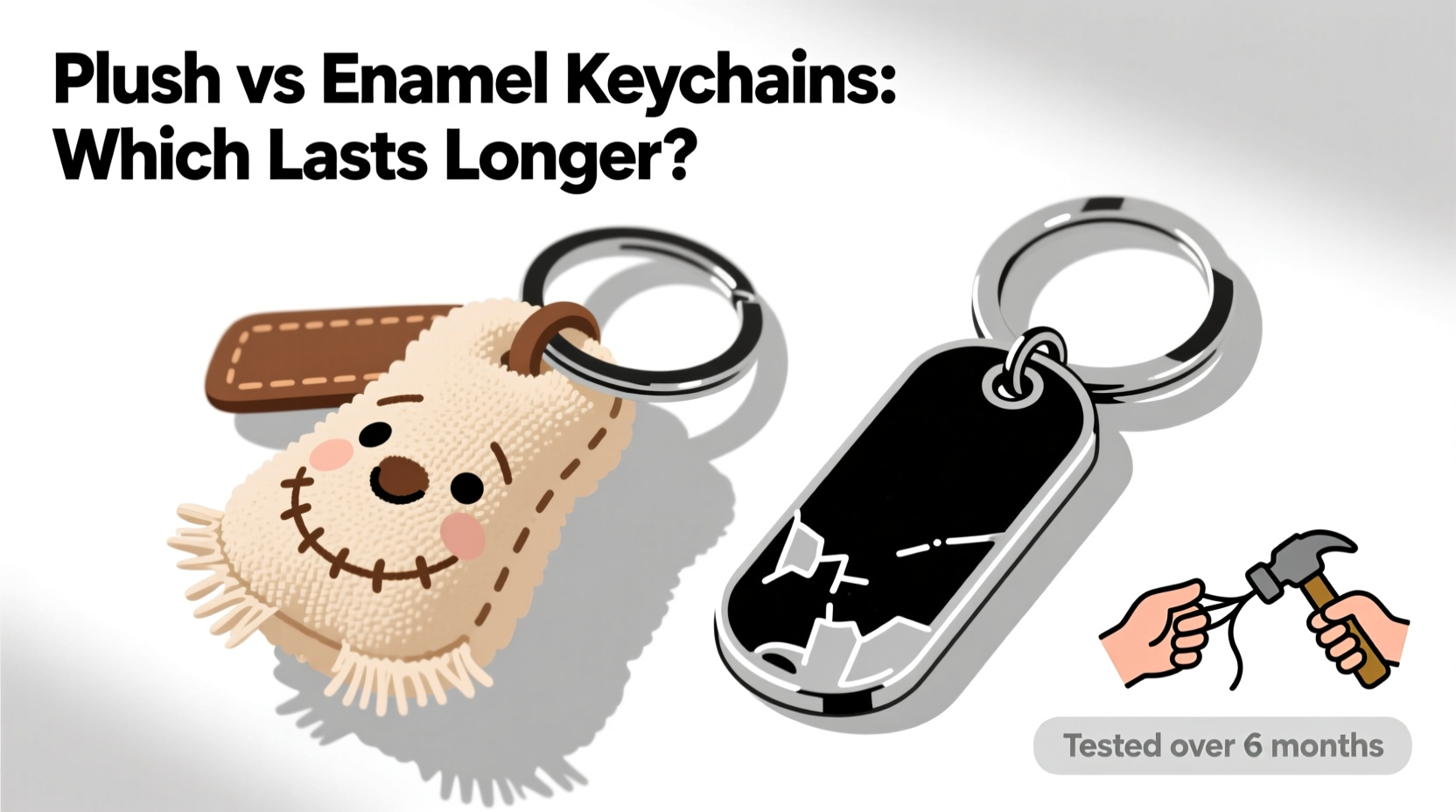
The core difference between plush and enamel keychains lies in their materials—and this directly affects how long they last.
Plush keychains are typically made from polyester fabric, filled with soft polyfill (often PP cotton), and feature embroidered or printed details. They resemble mini stuffed animals or characters and are prized for their tactile appeal. However, their softness is also their weakness. Fabrics can fray, stitching can unravel, and stuffing may shift or clump over time, especially with frequent handling.
Enamel keychains, by contrast, are usually crafted from metal bases (zinc alloy or iron) coated with layers of colored enamel. These are then sealed with a protective resin or epoxy layer. The result is a hard, glossy finish that resists scratches and fading. Because they're solid and non-porous, they don’t degrade from moisture or UV light as quickly as fabric-based items.
Real-World Wear and Tear: How Each Type Holds Up
Durability isn’t just about material strength—it’s about performance under real conditions. Consider these common stressors:
- Frequent jostling: In pockets, bags, or attached to heavy key rings
- Exposure to elements: Rain, sun, dust, and temperature changes
- Physical contact: Rubbing against surfaces, being dropped, or caught on zippers
Plush keychains tend to suffer faster in these scenarios. Their fabric surface collects lint and dirt, and repeated friction leads to pilling or bald spots. Embroidered eyes or noses may come loose, and if the thread quality is low, seams split within months. Washing helps, but most aren't machine-safe, and hand-cleaning risks damaging delicate features.
Enamel keychains, meanwhile, maintain integrity much longer. While they can chip if dropped onto concrete or struck sharply, minor scratches rarely affect function. The metal core doesn’t bend easily, and high-quality enamel coatings prevent corrosion. Even after years, many retain their original shine—especially if stored properly when not in use.
“Enamel pieces, when well-made, can last decades. Plush items are inherently temporary due to fiber degradation.” — Daniel Reyes, Product Durability Analyst at Urban Accessories Lab
Comparison Table: Plush vs Enamel Keychains
| Feature | Plush Keychain | Enamel Keychain |
|---|---|---|
| Material | Polyester fabric, polyfill stuffing | Metal base with enamel coating |
| Durability | Low to moderate; degrades with friction and moisture | High; resistant to scratches and weathering |
| Lifespan (average) | 6–18 months with regular use | 3–10+ years |
| Maintenance | Spot cleaning only; prone to staining | Wipe with damp cloth; minimal upkeep |
| Break Risk | Stitching failure, fabric tears | Chipping only under extreme impact |
| Aesthetic Longevity | Fades, flattens, loses fluff | Retains color and gloss for years |
Case Study: A Three-Year Campus Test
In 2021, a university lifestyle design class conducted a field experiment comparing plush and enamel keychains among 50 students. Each participant received both types, identical in size (about 2.5 inches), and used them daily for three years.
By the end of Year 1, 78% of plush keychains showed visible wear: flattened stuffing, frayed edges, or detached parts. By Year 2, only 12 remained intact. In contrast, all 50 enamel keychains were still fully functional. Five had minor edge chips, but none affected usability.
One student, Mia Tran, noted: “I loved my cat plush keychain, but after a year in my backpack, it looked sad. My enamel band logo? Still shiny, even after getting soaked in the rain.”
The study concluded that while plush keychains scored higher in emotional attachment initially, enamel versions outperformed them significantly in structural endurance.
How to Extend the Life of Either Type
Even the most durable item fails prematurely without care. Here’s how to maximize lifespan based on type:
- For plush keychains: Rotate usage to reduce constant friction. Store in a dry pouch when traveling.
- Avoid washing unless necessary: Use a soft brush and mild soap for spot cleaning.
- Inspect stitching monthly: Reinforce weak seams with a small stitch using matching thread.
- For enamel keychains: Wipe clean regularly to prevent grime buildup in crevices.
- Don’t use as bottle openers or tools: Despite their toughness, misuse causes chipping.
- Remove during swimming or showering: Chlorine and saltwater can corrode metal over time.
FAQ: Common Questions About Keychain Longevity
Can a plush keychain last 5 years?
Possibly, but only under ideal conditions: limited use, no exposure to moisture, and careful storage. Most begin deteriorating within the first year of daily use. Collectors who display rather than use plush keychains report longer lifespans, but functionality diminishes over time regardless.
Do enamel keychains fade in sunlight?
High-quality enamel with UV-resistant resin coating shows little to no fading, even after prolonged sun exposure. Cheaper versions may experience slight color dulling after several years, but structural integrity remains unaffected.
Which is better for kids’ backpacks?
Enamel is safer and more durable for children’s use. Plush keychains can become chewed, torn, or lost more easily. Additionally, small embroidered parts on plush items pose a choking hazard if detached.
Final Verdict: Which Lasts Longer Without Breaking?
When measured purely by resistance to breaking and long-term structural integrity, **enamel keychains win decisively**. Their solid construction, resistance to environmental factors, and minimal maintenance needs make them far more resilient than plush alternatives.
That said, value isn’t solely defined by durability. Plush keychains offer emotional warmth, sensory appeal, and a handmade charm that enamel cannot replicate. For sentimental gifts or decorative purposes, plush remains a beloved choice.
But if your priority is a keychain that won’t fall apart after six months of daily use—if you want something that survives drops, weather, and years of companionship—then enamel is the smarter investment.




 浙公网安备
33010002000092号
浙公网安备
33010002000092号 浙B2-20120091-4
Comments
No comments yet. Why don't you start the discussion?