
When it comes to creating a cozy, inviting space for relaxation, the choice between plush sofa cushions and bean bag chairs often comes down to personal preference. But beyond aesthetics and nostalgia, what truly defines comfort? Is it the structured support of a well-upholstered cushion, or the free-form adaptability of a bean bag? For those who spend evenings unwinding with a book, weekend afternoons binge-watching series, or late nights chatting with friends, understanding the functional differences between these two seating options can significantly impact long-term comfort and satisfaction.
Comfort isn’t just about softness—it’s about ergonomics, longevity, material quality, and how well a piece fits into your lifestyle. Let’s explore both options in depth, weighing their strengths and limitations to determine which one genuinely delivers superior lounging comfort.
The Anatomy of Comfort: What Makes a Seat Truly Relaxing?
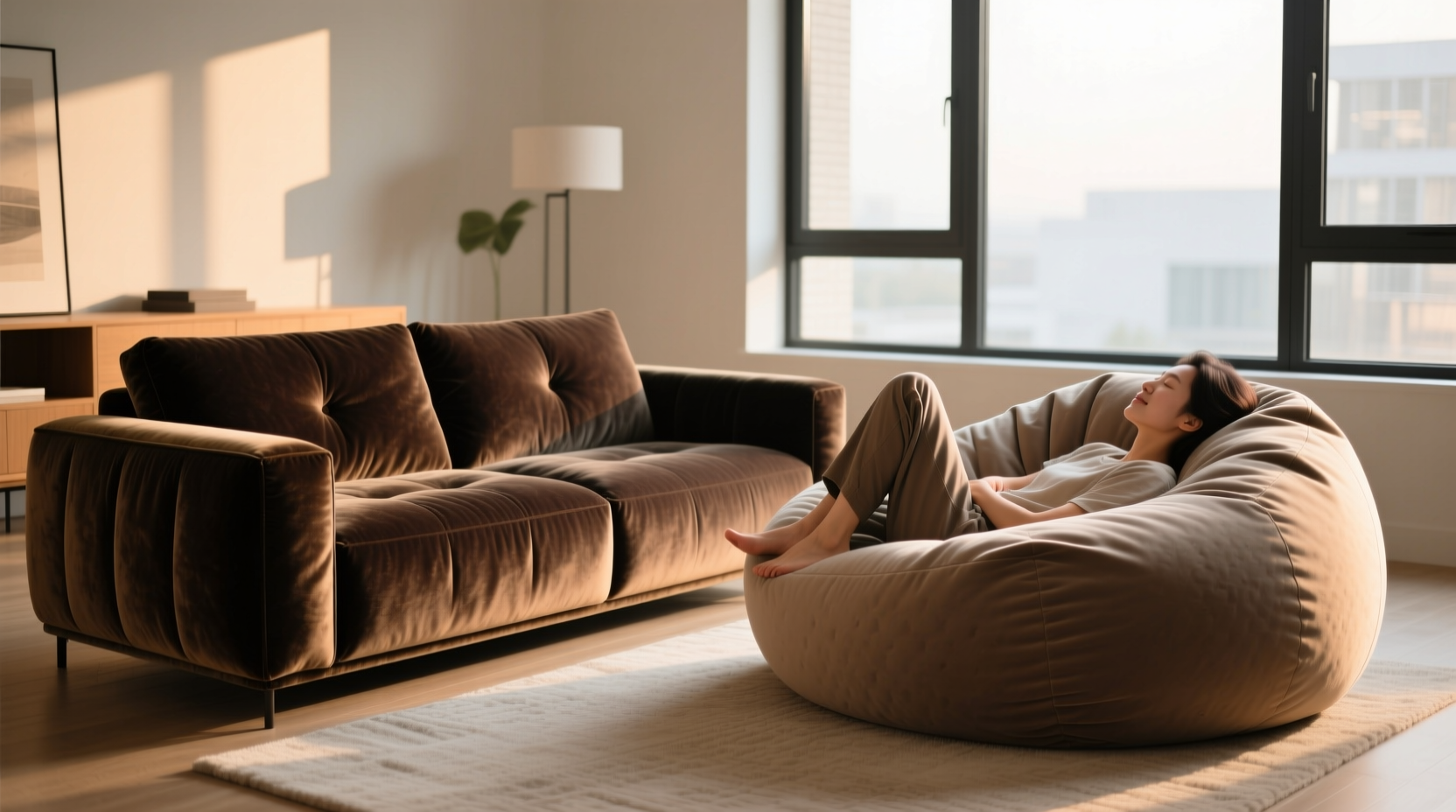
Before comparing specific furniture types, it's essential to define what “comfort” means in practice. Experts agree that true seating comfort involves three core elements:
- Support: The ability to maintain natural spinal alignment without strain.
- Pressure Distribution: Even weight dispersion to prevent numbness or soreness.
- Adaptability: How well the seat conforms to different body types and sitting positions.
“Comfort is not just about softness—overly yielding surfaces can lead to poor posture and fatigue within 30 minutes.” — Dr. Lena Torres, Ergonomic Design Consultant
A surface may feel heavenly at first touch, but if it lacks structural integrity, it can cause back pain, shoulder tension, or discomfort over time. This distinction is crucial when evaluating plush cushions versus bean bags, as initial impressions can be misleading.
Plush Sofa Cushions: Luxury with Structure
Plush sofa cushions are typically part of a larger sofa system, though standalone floor cushions have gained popularity in modern minimalist and Scandinavian interiors. These cushions use high-density foam, feather blends, or memory foam cores wrapped in soft upholstery fabrics like velvet, chenille, or performance microfiber.
Their primary advantage lies in consistent support. A well-made cushion maintains its shape and provides enough resistance to keep the pelvis slightly elevated, promoting a neutral spine position. This makes them ideal for semi-reclined lounging or upright reading postures.
However, not all plush cushions are created equal. Lower-density foams compress quickly, leading to sagging and reduced support after a few months. Feather-filled cushions feel sumptuous but require frequent fluffing and offer minimal lumbar support.
Pros and Cons of Plush Sofa Cushions
| Aspect | Advantages | Drawbacks |
|---|---|---|
| Support Level | High, especially with memory foam or sprung bases | Can feel too firm for some users |
| Durability | Lasts 5–7 years with proper care | Down/feather fills flatten faster |
| Style & Integration | Easily matches living room decor | Less flexible in placement |
| Cleanability | Removable covers simplify maintenance | Deep cleaning required for non-removable types |
Bean Bag Chairs: The Free-Form Contenders
Originally designed in the 1960s as anti-furniture, bean bag chairs reject traditional structure in favor of organic shaping. Filled with expanded polystyrene (EPS) beads, shredded foam, or even recycled materials, they mold instantly to the body’s contours.
This adaptability is their greatest strength. Unlike rigid sofas, bean bags allow users to sink in and shift positions freely—ideal for curling up sideways, lying partially reclined, or stretching out lengthwise. The lack of fixed arms or frames gives unparalleled positional freedom.
Modern iterations have improved dramatically. Premium models now include multi-layer filling systems, where a base of high-resilience foam supports a top layer of flowing beads. Some even feature built-in lumbar rolls or neck pillows, bridging the gap between casual lounging and ergonomic design.
Real-Life Example: The Home Theater Dilemma
Sophia, a freelance graphic designer from Portland, wanted comfortable seating for her basement home theater. She tested both options: a modular sectional with plush down-blend cushions and a large, modern bean bag with dual-density fill. After two weeks of nightly use, she found herself consistently choosing the bean bag. “I can lie diagonally, prop my feet up, and still see the screen. The sofa felt too upright for movie mode,” she explained. However, she noted that after two hours, she experienced mild lower back stiffness due to lack of structured support.
Her experience highlights a common trade-off: supreme short-term comfort at the expense of long-term posture.
Head-to-Head Comparison: Key Decision Factors
To clarify the differences, here’s a side-by-side analysis across critical categories:
| Factor | Plush Sofa Cushions | Bean Bag Chairs |
|---|---|---|
| Short-Term Comfort (0–60 mins) | Very good – soft and supportive | Excellent – molds instantly to body |
| Long-Term Comfort (>2 hours) | Good – maintains posture | Fair – may encourage slouching |
| Mobility & Flexibility | Limited – fixed shape | Excellent – reposition easily |
| Durability | High – resists wear with care | Moderate – filling settles over time |
| Style Versatility | High – integrates with decor | Variable – depends on design |
| Space Efficiency | Low to medium – requires dedicated area | High – lightweight and portable |
Choosing Based on Lifestyle: Who Should Choose What?
The best choice depends on how—and where—you plan to lounge:
- For readers and remote workers: Plush cushions with back support are preferable. They promote alertness and reduce neck strain during focused activities.
- For movie lovers and nappers: Bean bags excel in relaxed environments where changing positions frequently is desired.
- For small spaces or multi-use rooms: Lightweight bean bags can be moved or stored easily, making them ideal for studios or guest areas.
- For households with children: Bean bags are durable, forgiving, and safe for play, while plush cushions may stain more easily and require careful handling.
FAQ: Common Questions Answered
Do bean bag chairs lose their shape over time?
Yes, most do. EPS bead filling gradually compacts, especially under heavy or continuous use. High-quality models recommend refilling every 1–2 years. Some brands offer refill packs to restore volume.
Are plush cushions suitable for people with back pain?
It depends on the cushion type. Memory foam or latex-core cushions provide excellent support and are often recommended by physical therapists. Avoid overly soft down-filled versions, as they lack stability.
Can I leave a bean bag outside?
Only if it’s specifically designed for outdoor use. Standard indoor bean bags use fabric and filling that degrade when exposed to moisture and UV light. Outdoor versions use water-resistant covers and mold-resistant pellets.
Final Verdict: Which Is Actually More Comfortable?
If comfort is measured purely by immediate sensation, bean bag chairs win. Their ability to conform instantly to your body creates a “melting into the chair” effect that feels indulgent and freeing. However, comfort over extended periods favors plush sofa cushions. Their engineered support reduces fatigue, encourages better posture, and sustains usability for diverse activities—from working to socializing.
Ultimately, the most comfortable option is the one that aligns with your body, habits, and environment. For many, the ideal solution isn’t an either/or decision. A hybrid approach—using plush cushions for daily seated tasks and a bean bag for casual decompression—offers the best of both worlds.
Make Your Space Work for You
Don’t settle for generic answers. Test both options if possible. Spend 20 minutes in each, trying different positions. Notice where pressure builds, where support fades, and how you feel afterward. Your body will tell you what it truly needs.




 浙公网安备
33010002000092号
浙公网安备
33010002000092号 浙B2-20120091-4
Comments
No comments yet. Why don't you start the discussion?