
When it comes to safeguarding your tennis or badminton racket, the bag you choose is more than just a carrying case—it’s a critical part of equipment maintenance. While many players focus on strings, grip, and frame technology, the protective role of the racket bag often gets overlooked. Two of the most common materials used in racket bags are plush (often polyester-based fleece) and nylon (typically high-denier ballistic or ripstop). But does the material actually influence how well your racket is protected? The answer isn’t as simple as one being “better” than the other—it depends on usage, environment, and personal priorities.
Understanding Plush and Nylon: Material Basics
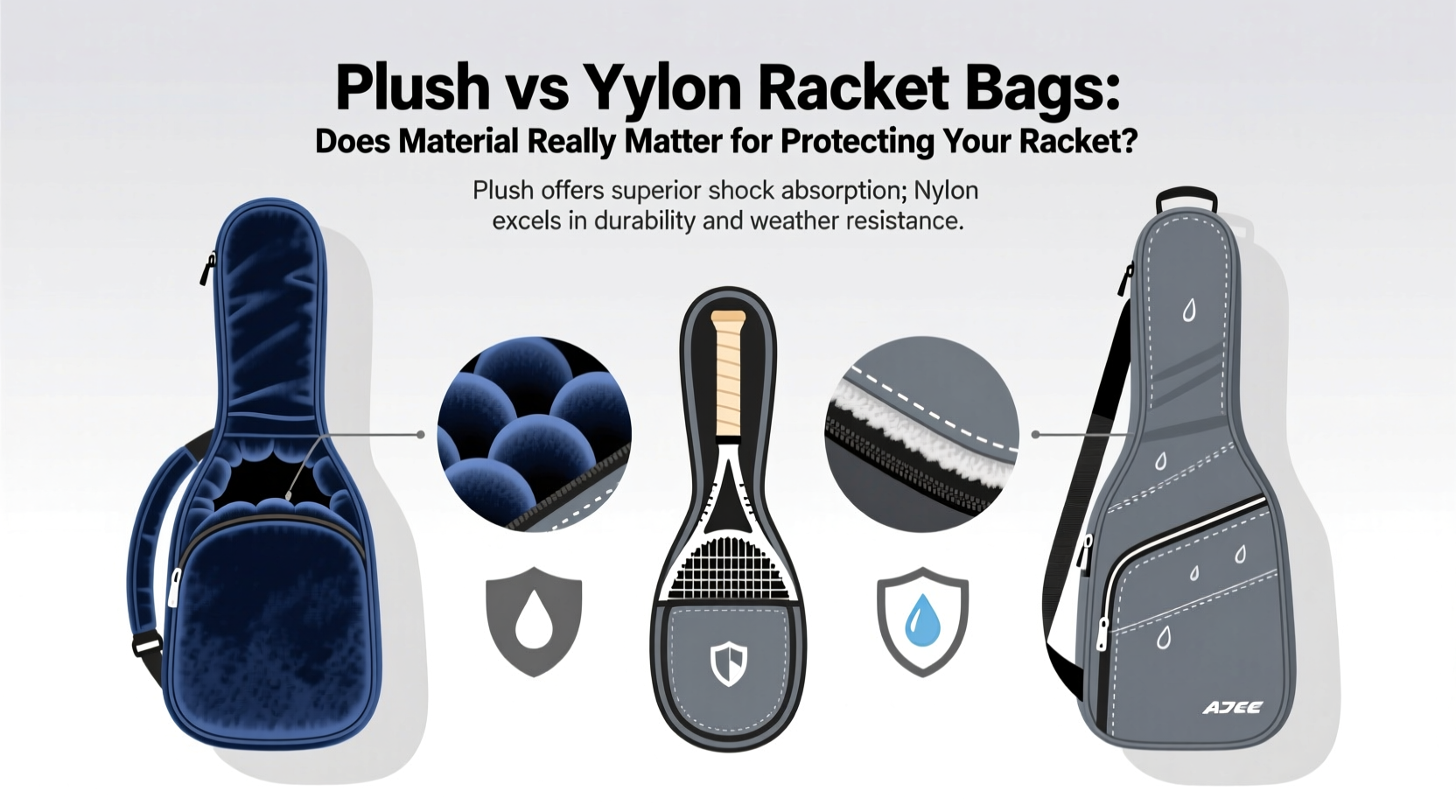
Before comparing their protective capabilities, it's essential to understand what each material offers at a structural level.
Plush refers to a soft, padded interior lining commonly found in racket compartments. It’s not usually the outer shell but rather a cushioned layer designed to absorb minor impacts and prevent scratches. Most plush-lined bags use polyester microfiber that feels velvety and gentle against racket finishes.
Nylon, on the other hand, is typically used for the exterior shell of racket bags. High-denier nylon (such as 600D or 1000D) is known for its strength, water resistance, and abrasion tolerance. It forms the first line of defense against drops, scrapes, and weather exposure.
In practice, many premium racket bags combine both: a durable nylon exterior with plush-lined main compartments. However, budget models may skimp on padding or use thinner fabrics, leading to compromised protection.
Protection Performance: Impact Absorption and Scratch Resistance
The primary function of any racket bag is to protect your investment. Rackets are precision instruments—exposed to stress from temperature shifts, moisture, and physical knocks. Here’s how plush and nylon contribute differently:
- Plush interiors excel at minimizing micro-scratches and reducing vibration during transport. The soft fabric prevents rackets from clattering against each other or the bag walls, which can degrade paint finishes over time.
- Nylon exteriors handle external threats like rain, rough handling by airlines, or being tossed into car trunks. A thick nylon shell resists tears and punctures far better than softer materials.
However, plush alone doesn’t provide meaningful shock absorption unless paired with foam padding. Some manufacturers label thin fleece linings as “plush protection,” but without underlying EVA foam or similar cushioning, they offer little real defense against drops.
Nylon’s rigidity also allows for structured bag designs that maintain shape, preventing compression damage when stacked under luggage or gym gear.
“While aesthetics matter, true protection lies in layered construction—durable outer fabric plus internal cushioning. One without the other leaves your racket vulnerable.” — David Lin, Sports Equipment Engineer at ProGear Labs
Material Comparison: Plush vs Nylon Features
| Feature | Plush (Interior) | Nylon (Exterior) |
|---|---|---|
| Scratch Protection | Excellent – soft surface prevents scuffing | Poor – abrasive if rackets contact directly |
| Impact Resistance | Fair (only with added foam padding) | Excellent – resists dents and punctures |
| Water Resistance | Poor – absorbs moisture easily | High – especially coated ripstop nylon |
| Durability | Moderate – wears faster with frequent use | Very High – withstands years of heavy use |
| Weight | Light | Light to Moderate (depends on denier) |
| Cleaning & Maintenance | Harder – traps dust and stains | Easier – wipes clean with damp cloth |
Real-World Scenario: Tournament Player vs Recreational User
Consider two players with different needs:
Alex, a competitive junior player, travels weekly for tournaments. His bag is checked on flights, thrown into equipment bins, and left outside courts in summer heat. He uses a 12-racket bag made with 1000D nylon and insulated, foam-padded compartments. Despite frequent rough handling, his rackets remain intact thanks to the rugged shell and internal structure.
Jamie, a recreational player, uses her racket twice a week at a local club. She values comfort and style, opting for a lightweight bag with plush lining but minimal outer reinforcement. After six months, she notices fraying at the corners and a small tear from catching the bag on a door. While her rackets are scratch-free, the bag itself shows wear much sooner.
This contrast illustrates that while plush contributes to delicate care, long-term protection hinges on robust external materials and overall build quality—not just soft interiors.
Choosing the Right Bag: A Practical Checklist
When evaluating racket bags, don’t be swayed solely by plush interiors or sleek designs. Use this checklist to ensure optimal protection:
- ✅ Look for dual-layer construction: durable nylon exterior + padded plush interior
- ✅ Check for reinforced stitching at stress points (handles, zippers, seams)
- ✅ Ensure compartment padding includes foam, not just fabric
- ✅ Verify water-resistant coating or rain cover inclusion
- ✅ Assess size and fit—overstuffing reduces effective cushioning
- ✅ Consider thermal insulation if playing in extreme climates
- ✅ Prioritize brand reputation and user reviews focused on longevity
Common Misconceptions About Racket Bag Materials
Several myths persist about what makes a racket bag protective:
- Myth: “More plush means better protection.” Reality: Soft lining prevents scratches but does nothing against drops unless backed by foam.
- Myth: “Nylon bags are too harsh for rackets.” Reality: As long as rackets are stored in padded, separated compartments, the outer material has no direct contact.
- Myth: “All ‘premium’ bags offer equal protection.” Reality: Marketing terms like “luxury feel” often emphasize texture over structural integrity.
FAQ: Plush vs Nylon Racket Bags
Can I use a plush-only bag for air travel?
Not recommended. Plush lacks structural support and puncture resistance. Airline baggage handling is rough—opt for a nylon-shell bag with reinforced corners and extra padding.
Do plush linings trap moisture and damage rackets?
Possibly. If you store a damp racket in a non-breathable plush compartment, moisture can linger and lead to grip degradation or frame corrosion over time. Always dry your racket before storage, regardless of bag type.
Is nylon harder to clean than plush?
No—nylon is generally easier to maintain. Spills and dirt can be wiped off with a damp cloth. Plush tends to hold onto dust and stains, requiring spot cleaning or specialized fabric cleaners.
Final Thoughts: Material Matters—But So Does Design
The debate between plush and nylon isn’t about choosing one over the other—it’s about recognizing their complementary roles. Plush protects against cosmetic damage; nylon defends against environmental and mechanical stress. The best protection comes from intelligent design: a rugged, weather-resistant nylon shell combined with thoughtfully padded, plush-lined compartments.
Your racket is an extension of your game. Choosing a bag based solely on appearance or softness risks compromising its lifespan. Invest in a model that balances both materials wisely, tailored to how—and where—you play.




 浙公网安备
33010002000092号
浙公网安备
33010002000092号 浙B2-20120091-4
Comments
No comments yet. Why don't you start the discussion?