
Collecting toys is no longer just a childhood pastime—it has evolved into a serious hobby with real financial implications. Whether you're drawn to the soft charm of plushies or the dynamic poses of action figures, one question remains central: which type of collectible holds its value better over time? The answer isn't straightforward, as it depends on factors like material quality, brand reputation, rarity, cultural relevance, and market demand. This article dives deep into both categories, comparing their long-term investment potential and offering practical guidance for collectors aiming to build valuable collections.
Rarity and Production Limits: What Drives Value?
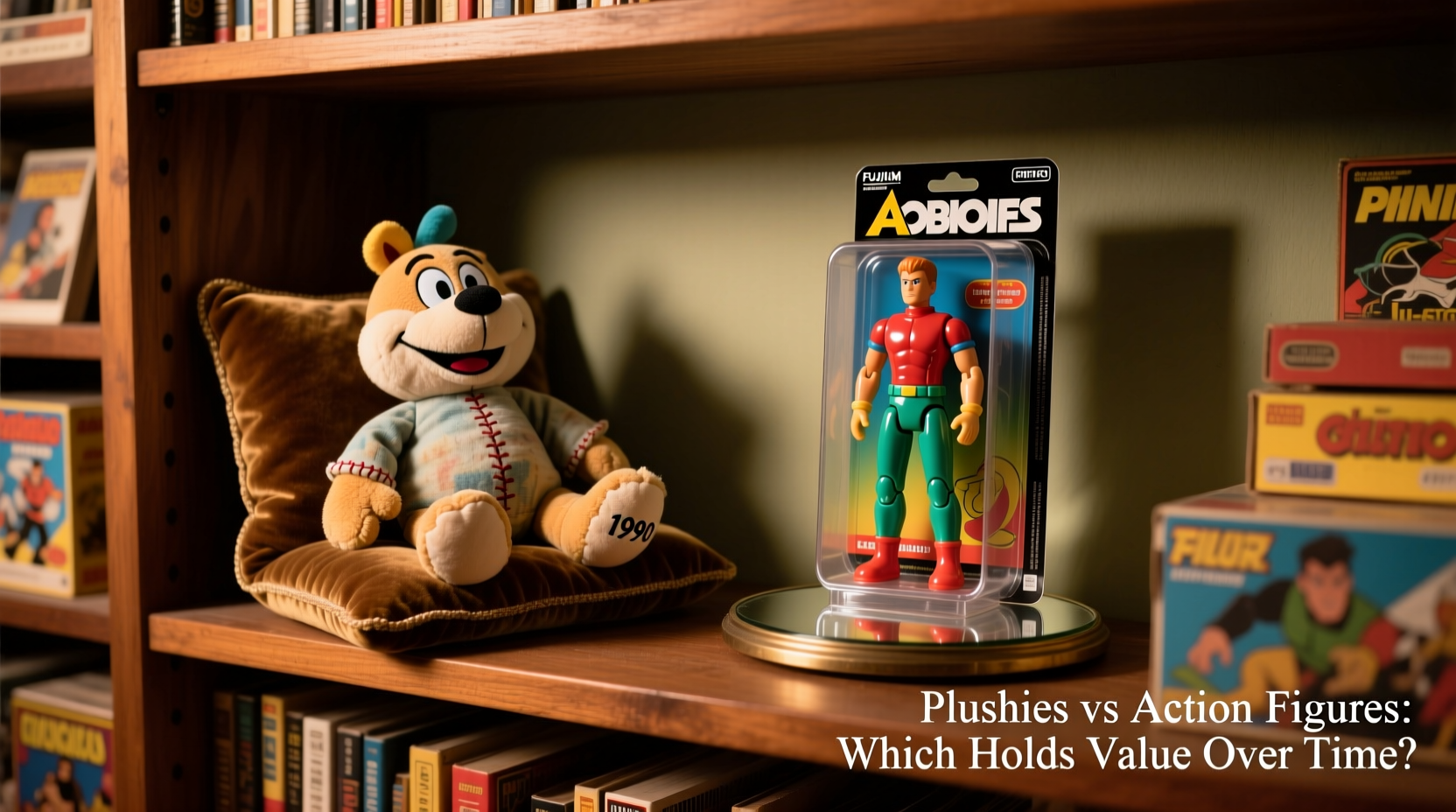
At the core of any collectible’s worth lies scarcity. Limited production runs, exclusive releases, and discontinued models are what transform ordinary toys into sought-after items. Both plushies and action figures benefit from these dynamics, but they operate differently due to manufacturing complexity and target demographics.
Action figures often have more structured release strategies. Major companies like Hasbro, Mattel, and NECA frequently produce limited editions tied to anniversaries, conventions (e.g., San Diego Comic-Con exclusives), or collaborations with artists. These figures may come with certificates of authenticity, numbered packaging, and strict production caps—sometimes as low as 500 units worldwide. Such constraints create immediate scarcity, driving up resale prices within months.
Plushies, especially designer or artist-made variants, also rely heavily on limited availability. Independent creators on platforms like Etsy or at pop-up markets often release “drops” with only a few hundred pieces available. Japanese brands such as Squishmallows occasionally issue seasonal or regional exclusives that sell out instantly. However, mainstream plush lines are typically mass-produced, making them less likely to appreciate unless they become culturally iconic.
Material Durability and Longevity
Physical condition plays a crucial role in determining resale value. Over time, wear and tear can significantly reduce an item's desirability—especially if it’s displayed without protection.
Action figures are generally made from durable plastics like ABS and PVC, with metal components in higher-end models. When kept in original packaging (commonly referred to as MIB – Mint In Box), they resist dust, sunlight damage, and handling wear far better than fabric-based items. Sealed blister cards act as protective enclosures, preserving both figure and accessories for decades.
In contrast, plushies are vulnerable to environmental factors. Their fabric exteriors can fade under UV light, develop stains, or lose shape through frequent hugging or improper storage. Even high-quality stuffing may flatten over time. While some premium plush lines use colorfast materials and reinforced stitching, most remain prone to deterioration unless stored carefully in climate-controlled environments.
“Condition is king in collectibles. A mint-in-box action figure from the '80s can fetch thousands, while a well-loved plush—even if rare—often struggles to reach triple digits.” — Daniel Reeves, Toy Appraiser & Collector’s Market Analyst
Market Demand and Cultural Relevance
Demand shapes value more than any other factor. A rare item means little if there’s no audience willing to pay a premium for it. Here, action figures historically outperform plushies due to stronger ties with established franchises and collector communities.
Characters from major intellectual properties—Star Wars, Marvel, DC Comics, G.I. Joe—are deeply embedded in pop culture. Their associated action figures enjoy sustained interest across generations. For example, a sealed 1978 Kenner Star Wars Boba Fett prototype sold for over $200,000 in 2022. Similarly, vintage Transformers and Power Rangers figures regularly command four- to five-figure sums at auction.
Plushies, while emotionally resonant, rarely achieve the same level of franchise-driven demand. Exceptions exist—such as the Be@rbrick line by Medicom Toy or rare Disney Store exclusives—but these are outliers. Most plush collecting leans toward nostalgia or aesthetic appeal rather than narrative attachment. That said, recent trends suggest growing interest in kawaii-style plushes, particularly among younger collectors and social media influencers.
| Factor | Action Figures | Plushies |
|---|---|---|
| Average Resale Appreciation (5+ years) | High (30–300%) | Low to Moderate (10–75%) |
| Primary Buyer Demographic | Adult collectors (25–55) | Teens & young adults (13–30) |
| Storage Sensitivity | Moderate (light/heat sensitive) | High (fabric degrades easily) |
| Tie-ins with Major Franchises | Extensive | Limited |
| Secondary Market Liquidity | Strong (eBay, Heritage Auctions) | Niche (Etsy, Mercari) |
Investment Strategy: Building a Value-Focused Collection
If your goal is long-term appreciation, strategy matters more than personal preference. Blindly buying what you love may result in emotional satisfaction—but not necessarily financial return. Consider this step-by-step approach to curating a collection with staying power.
- Define Your Niche: Choose a focused theme—e.g., vintage Star Wars figures, anime-exclusive plush drops, or Studio Ghibli merchandise. Specialization increases expertise and helps identify undervalued pieces.
- Prioritize Packaging: For action figures, never remove them from the box unless intended for display in a sealed case. For plushies, keep tags intact and store in ziplock bags inside display cases.
- Track Release Cycles: Subscribe to manufacturer newsletters, follow official social accounts, and join collector forums to anticipate limited releases.
- Authenticate Before Buying: Use services like JSA (James Spence Authentication) for high-value figures. Verify batch numbers and holograms where applicable.
- Document Everything: Keep receipts, photos, and provenance records. This adds credibility and can boost resale value.
Real-World Example: The Rise of a Cult Plush Line
In 2019, a small Japanese company released a limited run of 300 hand-stitched Onigiri-themed plushies as part of a food-art collaboration. Each came with a numbered tag and was sold only at a Tokyo art fair. Initially priced at ¥3,500 (~$32), they gained traction on Instagram after being featured by several lifestyle influencers.
By 2023, unopened units began appearing on Yahoo Japan Auctions with bids exceeding ¥80,000 ($550). One complete set of all three variants (rice ball, seaweed wrap, pickled plum center) sold privately for over $1,200. While this success story demonstrates that plushies *can* appreciate, it also highlights the exceptional conditions required: extreme scarcity, artistic credibility, and viral visibility.
Compare this to the 1984 Megazord action figure from the original ThunderCats series. Though produced in larger quantities, its status as a flagship character and connection to a beloved franchise ensured steady demand. Today, a sealed MIB unit routinely sells for $400–$600—a more predictable, stable return.
Expert Insights on Market Trends
Industry professionals emphasize that while both categories have growth potential, action figures offer more reliable investment pathways.
“The action figure market has matured over 40 years. We have clear pricing guides, grading standards, and historical data. Plush collecting lacks that infrastructure. It’s exciting, but speculative.” — Maria Lin, Editor at Collectors Quarterly
Grading systems like those used by Professional Sports Authenticator (PSA) now extend to toys, allowing third-party evaluation of condition. Action figures can be slabbed (encapsulated in protective cases) with grades from 1 to 10, directly influencing auction outcomes. No equivalent system exists for plushies, leaving valuation subjective and inconsistent.
Checklist: How to Maximize Collectible Value
- ✅ Buy limited editions only
- ✅ Keep items in original packaging with all accessories
- ✅ Store in a cool, dry place away from direct sunlight
- ✅ Use acid-free tissue paper for plush stuffing support
- ✅ Join online communities to monitor price trends
- ✅ Avoid cleaning methods that alter surface texture
- ✅ Insure high-value collections above $1,000
- ✅ Document purchases and condition changes annually
Frequently Asked Questions
Do new plushies ever become valuable?
Yes, but only under specific conditions: limited production, strong branding, cultural moment relevance (e.g., viral TikTok trend), and excellent preservation. Most modern plushies depreciate quickly after release.
Are vintage action figures always worth more?
Not necessarily. Age alone doesn’t guarantee value. The figure must be desirable (popular character), rare (low production), and in excellent condition. Common 1980s figures in poor condition may be worth less than $10.
Can I display my collection without losing value?
You can, but it comes at a cost. Opened or loose figures/plushies lose significant resale value compared to sealed ones. If displaying, use shadow boxes with UV-filtering glass and rotate items periodically to minimize exposure.
Conclusion: Making Informed Choices for Lasting Value
The debate between plushies and action figures ultimately hinges on intent. If you're collecting for joy, comfort, or aesthetic pleasure, plushies offer unmatched warmth and personality. But if your aim is long-term value retention—or even profit—action figures present a more consistent track record.
They benefit from stronger ties to enduring franchises, superior durability, established secondary markets, and formalized grading systems. Plushies, while capable of surprising gains, remain niche investments dependent on fleeting trends and emotional appeal.
That said, the future isn’t entirely one-sided. As designer toy culture expands and digital influence amplifies niche products, plushies may gain institutional recognition. Until then, collectors seeking stability should lean toward action figures—while still appreciating the unique charm of soft companions.




 浙公网安备
33010002000092号
浙公网安备
33010002000092号 浙B2-20120091-4
Comments
No comments yet. Why don't you start the discussion?