
Poedagar has built a reputation for delivering affordable, stylish timepieces that blend minimalist Scandinavian design with functional precision. As their popularity grows, so do questions about specific features—particularly those found on their analog models with calendar complications. One of the most common inquiries: what’s the actual difference between the “date” and “day” display on a Poedagar watch? And more importantly, is the added day indicator worth choosing over a simpler date-only model?
Understanding these small but meaningful details can significantly impact your daily experience with the watch. Whether you're using it as a fashion statement, a tool for productivity, or both, knowing how each feature works—and how often you’ll actually use it—can guide a smarter purchase decision.
The Mechanics of Date vs. Day Displays
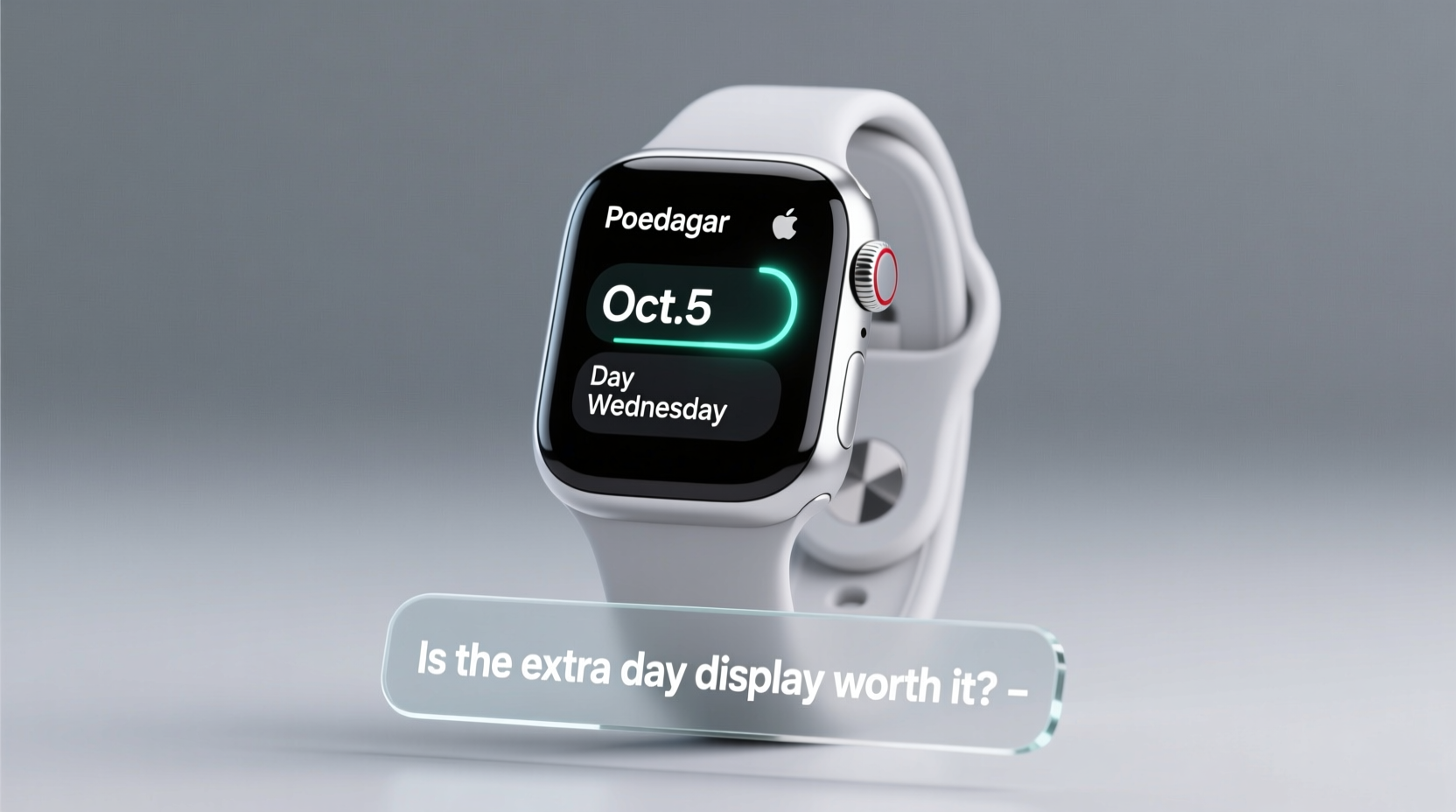
In horology, the term “date” refers to the numerical representation of the day of the month (e.g., 1 through 31), typically shown in a small window at the 3 o’clock or 6 o’clock position on the dial. The “day,” on the other hand, indicates the current weekday (Monday, Tuesday, etc.), and is usually displayed in a separate aperture adjacent to or below the date window.
On Poedagar watches that include both functions—such as certain models in the Stockholm or Gothenburg series—the day and date operate independently but are driven by the same movement. These are typically quartz-powered watches using reliable Japanese movements like the Miyota 2035 or equivalent, which support dual calendar displays without sacrificing accuracy.
The key distinction lies in utility:
- Date: Highly practical for tracking appointments, bill due dates, travel schedules, and general time management.
- Day: More contextual. Useful if your weekly routine varies significantly by weekday (e.g., gym days, meetings, classes), but redundant if your schedule is consistent or managed digitally.
Is the Extra Day Display Worth It? A Practical Evaluation
Adding a day display increases complexity in both design and function. While it may seem like a minor addition, it affects readability, dial balance, and even long-term usability.
Consider this: a date-only dial tends to be cleaner, with fewer interruptions to the overall visual flow. The number stands alone, easy to read at a glance. In contrast, a dual-display layout splits attention. Depending on font size and placement, the text for the day (often abbreviated as MON, TUE, etc.) can appear cramped, especially on smaller 36mm cases typical of Poedagar’s lineup.
Moreover, setting a dual calendar requires more steps. You must adjust both the day and date manually, often advancing the hands through 24-hour cycles to reach the correct weekday. This becomes tedious when traveling across time zones or after battery replacements.
“While dual calendar functions add technical charm, they don’t always enhance real-world usability—especially in minimalist designs where clarity reigns supreme.” — Lars Bengtsson, Watch Design Consultant, Nordic Time Institute
Comparison: Date-Only vs. Day+Date Models
| Feature | Date-Only Model | Day + Date Model |
|---|---|---|
| Dial Clarity | Clean, uncluttered | Slightly busier; two apertures |
| Readability | Excellent; instant recognition | Good, but requires focus on two points |
| Setting Complexity | Simple: one-turn adjustment | More involved: cycle through days if needed |
| Aesthetic Balance | Highly symmetrical, minimalist | Functional but less minimal |
| Use Case Fit | Broad appeal; ideal for professionals and casual wearers | Niche benefit for weekday-dependent routines |
Real-World Example: Emma’s Commute Routine
Emma, a project manager in Malmö, owns two Poedagar watches: a black-dialed date-only model and a navy version with day+date. She wears the former during workweeks because her phone handles all scheduling. She finds the clean face pairs better with business attire and reduces visual noise during back-to-back meetings.
On weekends, she switches to the day+date model while hiking or visiting family. Here, knowing the day at a glance helps her coordinate group activities without pulling out her phone. “It feels more intentional,” she says. “Like I’m present, not distracted.”
Her experience reflects a broader pattern: the day display shines in low-tech or socially engaged environments but adds little in digitally saturated ones.
Step-by-Step: Choosing the Right Model for Your Lifestyle
- Assess your daily routine. Do you follow a fixed schedule, or does your activity change drastically by day? If Mondays are meetings and Fridays are remote, the day display might help reinforce structure.
- Evaluate your tech dependence. If you check your phone frequently, the day window likely duplicates existing information.
- Consider aesthetics. Try viewing both styles online or in person. Does the dual aperture disrupt the watch’s symmetry? Minimalist fans often prefer the elegance of simplicity.
- Think about longevity. Will you still want the day function in five years? Trends shift, but core preferences for clarity and ease remain.
- Test readability. In low light or quick glances, can you instantly see the date? If the day window draws attention away, it may hinder rather than help.
Checklist: Is a Day+Date Poedagar Right for You?
- ☐ I often need to confirm the weekday without my phone
- ☐ My social or work calendar changes significantly by day
- ☐ I appreciate technical detail in minimalist design
- ☐ I’m willing to spend extra time setting the watch after maintenance
- ☐ The slightly busier dial doesn’t bother me visually
Frequently Asked Questions
Can I set the day and date independently on a Poedagar watch?
Yes, most Poedagar models with dual calendar functions allow independent adjustment. Pull the crown to the first position to set the date, and to the second (fully pulled) position to set the time and cycle through the days. Be careful not to adjust the date between 9 PM and 3 AM, as this can damage the mechanism.
Do all Poedagar watches have a day display?
No. Only select models include both day and date. Many of their bestsellers, including the classic Lund and Uppsala editions, feature date-only displays or no calendar at all, emphasizing pure minimalism.
Does the day display affect battery life?
Not significantly. The additional text window is passive—it doesn’t require extra power. Battery life remains around 2–3 years, typical for quartz watches with standard movements.
Final Thoughts: Simplicity Often Wins
At its core, Poedagar’s appeal lies in thoughtful reduction—removing everything non-essential to highlight what matters. In that spirit, the date function serves a clear, universal purpose. The day display, while technically impressive, edges closer to ornamentation than necessity for most users.
If your life runs on routines tracked elsewhere, the date-only model delivers superior elegance and usability. But if you value tactile awareness of the weekday—whether for personal rituals, teaching schedules, or digital detoxing—the dual display offers a subtle but meaningful connection to time’s rhythm.
The true test isn’t what the watch can do, but what it helps you do better. For many, that answer leans toward simplicity.




 浙公网安备
33010002000092号
浙公网安备
33010002000092号 浙B2-20120091-4
Comments
No comments yet. Why don't you start the discussion?