
When choosing sunglasses, many people assume that darker lenses or sleek designs automatically mean better eye protection. However, the real measure of safety lies in how well a pair shields your eyes from ultraviolet (UV) radiation and visual stressors like glare. A common point of confusion is the difference between polarized and non-polarized sunglasses—particularly whether one offers superior protection. The answer isn't as straightforward as it seems. While polarization significantly improves visual comfort, it doesn’t inherently increase UV protection. Understanding the distinct roles of lens technology and UV filtering is essential for making an informed decision that safeguards your long-term eye health.
Understanding UV Radiation and Eye Damage
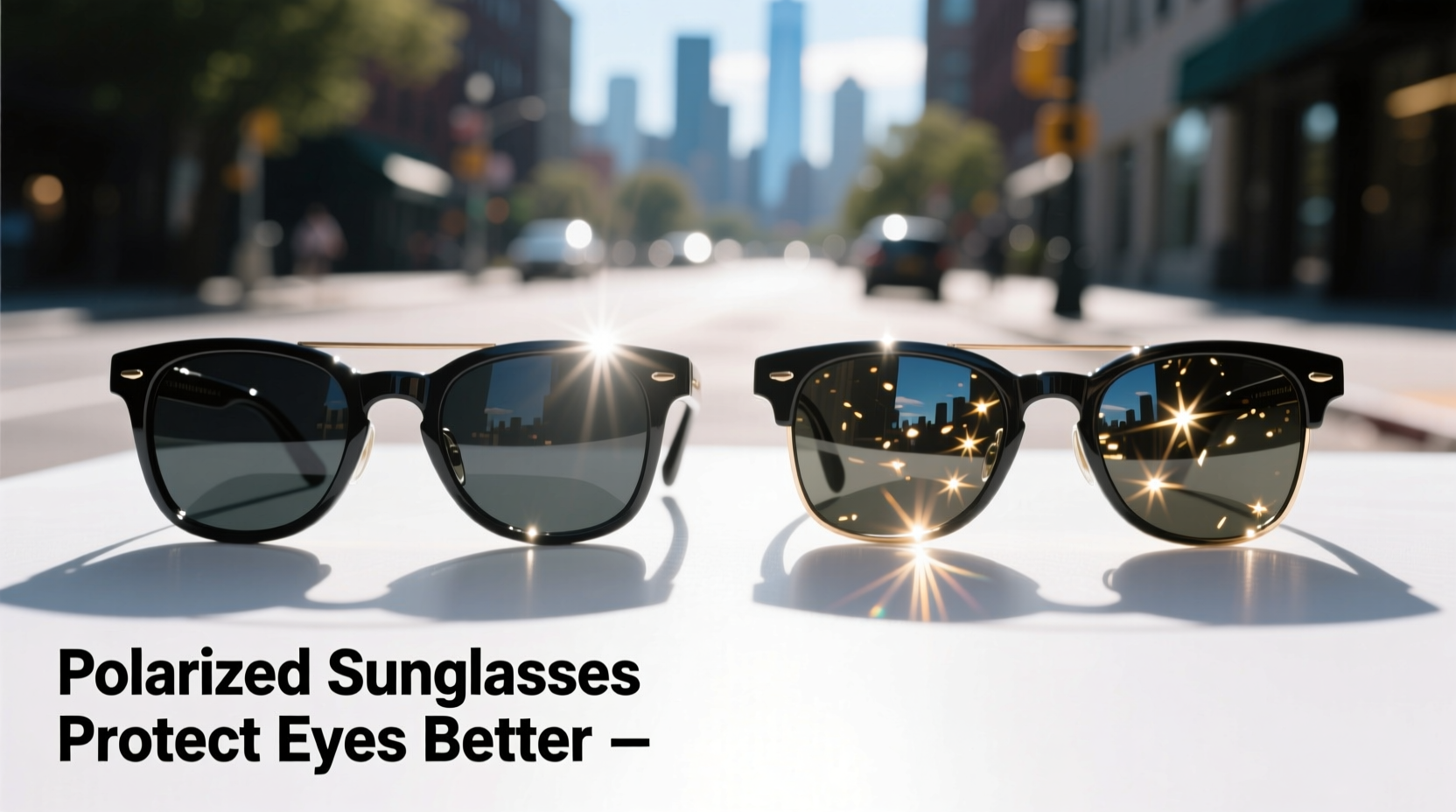
Before comparing polarized and non-polarized lenses, it’s crucial to recognize what actually harms your eyes. Ultraviolet (UV) radiation from the sun comes in two primary forms relevant to eye health: UVA and UVB. Prolonged exposure to these rays increases the risk of cataracts, macular degeneration, photokeratitis (sunburn of the cornea), and even cancers of the eyelid.
The American Academy of Ophthalmology emphasizes that UV damage is cumulative. This means every unprotected minute spent outdoors adds up over time, increasing the likelihood of vision problems later in life. Children and individuals with light-colored eyes are especially vulnerable due to lower natural pigment protection.
Effective sunglasses must block 99–100% of both UVA and UVB rays, typically labeled as “UV400” protection, meaning they filter wavelengths up to 400 nanometers—the full spectrum of harmful UV light. This standard is independent of lens color, darkness, or polarization. A clear lens can offer full UV protection; conversely, dark tinted lenses without UV filters can be more dangerous, as they cause pupils to dilate and allow more unfiltered UV light into the eye.
“UV protection is non-negotiable. Polarization is a comfort feature. Never confuse the two when buying sunglasses.” — Dr. Lena Reyes, Optometrist and Vision Health Specialist
What Are Polarized Lenses? How Do They Work?
Polarized lenses contain a special chemical filter applied in a vertical alignment during manufacturing. This filter blocks intense reflected light that bounces off flat, horizontal surfaces such as water, snow, sand, and paved roads. This reflected light becomes horizontally polarized, creating harsh glare that reduces visibility and causes eye strain.
By filtering out this horizontal glare, polarized lenses enhance contrast, clarity, and visual comfort. They are particularly beneficial for activities like driving, fishing, skiing, or spending time near lakes and oceans. Drivers report improved depth perception and reduced fatigue on sunny days, while anglers appreciate the ability to see beneath the water’s surface.
However, polarization does not block UV radiation by default. It is a separate optical enhancement. Many high-quality polarized sunglasses do include UV400 protection, but this must be explicitly stated. Consumers should never assume polarization equals UV defense.
Non-Polarized Sunglasses: Simpler But Still Effective
Non-polarized sunglasses rely solely on tinting and UV-absorbing materials to reduce brightness and block harmful rays. While they don’t eliminate glare in the same way polarized lenses do, they can still provide excellent UV protection if properly manufactured.
These lenses are often preferred in certain scenarios. For example, pilots avoid polarized glasses because they can interfere with the readability of LCD screens in cockpits. Similarly, skiers may find that polarized lenses make it harder to detect icy patches on slopes, as they suppress reflective cues that indicate slick conditions.
Another advantage of non-polarized sunglasses is cost. Without the added layer of polarization technology, they are generally less expensive, making them accessible for everyday use or backup pairs. However, low price shouldn’t come at the expense of UV protection. Inexpensive non-polarized sunglasses that lack proper UV filtering are among the most dangerous options, as their dark tint encourages pupil dilation while allowing unfiltered UV rays to enter.
Comparative Analysis: Key Differences and Benefits
| Feature | Polarized Sunglasses | Non-Polarized Sunglasses |
|---|---|---|
| Glare Reduction | Excellent – blocks horizontal glare from reflective surfaces | Limited – only reduces overall brightness |
| UV Protection | Only if specifically designed with UV400 coating | Available, but must be verified per product |
| Visual Clarity | Enhanced contrast and depth perception | Moderate improvement; depends on tint quality |
| Cost | Generally higher due to specialized lens technology | Typically more affordable |
| Best Use Cases | Driving, boating, fishing, beach outings | General outdoor wear, urban environments, aviation |
| Screen Compatibility | May reduce visibility of digital screens (e.g., phones, dashboards) | No interference with LCD or LED displays |
The table illustrates that while polarized lenses excel in reducing discomfort from glare, they are not inherently safer. Both types require proper UV filtering to protect ocular tissues. Choosing between them should depend on lifestyle, environment, and specific visual demands—not just aesthetics or marketing claims.
Real-World Example: Marina’s Driving Experience
Marina, a daily commuter in Arizona, struggled with blinding glare on her morning drive to work. The sun reflecting off car hoods and wet pavement made it difficult to see traffic signals clearly. She purchased a pair of stylish non-polarized sunglasses thinking the dark lenses would help. Instead, her eyes fatigued quickly, and she found herself squinting through the reflections.
After consulting her optometrist, she switched to polarized sunglasses with UV400 protection. Immediately, the road appeared clearer. The harsh white glare was gone, and she could distinguish brake lights and lane markings more easily. More importantly, her eye strain decreased significantly over time. Her doctor noted that while her previous sunglasses looked protective, they lacked certified UV blocking, putting her at risk for early lens deterioration.
This case underscores a key point: functional benefits matter more than appearance. Polarization improved Marina’s visual comfort, but the UV400 rating ensured her eyes were truly protected.
How to Choose the Right Sunglasses for Maximum Eye Protection
Selecting sunglasses that genuinely protect your eyes requires attention to detail and awareness of misleading marketing tactics. Follow this step-by-step guide to make a safe, informed choice:
- Verify UV Protection First: Look for labels stating “100% UV protection” or “UV400.” If this information isn’t available, assume the lenses do not protect your eyes adequately.
- Determine Your Environment: If you spend time near water, snow, or drive frequently, polarized lenses will reduce glare and improve safety. For general city use or screen-heavy tasks, non-polarized may suffice.
- Avoid Overly Dark Lenses Without UV Filters: Extra-dark tints without UV protection are worse than wearing no sunglasses at all, as they cause pupil dilation and increase UV exposure.
- Check Lens Quality: Distorted vision or inconsistent coloring indicates poor manufacturing. High-quality lenses should provide clear, undistorted optics across the entire field of view.
- Consider Fit and Coverage: Wraparound styles prevent peripheral UV exposure. Large frames or close-fitting designs minimize light entering from the sides.
- Consult an Eye Care Professional: Ask your optometrist for recommendations tailored to your prescription needs, lifestyle, and sensitivity to light.
Sunglass Selection Checklist
- ✅ Labels confirm 100% UVA/UVB or UV400 protection
- ✅ Appropriate for intended activity (e.g., driving, sports, casual wear)
- ✅ Comfortable fit with minimal light leakage from sides/top
- ✅ No visual distortion when scanning side-to-side
- ✅ Polarization confirmed (if desired) via reflection test (see below)
- ✅ Durable frame material suitable for frequent use
To test polarization at home, hold the sunglasses in front of an LCD screen (like a smartphone or laptop). Rotate the lenses 60–90 degrees. If they’re polarized, the screen will appear significantly darker or blacken at certain angles. Non-polarized lenses won’t produce this effect.
Frequently Asked Questions
Do polarized sunglasses protect against UV rays?
Not necessarily. Polarization and UV protection are separate features. A lens can be polarized without UV filtering, and vice versa. Always ensure your sunglasses are labeled as providing 100% UV protection, regardless of polarization.
Are non-polarized sunglasses bad for your eyes?
No—if they have proper UV protection. Non-polarized sunglasses are perfectly safe and effective for blocking UV rays. The main drawback is increased glare in bright, reflective environments, which can lead to temporary eye strain but not long-term damage.
Can I wear polarized sunglasses every day?
Yes, provided they offer full UV protection. Daily wear is encouraged in sunny climates or high-glare settings. However, some users report difficulty viewing touchscreens or instrument panels, so consider keeping a non-polarized pair for situations involving digital displays.
Conclusion: Prioritize Protection, Then Enhance Comfort
When it comes to protecting your eyes, UV defense is the foundation. Neither polarized nor non-polarized lenses are inherently superior in shielding against harmful radiation—it’s the presence of UV400 filtering that matters most. Polarization is a valuable upgrade for visual comfort and clarity, especially in high-glare environments, but it should never be mistaken for built-in sun protection.
The best approach is to select sunglasses that combine 100% UV protection with features suited to your lifestyle. Whether you choose polarized or non-polarized, always verify the technical specifications rather than relying on price, brand, or lens darkness. Your eyes are exposed to sunlight year-round, even on cloudy days, so consistent, informed protection is critical.




 浙公网安备
33010002000092号
浙公网安备
33010002000092号 浙B2-20120091-4
Comments
No comments yet. Why don't you start the discussion?