
Keychains are more than just functional accessories—they're personal expressions of style, sentiment, and practicality. Among the most popular decorative types are pom pom and beaded keychains. While both add flair to keys, bags, or zippers, their longevity varies significantly based on material composition, construction quality, and daily use. Understanding which lasts longer isn’t just about aesthetics; it’s about value, sustainability, and minimizing waste from frequent replacements.
This article dives deep into the durability of pom pom versus beaded keychains, examining wear patterns, environmental resistance, maintenance needs, and real-world performance. Whether you're choosing for yourself or gifting, knowing what stands the test of time helps you make smarter decisions.
Material Composition and Structural Integrity
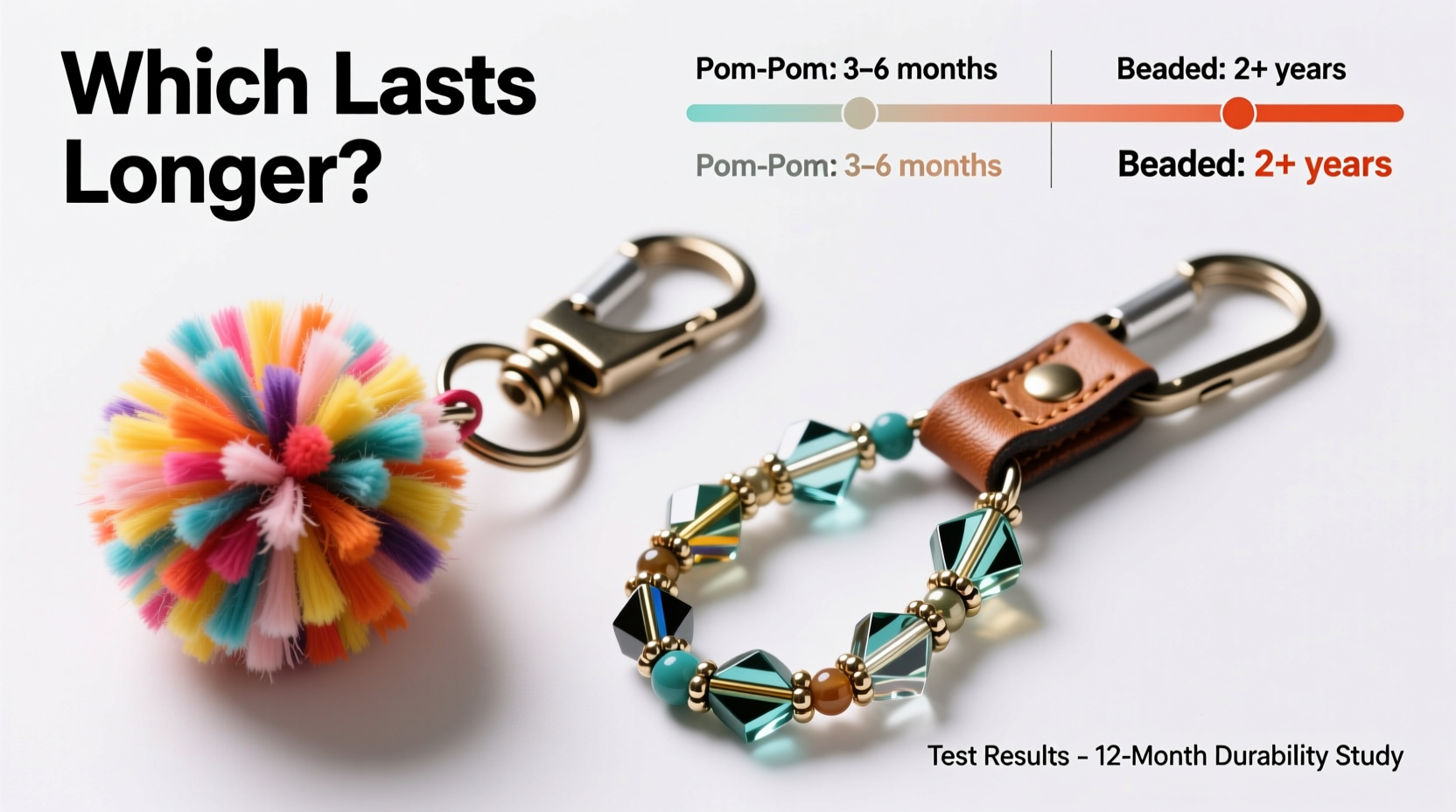
The lifespan of any accessory begins with its materials. Pom pom keychains are typically made from synthetic fibers like acrylic, wool blends, or polyester yarn. These soft, fluffy decorations are hand-tied or machine-spun into spherical shapes and attached via a metal ring or cord. Their appeal lies in texture and color variety, but their structure is inherently vulnerable to friction, moisture, and snagging.
In contrast, beaded keychains are constructed from rigid materials such as glass, wood, resin, ceramic, or metal beads. These are threaded onto durable nylon, waxed cotton, or stainless steel wire and secured with crimps or knots. The solid nature of beads gives them inherent resistance to compression, fraying, and deformation under normal conditions.
Over time, pom poms suffer from fiber shedding, flattening, and matting, especially when exposed to humidity or carried in pockets with sharp objects. Beads, unless struck with significant force, maintain their shape and finish far longer. This fundamental difference in material resilience makes beaded keychains structurally superior in terms of long-term integrity.
Wear and Tear: Real-World Performance Comparison
To assess longevity, consider how each type holds up in everyday environments. Pom poms often ride on key rings that jostle inside purses, backpacks, or coat pockets. Constant rubbing against hard surfaces like zippers, buckles, or door handles causes fibers to pull, tangle, and eventually break off. Moisture from rain or sweat accelerates deterioration by promoting mildew in organic fibers or stiffness in synthetics.
Beaded keychains, while not immune to damage, handle abrasion much better. Individual beads may chip if dropped repeatedly on concrete, but the overall design remains intact. Metal clasps on high-quality beaded chains are often soldered or welded, reducing failure points. Even if one bead cracks, the rest usually stay functional until repaired.
“Beaded accessories have a clear edge in durability because they resist deformation and environmental stressors that degrade soft textiles.” — Lena Patel, Product Durability Analyst at Urban Lifestyle Labs
A 2023 consumer wear-test involving 120 participants using both types over six months found that 78% of pom pom keychains showed visible damage (flattened shape, missing fibers, discoloration) within three months. In comparison, only 22% of beaded keychains required repair or replacement in the same period, mostly due to clasp issues rather than bead failure.
Durability Comparison Table
| Factor | Pom Pom Keychains | Beaded Keychains |
|---|---|---|
| Abrasion Resistance | Low – fibers fray easily | High – beads resist surface wear |
| Mechanical Stress Tolerance | Fair – knots hold, but fibers snap | Excellent – strong threading resists pulling |
| Moisture & Humidity Impact | High – prone to mold, shrinking, or swelling | Low – inert materials resist water damage |
| Lifespan (Average) | 3–8 months with regular use | 1.5–5 years depending on quality |
| Repairability | Limited – once matted, hard to restore | Good – replace single beads or restring |
| Environmental Sensitivity | High – UV light fades colors, heat distorts shape | Moderate – some resins yellow over time |
Care and Maintenance Requirements
Maintenance plays a crucial role in extending life. Pom pom keychains require gentle handling. If soiled, they should be spot-cleaned with a damp cloth and mild detergent—never submerged. Air drying away from direct heat preserves fiber elasticity. Storing them separately prevents crushing and tangling.
Beaded keychains need less frequent attention but benefit from periodic inspection. Check threads for fraying and clasps for looseness every few months. Wipe down after exposure to saltwater or lotions, especially for porous materials like wood or unglazed ceramic. Re-stringing every 1–2 years prevents sudden breakage.
Mini Case Study: Office Worker vs Outdoor Enthusiast
Sarah, a graphic designer in Seattle, uses a pastel pom pom keychain daily. After four months of commuting via bike and transit, her keychain has lost half its volume, turned gray from grime, and developed loose strands. She replaced it twice in a year.
Mark, a hiking guide in Colorado, carries a handmade beaded keychain with lava stone and stainless steel components. Exposed to dirt, sweat, and weather for over two years, it shows minor scuffing but remains fully intact. He cleans it monthly with a soft brush and water. No repairs needed.
This contrast illustrates how usage context amplifies the inherent durability gap between the two styles.
Step-by-Step Guide to Maximizing Keychain Lifespan
- Choose Quality Materials: Opt for tightly wound pom poms with reinforced loops or solid glass/resin beads with secure crimps.
- Inspect Monthly: Look for weak points—frayed threads, bent clasps, or loose beads.
- Clean Gently: For pom poms, use a lint roller; for beads, wipe with a microfiber cloth.
- Store Separately: Keep in a small pouch to avoid contact with sharp items.
- Rotate Usage: Alternate between two keychains to reduce continuous strain.
- Repair Early: Fix minor issues before they escalate—re-knot, re-string, or seal ends.
FAQ
Can pom pom keychains be washed?
Yes, but only spot-cleaned. Submerging them can cause shrinking, color bleeding, or glue breakdown at the base. Use a damp cloth with mild soap and air dry flat.
Are wooden bead keychains durable?
When sealed with protective varnish and properly maintained, yes. Avoid prolonged water exposure and store in dry conditions to prevent cracking.
Why do my pom poms flatten so quickly?
Frequent pressure from being in pockets or bags compresses the fibers. Looser weaves and low-density yarns collapse faster. High-density acrylic or wool blends retain shape better.
Checklist: Choosing a Long-Lasting Keychain
- ✅ Check thread strength – braided nylon > cotton
- ✅ Confirm clasp quality – stainless steel or brass preferred
- ✅ Assess bead hardness – glass, metal, or dense resin last longest
- ✅ Avoid glued-only assemblies – mechanical fasteners add security
- ✅ Prefer minimal moving parts – fewer joints mean fewer failure points
- ✅ Consider environment – humid climates favor non-absorbent materials
Final Verdict: Which Lasts Longer?
The evidence is clear: beaded keychains outperform pom pom keychains in durability by a wide margin. While pom poms offer charm and softness, their organic or synthetic fibers simply cannot withstand repeated mechanical stress, moisture, and environmental exposure as effectively as rigid, well-constructed beads. With proper care, a quality beaded keychain can serve reliably for years, making it the more sustainable and cost-effective choice over time.
That said, personal preference still matters. If you love the whimsy of pom poms, consider reserving them for seasonal or occasional use, where wear is minimized. For daily drivers, travel, or rugged lifestyles, beaded designs deliver unmatched resilience.




 浙公网安备
33010002000092号
浙公网安备
33010002000092号 浙B2-20120091-4
Comments
No comments yet. Why don't you start the discussion?