
Productivity isn’t just about working harder—it’s about working smarter. Two of the most discussed approaches in modern performance circles are the Pomodoro Technique and the pursuit of flow state. One is a structured, time-based system; the other, an elusive mental zone where work feels effortless. But when it comes to getting meaningful work done, which method wins? The answer isn’t as simple as choosing one over the other. In reality, both have strengths and limitations, and their true power emerges when used strategically together.
The Pomodoro Technique: Discipline Through Structure
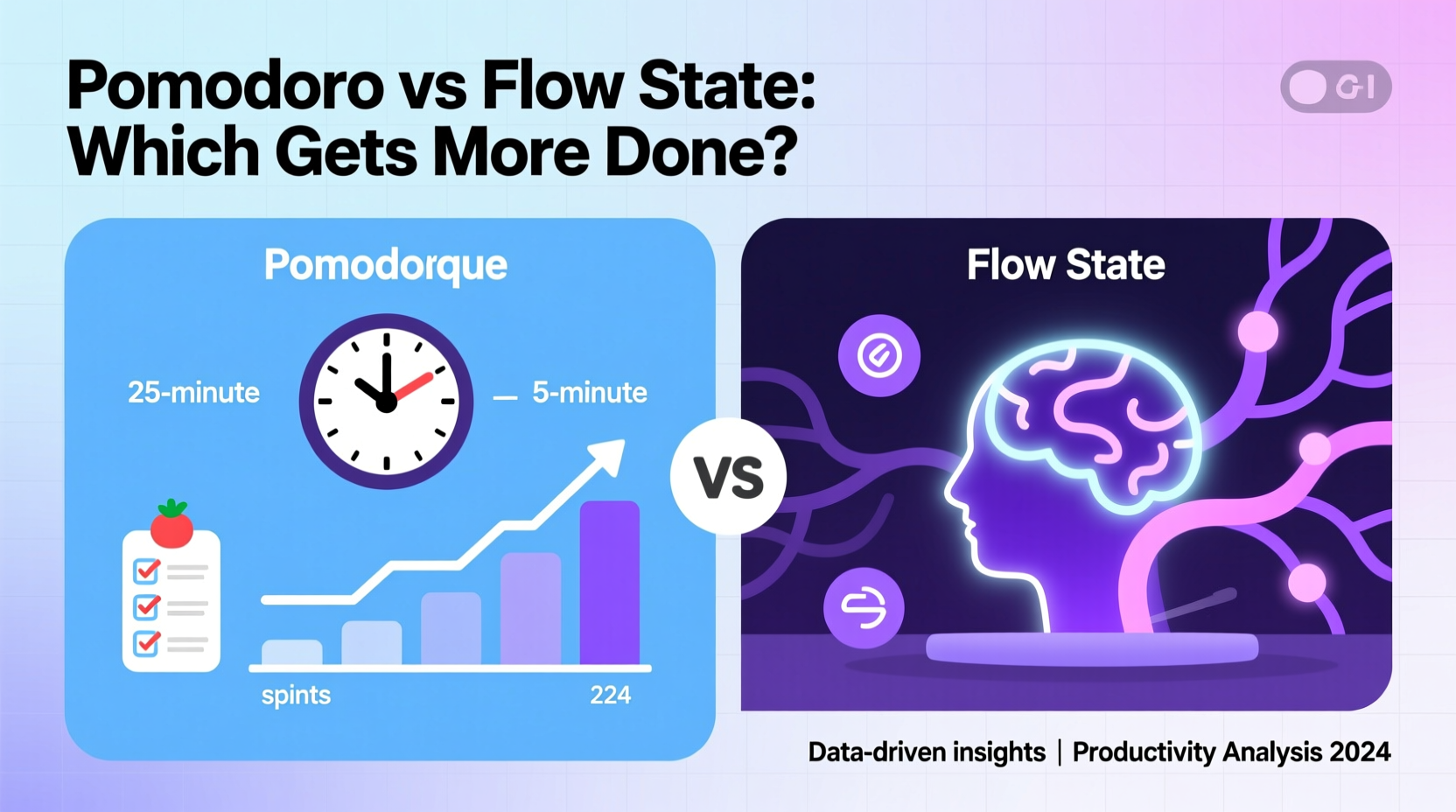
Developed by Francesco Cirillo in the late 1980s, the Pomodoro Technique breaks work into 25-minute intervals—called \"Pomodoros\"—separated by five-minute breaks. After four cycles, a longer break of 15–30 minutes resets the mind. At its core, this method combats procrastination by making focused work feel manageable and finite.
The psychological appeal lies in its simplicity. Knowing you only need to concentrate for 25 minutes lowers the barrier to starting. It also enforces regular recovery periods, reducing cognitive fatigue and preventing burnout. For tasks that require sustained attention but aren’t inherently engaging—like administrative work, email triage, or studying dense material—Pomodoro excels at maintaining momentum.
When Pomodoro Works Best
- Tasks with low intrinsic motivation (e.g., data entry, proofreading)
- When overcoming procrastination is the primary challenge
- In environments with frequent interruptions
- For building consistent daily habits
However, the rigidity of fixed intervals can become counterproductive when tackling complex, creative, or deeply analytical work. Stopping mid-thought every 25 minutes disrupts continuity and may prevent the brain from entering deeper processing modes.
Flow State: The Psychology of Effortless Performance
Coined by psychologist Mihaly Csikszentmihalyi, flow state describes a mental condition where a person is fully immersed in an activity, experiencing energized focus, full involvement, and enjoyment. Time seems to vanish, self-consciousness fades, and performance reaches peak levels.
Flow occurs when there’s a precise balance between the challenge of a task and one’s skill level. Too easy, and boredom sets in; too hard, and anxiety takes over. When aligned, the brain enters a state of hyper-concentration, often producing high-quality output at remarkable speed.
“In flow, we are not just more productive—we are more fulfilled. The experience itself becomes rewarding, beyond any external outcome.” — Mihaly Csikszentmihalyi, Positive Psychology Researcher
Unlike Pomodoro, flow cannot be scheduled on a timer. It must be cultivated through environmental design, task selection, and mental preparation. Once achieved, it can last for hours and yield extraordinary results—writers finish chapters, coders build entire features, artists produce masterpieces—all without feeling drained.
Conditions Required for Flow
- Clear goals with immediate feedback
- A challenge that slightly exceeds current skill level
- Freedom from distractions
- High personal interest or intrinsic motivation
- Minimal external pressure or time stress
Because flow depends on uninterrupted concentration, it’s fragile. A single phone notification or interruption can shatter the state, requiring significant time to re-enter.
Comparing Pomodoro and Flow: A Practical Breakdown
To understand which method “gets more done,” we must define what “done” means. Is it volume of tasks completed? Depth of insight generated? Long-term project progress? The answer varies by context.
| Aspect | Pomodoro Technique | Flow State |
|---|---|---|
| Time Management | Rigid, interval-based structure | Flexible, duration varies (30 min to several hours) |
| Best For | Repetitive, routine, or unengaging tasks | Creative, complex, or cognitively demanding work |
| Mental Load | Low to moderate; relies on discipline | High initial load, then effortless immersion |
| Distraction Resilience | High; built-in reset after each break | Very low; easily disrupted |
| Output Type | Consistent, incremental progress | Bursts of high-quality, innovative work |
| Sustainability | High; designed for daily use | Limited; difficult to achieve daily without ideal conditions |
This comparison reveals a critical insight: Pomodoro optimizes consistency, while flow maximizes intensity. Neither is universally superior. Instead, they serve different phases of the productivity cycle.
Real-World Example: A Software Developer’s Workflow
Consider Alex, a mid-level software engineer balancing bug fixes, feature development, and code reviews. On Monday morning, Alex faces a backlog of small tickets—perfect for Pomodoro. Using four consecutive sessions, Alex clears eight minor issues, each requiring short bursts of logic and testing. The structure keeps momentum high and prevents decision fatigue.
On Wednesday, Alex begins designing a new API integration—a complex task requiring deep thinking and architectural planning. After clearing the desk, silencing notifications, and setting a clear goal (“design core endpoints and data flow”), Alex works uninterrupted for 90 minutes. In that time, a flow state emerges. Ideas connect rapidly, patterns emerge, and the initial framework takes shape far faster than expected. This wouldn’t have happened under 25-minute constraints.
By Friday, Alex combines both methods: starting with Pomodoro to warm up with emails and documentation, then transitioning into a flow-friendly block for deep coding. This hybrid approach balances reliability with breakthrough potential.
How to Combine Both Methods Strategically
The most effective professionals don’t choose between Pomodoro and flow—they orchestrate them. Here’s a step-by-step guide to integrating both for maximum output:
- Map Your Task Types: Categorize your work into shallow (routine) and deep (cognitive) tasks. Use Pomodoro for the former, reserve long blocks for the latter.
- Schedule Flow-Friendly Blocks: Identify 2–3 hours weekly when energy and focus are highest. Protect this time like a meeting with no interruptions.
- Use Pomodoro to Clear the Deck: Start the day with 2–3 Pomodoros to handle emails, planning, and small tasks. This reduces mental clutter.
- Transition Into Flow: After clearing low-focus work, move into a deep task without a timer. Let natural concentration take over.
- Respect Recovery: After a flow session, take a longer break—even if not scheduled. Mental exhaustion accumulates silently.
- Review and Adjust Weekly: Track which method produced the most valuable outcomes. Refine based on real results, not theory.
Checklist: Optimizing for Both Pomodoro and Flow
- ☑ Audit your weekly tasks: identify shallow vs. deep work
- ☑ Schedule at least two 90-minute flow blocks per week
- ☑ Use Pomodoro for admin, communication, and review tasks
- ☑ Eliminate distractions during flow attempts (phone off, apps closed)
- ☑ Set a clear goal before starting any deep work session
- ☑ Reflect weekly: what method delivered the highest-value output?
Common Misconceptions Debunked
Many believe flow is only for creatives or that Pomodoro is outdated in fast-paced environments. These assumptions limit productivity potential.
One myth is that “flow is uncontrollable.” While it can’t be forced, it can be invited. By curating environment, selecting appropriate challenges, and eliminating friction, you dramatically increase the odds of entering flow. Similarly, dismissing Pomodoro as “too rigid” ignores its role as a training tool. Like learning scales in music, structured practice builds the discipline needed for improvisational mastery.
Another fallacy is that more hours equal more output. In truth, a single hour of flow can surpass eight hours of distracted effort. The goal isn’t busyness—it’s impact.
FAQ
Can I use Pomodoro during a flow state?
No. Interrupting flow with a timer undermines its benefits. If you’re in flow, let it continue. You can resume Pomodoro afterward or the next day.
How do I know if I’m in flow?
Signs include losing track of time, intense focus, a sense of ease despite high effort, and intrinsic enjoyment of the task. Afterward, you’ll often feel energized, not drained.
Is Pomodoro suitable for team work?
With coordination, yes. Teams can align Pomodoro schedules for collaborative sprints, followed by synchronized breaks. However, flow is typically a solo experience and requires individual space.
Conclusion: Synergy Over Competition
The debate between Pomodoro Technique and flow state misses the point. One is not better than the other—they are tools for different jobs. Pomodoro builds the habit of showing up consistently. Flow rewards that consistency with moments of extraordinary output. The most productive people aren’t those who pick a side; they’re the ones who understand when to apply each.
Start by using Pomodoro to eliminate distractions and build focus stamina. Then, create conditions where flow can emerge naturally. Over time, you’ll develop an intuitive rhythm: structured effort when clarity is needed, deep immersion when brilliance is possible.




 浙公网安备
33010002000092号
浙公网安备
33010002000092号 浙B2-20120091-4
Comments
No comments yet. Why don't you start the discussion?