
When it comes to children’s toys, the debate between sentimental favorites like a pony plush and structured learning tools such as educational toys is more than just about fun versus function. Parents often face a dilemma: should they prioritize emotional comfort or cognitive advancement? The answer isn’t binary. Both types of toys serve distinct developmental roles, but understanding how each contributes to a child’s growth can help caregivers make informed choices that support holistic learning.
The Role of Emotional Play: Why Pony Plush Matters
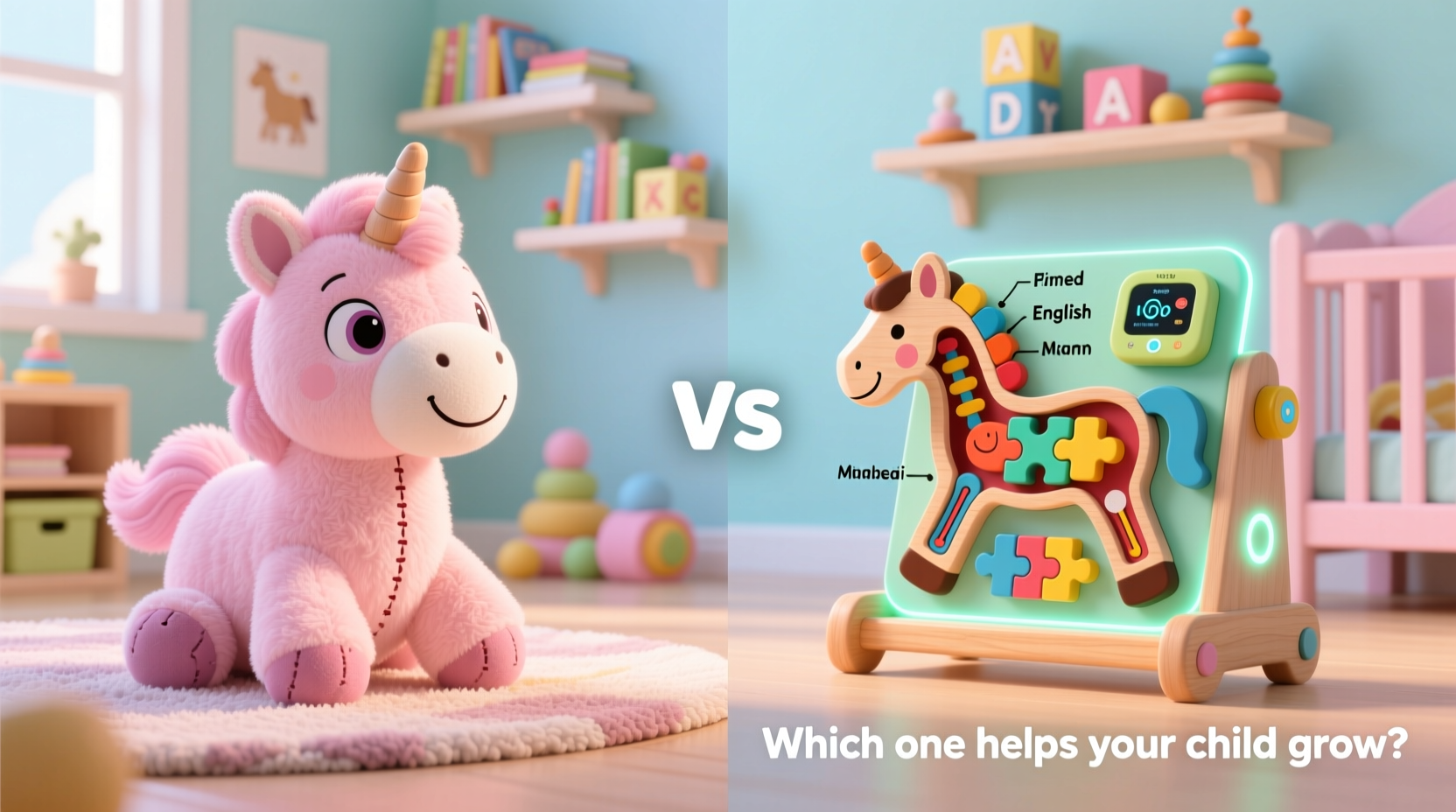
A soft, cuddly pony plush may seem like a simple comfort object, but its role in early childhood extends far beyond decoration. For many children, stuffed animals become companions in imaginative play, helping them process emotions, practice empathy, and develop language skills through narrative storytelling.
Children often assign voices and personalities to their plush toys, engaging in role-play scenarios that mirror real-life interactions. This kind of symbolic play strengthens social-emotional intelligence. According to Dr. Doris Bergen, a developmental psychologist specializing in play, “Imaginative play with dolls or stuffed animals allows children to experiment with social roles, problem-solve conflicts, and regulate emotions in a safe context.”
“Children don’t just play with toys—they use them as tools for meaning-making.” — Dr. Laura Berk, Child Development Researcher
In this light, a pony plush isn’t merely a passive object; it becomes an active participant in a child’s internal world. It fosters creativity, builds narrative fluency, and supports emotional resilience—skills that are foundational for later academic and interpersonal success.
What Defines an Educational Toy?
Educational toys are intentionally designed to promote specific developmental milestones. These include puzzles that enhance spatial reasoning, alphabet blocks that build literacy, math games that introduce numeracy, and STEM kits that encourage scientific thinking. Unlike open-ended plush toys, educational toys often have clear objectives and measurable outcomes.
Key features of effective educational toys include:
- Age-appropriateness: Matches the child’s cognitive and motor abilities.
- Active engagement: Requires participation rather than passive observation.
- Feedback mechanism: Allows trial and error, reinforcing cause-and-effect learning.
- Multisensory stimulation: Engages sight, touch, sound, and sometimes movement.
For example, a wooden shape-sorting cube doesn’t just entertain—it teaches categorization, hand-eye coordination, and problem-solving. Similarly, phonics-based games lay the groundwork for reading readiness by linking sounds to symbols.
Limitations of Over-Relying on Educational Toys
Despite their benefits, educational toys aren't without drawbacks. Some are overly prescriptive, limiting creative exploration. Others create pressure on both children and parents to “achieve” learning goals during playtime, which can diminish intrinsic motivation. When every toy feels like a lesson, children may begin to associate play with performance rather than joy.
Comparing Learning Outcomes: A Side-by-Side Analysis
| Aspect | Pony Plush (Open-Ended Toy) | Educational Toy (Structured Toy) |
|---|---|---|
| Cognitive Development | Indirect: Encourages storytelling, sequencing, memory recall | Direct: Builds literacy, math, logic, and science skills |
| Social-Emotional Growth | Strong: Fosters empathy, self-regulation, identity exploration | Limited: Unless designed for cooperative play |
| Creativity & Imagination | High: Unlimited narrative possibilities | Moderate: Bound by rules or intended use |
| Motor Skills | Basic: Holding, hugging, positioning | Advanced: Fine motor tasks like fitting pieces, turning gears |
| Long-Term Engagement | Often high due to emotional attachment | May decline once challenge is mastered |
This comparison reveals that neither toy type is universally superior. Instead, their value depends on the developmental domain being nurtured and the child’s individual needs at a given stage.
Real Example: How One Family Balanced Both
Sophie, age 4, received a My Little Pony plush for her birthday. Her parents noticed she spent hours creating elaborate stories involving the pony traveling to magical lands, rescuing friends, and solving problems. Inspired, they introduced a magnetic storytelling board—an educational toy that uses picture tiles to build narratives.
At first, Sophie resisted the structure. But when her mother began using the pony as the main character in the tile stories, engagement soared. Within weeks, Sophie was constructing multi-step sequences, using descriptive language, and even writing simple words to label scenes.
This case illustrates synergy: the emotional anchor of the plush made the educational tool more accessible. The key wasn’t choosing one over the other—it was integrating both in a way that honored the child’s natural interests.
Practical Tips for Maximizing Learning Through Both Toy Types
- Use plush toys as story starters: Ask your child to narrate a day in the life of their pony. Record it or write it down to reinforce literacy.
- Pair plushes with themed learning kits: If your child loves a horse plush, add a pretend veterinary kit or a farm animal puzzle.
- Create a “learning adventure” night: Let the plush “discover” numbers hidden around the room or letters taped to furniture.
- Encourage teaching roles: Have your child “teach” the pony how to count or spell, reinforcing their own understanding.
- Observe before intervening: Watch how your child plays naturally before introducing educational extensions.
Checklist: Choosing the Right Mix for Your Child
- Assess your child’s current interests—do they gravitate toward characters or challenges?
- Determine developmental goals—language, motor skills, emotional regulation?
- Select 1–2 educational toys that align with those goals and their interests.
- Introduce new toys alongside familiar comfort items.
- Observe play patterns for a week and adjust accordingly.
- Rotate toys monthly to maintain novelty and engagement.
Frequently Asked Questions
Can a plush toy really help my child learn to read?
Yes—indirectly. While a plush doesn’t teach phonics, it can inspire storytelling, vocabulary expansion, and narrative comprehension. Children who create rich imaginary worlds often develop stronger language foundations. Pairing plush play with books about similar themes enhances this effect.
Are expensive educational toys better than simple ones?
Not necessarily. Research shows that basic building blocks, puzzles, and art supplies are often more effective than high-tech gadgets. The most important factor is whether the toy encourages active, sustained engagement—not its price tag or digital features.
Should I limit plush toys if I want my child to focus on learning?
No. Emotional security and cognitive growth are not mutually exclusive. In fact, children learn best when they feel safe and intrinsically motivated. Removing comfort objects can increase anxiety and reduce openness to new experiences.
Conclusion: It’s Not Either/Or—It’s Both/And
The question isn’t whether a pony plush or an educational toy helps kids learn—it’s how to leverage both for balanced development. Emotional connection fuels curiosity. Structured learning builds competence. When combined thoughtfully, these elements create a rich ecosystem where children thrive intellectually, socially, and emotionally.
Rather than seeking a single “best” toy, focus on curating a diverse play environment. Let the pony gallop through enchanted forests while also counting stars in a math-themed night sky puzzle. Blend imagination with instruction. Support comfort while encouraging challenge.




 浙公网安备
33010002000092号
浙公网安备
33010002000092号 浙B2-20120091-4
Comments
No comments yet. Why don't you start the discussion?