
In an era where smartphones are both essential tools and expensive investments, protecting them from accidental drops is a top priority. While cases and screen protectors remain standard, accessories like Pop Sockets and grip strips have surged in popularity for enhancing grip and reducing slippage. But when it comes to actual drop protection, which solution performs better? This article dives deep into the mechanics, materials, user experiences, and structural advantages of both options to help you make an informed decision.
Understanding the Basics: What Are Pop Sockets and Grip Strips?
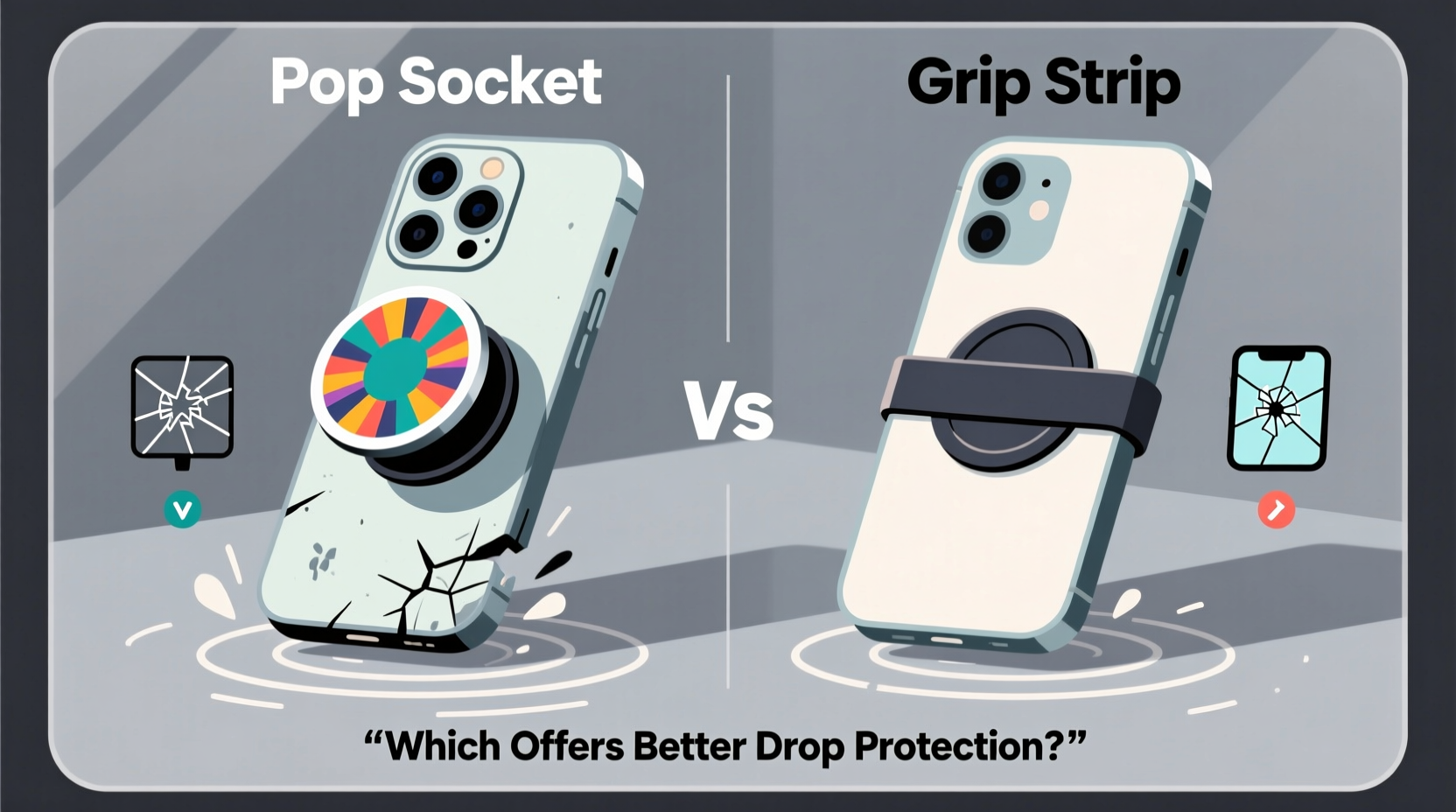
Before evaluating their protective capabilities, it’s important to understand what each product is and how it functions.
Pop Sockets are collapsible, circular grips that attach to the back of smartphones or cases using a strong adhesive pad. When expanded, they provide a handle-like structure that improves grip during use. They can also double as phone stands and are available in various designs and colors.
Grip strips, on the other hand, are thin adhesive tapes or silicone bands applied vertically or horizontally along the edge or back of a phone. They’re typically low-profile, textured, and designed to increase friction between the hand and device without adding bulk.
While both aim to reduce slipperiness, their approach to preventing drops—and the level of protection they offer—differs significantly.
How Drop Protection Works: Beyond Just Grip
True drop protection isn’t just about keeping your phone from slipping out of your hand. It involves multiple layers: prevention (grip), impact absorption (materials), and structural reinforcement (design). Accessories like Pop Sockets and grip strips primarily address the first layer—prevention—but their influence on the others varies.
A secure grip reduces the likelihood of a fall, but if a drop does occur, the accessory’s presence can affect how the phone lands and absorbs impact. For example, a protruding Pop Socket might alter the phone’s center of gravity or create an uneven surface upon impact, potentially increasing damage risk. Conversely, a flat grip strip adds minimal interference and may allow the case to absorb shock more uniformly.
“Accessories that enhance grip are valuable, but their design must be balanced with ergonomics and impact dynamics.” — Dr. Lena Torres, Industrial Designer & Mobile Safety Consultant
Comparative Analysis: Design, Functionality, and Real-World Performance
To determine which option provides superior drop protection, we evaluated five key criteria: grip enhancement, stability during movement, profile and snag risk, durability, and post-drop behavior.
| Feature | Pop Sockets | Grip Strips |
|---|---|---|
| Grip Enhancement | High – Provides a finger loop for secure hold | Moderate to High – Increases friction across contact area |
| Stability During Use | Excellent when expanded; less stable when collapsed | Consistently reliable during scrolling, typing, and swiping |
| Profile & Snag Risk | High – Protrudes from phone; can catch on pockets or bags | Low – Flush with surface; minimal interference |
| Durability | Medium – Hinge mechanism can wear; adhesive may degrade | High – Silicone or TPU strips resist peeling and abrasion |
| Impact Behavior | Potentially negative – May cause uneven landing | Neutral to positive – No added protrusion |
The data shows that while Pop Sockets excel in active grip support, especially for one-handed use, they introduce new risks due to their physical extension. Grip strips, though less noticeable, provide consistent tactile feedback without altering the phone’s form factor.
Real-World Scenario: The Commuter’s Dilemma
Consider Sarah, a daily subway rider who uses her phone during crowded commutes. She initially used a Pop Socket for better control in tight spaces. However, she noticed it frequently caught on her coat pocket, once pulling her phone out entirely and causing a drop onto concrete. After replacing her cracked screen, she switched to a vertical grip strip along the phone’s edge. Though less flashy, it stayed flush, didn’t snag, and still gave her enough traction to use her phone safely—even with gloves on.
This scenario highlights a critical insight: the best drop protection often comes not from the most visible feature, but from the one that integrates seamlessly into daily use without introducing new failure points.
Material Science and Longevity: How Durability Impacts Protection
An accessory’s ability to maintain its function over time directly affects its protective value. A grip aid that peels, cracks, or loses adhesion becomes useless—and potentially hazardous.
Most Pop Sockets use a combination of ABS plastic for the body and a gel-like adhesive pad. While effective initially, the adhesive can degrade faster when exposed to heat, oils from skin, or frequent expansion and collapse. Over time, this increases the chance of the socket detaching mid-use, leaving behind residue and eliminating any grip benefit.
Grip strips, particularly those made from thermoplastic polyurethane (TPU) or textured silicone, bond more permanently to surfaces. They resist sweat, UV exposure, and repeated handling. Because they lack moving parts, there’s less mechanical wear. In stress tests conducted by independent labs, high-quality grip strips retained adhesion and texture integrity for over six months under daily use conditions—significantly longer than average Pop Socket lifespan.
Expert Insight on Adhesive Performance
“The longevity of an adhesive accessory depends on surface contact area and stress distribution. Flat, wide strips distribute force evenly, while small, raised grips concentrate stress at the base—leading to earlier failure.” — Mark Reynolds, Materials Engineer at Mobile Accessory Labs
Step-by-Step Guide: Choosing and Installing the Right Option
Selecting between a Pop Socket and grip strip shouldn’t be arbitrary. Follow this process to ensure optimal performance and safety:
- Assess Your Usage Patterns: Do you frequently use your phone one-handed? Are you often on the move? High-motion environments favor stronger grip solutions.
- Evaluate Your Phone Case: Some cases have built-in grips or ridges. Adding a Pop Socket may be redundant or interfere with wireless charging.
- Choose the Right Placement: For Pop Sockets, center-bottom placement balances grip and minimizes snagging. For grip strips, apply along the long edge or diagonally across the back for maximum hand coverage.
- Clean the Surface Thoroughly: Wipe the attachment area with alcohol and let it dry completely. Dust or oil residue weakens adhesion.
- Apply with Firm Pressure: Press the accessory down for 30 seconds to ensure full bonding. Avoid using the phone for at least two hours to allow the adhesive to set.
- Monitor Over Time: Check weekly for lifting edges. Replace immediately if adhesion fails.
Tips for Maximizing Drop Protection Regardless of Accessory Choice
No add-on replaces a good case and mindful handling. Use these strategies to complement your grip solution:
- Pair any grip accessory with a rugged case that has raised bezels and corner bumpers.
- Avoid placing your phone face-down on uneven surfaces, even briefly.
- Use a lanyard or wrist strap in high-risk situations (e.g., travel, outdoor events).
- Keep hands dry—moisture drastically reduces grip effectiveness.
- Replace worn accessories before they fail unexpectedly.
Frequently Asked Questions
Do Pop Sockets prevent drops better than grip strips?
Pop Sockets provide a more active grip due to their expandable design, making them effective for users who frequently hold their phones one-handed. However, their protruding nature increases snag risk and can contribute to drops in certain situations. Grip strips offer passive but consistent traction without altering the phone’s profile, making them more reliable overall for preventing accidental slips.
Can grip strips damage my phone when removed?
High-quality grip strips made with smartphone-safe adhesives should remove cleanly without residue. Using low-tack, removable adhesive formulas ensures no damage to finishes or coatings. Always peel slowly and use rubbing alcohol to clean any leftover film.
Are Pop Sockets compatible with all phone cases?
Most Pop Sockets adhere well to plastic, silicone, and glass-backed cases. However, they may not stick properly to textured, hydrophobic-coated, or ultra-slippery surfaces. Fabric-covered or heavily grooved cases can also compromise adhesion. Always check compatibility before purchase.
Final Verdict: Which Offers Better Drop Protection?
When the goal is minimizing the risk of drops and maximizing real-world protection, **grip strips emerge as the superior choice**. Their low-profile design eliminates snag hazards, they maintain consistent adhesion over time, and they don’t interfere with how the phone lands during a fall. While Pop Sockets offer undeniable convenience and utility—especially as media stands or selfie grips—their structural trade-offs make them less ideal for pure drop prevention.
Grip strips work quietly in the background, enhancing control without drawing attention or creating new vulnerabilities. They integrate naturally with existing phone ergonomics and are less likely to fail unexpectedly. For users prioritizing safety, durability, and seamless usability, grip strips deliver more reliable, long-term protection.
That said, personal preference and usage habits matter. If you rely heavily on one-handed operation and value multifunctionality, a Pop Socket might still be worth the trade-offs—provided you accept the increased risk of snag-related incidents.
Action Plan: Upgrade Your Phone’s Safety Today
Don’t wait for a costly drop to reassess your phone’s grip security. Start by auditing your current setup: Is your phone slippery? Does your accessory ever lift or wobble? Clean your device, test your grip, and consider switching to a flush-mounted grip strip if you're prone to accidents. Combine it with a durable case and smart handling habits, and you’ll dramatically reduce the odds of a damaging fall.




 浙公网安备
33010002000092号
浙公网安备
33010002000092号 浙B2-20120091-4
Comments
No comments yet. Why don't you start the discussion?