
In recent years, social media has popularized DIY dental trends promising faster, cheaper paths to straighter teeth. One such trend—“popcorn braces”—has gained attention for all the wrong reasons. These homemade devices, often made from rubber bands, thread, or even actual popcorn kernels tied around teeth, claim to close gaps quickly. But while they may seem like a shortcut, they pose serious risks to oral health. Orthodontists warn that these makeshift tools can cause irreversible damage, including tooth loss, gum disease, and jaw misalignment. This article explains why popcorn braces are a dangerous myth and outlines safe, science-backed alternatives for achieving a healthy, aligned smile.
The Danger Behind the Trend
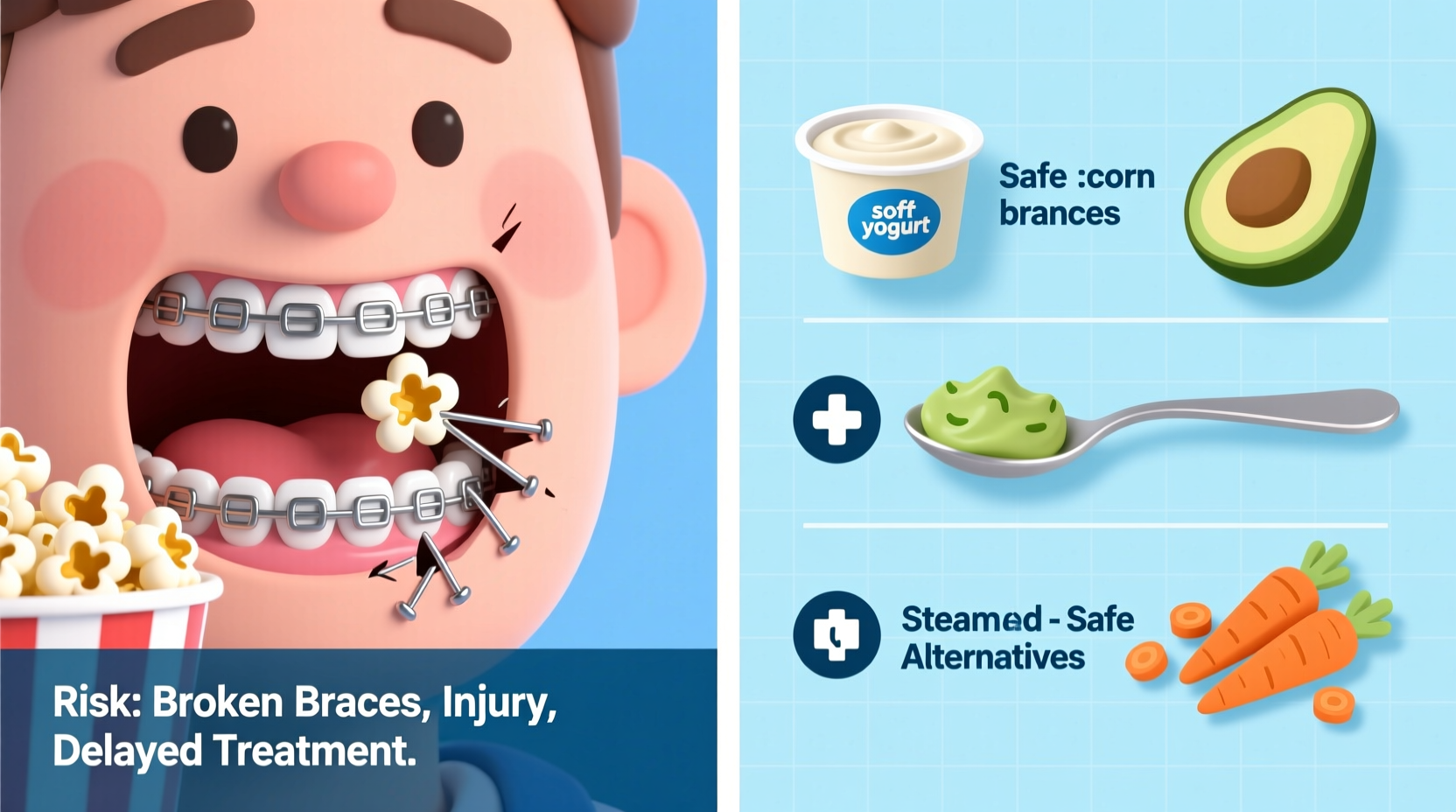
Popcorn braces refer to unregulated, non-professional methods people use at home to mimic orthodontic movement. The name comes from viral videos where individuals place small objects—like popcorn kernels—between teeth to force them apart or use elastic bands wrapped tightly around multiple teeth to pull them together. The idea is to replicate the pressure applied by real braces, but without professional oversight or proper materials.
Unlike clinical orthodontics, which relies on controlled forces calibrated over time, popcorn braces apply uneven, excessive pressure. This can lead to root resorption—the breakdown of tooth roots—because the periodontal ligament (which holds teeth in place) becomes traumatized. In severe cases, teeth can become loose or fall out entirely.
“Applying force to teeth without understanding biomechanics is like performing surgery with a butter knife. You might see movement, but the damage underneath can be catastrophic.” — Dr. Lena Reyes, Board-Certified Orthodontist
Why Popcorn Braces Don’t Work—and What They Can Cost You
The human mouth is a complex system of bones, muscles, nerves, and connective tissues. Moving teeth safely requires precise control over direction, magnitude, and duration of force. Real braces and clear aligners are engineered to shift teeth gradually while preserving bone structure and gum health. Popcorn braces lack this precision.
Common consequences include:
- Tooth loss: Excessive pressure can sever blood supply to the pulp, leading to necrosis.
- Gum recession: Improper tension pulls gums away from teeth, exposing sensitive roots.
- Malocclusion: Teeth may move in unintended directions, worsening bite alignment.
- Infection: Non-sterile materials introduce bacteria into gum pockets.
- Jaw pain: Uneven shifts strain the temporomandibular joint (TMJ).
Safe and Effective Alternatives to Popcorn Braces
Thankfully, numerous safe, proven options exist for correcting crooked teeth, closing gaps, and improving bite function. These treatments are designed by professionals, backed by research, and tailored to individual anatomy.
1. Traditional Metal Braces
Metal brackets bonded to each tooth are connected by a wire that applies gentle, continuous pressure. Adjustments every 4–6 weeks ensure steady progress. Ideal for complex cases involving rotation, spacing, or crowding.
2. Ceramic Braces
Functionally identical to metal braces but use tooth-colored or clear brackets for a more discreet appearance. Slightly more fragile than metal, but effective for moderate to severe misalignments.
3. Lingual Braces
Placed on the back (tongue side) of teeth, making them invisible from the front. Custom-fitted and highly effective, though they may affect speech initially and require a skilled orthodontist.
4. Clear Aligners (e.g., Invisalign)
Removable, transparent trays worn for 20–22 hours per day. Changed weekly or biweekly as teeth shift. Best for mild to moderate issues and favored for their aesthetic appeal and convenience.
5. Self-Ligating Braces
A modern version of traditional braces that uses a clip mechanism instead of elastic ties. Reduces friction, potentially shortening treatment time and requiring fewer adjustments.
| Option | Visibility | Treatment Duration | Best For | Cost Range (USD) |
|---|---|---|---|---|
| Metal Braces | High visibility | 18–36 months | Severe misalignment | $3,000–$7,000 |
| Ceramic Braces | Low visibility | 18–30 months | Moderate to severe cases wanting discretion | $4,000–$8,000 |
| Lingual Braces | Completely hidden | 18–30 months | Professionals or public figures | $8,000–$10,000 |
| Clear Aligners | Nearly invisible | 6–24 months | Mild to moderate crowding/gaps | $3,000–$8,000 |
| Self-Ligating Braces | Visible (metal/ceramic) | 12–24 months | Faster treatment with fewer visits | $4,500–$7,500 |
Step-by-Step Guide to Getting Safe Orthodontic Treatment
If you're considering correcting your smile, follow this proven path to ensure safety and effectiveness:
- Consult a licensed orthodontist: Not all dentists specialize in tooth movement. Verify credentials and experience.
- Get a full assessment: Includes X-rays, intraoral scans, and bite analysis to diagnose underlying issues.
- Review treatment options: Discuss goals, lifestyle, and budget to choose the best method.
- Begin treatment: Whether braces or aligners, follow all instructions precisely.
- Attend regular check-ups: Essential for monitoring progress and adjusting forces.
- Wear retainers post-treatment: Prevents relapse—teeth naturally want to shift back.
Real-World Example: A Cautionary Tale
Twenty-one-year-old Mia from Austin tried using hair elastics to close a gap between her front teeth. Within three weeks, she noticed increasing pain and sensitivity. By week five, one tooth had become visibly loose. She visited an orthodontist, who diagnosed severe root resorption and infection. The tooth could not be saved and required extraction. Mia now wears a dental implant and undergoes full orthodontic treatment to correct the imbalance caused by the DIY attempt. “I thought I was saving money,” she said. “But I ended up spending twice as much and lost a tooth forever.”
Expert Recommendations and Prevention Tips
Orthodontic associations worldwide—including the American Association of Orthodontists (AAO)—have issued warnings against DIY braces. They emphasize that only trained professionals should handle tooth movement.
Checklist: Choosing a Safe Orthodontic Option
- ✅ Confirmed orthodontist (not just a dentist offering aligners)
- ✅ In-person or telehealth consultation with diagnostic records
- ✅ Custom treatment plan with projected timeline
- ✅ Follow-up schedule and emergency support
- ✅ FDA-approved materials (especially for aligners)
- ✅ Retention plan included post-treatment
Frequently Asked Questions
Can I use store-bought aligners like some brands online?
Some direct-to-consumer aligner companies are legitimate and work with licensed dentists. However, they’re only suitable for mild cases. Severe misalignments require in-person evaluation. Never skip a professional diagnosis—even if it costs more upfront.
How long does orthodontic treatment usually take?
Most treatments last between 6 months (minor corrections) and 3 years (complex cases). The average is 18–24 months. Consistency with wear (for aligners) and appointments (for braces) directly impacts duration.
Are there affordable options for low-income patients?
Yes. Many orthodontists offer payment plans. Dental schools often provide reduced-cost treatment performed by supervised residents. Some nonprofits and community clinics also offer assistance programs.
Conclusion: Invest in Your Smile the Right Way
Your smile is not a project to experiment with—it’s a vital part of your health and self-confidence. While the temptation to try quick fixes like popcorn braces may come from frustration or cost concerns, the risks far outweigh any perceived benefits. Real, lasting results come from professional care, not viral hacks. With multiple safe, customizable, and increasingly affordable options available today, there’s no need to gamble with your teeth. Take the responsible step: consult a qualified orthodontist, understand your choices, and begin a journey that protects both your oral health and your future smile.




 浙公网安备
33010002000092号
浙公网安备
33010002000092号 浙B2-20120091-4
Comments
No comments yet. Why don't you start the discussion?