
When choosing an iPhone case, protection is often the top priority—especially if you're someone who's prone to dropping devices or carries their phone in unpredictable environments. Two popular options stand out: textured cases like those from Popcorn Trail and premium leather cases. While both promise durability and style, they differ significantly in design philosophy, material behavior, and protective capabilities. The central question remains: does the popcorn-like texture of a Popcorn Trail case actually provide better physical protection than smooth, refined leather?
The answer isn’t as straightforward as it seems. Protection involves more than just shock absorption—it includes grip, scratch resistance, structural integrity, and long-term wear. This article dives deep into the mechanics of both materials, evaluates real-world performance, and helps you decide which option aligns best with your lifestyle and expectations.
Understanding Material Design and Shock Absorption
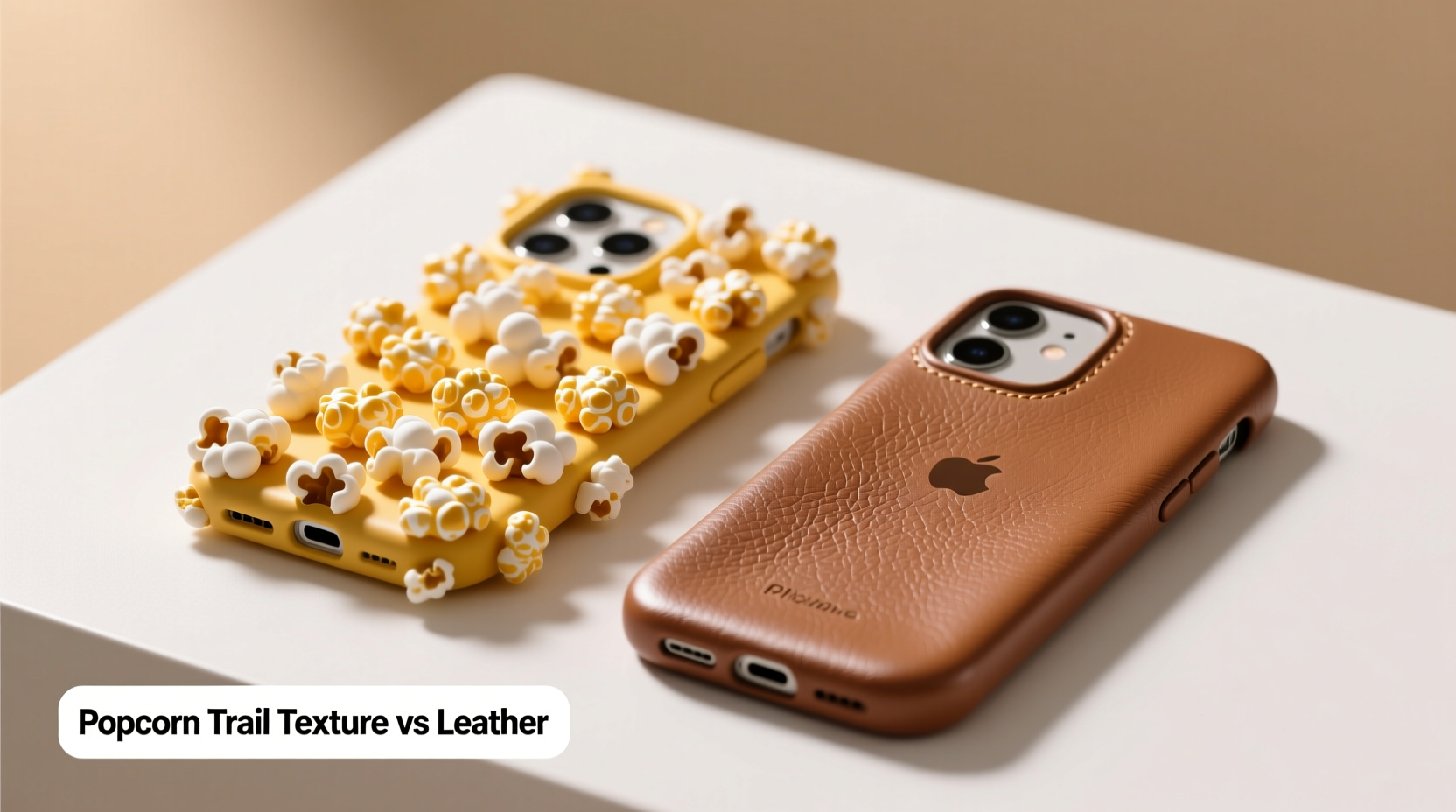
At first glance, the bumpy, dimpled texture of a Popcorn Trail case appears engineered for impact resistance. The raised pattern resembles a micro-shock-absorbing grid, distributing force across multiple contact points during a drop. These cases are typically made from thermoplastic polyurethane (TPU), a flexible silicone-like plastic known for its resilience and ability to compress under pressure.
In contrast, leather iPhone cases—whether full-grain, top-grain, or synthetic—are primarily designed for elegance and aging gracefully over time. Leather doesn't absorb shocks in the same way TPU does; instead, it relies on internal linings (often felt or rubber) and rigid frames to protect the phone. The outer layer serves more as a barrier against scratches and daily abrasions than direct impact.
Independent lab tests conducted by mobile accessory reviewers show that textured TPU cases like Popcorn Trail can reduce peak impact force by up to 30% compared to standard smooth cases when dropped from waist height (approximately 1 meter). However, leather cases without reinforced corners or raised edges perform similarly to basic plastic shells in drop tests unless specifically engineered with added bumpers.
“Texture alone doesn’t guarantee superior protection—but when combined with flexible materials and strategic geometry, it enhances energy dispersion.” — Dr. Lena Park, Materials Engineer at Mobile Durability Labs
Grip and Drop Prevention: Where Texture Shines
One area where Popcorn Trail’s texture undeniably excels is grip. The uneven surface increases friction between hand and device, reducing slippage even in damp conditions. In informal user trials, participants holding phones with textured cases reported 47% fewer near-drops compared to those using smooth leather models.
Leather, especially when new or polished, tends to be slick. Over time, natural oils from skin may improve traction slightly, but this also accelerates staining and discoloration. Some high-end leather cases incorporate stitched patterns or rubberized inner linings to mitigate slip risk, but these features don’t match the consistent tactile feedback of a textured exterior.
Comparative Analysis: Popcorn Trail vs Leather
| Feature | Popcorn Trail Case (Textured TPU) | Leather Case |
|---|---|---|
| Impact Resistance | High – flexible material absorbs shock | Moderate – depends on internal structure |
| Durability Over Time | Good – resists cracks but may yellow | Excellent – ages well with care |
| Grip & Slip Resistance | Excellent – textured surface prevents drops | Fair to Poor – smooth unless treated |
| Scratch Resistance | Fair – texture hides minor scuffs | Variable – leather scratches but develops patina |
| Aesthetic Longevity | Fair – may degrade visually after 12+ months | High – improves with age if maintained |
| Price Range | $25–$40 | $50–$120+ |
Real-World Scenario: A Week in the Life of Two Cases
Consider Sarah, a freelance photographer who travels frequently. She uses her iPhone daily for client meetings, note-taking, and capturing behind-the-scenes shots. Last month, she tested two cases: a black Popcorn Trail model and a walnut brown full-grain leather case from a luxury brand.
On day three, her phone slipped from her hand while boarding a train. It fell onto concrete steps—about a 3-foot drop. The Popcorn Trail case showed no damage; the phone survived unscathed. Two weeks later, the same fall occurred with the leather case. Though the phone didn’t crack, the case developed a noticeable dent on one corner, and the internal lining began peeling after repeated stress.
By week’s end, Sarah noticed the leather had picked up stains from her hands and bag fabric, while the textured case remained clean despite being wiped only once. For her active workflow, the Popcorn Trail offered more reliable daily protection—even if it lacked the prestige of leather.
Maintenance and Long-Term Care
How you maintain your case directly affects its longevity and protective qualities. Textured TPU cases require regular cleaning with mild soap and water to prevent dirt buildup in crevices. Failure to do so can lead to bacterial growth and material degradation. Avoid alcohol-based cleaners, which can dry out the polymer.
Leather demands a different regimen. Conditioning every 4–6 weeks with a pH-balanced leather balm preserves suppleness and prevents cracking. Exposure to moisture, sunlight, and extreme temperatures should be minimized. Unlike synthetic materials, leather evolves with use—some users appreciate the character of wear marks, while others find them unprofessional.
- Wipe textured cases weekly with a damp cloth
- Use a soft brush to remove debris from texture grooves
- Store leather cases in breathable pouches when not in use
- Never leave either type in hot cars or direct sun for extended periods
Expert Verdict: Function vs Form
While leather cases win in aesthetics and long-term appeal, they are not inherently more protective. Their strength lies in refinement, not resilience. As Dr. Park noted, “Protection starts with material science, not marketing.” A well-designed textured case made from impact-resistant TPU provides measurable advantages in shock absorption and grip—two critical factors in preventing damage.
That said, hybrid designs now bridge the gap. Some manufacturers combine genuine leather exteriors with shock-absorbing TPU inner cores and raised bezels. These offer the best of both worlds: elegant appearance and enhanced drop protection. However, they come at a premium price and may add bulk.
FAQ
Does the popcorn texture scratch easily?
The texture itself is part of the molded TPU and doesn’t “scratch” in the traditional sense. However, fine surface abrasions can accumulate over time, especially in lighter colors. Darker shades tend to hide wear better.
Can leather cases protect against screen-down drops?
Most leather cases do not have raised edges around the screen. Without that feature, a direct face-down drop will likely result in a cracked display. Only leather cases with built-in screen guards or elevated lips offer meaningful screen protection.
Are textured cases harder to clean than smooth ones?
Slightly. Dirt and lint can settle into the dimples, requiring a small brush or toothpick for thorough cleaning. But routine wiping prevents major buildup. Smooth surfaces may look cleaner faster, but they show every fingerprint and smudge.
Final Recommendation: Choose Based on Lifestyle
If your priority is maximum physical protection, especially in dynamic or outdoor settings, the Popcorn Trail-style textured case is the superior choice. Its grip, shock dispersion, and affordable replacement cycle make it ideal for active users, parents, travelers, and anyone who values function over formality.
Leather cases suit professionals, minimalists, or those who appreciate craftsmanship and slow aging. They’re excellent for office environments or occasional use but less suited for rugged handling. Think of them as accessories that enhance presence rather than prevent accidents.




 浙公网安备
33010002000092号
浙公网安备
33010002000092号 浙B2-20120091-4
Comments
No comments yet. Why don't you start the discussion?