
For smoothie enthusiasts, blending isn't just a habit—it's a lifestyle. Whether you're fueling up after a workout, preparing a quick breakfast on the go, or experimenting with nutrient-packed recipes, your blender plays a crucial role in delivering consistent, smooth results. But with so many options available, one question keeps coming up: should you choose a portable blender or stick with a regular countertop model?
The answer depends on your priorities—power, portability, ease of cleaning, budget, and usage frequency. While both types serve the purpose of making smoothies, they cater to different lifestyles and needs. Let’s break down the key differences, advantages, and limitations to help smoothie lovers make an informed decision.
Understanding the Core Differences
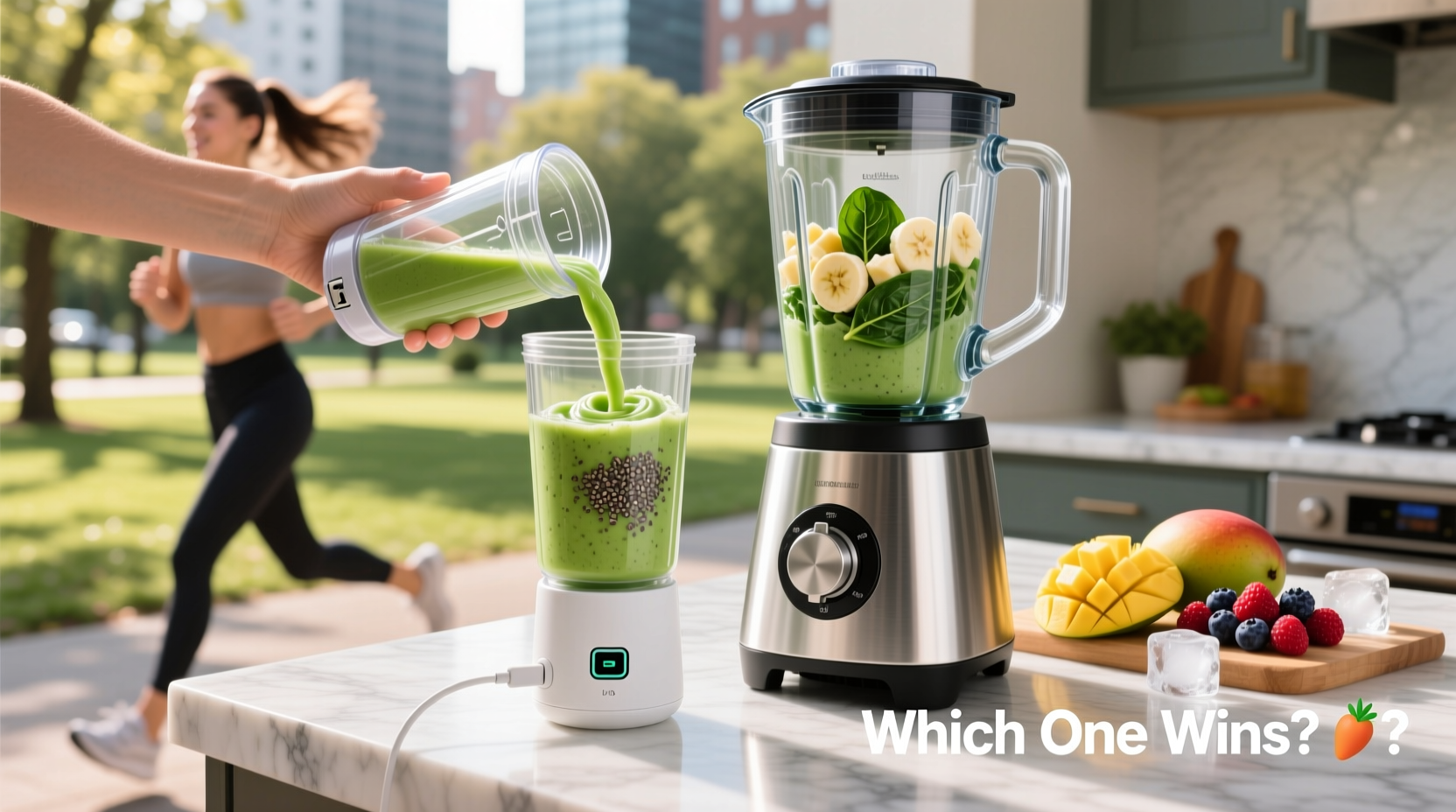
At first glance, portable and regular blenders may seem similar—they both blend ingredients into smooth liquid form. However, their design, functionality, and intended use cases are fundamentally different.
- Portable blenders are compact, battery-powered devices designed for mobility. They typically feature a single-serving cup that doubles as a travel bottle. Ideal for people on the move, these blenders are lightweight and USB-rechargeable.
- Regular (countertop) blenders are larger, plug-in appliances with powerful motors, multiple speed settings, and durable blades. They’re built for versatility—handling everything from frozen fruit and ice to nut butters and hot soups.
The primary trade-off comes down to power versus portability. Portable blenders win in convenience; regular blenders dominate in performance.
Performance and Blending Power Compared
When it comes to texture and consistency, not all blenders deliver the same results. A high-performance countertop blender can pulverize fibrous greens, frozen berries, and even ice into a silky-smooth drink in seconds. Portable models, while improving rapidly, often struggle with tougher ingredients due to lower wattage and smaller motors.
Most portable blenders operate between 100–300 watts, whereas regular blenders range from 500 to over 1500 watts. This difference directly affects their ability to handle dense or frozen components without leaving chunks.
Additionally, blade design impacts efficiency. Countertop models often feature multi-level, stainless steel blades that create a vortex, pulling ingredients downward. Portable units usually have simpler blade assemblies, requiring more manual shaking during blending to achieve uniform texture.
“Blending efficiency isn’t just about speed—it’s about how well the blades circulate ingredients. That vortex effect is hard to replicate in small, portable designs.” — Dr. Alan Torres, Appliance Engineer & Kitchen Tech Analyst
Portability and Lifestyle Fit
This is where portable blenders shine. Designed for travelers, gym-goers, students, and busy professionals, they eliminate the need for multiple containers. You blend directly in the cup, screw on a lid, and take it with you—no pouring, no spills, no extra dishes.
Weighing between 1.5 to 3 pounds, most portable blenders fit easily in backpacks, gym bags, or car cup holders. Their rechargeable batteries last anywhere from 10 to 30 blends per charge, depending on the model.
In contrast, regular blenders are stationary. They require counter space, a nearby outlet, and access to a sink for filling and cleaning. While some high-end models offer cordless bases, they’re rare and expensive.
If your routine involves making smoothies at the office, post-workout at the gym, or while camping, a portable blender offers unmatched convenience. But if you primarily make smoothies at home and value kitchen efficiency over mobility, a countertop model remains the superior tool.
Comparison Table: Key Features Side by Side
| Feature | Portable Blender | Regular Blender |
|---|---|---|
| Power (Watts) | 100–300 W | 500–1500+ W |
| Capacity | 12–20 oz (single serve) | 40–72 oz (family size) |
| Portability | High – battery-powered, lightweight | Low – requires outlet and counter space |
| Blending Time | 30–60 seconds (slower with ice/frozen) | 10–30 seconds (faster, smoother) |
| Ease of Cleaning | Easy – rinse cup and lid | Moderate – disassemble jar, blades, gasket |
| Price Range | $30–$80 | $80–$400+ |
| Best For | On-the-go individuals, light users | Frequent blenders, families, recipe variety |
Real-World Example: Two Smoothie Lovers, Two Choices
Consider Sarah and James—both passionate about daily smoothies but with very different routines.
Sarah is a freelance graphic designer who works remotely from cafes and co-working spaces. She starts her day with a green smoothie but doesn’t always have access to a kitchen. Her solution? A portable blender she charges overnight. She preps her ingredients at home, drops them into the cup, adds liquid at the café, blends for 45 seconds, and enjoys her drink on the spot. It fits seamlessly into her mobile workflow.
James, on the other hand, runs a wellness blog and tests new smoothie recipes weekly. His kitchen is his lab—he uses frozen mango, chia seeds, protein powder, and raw spinach almost daily. He owns a high-end countertop blender with variable speeds and a tamper. It handles thick mixtures effortlessly and cleans quickly with a self-cleaning cycle. For him, sacrificing power for portability would undermine his creative process.
Their stories highlight a critical point: the best blender isn’t the most advanced—it’s the one that aligns with your lifestyle.
Step-by-Step Guide: Choosing the Right Blender for You
Follow this practical sequence to determine which blender suits your needs:
- Evaluate your daily routine. Do you leave home early? Work out away from home? Travel frequently? If yes, portability becomes a priority.
- List your typical ingredients. Mostly fresh fruit and yogurt? A portable blender can handle that. Regularly using frozen fruit, nuts, or fibrous greens? Opt for higher power.
- Assess your storage space. Small apartment or shared kitchen? A portable unit saves counter space.
- Consider cleanup habits. If you dislike washing multiple parts, the one-cup system of a portable blender reduces friction.
- Determine your budget. While both types vary in price, high-performance countertop models often cost significantly more.
- Test before buying (if possible). Read verified customer reviews focusing on noise level, durability, and real-world blending performance—not just specs.
Can You Have Both? The Hybrid Approach
Many smoothie lovers don’t limit themselves to one type. Owning both a portable and a regular blender is increasingly common, especially among those who value flexibility.
Use the countertop blender at home for batch preparation—make two or three servings at once, refrigerate extras, and re-blend later if separation occurs. Then, rely on the portable version when you're out and need a fresh blend without lugging heavy equipment.
This dual-system approach combines the strengths of both: maximum performance at home and seamless convenience on the go.
Frequently Asked Questions
Can a portable blender crush ice effectively?
Some newer models can handle small amounts of ice, but results vary. Most portable blenders struggle with large cubes or frequent ice use. For regular icy drinks, a countertop blender with at least 600 watts and sharp blades is recommended.
How long does a portable blender battery last?
Battery life depends on usage and model. On average, a full charge supports 10–20 blends. High-drain tasks like crushing frozen fruit reduce longevity. Most units take 2–4 hours to recharge via USB-C or wall adapter.
Are portable blenders safe to carry in a bag?
Yes—if properly sealed. Always ensure the lid and blade assembly are tightly secured before transport. Choose models with locking mechanisms and spill-proof designs. Never store a blended smoothie in the blender cup for more than 2–3 hours without refrigeration.
Checklist: What to Look for Before Buying
- ✔️ Battery life and charging method (USB-C preferred)
- ✔️ Cup capacity (16 oz is ideal for most adults)
- ✔️ Blade quality (stainless steel, removable for cleaning)
- ✔️ Noise level (under 80 dB for public use)
- ✔️ Warranty and customer support (at least 1-year coverage)
- ✔️ Dishwasher-safe components
- ✔️ Leak-proof lid design
- ✔️ Motor durability (look for brushless motors in premium models)
Final Verdict: Which Is Better for Smoothie Lovers?
There’s no universal “better” option—only what’s better for you.
If your smoothie habit revolves around convenience, mobility, and simplicity, a portable blender is likely your best companion. It removes barriers to healthy eating by letting you blend anywhere, anytime, with minimal cleanup.
But if you demand restaurant-quality texture, enjoy complex recipes, or feed a family, a regular blender delivers unmatched power and versatility. Its ability to handle diverse ingredients consistently makes it a long-term investment in your health and culinary exploration.
Ultimately, the ideal choice reflects your rhythm of life. Ask yourself: do you value freedom of movement, or peak performance at home? Your answer will guide you to the right tool.




 浙公网安备
33010002000092号
浙公网安备
33010002000092号 浙B2-20120091-4
Comments
No comments yet. Why don't you start the discussion?