
Car trouble doesn’t wait for ideal conditions. A dead battery can strike at any time—on a cold winter morning, in a dimly lit parking lot, or miles from the nearest gas station. For decades, jumper cables have been the go-to solution. But today’s drivers have a better option: the portable jump starter. Compact, self-contained, and increasingly affordable, these battery packs are redefining roadside assistance. Understanding the differences between traditional jumper cables and modern jump starters isn’t just about convenience—it’s about safety, reliability, and preparedness.
The Evolution of Vehicle Battery Rescue Tools
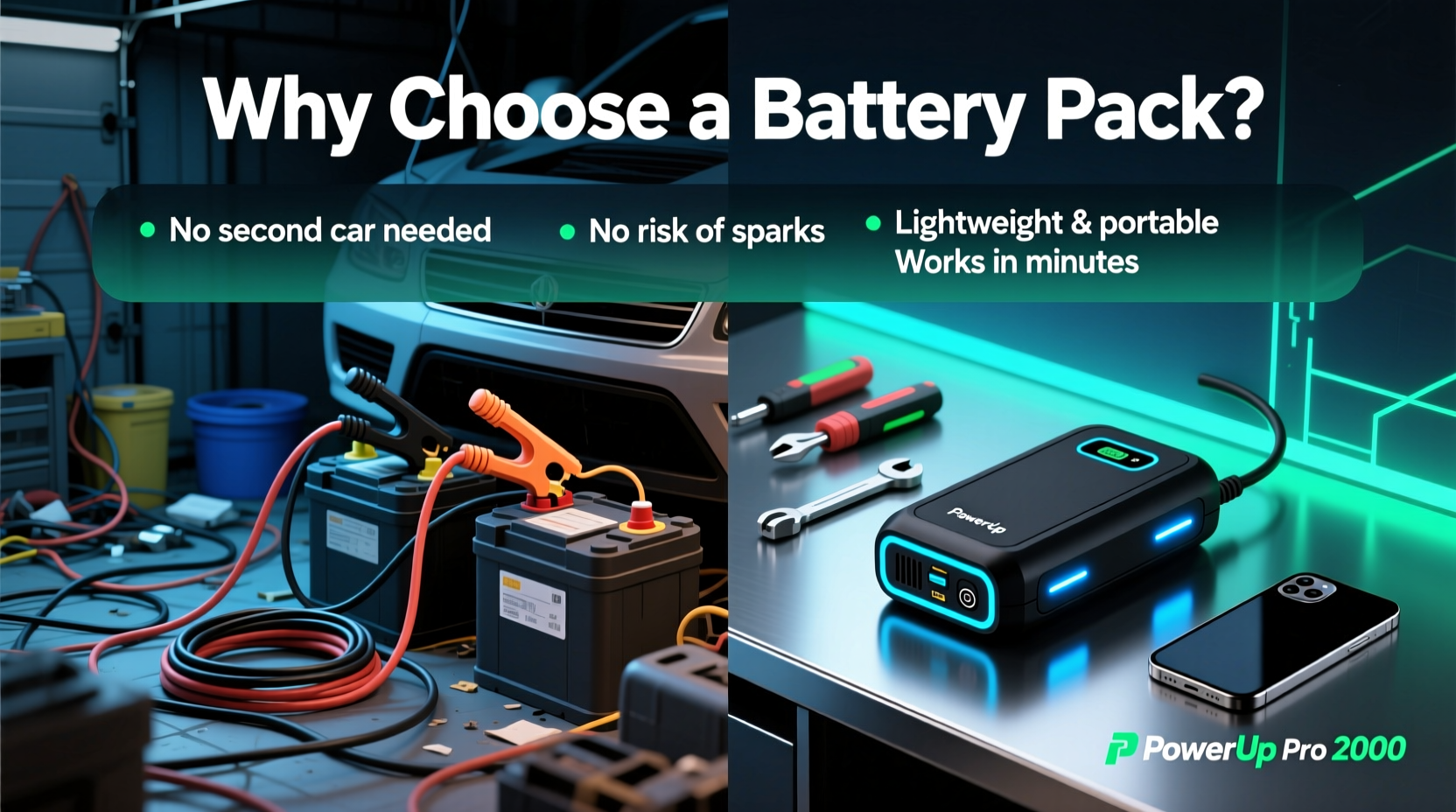
Not long ago, the only way to revive a dead car battery was with another vehicle and a set of jumper cables. This method, while effective, comes with significant limitations. It requires access to a second running car, proper knowledge of connection sequences, and favorable weather and lighting conditions. In remote areas or during late-night breakdowns, finding help isn’t always possible.
Enter the portable lithium-ion jump starter. These devices integrate a high-capacity battery, built-in safety features, and often additional tools like USB charging ports, LED flashlights, and even air compressors. They eliminate dependency on external vehicles and empower drivers to act independently when their engine won’t turn over.
Modern jump starters weigh as little as one pound and fit easily in a glove compartment or under a seat. Despite their size, they deliver enough power to start most gasoline engines up to 6.0 liters and some diesel engines up to 3.0 liters. The technology has matured to the point where reliability and ease of use rival—if not surpass—that of traditional jumper cables.
How Jumper Cables Work—and Where They Fall Short
Jumper cables transfer power from a donor vehicle’s battery to a dead one through direct electrical connection. When used correctly, they can safely restart an engine. However, several critical drawbacks limit their effectiveness:
- Dependency on a second vehicle: Without another functioning car nearby, jumper cables are useless.
- Safety risks: Incorrect connection order (reverse polarity) can damage both vehicles’ electronics or cause battery explosions.
- Physical strain: Heavy-duty cables are bulky and difficult to store; improper handling increases risk of sparks or burns.
- Weather vulnerability: Cold temperatures reduce battery efficiency, making successful jumps less likely even with assistance.
- User error: Many drivers lack confidence in using jumper cables correctly, leading to hesitation or mistakes during emergencies.
These limitations become especially problematic in isolated locations, bad weather, or situations involving older adults or solo travelers who may not feel comfortable approaching strangers for help.
Why Portable Jump Starters Are Superior in Real-World Scenarios
A portable jump starter functions as a standalone power source. It connects directly to your vehicle’s battery terminals and delivers a surge of energy without needing another car. This independence transforms the emergency response process. Here’s how jump starters outperform traditional cables:
Convenience and Portability
Most models are smaller than a hardcover book and weigh under two pounds. They take up minimal space and require no setup beyond plugging in the clamps. Unlike coiled cables that tangle and corrode, jump starters are sealed units designed for long-term storage.
Integrated Safety Features
Top-tier jump starters include protections against reverse polarity, overcurrent, short circuits, and overheating. Some feature smart sensors that prevent activation if connections are incorrect. This dramatically reduces the risk of user error—a major advantage for inexperienced drivers.
Multi-Functionality
Many jump starters double as power banks for smartphones, tablets, and other USB devices. Built-in LED lights offer flashlight, strobe, and SOS modes, providing visibility during nighttime breakdowns or signaling for help. Higher-end models include digital displays showing remaining charge and voltage levels.
Reliability in Extreme Conditions
Lithium polymer batteries maintain performance in sub-zero temperatures better than traditional lead-acid batteries. This means a jump starter remains functional even in harsh winter climates where jumper cables might fail due to reduced donor battery output.
“Modern portable jump starters have closed the gap in power delivery while adding layers of safety and usability that traditional methods simply can’t match.” — David Lin, Automotive Electronics Engineer
Comparison: Portable Jump Starter vs Jumper Cables
| Feature | Portable Jump Starter | Jumper Cables |
|---|---|---|
| Requires Second Vehicle | No | Yes |
| Portability | High (fits in glove box) | Low (bulky, heavy) |
| Safety Protections | Built-in (reverse polarity, overload) | None (user-dependent) |
| Additional Functions | USB charging, flashlight, air pump | None |
| Success Rate (Cold Weather) | High (stable internal battery) | Moderate to Low (depends on donor) |
| Cost Over Time | One-time purchase (~$80–$150) | Lower upfront (~$30), but limited utility |
| User Skill Required | Low (guided indicators) | Moderate to High |
Real-Life Example: A Breakdown on a Rural Road
Consider Sarah, a freelance photographer returning home after a weekend shoot. Her SUV stalls on a dark country road at 9 PM in January. Temperatures hover around 15°F (-9°C). She tries to start the engine multiple times, draining what little charge remains in her battery.
With jumper cables, she’d need to flag down another driver—an unlikely prospect on this infrequent route. Even if someone stopped, connecting cables in freezing wind would be difficult and risky. Instead, Sarah pulls out her portable jump starter from the center console. Within 90 seconds, following the device’s LED prompts, she reconnects the clamps, starts the engine, and drives home safely.
In this scenario, the jump starter wasn’t just convenient—it was the only viable solution. No reliance on goodwill, no exposure to danger, no guesswork. Just a reliable tool doing exactly what it was designed for.
Choosing the Right Jump Starter: A Practical Checklist
Not all portable jump starters are created equal. To ensure you get a model that performs when needed, follow this checklist before purchasing:
- ✅ Peak Amp Rating: At least 1000A for gasoline engines up to 6.0L; 2000A+ for larger or diesel engines.
- ✅ Battery Capacity: Minimum 15,000mAh for multiple charges and longer shelf life.
- ✅ Safety Certifications: Look for UL, CE, or FCC marks indicating tested compliance.
- ✅ Cold Cranking Amps (CCA) Equivalent: Check manufacturer specs for temperature-rated performance.
- ✅ Recharge Method: USB-C or wall charger with auto-shutoff to prevent overcharging.
- ✅ Indicator System: Digital display or color-coded LEDs showing charge level and fault detection.
- ✅ Extra Features: Integrated flashlight, USB-A/USB-C ports, carrying case.
- ✅ Warranty: Minimum 1-year warranty with customer support availability.
Step-by-Step Guide to Using a Portable Jump Starter
Using a modern jump starter is straightforward. Follow these steps for a safe and successful start:
- Turn off the vehicle and remove the key or press the start button to ensure ignition is off.
- Locate the battery under the hood. If inaccessible, consult your owner’s manual for terminal access points.
- Attach the red clamp to the positive (+) terminal of the dead battery.
- Attach the black clamp to a solid metal surface away from the battery (e.g., engine block) to ground it.
- Power on the jump starter and wait for confirmation light (usually green).
- Start the engine normally. Let it run for at least 5 minutes to begin recharging the battery.
- Remove clamps in reverse order: Black first, then red.
- Recharge the jump starter after use to maintain readiness.
Always refer to your specific model’s instructions, as some units require pressing a “boost” button before cranking the engine.
Frequently Asked Questions
Can a portable jump starter damage my car’s electronics?
High-quality jump starters include voltage regulation and spike protection. As long as you follow the instructions and avoid touching the clamps together, there is minimal risk to sensitive systems like ECUs or infotainment units.
How long does a jump starter hold its charge?
Most last 6–12 months on standby, though manufacturers recommend recharging every 3–6 months. Poor maintenance can reduce lifespan significantly. Devices with auto-discharge prevention circuits perform best over extended storage.
Are jump starters worth it for newer cars with advanced electronics?
Yes—especially so. Newer vehicles often have complex electrical systems that drain batteries quickly during periods of inactivity (e.g., keyless entry, alarm systems). A jump starter provides immediate recovery without requiring a tow or professional service call.
Final Thoughts: Why Every Driver Should Carry a Battery Pack
The shift from jumper cables to portable jump starters reflects broader changes in automotive culture. Today’s drivers value autonomy, safety, and simplicity. Relying on chance encounters with helpful strangers is no longer necessary—or practical. A quality jump starter puts control back in the driver’s hands.
Think of it as insurance: inexpensive, compact, and rarely used—but invaluable when the moment arrives. Whether you drive a sedan, truck, SUV, or hybrid, having a reliable power source in your vehicle means fewer stress-filled calls for roadside assistance and more confidence on every journey.
Unlike jumper cables, which serve one narrow purpose, a modern battery pack enhances overall preparedness. It powers your phone during blackouts, illuminates dark spaces, and gets you moving again—all from a single device.




 浙公网安备
33010002000092号
浙公网安备
33010002000092号 浙B2-20120091-4
Comments
No comments yet. Why don't you start the discussion?