
In an age where our lives are powered by smartphones, tablets, and wearable tech, portable power banks have become essential companions. They keep us connected during travel, emergencies, or long workdays away from outlets. But behind their convenience lies a growing concern: reports of power banks overheating, catching fire, or even exploding. While such incidents are relatively rare, they can be dangerous when they occur. Understanding the risks and knowing how to select a safe, high-quality power bank isn’t just smart—it’s a matter of personal safety.
This guide breaks down the science behind why some power banks fail, highlights real-world cases, and provides actionable steps to ensure you’re using a device that won’t compromise your safety. From internal battery chemistry to certification standards, we’ll cover what truly matters when making a purchase.
The Science Behind Power Bank Failures
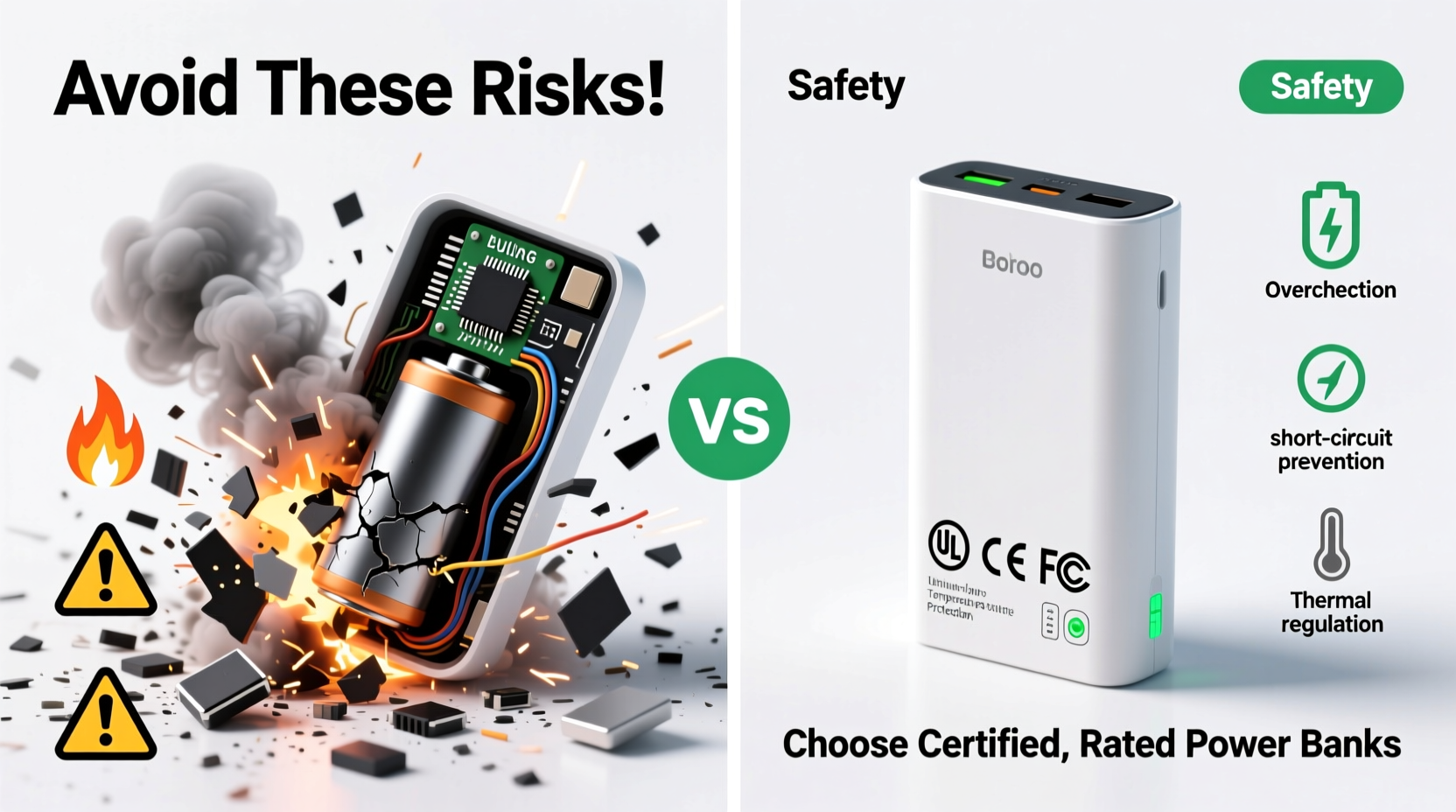
Most modern power banks use lithium-ion (Li-ion) or lithium-polymer (LiPo) batteries—compact, energy-dense technologies ideal for portable electronics. However, these same qualities make them sensitive to physical damage, manufacturing defects, and improper charging practices.
Lithium-based batteries contain a flammable electrolyte. When the internal separator between the anode and cathode is compromised—due to puncture, overcharging, or poor quality control—a short circuit can occur. This leads to thermal runaway: a rapid increase in temperature and pressure that can result in smoke, fire, or explosion.
Manufacturers mitigate these risks through built-in protection circuits that regulate voltage, current, and temperature. But not all power banks include robust safeguards—especially cheaper models from unverified brands.
Real Cases: When Convenience Turned Dangerous
In 2022, a woman in Florida reported her power bank exploding while charging in her car cup holder. The device, purchased online for under $15, began emitting smoke before bursting into flames, damaging the dashboard and triggering the car’s smoke alarm. Fortunately, no injuries occurred, but the incident underscores the risk of low-cost, uncertified devices.
Another case involved a student in South Korea whose power bank exploded mid-flight. The airline crew responded quickly, but the event led to heightened scrutiny of carry-on electronics. Investigations revealed the device lacked any safety certifications and had been modified to increase capacity—a common but hazardous practice among third-party sellers.
These examples aren’t isolated. Consumer safety agencies, including the U.S. Consumer Product Safety Commission (CPSC), have issued multiple recalls over the past five years due to defective power banks. In many cases, the root cause was substandard battery cells or missing protective circuitry.
“Not all lithium batteries are created equal. A poorly manufactured cell can fail catastrophically under normal use.” — Dr. Alan Zhou, Battery Safety Researcher at MIT Energy Initiative
How to Choose a Safe Power Bank: A Step-by-Step Guide
Selecting a reliable power bank goes beyond brand names and price tags. Follow this structured approach to minimize risk and maximize performance.
- Determine your actual needs: Assess how much power you typically use. A 5,000–10,000mAh capacity is sufficient for most smartphone users. Larger capacities (20,000mAh+) are useful for extended trips but require more rigorous safety features.
- Check for recognized safety certifications: Look for marks like UL (Underwriters Laboratories), CE (Conformité Européenne), FCC (Federal Communications Commission), or PSE (Japan). These indicate the product has passed standardized safety tests.
- Verify the brand reputation: Stick to reputable manufacturers such as Anker, Aukey, Belkin, or Samsung. Avoid generic brands with no customer support or warranty.
- Inspect the build quality: The casing should feel sturdy, with no seams or loose parts. Buttons, ports, and indicators should operate smoothly. Poor construction often reflects poor internal design.
- Review the included safety features: Reliable models include overcharge protection, short-circuit prevention, temperature control, and surge protection. Check the product specifications or user manual for details.
- Avoid exaggerated claims: Be skeptical of ultra-thin 30,000mAh power banks priced under $30. Physics limits energy density—such claims often signal false labeling or unsafe battery stacking.
- Read user reviews critically: Look for patterns in feedback. Multiple complaints about overheating, swelling, or sudden failure are red flags.
Safety Checklist Before You Buy
Use this checklist to evaluate any power bank before purchasing:
- ✅ Has UL, CE, FCC, or equivalent certification
- ✅ Made by a known, reputable brand
- ✅ Includes overcharge, overcurrent, and short-circuit protection
- ✅ Realistic capacity (no “fake mAh” inflation)
- ✅ No visible defects or uneven casing
- ✅ Comes with a warranty (at least 1 year)
- ✅ Positive, consistent user reviews regarding safety and durability
Do’s and Don’ts of Power Bank Usage
Even a high-quality power bank can become hazardous with improper use. Follow these guidelines to maintain safety over time.
| Do’s | Don’ts |
|---|---|
| Charge the power bank using the recommended cable and adapter | Use damaged or frayed cables |
| Store in a cool, dry place away from direct sunlight | Leave it in hot cars or near radiators |
| Allow it to fully discharge every few months to recalibrate | Keep it constantly plugged in after full charge |
| Clean ports gently with a dry brush or compressed air | Expose it to water or moisture |
| Replace if you notice swelling, overheating, or strange odors | Continue using a damaged or bloated unit |
What to Do If Your Power Bank Malfunctions
If your power bank starts behaving abnormally—overheating, emitting odor, or showing signs of swelling—act immediately:
- Stop using it: Disconnect from any device and unplug from the charger.
- Move to a safe area: Place it on a non-flammable surface like concrete or ceramic tile, away from curtains, paper, or furniture.
- Do not attempt to open or repair it: Lithium batteries are not user-serviceable. Tampering increases the risk of fire.
- Contact the seller or manufacturer: Report the issue and check if there’s a recall or replacement program.
- Dispose of properly: Take it to an electronics recycling center or hazardous waste facility. Never throw lithium batteries in regular trash.
“Early warning signs like swelling or inconsistent charging should never be ignored. That’s your device telling you it’s unsafe.” — Lisa Tran, Senior Technician at SafeTech Electronics Lab
FAQ: Common Questions About Power Bank Safety
Can a power bank explode while in use?
Yes, though rare. Most incidents occur during charging due to excessive heat buildup or faulty components. Using certified devices and avoiding extreme temperatures significantly reduces this risk.
Is it safe to carry a power bank on a plane?
Yes, but with restrictions. Most airlines allow power banks under 100Wh (watt-hours) in carry-on luggage only. For example, a 20,000mAh power bank at 3.7V equals 74Wh—within the limit. Always check with your airline. Never pack them in checked baggage due to fire risk.
How long should a good power bank last?
A well-maintained, high-quality power bank typically lasts 3–5 years or 500–1,000 charge cycles. Performance degrades gradually, so you’ll notice shorter output over time. Replace it if capacity drops below 70% or if physical damage occurs.
Final Thoughts: Prioritize Safety Over Savings
The convenience of a portable power bank shouldn’t come at the cost of safety. While budget options may seem appealing, they often cut corners on battery quality, circuit protection, and regulatory compliance. A single incident can lead to property damage, injury, or worse.
Investing in a certified, reputable power bank protects not just your devices, but your home, workplace, and personal well-being. By understanding the technology, recognizing warning signs, and making informed choices, you can enjoy uninterrupted power without unnecessary risk.




 浙公网安备
33010002000092号
浙公网安备
33010002000092号 浙B2-20120091-4
Comments
No comments yet. Why don't you start the discussion?