
When planning a family camping trip, reliable power can make all the difference—running a mini-fridge, charging phones, or powering a CPAP machine. But when children are involved, safety becomes the top priority. The choice between a portable power station and a gas generator isn’t just about convenience; it’s about minimizing risks in an outdoor environment where supervision is constant but distractions are everywhere. While both options provide off-grid electricity, their design, operation, and potential hazards vary significantly. Understanding these differences helps parents make informed decisions that protect their children while still enjoying modern comforts in nature.
Safety Risks of Gas Generators Around Children
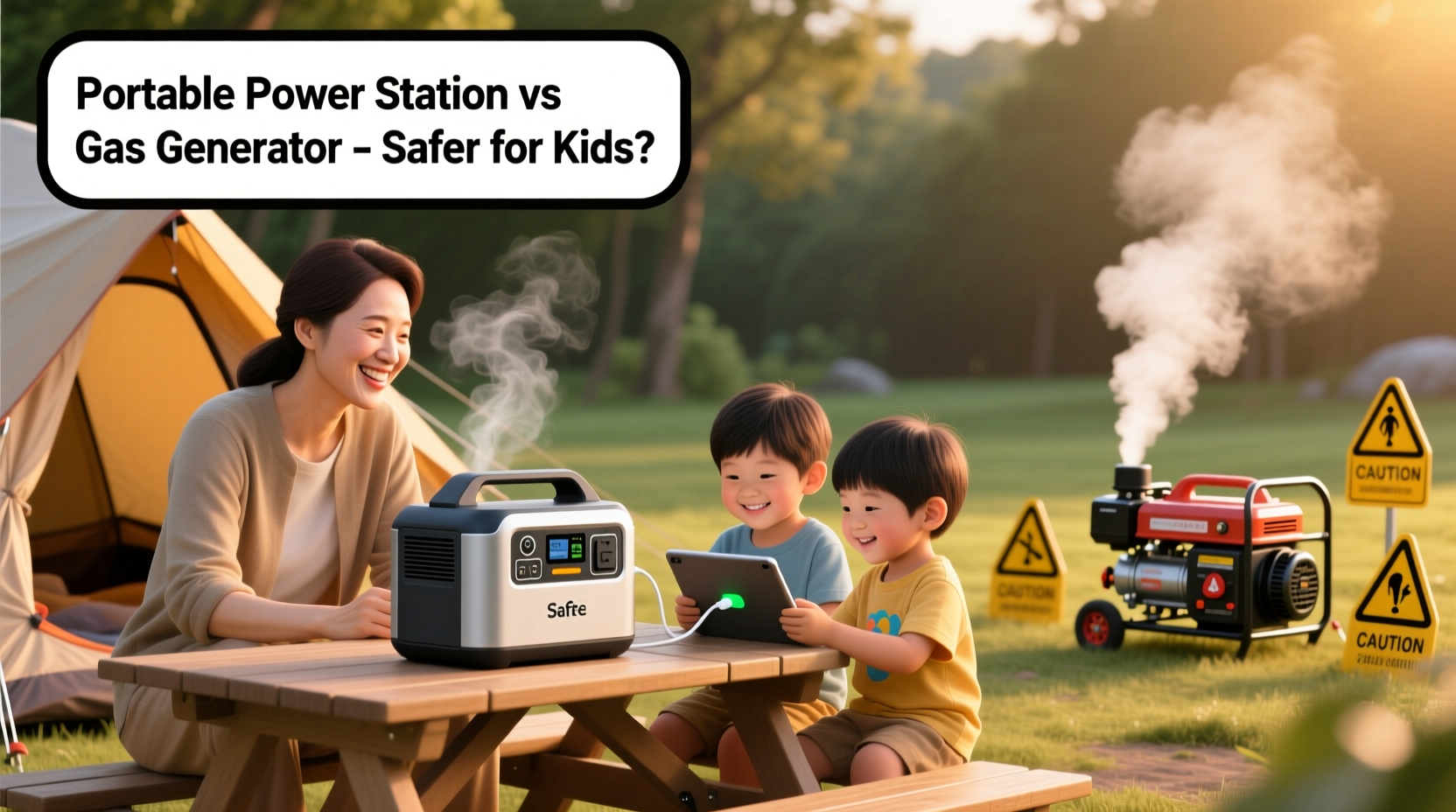
Gas-powered generators have long been a staple for campers needing robust energy output. However, their operational mechanics introduce several dangers, especially in family settings. The most critical concern is carbon monoxide (CO) emission—a colorless, odorless gas produced during combustion. According to the Centers for Disease Control and Prevention (CDC), over 400 Americans die annually from unintentional CO poisoning, and many incidents occur during outdoor recreation involving portable generators.
Even with proper ventilation, wind shifts or temporary lapses in awareness can allow CO to accumulate near tents or open-air shelters. Children are particularly vulnerable due to their faster breathing rates and smaller body mass. A child exposed to low levels of CO may experience headaches, nausea, or dizziness before adults notice anything wrong.
In addition to toxic fumes, gas generators pose fire and burn risks. The engine and exhaust system reach extremely high temperatures during operation. A curious toddler reaching toward the unit could suffer serious burns. Fuel handling also introduces hazards: gasoline is highly flammable, and spills—even small ones—can ignite under the right conditions. Refueling a hot generator increases the risk of flash fires.
Why Portable Power Stations Are Inherently Safer
Portable power stations, also known as solar generators or battery-based inverters, store electricity in lithium-ion or LiFePO4 batteries. Unlike gas models, they produce zero emissions during use. This eliminates the threat of carbon monoxide entirely, making them fundamentally safer for close proximity to children.
These units generate minimal heat during operation. The exterior remains cool to the touch, reducing the risk of accidental burns. There’s no fuel to store or handle, removing the danger of leaks, spills, or ignition. Most models include built-in safety features such as overcharge protection, short-circuit prevention, and temperature regulation—automated safeguards that require no user intervention.
Additionally, power stations operate nearly silently. Noise levels typically range from 30 to 50 decibels, comparable to a whisper or light rainfall. This quiet performance supports a peaceful campsite environment, allowing children to nap, play, or sleep without disruptive engine noise. It also enhances situational awareness—parents can hear approaching wildlife or children calling for help without competing with generator roar.
“Battery-powered stations represent a major leap forward in family camping safety. Eliminating combustion removes multiple layers of risk.” — Dr. Lena Patel, Pediatric Environmental Health Specialist
Comparative Safety Features: Side-by-Side Analysis
| Feature | Portable Power Station | Gas Generator |
|---|---|---|
| Carbon Monoxide Emissions | None | High – requires strict outdoor use |
| Operating Temperature | Cool to warm (safe to touch) | Very hot (burn hazard) |
| Noise Level | 30–50 dB (quiet) | 65–85 dB (loud, disruptive) |
| Fuel Handling Required | No | Yes – gasoline storage and refueling |
| Fire Risk | Very low (sealed battery systems) | Moderate to high (fuel + heat) |
| Child Accessibility Risk | Low (no moving parts, cool surfaces) | High (hot surfaces, fuel caps, pull cords) |
| Maintenance Complexity | Minimal (recharge only) | Regular (oil changes, spark plugs, carburetor cleaning) |
This comparison highlights why portable power stations are increasingly preferred by families. Their passive safety profile aligns well with environments where children are free to explore and supervision must be balanced with relaxation.
Real-World Scenario: A Family Camping Trip Gone Right
The Thompson family planned a three-day camping trip in the Rockies with their two young children, ages 4 and 7. They needed power for a portable fridge (to keep medication and baby food cold), a few LED lights, and phone charging. Initially, they considered a 2,000-watt gas generator due to its lower upfront cost. However, after researching safety concerns and reading incident reports from national parks, they opted for a 1,500-watt portable power station with LiFePO4 chemistry and solar recharging capability.
During the trip, the youngest child wandered toward the power unit out of curiosity. The father noticed and gently redirected him—but realized that even if he hadn’t intervened, there was no danger. The unit was silent, cool, and had no exposed components. That evening, the kids fell asleep quickly, undisturbed by noise. On the second day, they recharged the station using two foldable solar panels while hiking nearby trails. By the end of the trip, they’d used 80% of the battery and still had enough reserve for one more night.
“We felt relaxed the whole time,” said Sarah Thompson. “No worrying about fumes, no loud noise waking the kids, no stress about refueling. It just worked—and kept our family safe.”
Choosing the Right Power Solution: A Step-by-Step Guide
Selecting the safest and most practical power source for camping with children involves assessing needs, constraints, and safety priorities. Follow this sequence to make a confident decision:
- Assess your power requirements. List all devices you plan to run (e.g., mini-fridge, lights, fan, phone charger). Add up their wattage and estimate daily usage in watt-hours. For example, a 50W fridge running 8 hours uses 400Wh.
- Evaluate runtime needs. Determine how many days you’ll camp without access to grid charging. If you’re car camping with solar availability, a 1,000Wh station may suffice. For longer trips, consider 1,500Wh+ or dual-station setups.
- Prioritize safety features. Look for units with LiFePO4 batteries (more stable than standard lithium-ion), overheat protection, and UL certification. Avoid cheap, unbranded models lacking safety testing.
- Plan for recharging. Solar compatibility is ideal for extended trips. Ensure your panel voltage matches the station’s input specs. Bring a car charger as backup.
- Compare portability. Weigh the unit and consider handles or wheels. A 30-pound station is manageable for most adults; anything heavier may require dedicated transport.
- Test before departure. Charge the station fully, run your devices at home, and confirm performance. This avoids surprises in the field.
Common Misconceptions About Battery-Powered Stations
Despite growing popularity, some campers still hesitate to switch from gas generators due to outdated assumptions. One common myth is that portable power stations lack sufficient power for real-world use. While early models were limited, modern units like the Jackery Explorer 1500, EcoFlow Delta 2, or Bluetti AC200P deliver 1,000 to 2,400 watts of surge capacity—enough to run refrigerators, electric kettles, or even small heaters intermittently.
Another misconception is that they’re too expensive. While initial costs range from $500 to $2,000, the long-term savings on fuel, maintenance, and durability often justify the investment. High-quality LiFePO4 batteries last 3,000+ charge cycles—over a decade of regular use—compared to gas generators needing annual tune-ups and eventual engine replacement.
Finally, some believe solar charging is unreliable. In reality, even moderate sunlight generates usable power. Two 200W solar panels can recharge a 1,000Wh station in 4–6 hours under clear skies. For cloudy conditions, partial charging still extends runtime.
FAQ: Safety and Practicality for Families
Can I use a portable power station inside a tent?
Yes, safely. Since they emit no fumes and generate minimal heat, power stations can be placed inside tents or RVs. Just ensure vents aren’t blocked and keep liquids away from ports.
Are gas generators ever safe around kids?
Only when operated with strict protocols: placed far from living areas, never left unattended, and turned off during sleep or playtime. Even then, risks remain. For families, the margin for error is too narrow to recommend routine use.
What happens if a child presses buttons on the power station?
Most units have lockable screens or require deliberate actions to change settings. Accidental button presses won’t cause harm, though they might disable outputs. Teach older kids basic rules, like not plugging in unknown devices.
Final Recommendations and Action Plan
For families camping with children, portable power stations are the unequivocally safer choice. They eliminate life-threatening risks like carbon monoxide exposure, reduce burn and fire hazards, and support a calmer, more enjoyable outdoor experience. While gas generators still serve niche applications—such as powering large tools or extended off-grid worksites—their drawbacks outweigh benefits in family recreational settings.
Investing in a quality power station pays dividends in peace of mind. Choose a model with LiFePO4 batteries, adequate capacity, and solar compatibility. Pair it with labeled cables and a simple usage routine so everyone in the family understands its role. Recharge strategically, monitor usage via built-in displays, and store it properly between trips.




 浙公网安备
33010002000092号
浙公网安备
33010002000092号 浙B2-20120091-4
Comments
No comments yet. Why don't you start the discussion?