
When the lights go out or you're off-grid exploring nature, reliable backup power is essential. Traditionally, gas generators have been the go-to solution. But with growing environmental awareness and advancements in battery technology, portable power stations are emerging as a compelling alternative. The choice between these two options isn’t just about wattage or runtime—it’s also about noise, emissions, convenience, and long-term sustainability. Understanding the differences helps you make an informed decision that aligns with both your energy needs and environmental values.
How They Work: Core Technology Explained
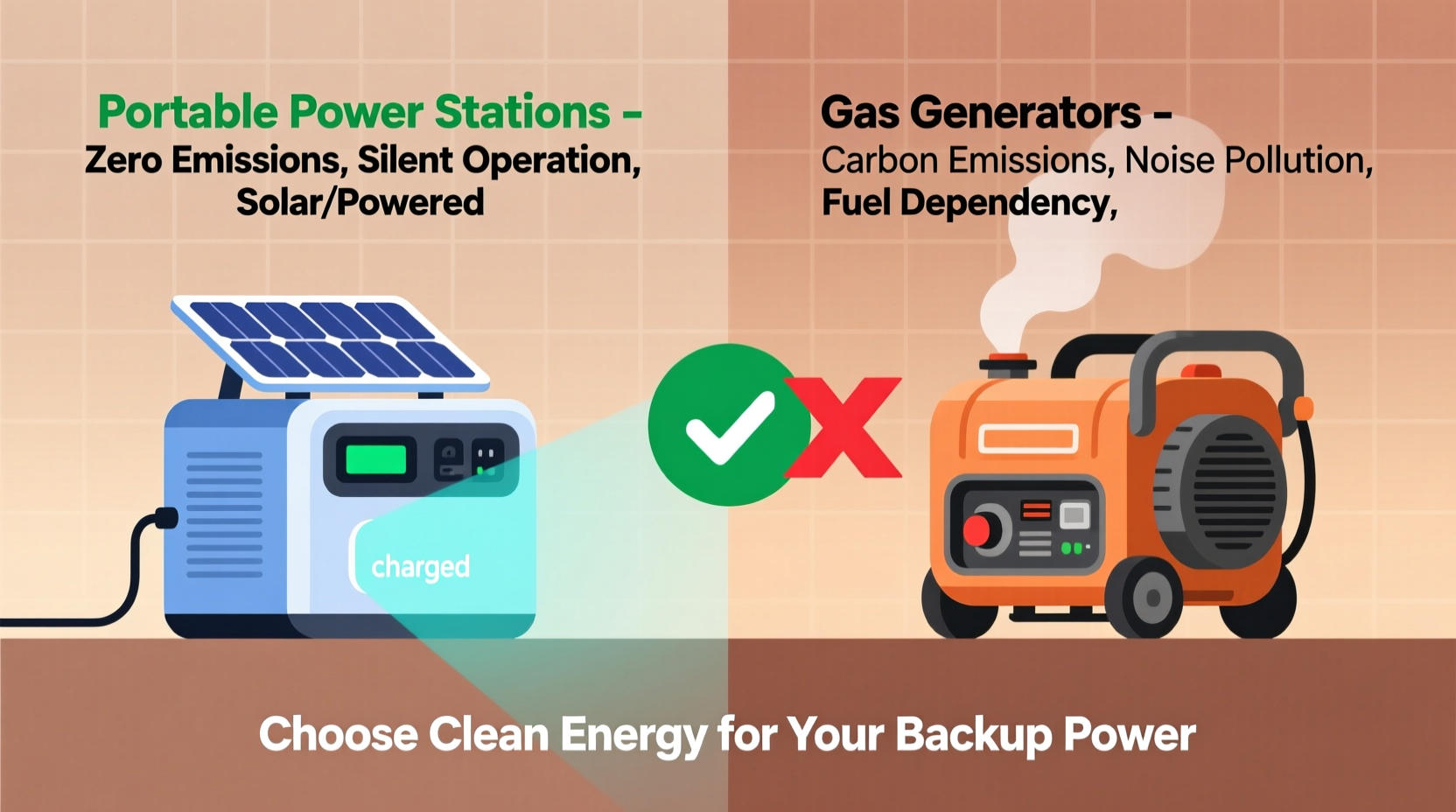
Gas generators produce electricity by burning fossil fuels—typically gasoline, propane, or diesel—to power an internal combustion engine connected to an alternator. This mechanical process generates alternating current (AC) electricity suitable for running household appliances, tools, and electronics during outages or outdoor activities.
In contrast, portable power stations are large-capacity battery systems charged via AC wall outlets, solar panels, car chargers, or even some wind turbines. These units store energy in lithium-ion or lithium iron phosphate (LiFePO4) batteries and use inverters to convert stored direct current (DC) into usable AC power. Unlike gas generators, they have no moving parts and emit zero operational emissions.
The fundamental difference lies in energy source and conversion method. Gas generators rely on continuous fuel combustion, while power stations depend on pre-stored electrical energy. This distinction shapes their environmental impact, maintenance requirements, and usability across different scenarios.
Eco-Friendliness: Emissions, Noise, and Long-Term Impact
Environmental considerations are increasingly influencing consumer choices. When comparing portable power stations and gas generators from an ecological standpoint, several key factors come into play.
Air Quality and Carbon Footprint
Gas generators emit carbon dioxide (CO₂), nitrogen oxides (NOx), carbon monoxide (CO), and particulate matter—pollutants linked to respiratory issues and climate change. Even modern inverter generators, which are more efficient than conventional models, still burn fossil fuels and contribute to greenhouse gas emissions.
Portable power stations produce no tailpipe emissions during operation. Their overall carbon footprint depends on how they’re recharged. If powered primarily by renewable sources like rooftop solar, their lifecycle emissions can be near-zero. Grid charging introduces indirect emissions based on local energy mix, but even in coal-dependent regions, centralized power plants are generally more efficient and regulated than small-scale generator engines.
Noise Pollution
Noise levels significantly affect user experience and community impact. Gas generators typically operate between 65–75 decibels (dB), comparable to a vacuum cleaner or loud conversation. Some high-output models exceed 80 dB, making them disruptive in residential neighborhoods or quiet camping environments.
Portable power stations run silently—usually below 40 dB—because they lack motors or exhaust systems. This makes them ideal for indoor use, nighttime operation, or settings where peace matters, such as RV parks or emergency shelters.
“Switching from gas generators to clean battery storage represents one of the most accessible ways households can reduce localized pollution and support energy resilience.” — Dr. Lena Patel, Sustainable Energy Researcher at GreenGrid Institute
Performance Comparison: Power Output, Runtime, and Recharging
While eco-friendliness is important, performance remains critical. Let’s examine how these systems stack up in real-world applications.
| Feature | Gas Generator | Portable Power Station |
|---|---|---|
| Typical Capacity | Limited only by fuel supply | 300Wh – 5,000Wh (expandable with extra batteries) |
| Fuel/Energy Source | Gasoline, propane, diesel | Lithium-based battery (rechargeable via grid, solar, car) |
| Runtime (at 50% load) | 6–12+ hours (refuelable) | 4–10 hours (requires recharging) |
| Noise Level | 65–75 dB | 0–40 dB |
| Start-Up Time | Manual pull-start or electric start (seconds) | Instant on |
| Maintenance Needs | Oil changes, spark plug replacement, carburetor cleaning | Minimal (battery health monitoring) |
| Indoor Use Safety | Never safe due to CO risk | Fully safe |
| Recharge Time | N/A (refueling takes minutes) | 3–12 hours (faster with dual input/solar) |
For sustained, high-power demands—such as running central air conditioning, well pumps, or heavy-duty job site equipment—gas generators offer unmatched endurance through refueling. However, for moderate loads like refrigerators, CPAP machines, laptops, lights, and phone charging, modern power stations deliver sufficient capacity with greater convenience and safety.
Real-World Scenario: A Weekend Power Outage
Consider Sarah, a homeowner in the Pacific Northwest who experiences seasonal storms that knock out power for 24–48 hours. She previously used a 3,000-watt gas generator stored in her garage. During one outage, she forgot to check the oil before starting it, causing damage that required costly repairs. She also had to run extension cords through windows, creating drafts and safety hazards. One night, the generator woke her family with its loud cycling, and she worried about fumes despite placing it outside.
Last year, Sarah invested in a 2,000Wh portable power station paired with a 400-watt solar panel. Before storm season, she charges it fully using solar energy during sunny days. When the grid fails, she powers her Wi-Fi router, refrigerator, LED lights, and medical devices seamlessly. There’s no noise, no smell, and no need to monitor fuel. On sunny days, the unit recharges passively. Though it doesn’t run her HVAC system, it keeps essentials operating safely and quietly.
Sarah’s experience reflects a growing trend: consumers prioritizing reliability, ease of use, and environmental responsibility over raw power alone.
Cost Analysis: Upfront Investment vs. Long-Term Savings
Portable power stations often carry higher initial price tags. Entry-level models start around $300, while premium units with 2,000Wh+ capacity and solar compatibility can cost $1,500–$3,000. In comparison, a quality 3,000-watt inverter generator ranges from $800–$1,200.
However, long-term ownership costs tell a different story. Gas generators require ongoing expenses:
- Fuel purchases (gasoline averages $3–$5 per gallon)
- Oil changes every 50–100 hours of use
- Spark plug replacements annually
- Possible carburetor cleaning or engine repairs
- Winterization kits and stabilizers for storage
Power stations eliminate fuel and mechanical maintenance. While batteries degrade over time (typically lasting 5–10 years depending on chemistry and usage), many models feature replaceable cells or modular designs. Solar recharging further reduces reliance on the grid, lowering electricity bills and enhancing energy independence.
Choosing What’s Right for Your Needs: A Practical Checklist
Selecting between a gas generator and a portable power station depends on your specific situation. Use this checklist to guide your decision:
- Assess your essential power needs: List devices you must run during an outage (e.g., fridge, furnace fan, sump pump). Add up their wattage requirements.
- Determine expected outage duration: Short, infrequent blackouts favor power stations. Extended or indefinite outages may require fuel-based generation.
- Evaluate refueling access: Do you have secure fuel storage? Will roads be passable after a disaster?
- Consider placement and ventilation: Can you safely operate a gas generator outdoors away from windows and vents?
- Factor in noise sensitivity: Are you in a densely populated area, using power at night, or camping in nature?
- Plan for recharging options: Do you have access to solar panels, a car outlet, or a reliable grid connection?
- Review portability needs: Will you transport the unit frequently? Power stations are heavier per watt but easier to move without fuel handling.
- Calculate total cost of ownership: Include fuel, maintenance, and lifespan when comparing value.
Hybrid Approach: Best of Both Worlds?
Some users opt for a hybrid strategy—using a portable power station as the primary backup for daily essentials and keeping a gas generator on hand for extreme scenarios requiring prolonged high-wattage output. This combination offers flexibility and redundancy.
For example, during a multi-day winter storm, a power station can maintain lighting, communication, and medical equipment overnight. During daylight, a small gas generator runs briefly to recharge the station, minimizing fuel consumption and noise exposure. Alternatively, pairing a mid-sized power station with foldable solar panels creates a nearly self-sustaining loop under favorable weather conditions.
This tiered approach balances sustainability with resilience, especially valuable in regions facing increasing climate-related disruptions.
FAQ
Can a portable power station really replace a gas generator?
For many households, yes—especially if energy use is managed wisely. Modern power stations can run refrigerators, lights, routers, TVs, and small heaters for meaningful periods. However, they cannot continuously power large appliances like central AC or electric water heaters. Assess your actual load and prioritize critical devices to determine suitability.
Are portable power stations safe indoors?
Yes. Unlike gas generators, which produce deadly carbon monoxide, portable power stations emit no fumes and can be safely used inside homes, garages, RVs, or tents. Always follow manufacturer guidelines regarding ventilation and temperature.
How long do portable power stations last?
Most last 5–10 years depending on battery type and usage patterns. Lithium iron phosphate (LiFePO4) models typically endure 3,000–5,000 charge cycles, far exceeding standard lithium-ion (500–1,000 cycles). Proper care—avoiding full discharges and extreme temperatures—extends lifespan.
Final Thoughts: Toward Cleaner, Smarter Backup Power
The shift from gas generators to portable power stations mirrors broader trends in energy: decentralization, electrification, and sustainability. While gas generators still serve vital roles in high-demand or remote applications, portable power stations offer a cleaner, quieter, and increasingly capable alternative for everyday backup needs.
As battery prices continue to fall and solar integration becomes standard, the economic and environmental advantages of these systems will only grow. Whether you're preparing for emergencies, powering outdoor adventures, or reducing your carbon footprint, choosing an eco-friendly power solution is both practical and forward-thinking.




 浙公网安备
33010002000092号
浙公网安备
33010002000092号 浙B2-20120091-4
Comments
No comments yet. Why don't you start the discussion?