
When planning a camping trip, reliable power is no longer a luxury—it’s essential. From charging smartphones to running small appliances like mini-fridges or CPAP machines, having electricity in the wild makes outdoor adventures safer and more comfortable. Two of the most popular options today are portable power stations and solar generators. While these terms are often used interchangeably, they refer to distinct technologies with different strengths and limitations. Understanding their differences can help you make an informed decision based on your camping style, destination, and energy needs.
Understanding the Basics: What Are Portable Power Stations and Solar Generators?
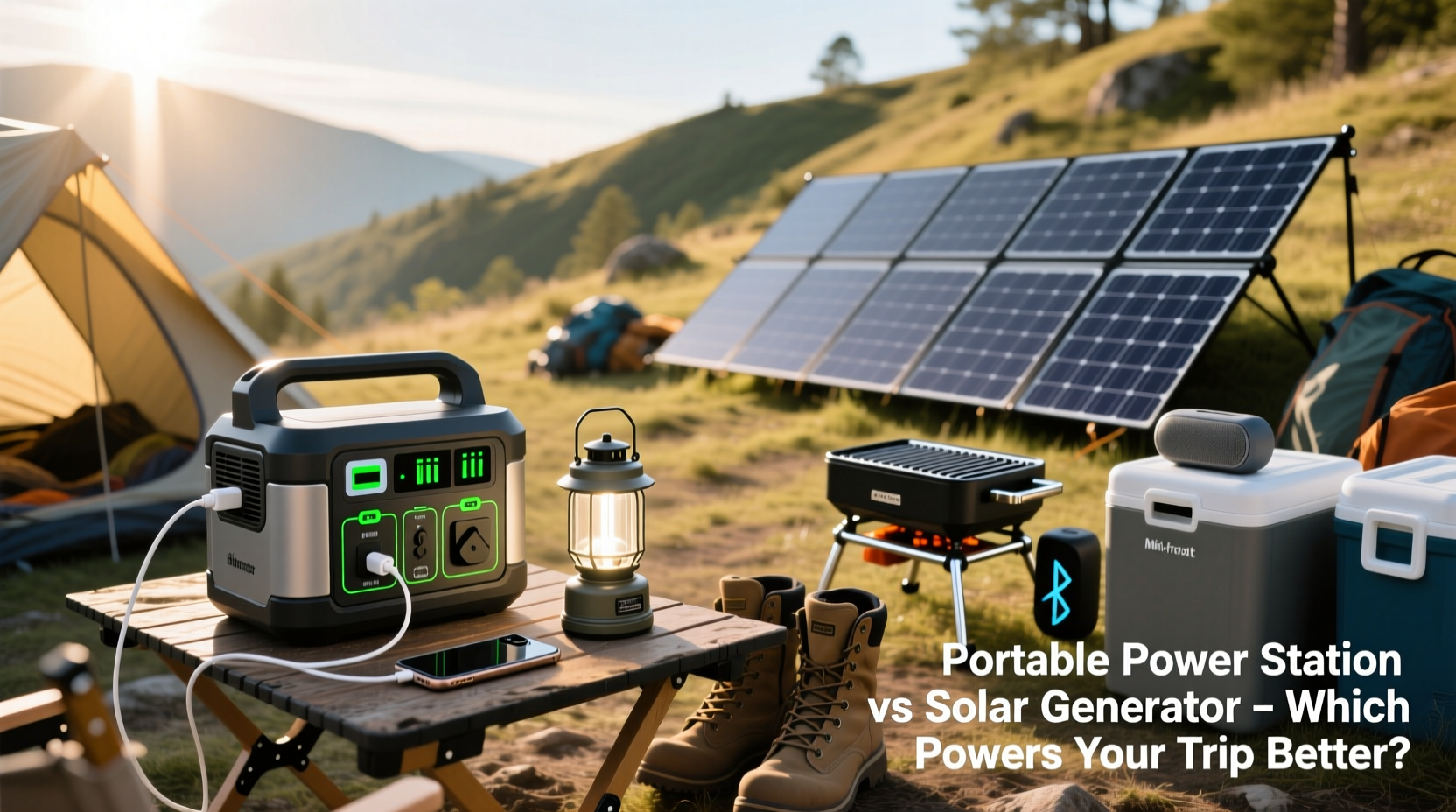
A portable power station is essentially a large-capacity battery pack designed to store electrical energy. It can be charged via wall outlets, car chargers, or solar panels and then used to power various devices through AC outlets, USB ports, and DC outputs. These units are self-contained, quiet, and require no fuel—making them ideal for campers who value convenience and low maintenance.
On the other hand, a solar generator isn’t a generator in the traditional sense. The term typically refers to a system that combines a portable power station with one or more solar panels. The solar panels capture sunlight and convert it into electricity, which charges the internal battery. In this context, “solar generator” emphasizes the renewable energy source rather than the storage unit itself.
“Many people don’t realize that ‘solar generator’ usually means a power station paired with solar input. True independence comes from combining both.” — Dr. Lena Reyes, Renewable Energy Systems Engineer
The key distinction lies in how they’re powered. A standalone portable power station relies on pre-charged energy from the grid or vehicle, while a solar-integrated system offers ongoing recharging capability under sunlight. This difference becomes critical when considering trip duration and access to conventional power sources.
Performance Comparison: Capacity, Output, and Runtime
To determine which option performs better on a camping trip, consider three core metrics: capacity (measured in watt-hours), output (wattage), and runtime under load. These factors directly impact what devices you can run and for how long.
Most portable power stations range from 300Wh to over 2000Wh in capacity. For example, a 500Wh unit can charge a smartphone about 40 times, power a 50W laptop for nearly 10 hours, or run a 30W camping light for over 16 hours. High-capacity models can even support refrigerators or electric kettles for short durations.
Solar generators depend not only on battery size but also on solar input efficiency. A 500Wh power station paired with a 100-watt solar panel might take 5–8 hours to fully recharge under optimal sun conditions. However, cloudy weather, indirect light, or improper panel angles can extend that time significantly—sometimes doubling it.
| Feature | Portable Power Station (No Solar) | Solar Generator (Power Station + Solar Panel) |
|---|---|---|
| Energy Source | Pre-charged (wall outlet, car charger) | Sunlight + pre-charging options |
| Recharge Time (Typical) | 3–7 hours (AC outlet) | 5–10+ hours (sunlight dependent) |
| Fuel Needed? | No | No |
| Runtime Independence | Limited by initial charge | Extended with daily solar exposure |
| Noise Level | Silent | Silent |
| Best For | Weekend trips, car camping, emergency backup | Longer expeditions, remote locations, eco-conscious users |
The table highlights a crucial trade-off: convenience versus sustainability. If you're returning to civilization every few days, a portable power station may suffice. But if you're heading deep into the backcountry for a week or more, a solar generator provides the ability to replenish energy daily, reducing reliance on external infrastructure.
Portability and Setup: What Fits Your Camping Style?
Weight and ease of setup play a major role in field usability. Portable power stations alone are generally compact and weigh between 5 to 30 pounds, depending on capacity. Many come with built-in handles and require zero assembly—just turn them on and plug in your gear.
Solar generators add complexity. While the power station remains the same, integrating foldable solar panels introduces bulk and setup time. A typical 100W solar panel weighs 8–12 pounds and unfolds to roughly the size of a yoga mat. You’ll need to position it toward the sun, angle it correctly, and secure it against wind—tasks that become challenging in wooded areas or during unpredictable weather.
For backpackers or minimalist campers, every ounce counts. In such cases, a smaller power station without solar may be preferable. But for family campers or basecamp setups where space and weight are less constrained, adding solar panels enhances long-term viability.
Real Example: A Weekend vs. Week-Long Trip
Consider two scenarios. Sarah plans a two-night lakeside campsite accessible by car. She brings a 400Wh power station, pre-charged at home. Over the weekend, she powers lights, charges her phone twice, runs a small fan, and uses a Bluetooth speaker. By Sunday afternoon, the unit is nearly depleted—but she returns home just in time to recharge it for next time.
Meanwhile, James embarks on a six-day hiking expedition in a national forest with limited road access. He carries a 600Wh power station and a 120W foldable solar panel. Each morning, he sets up the panel near his tent. Even with partial cloud cover, he gains 300–400Wh of energy per day, enough to offset his nightly usage and keep his GPS, headlamps, and camera batteries topped off throughout the journey.
In both cases, the right system was chosen based on trip length and environmental conditions. Sarah didn’t need solar because her energy demands were finite and manageable within the battery’s limits. James benefited from renewable input, enabling sustained operation far from any electrical outlet.
Cost and Long-Term Value
Upfront cost is another deciding factor. Entry-level portable power stations start around $200 for 300Wh models. Mid-range units (500–1000Wh) range from $400 to $900. Solar generators cost more due to the added panel(s). A quality 100W solar panel typically ranges from $150 to $300, increasing the total investment significantly.
However, long-term value favors solar integration. Campers who frequently venture off-grid will save money over time by avoiding repeated grid charging and extending battery life through balanced discharge/recharge cycles. Additionally, solar reduces environmental impact, aligning with sustainable outdoor ethics.
Maintenance costs are minimal for both systems, though solar panels should be kept clean and stored properly to avoid micro-cracks or delamination. Most modern lithium-ion batteries last 500–1000 charge cycles before dropping below 80% capacity, meaning a well-maintained unit can serve reliably for several years.
Step-by-Step Guide: Choosing the Right System for Your Trip
Selecting between a portable power station and a solar generator doesn’t have to be overwhelming. Follow this practical decision-making process:
- Evaluate trip duration: Is it under 72 hours? A pre-charged power station likely suffices. Longer stays benefit from solar recharging.
- List all powered devices: Note each item’s wattage and estimated daily usage (in hours).
- Calculate total daily watt-hour consumption: Multiply watts × hours for each device, then sum them up.
- Add a 20% buffer: Account for inefficiencies and unexpected usage.
- Determine recharging feasibility: Will you have access to wall outlets or car charging mid-trip? If not, prioritize solar compatibility.
- Assess portability needs: Can you carry extra weight? Do you have space in your vehicle or trailer?
- Set a budget: Balance upfront cost with expected frequency of use and desired features like app monitoring or MPPT charge controllers.
FAQ: Common Questions About Power Solutions for Camping
Can I use a portable power station to jump-start my car?
Some high-end models include a jump-start function with clamps, but most do not. Check product specifications carefully if this feature is important. Alternatively, consider carrying a dedicated jump starter.
Do solar generators work on cloudy days?
Yes, but at reduced efficiency. Modern monocrystalline panels can still generate 10–25% of their rated output under overcast skies. Positioning the panel in direct sunlight whenever possible maximizes yield.
Are these systems safe to use inside a tent?
Yes, both types are safe indoors as they produce no emissions. However, ensure adequate ventilation around the unit to prevent overheating, especially when powering high-wattage devices.
Final Recommendation: Which Powers a Camping Trip Better?
The answer depends on your specific circumstances. For short, car-accessible trips with predictable return schedules, a portable power station offers unmatched simplicity and reliability. There’s no need to wait for sunlight or manage panel placement—you simply charge it beforehand and go.
But for extended wilderness excursions, remote locations, or eco-focused adventurers, a solar generator delivers superior long-term performance. The ability to harness sunlight transforms your power supply from finite to renewable, effectively turning each sunny day into a recharge opportunity.
Ultimately, the best solution may be hybrid: invest in a solar-compatible power station now, even if you start without panels. This gives you flexibility to upgrade later. Many experienced campers begin with a standalone unit and add solar when their adventures grow longer or more remote.
“The future of outdoor power isn’t just about capacity—it’s about resilience. Solar integration turns a battery into a self-sustaining ecosystem.” — Mark Tran, Outdoor Tech Analyst at GearFront Review
Checklist: Preparing Your Power System for a Camping Trip
- ✔ Calculate total device power requirements (watt-hours per day)
- ✔ Choose a power station with at least 20% more capacity than needed
- ✔ Verify compatibility with solar panels if planning off-grid recharging
- ✔ Pack necessary cables and adapters (MC4 connectors, USB-C, etc.)
- ✔ Fully charge the unit before departure
- ✔ Bring a protective case or cover for transport and weather protection
- ✔ Test all devices with the unit prior to leaving home
Conclusion
Whether you choose a portable power station or a solar generator, the goal is the same: to stay connected, safe, and comfortable while enjoying nature. Each system has its place. Recognizing the nuances between them empowers smarter decisions tailored to your lifestyle and environment. As renewable technology advances, the gap between convenience and sustainability continues to narrow—offering campers the best of both worlds.




 浙公网安备
33010002000092号
浙公网安备
33010002000092号 浙B2-20120091-4
Comments
No comments yet. Why don't you start the discussion?