
Power steering is one of the most critical systems in modern vehicles, making it easier to turn the wheel with minimal effort. When it works, you barely notice it. But when it starts failing, driving becomes not just difficult but dangerous. Sudden stiffness, strange noises, or fluid leaks are signs that something’s wrong. Understanding why power steering fails—and knowing what steps to take—can save you time, money, and potentially prevent an accident.
How Power Steering Works: A Quick Overview
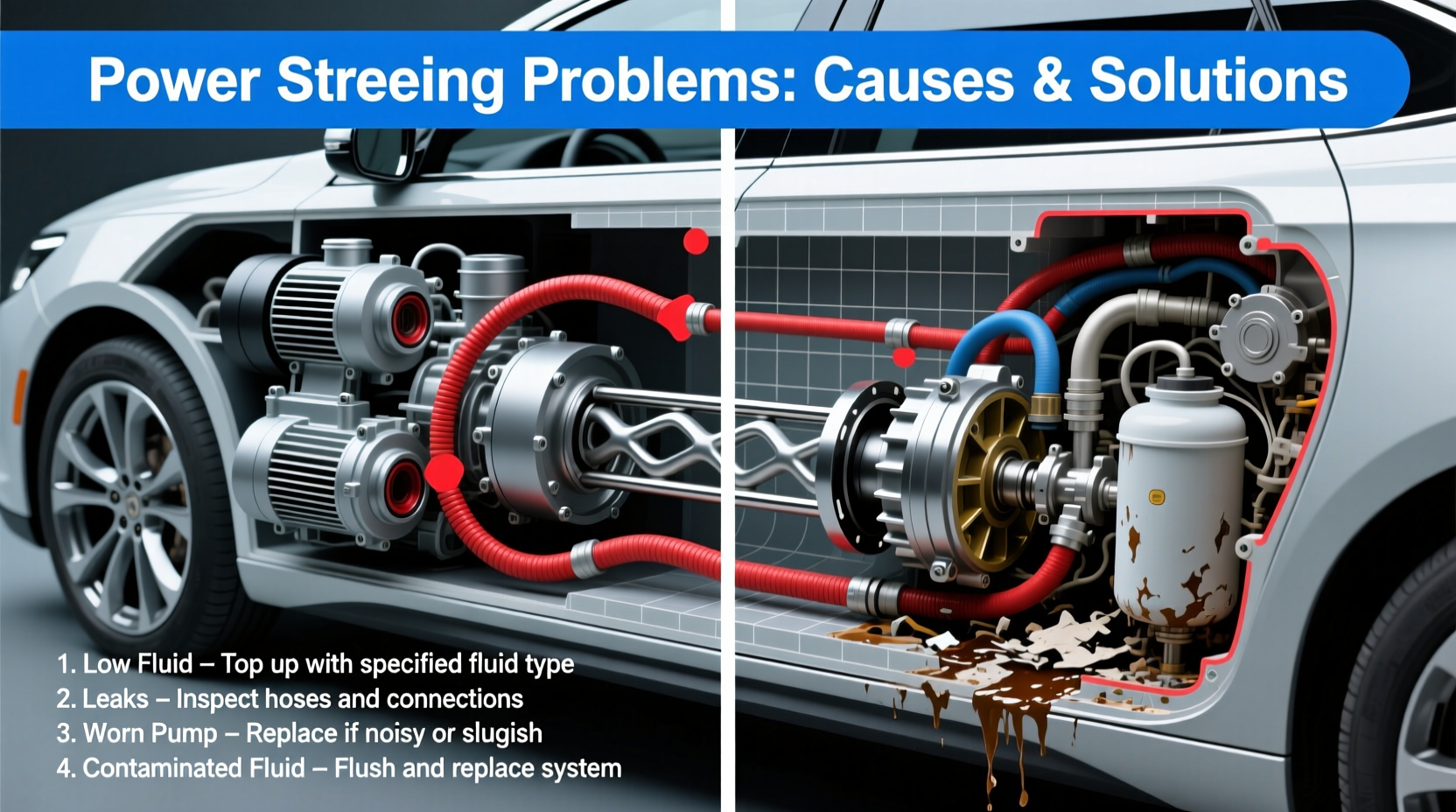
Before diving into failures, it helps to understand how the system functions. Most vehicles use either hydraulic or electric power steering:
- Hydraulic Systems: Use engine-driven pumps to pressurize fluid, which assists in turning the wheels. The pump sends fluid through hoses to the steering gear, reducing the force needed at the wheel.
- Electric Systems (EPS): Replace hydraulic components with an electric motor that provides assistance based on input from sensors. These are more efficient and require less maintenance.
Both systems aim to reduce driver effort, especially at low speeds or when parking. However, each has its own failure points and diagnostic challenges.
Common Causes of Power Steering Failure
Failure doesn’t happen overnight. It usually begins with subtle signs that escalate if ignored. Here are the most frequent causes:
1. Low or Contaminated Power Steering Fluid
In hydraulic systems, fluid is essential for transmitting pressure. Leaks from hoses, seals, or the reservoir can lead to low fluid levels. Over time, the fluid breaks down or gets contaminated with debris, reducing effectiveness and causing wear.
2. Failing Power Steering Pump
The pump generates hydraulic pressure. When bearings wear out or internal seals fail, the pump may whine, groan, or stop working entirely. A complete pump failure means no assistance, making steering extremely stiff.
3. Damaged Hoses and Leaks
Hoses degrade over time due to heat, vibration, and age. Cracks or loose connections cause fluid leaks, leading to reduced pressure and eventual system failure.
4. Worn Rack and Pinion
The rack converts rotational movement into linear motion to turn the wheels. Internal wear, seal degradation, or contamination can cause play in the steering, inconsistent response, or fluid leaks.
5. Electric System Malfunctions (EPS)
In electric systems, issues often stem from sensor failures, software glitches, or motor burnout. Warning lights like “EPS” or “Service Steering” typically appear on the dashboard.
“Over 60% of hydraulic power steering failures I see are due to neglected fluid changes or undetected leaks.” — Carlos Mendez, ASE-Certified Master Technician
Symptoms That Signal Trouble
Recognizing early warning signs can prevent total failure. Watch for these red flags:
| Symptom | Likely Cause | Action Required |
|---|---|---|
| Steering feels stiff | Low fluid, failed pump, or EPS motor issue | Check fluid level; inspect for leaks; scan for error codes |
| Whining or squealing noise | Low fluid or failing pump | Top off fluid; listen for pump noise under load |
| Steering wheel vibration | Worn rack, unbalanced tires, or alignment issue | Inspect suspension and steering components |
| Fluid puddles under the car | Leaking hose, seal, or reservoir | Identify leak source; repair or replace component |
| Dashboard warning light (EPS) | Sensor fault, software error, or motor failure | Use OBD2 scanner to diagnose code |
Step-by-Step Guide: What to Do When Power Steering Fails
If you experience sudden loss of steering assist, follow this sequence to stay safe and resolve the issue efficiently:
- Stay Calm and Reduce Speed: Power steering failure makes the wheel heavy, especially at low speeds. Keep both hands on the wheel and gently pull over to a safe location.
- Turn Off the Engine: Once stopped, shut off the vehicle to prevent further damage, especially if you suspect a leaking pump or overheating system.
- Check Fluid Level (Hydraulic Systems): Open the hood and locate the power steering reservoir. If the fluid is below the minimum line, top it off with the manufacturer-recommended type.
- Inspect for Leaks: Look under the car and around the pump, hoses, and rack for signs of fluid. Dark, oily residue is a telltale sign.
- Scan for Error Codes (EPS Models): Use an OBD2 scanner to check for stored codes related to the electric power steering system.
- Test Drive Briefly: After topping off fluid or clearing a temporary glitch, test drive at low speed in a safe area to assess improvement.
- Schedule Professional Inspection: Even if the problem seems resolved, have a mechanic inspect the entire system. Intermittent issues can indicate deeper problems.
Preventive Maintenance Checklist
Regular care can extend the life of your power steering system significantly. Use this checklist monthly or every oil change:
- ✅ Check power steering fluid level and color (should be clear red or amber, not brown or black)
- ✅ Inspect hoses and connections for cracks, bulges, or leaks
- ✅ Listen for unusual noises when turning the wheel
- ✅ Flush and replace fluid every 50,000 miles (if recommended by manufacturer)
- ✅ For EPS: Ensure battery and alternator are functioning properly (voltage issues affect motor performance)
- ✅ Rotate tires regularly to reduce strain on steering components
Real-World Example: A Missed Leak Leads to Costly Repair
Mark, a delivery driver in Denver, noticed a small puddle under his 2015 Honda Accord. He assumed it was water from the AC. Over three weeks, the steering became harder to turn, especially in parking lots. One morning, the wheel locked mid-turn. He managed to stop safely but couldn’t move the car. A tow revealed a completely dry power steering system. The rack-and-pinion unit had seized due to lack of lubrication. The repair cost $1,200—far more than fixing the initial $150 hose leak would have been.
This case highlights how ignoring minor symptoms escalates into major mechanical failure. Early detection saves money and ensures safety.
Frequently Asked Questions
Can I drive with no power steering?
You can, but it’s strongly discouraged. Without assistance, steering requires significantly more force, increasing the risk of losing control—especially at low speeds or during emergency maneuvers. Get the vehicle towed if the system has failed completely.
Is power steering fluid universal?
No. While some fluids are compatible across brands, manufacturers often specify exact types (e.g., ATF-based or synthetic-specific). Using the wrong fluid can damage seals and pumps. Always consult your owner’s manual.
How much does power steering repair cost?
Costs vary widely:
- Hose replacement: $150–$300
- Pump replacement: $400–$700
- Rack and pinion: $800–$1,500
- EPS motor or sensor: $600–$1,200
Final Thoughts: Act Early, Stay Safe
Power steering isn’t just about comfort—it’s a core safety feature. Ignoring early warnings turns manageable repairs into expensive breakdowns. Whether your vehicle uses hydraulic or electric assistance, routine checks and prompt responses to symptoms protect your investment and keep you in control on the road.




 浙公网安备
33010002000092号
浙公网安备
33010002000092号 浙B2-20120091-4
Comments
No comments yet. Why don't you start the discussion?