
Locking your keys inside the car is one of the most common—and frustrating—automotive mishaps. It can happen to anyone, at any time: while grabbing groceries, helping a child out of the back seat, or simply misjudging a quick errand. While panic may set in, it’s essential to stay calm and avoid risky or destructive attempts to regain access. Fortunately, several practical and safe methods exist to unlock your car without keys—methods that protect your vehicle, your wallet, and your peace of mind.
This guide outlines proven techniques, tools, and strategies used by professionals and everyday drivers alike. Whether you're dealing with a modern keyless entry system or an older mechanical lock, these solutions prioritize safety, legality, and effectiveness.
Understanding Your Car’s Lock System
Before attempting any unlock method, it's important to understand the type of locking mechanism your vehicle uses. Most cars fall into one of three categories:
- Mechanical locks: Found in older vehicles, these use physical key cylinders and rods to operate door latches.
- Power locks with remote fobs: Common in cars from the 1990s onward, these rely on electronic signals to lock and unlock doors.
- Smart key systems (keyless entry): Modern vehicles often feature proximity sensors, push-button start, and encrypted digital keys.
Knowing your car’s system determines which unlock methods are viable. For example, a slim jim might work on older power-lock systems but could damage wiring in newer models. Similarly, signal amplification won’t help if your car lacks smart-key technology.
Step-by-Step Guide to Safe Unlocking Methods
The following sequence outlines the safest and most effective approaches, starting with non-invasive techniques and progressing only when necessary.
- Check for unlocked doors or windows. Always walk around the vehicle and test each door—even the trunk. Many people assume all doors are locked when one may be open.
- Use a spare key. If stored at home, work, or with a trusted contact, this is the fastest and safest solution.
- Contact roadside assistance. Services like AAA, OnStar, or your insurance provider often offer free lockout help.
- Try the string method (for older cars with manual locks). This low-tech approach uses a looped string to manipulate the lock rod through a slightly opened window.
- Use a professional auto tool like a wedge and rod kit. Designed for trained technicians, these tools gently separate the door seal and activate internal controls.
- Call a licensed locksmith. A mobile locksmith can gain entry quickly without damage, typically charging $50–$120.
Avoid using coat hangers, screwdrivers, or improvised tools unless absolutely necessary and only if you fully understand your car’s internal mechanism. These can scratch paint, break plastic clips, or sever wiring harnesses.
Do’s and Don’ts of Car Unlocking
| Do’s | Don’ts |
|---|---|
| Stay calm and assess all options first. | Panic and force entry with sharp objects. |
| Use tools designed for automotive entry. | Insert metal between glass and weather stripping. |
| Call roadside assistance or a locksmith. | Attempt slim jim use on side-impact airbag-equipped doors. |
| Keep a spare key in a secure location. | Leave keys on the driver’s seat while running errands. |
| Learn your car’s emergency release features. | Ignore manufacturer warnings about DIY entry. |
Real-Life Scenario: How Sarah Regained Access Safely
Sarah, a nurse working a double shift, returned to her 2015 Honda Civic after a long day to find her keys inside the car. The windows were closed, and her phone battery was low. Instead of trying to pry the door open with a coat hanger—as she’d seen in movies—she took a breath and reviewed her options.
She remembered her insurance included roadside assistance. She called the number, verified her policy, and within 18 minutes, a certified technician arrived with a lockout kit. Using a soft inflatable wedge and a radio-frequency bypass tool, he opened the door in under two minutes—no scratches, no broken parts.
“I was embarrassed, but the technician was respectful and efficient,” Sarah said later. “It cost me nothing, and my car wasn’t damaged. I now keep a spare key in my purse.”
“We see dozens of lockouts weekly. The ones where people stay calm and call professionals almost always end without damage.” — Mark Reynolds, Mobile Auto Locksmith, 12 years experience
When Technology Can Help: Smart Key & Signal Tricks
Modern vehicles with keyless entry sometimes allow access even when the fob is inside. Some brands have built-in redundancy:
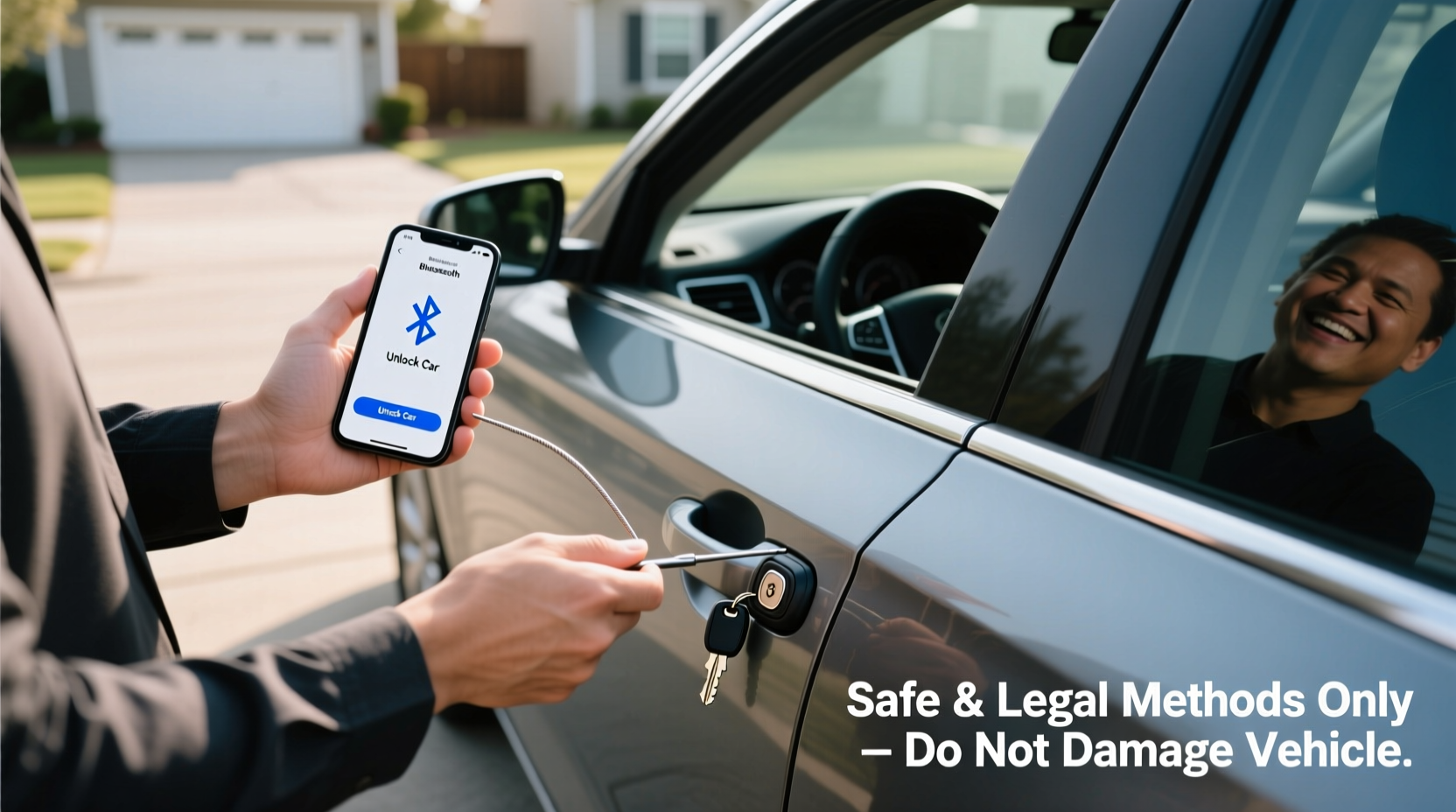
- Remote unlock via app: BMW, Tesla, Hyundai, and others offer smartphone apps that can unlock the car remotely if linked.
- Signal relay from a second device: If you have a backup fob at home, some systems allow family members to hold it near a phone during a video call, transmitting the signal.
- Backup mechanical key: Many smart fobs contain a hidden physical key for emergencies. Check your fob’s release mechanism.
However, these methods depend on battery life, network connectivity, and proper setup. Always ensure your car’s companion app is installed and logged in before an emergency arises.
Frequently Asked Questions
Can I unlock my car with a tennis ball?
No, the viral \"tennis ball method\" (cutting a hole and slamming it on the lock) is a myth. It has never been proven to work and can damage your door handle or paint.
Will a magnet unlock my car?
Generally, no. While rare vintage cars used magnetic locks, modern vehicles do not respond to external magnets. Attempting this can interfere with electronic sensors.
Is it legal to unlock my own car?
Yes, as long as you own or legally operate the vehicle. However, using certain tools in public may attract police attention. Be prepared to show ID or registration if questioned.
Prevention Checklist: Avoid Future Lockouts
- ✅ Keep a spare key in your wallet or with a neighbor.
- ✅ Program multiple key fobs and store one safely offsite.
- ✅ Install a GPS-enabled key tracker (like Tile or Apple AirTag) on your keychain.
- ✅ Use a secure magnetic key box mounted under the car.
- ✅ Enable remote unlock features through your car’s app.
- ✅ Practice situational awareness: feel for keys before closing doors.
“Over 70% of lockouts happen within 10 feet of the front door. People forget keys on counters, dashboards, or seats.” — National Automotive Locksmith Association Report, 2023
Final Thoughts
Being locked out of your car doesn’t have to mean damage, expense, or stress. With preparation and knowledge, you can resolve the situation safely and efficiently. The best approach combines immediate action—like calling roadside assistance—with long-term prevention, such as keeping spare keys and using tracking devices.
Remember, your car’s integrity matters more than saving a few minutes. Avoid shortcuts that risk costly repairs. Stay informed, stay calm, and know that help is always within reach.




 浙公网安备
33010002000092号
浙公网安备
33010002000092号 浙B2-20120091-4
Comments
No comments yet. Why don't you start the discussion?