
Small changes in behavior compound into profound results over time. Living a better life isn’t about grand gestures or overnight transformations—it’s built on consistent, practical habits that shape your mindset, energy, and focus. These routines don’t require massive effort but do demand intentionality. By integrating simple yet powerful actions into your day, you can improve your health, relationships, productivity, and overall well-being.
Start with Your Morning Routine
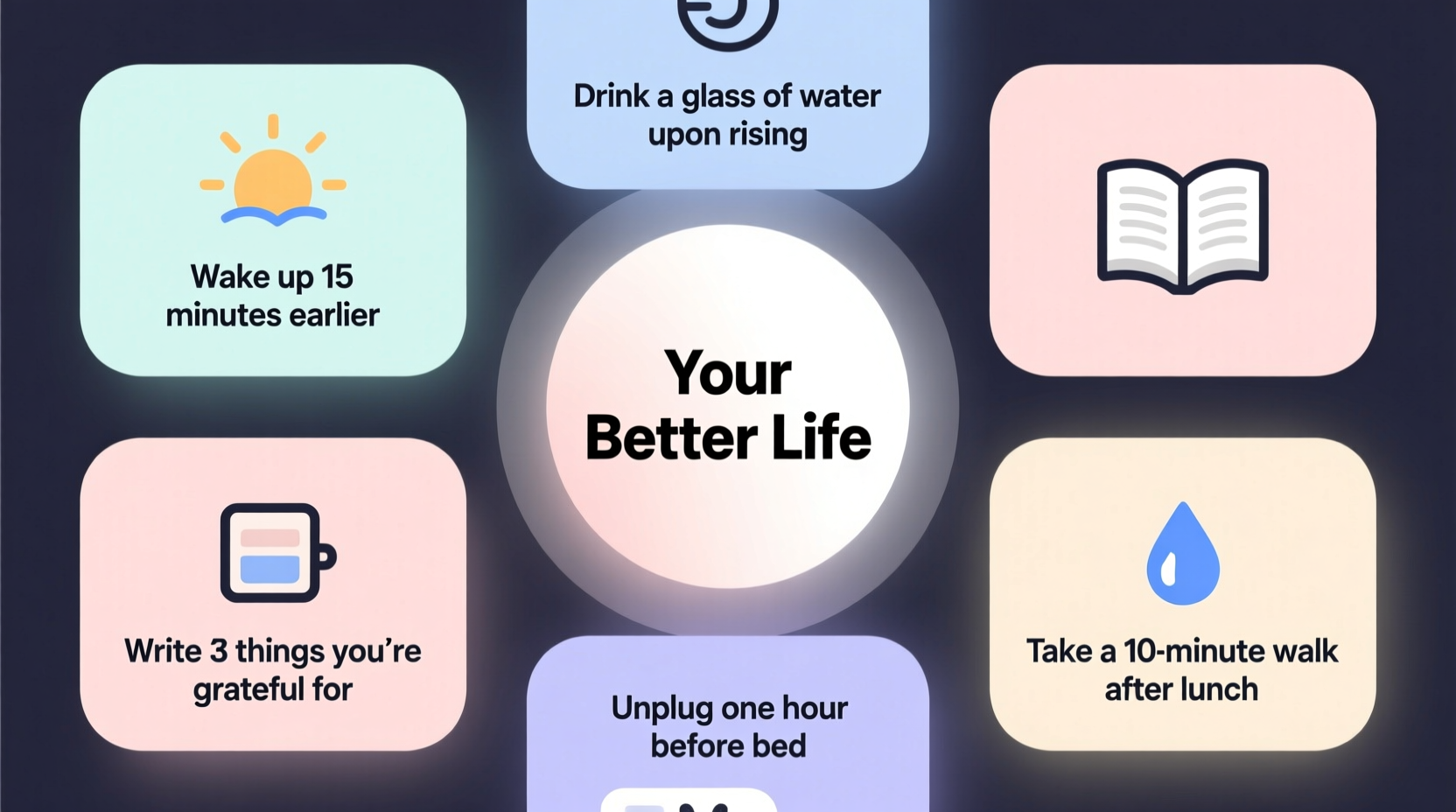
The first hour of your day sets the tone for everything that follows. A rushed, reactive start often leads to stress and decision fatigue. Instead, design a morning that supports clarity and calm. Begin by waking at a consistent time—even on weekends—to regulate your circadian rhythm. Avoid reaching for your phone immediately; the digital noise of notifications can hijack your mental state before you’ve had a chance to ground yourself.
Instead, spend the first 10–15 minutes in stillness. This could be meditation, journaling, or simply sitting with a cup of tea while reviewing your priorities. Movement is equally important: five minutes of stretching or a short walk outside exposes you to natural light and signals your brain that it’s time to be alert.
A Simple Morning Sequence
- Wake up and hydrate (glass of water)
- Spend 5 minutes breathing or meditating
- Write down one thing you’re grateful for
- Movement: stretch, walk, or light exercise
- Review your top 3 priorities for the day
Design Your Day with Intentional Focus
Most people operate in reaction mode—responding to emails, messages, and demands as they arrive. High performers, however, structure their day around deep work and meaningful tasks. Cal Newport, author of *Deep Work*, emphasizes that “the ability to perform deep work is becoming increasingly rare at exactly the same time it is becoming increasingly valuable.”
“The key to improving performance isn’t doing more things—it’s doing fewer things with greater focus.” — Cal Newport, Computer Scientist and Author
Block out 90-minute windows in your calendar for focused work. During this time, silence notifications, close unrelated tabs, and commit fully to one task. After each session, take a 15–20 minute break to recharge. This rhythm aligns with the body’s natural ultradian cycles and sustains mental stamina throughout the day.
Do’s and Don’ts of Daily Planning
| Do | Don’t |
|---|---|
| Plan your day the night before | Wait until morning to decide what to do |
| Limit your daily priorities to 3 key tasks | Make a list of 10+ items expecting to finish them all |
| Schedule breaks and transitions | Work straight through without rest |
| Use time blocking for high-focus work | Leave your schedule open-ended |
Build Physical and Mental Resilience
Your body and mind are interdependent. Neglecting physical health undermines mental clarity, emotional stability, and motivation. Yet fitness doesn’t require hours at the gym. Consistency beats intensity. Incorporate movement into your daily rhythm: take walking meetings, use stairs instead of elevators, or do a 7-minute home workout in the evening.
Nutrition plays an equally vital role. Instead of restrictive diets, focus on adding nutrient-dense foods—leafy greens, whole grains, lean proteins—while reducing processed sugars and refined carbs. Hydration is often overlooked; aim for at least 2 liters of water daily, especially if you consume caffeine.
Mental resilience grows through regular reflection. Spend 10 minutes each evening journaling: What went well? What could improve? What am I grateful for? This practice reinforces self-awareness and reduces rumination.
Real Example: How Sarah Reclaimed Her Energy
Sarah, a project manager in her mid-30s, was overwhelmed. She worked late, skipped meals, and felt constantly drained. After reading about habit stacking and time blocking, she made three small changes:
- She started waking at 6:30 a.m. and spent 10 minutes journaling and stretching.
- She began scheduling two 90-minute focus blocks each day for critical tasks.
- She committed to a 20-minute walk after lunch and stopped eating sugary snacks.
Within six weeks, Sarah reported higher energy, better sleep, and improved focus. Her team noticed her clearer communication and reduced reactivity. She wasn’t working harder—she was working smarter, guided by deliberate habits.
Create an Evening Wind-Down Ritual
How you end your day influences how well you recover and prepare for the next. A chaotic evening leads to poor sleep and groggy mornings. Instead, build a wind-down routine that signals safety and closure to your nervous system.
Begin by setting a digital curfew 60–90 minutes before bed. The blue light from screens suppresses melatonin, delaying sleep onset. Replace screen time with low-stimulus activities: reading a physical book, light stretching, or listening to calming music.
Tidy your space briefly—make your bed, clear clutter from your desk. A clean environment promotes mental clarity. Finally, reflect on the day with gratitude. Name three things that went well, no matter how small. This rewires your brain to notice positivity and reduces anxiety.
Evening Habit Checklist
- Set a screen curfew (e.g., 9:00 PM)
- Review tomorrow’s top 3 priorities
- Practice 5 minutes of breathwork or gentle yoga
- Write down 3 things you’re grateful for
- Keep your bedroom cool, dark, and quiet
Frequently Asked Questions
How long does it take to form a new habit?
Research from University College London suggests it takes an average of 66 days for a behavior to become automatic, though this varies by individual and complexity. The key is consistency, not perfection. Missing a day doesn’t reset progress—just resume the next day.
What if I don’t have time for these habits?
Start smaller than you think. Two minutes of mindfulness, a single glass of water upon waking, or one deep breath before checking email counts. Tiny habits create momentum. As James Clear writes in *Atomic Habits*, “You do not rise to the level of your goals. You fall to the level of your systems.”
Can these habits really change my life?
Yes—but only if practiced consistently. Individual habits may seem insignificant, but their cumulative effect reshapes your identity over time. When you repeatedly act like a healthy, focused, intentional person, you become one.
Take Action Today
Transformation doesn’t require a dramatic overhaul. It begins with a single choice: to do one small thing differently. Pick one habit from this article—perhaps drinking water first thing in the morning, or writing down three priorities—and commit to it for seven days. Track your experience. Notice shifts in mood, energy, or focus. Then add another.
Living a better life isn’t about achieving perfection. It’s about showing up daily with awareness and care. These habits are not shortcuts—they are the foundation. Start where you are, use what you have, and do what you can. Progress compounds quietly, then suddenly.




 浙公网安备
33010002000092号
浙公网安备
33010002000092号 浙B2-20120091-4
Comments
No comments yet. Why don't you start the discussion?