
Weight is often seen as a number on a scale, but what if you don’t have one? Whether due to travel, lack of access, or personal preference, there are reliable and surprisingly accurate ways to estimate your body weight without stepping onto a digital or analog scale. These methods rely on body measurements, water displacement, comparative weighing, and indirect indicators like clothing fit and physical performance. While not as precise as calibrated instruments, they offer valuable insights—especially when used consistently over time.
1. Use Body Measurements and Mathematical Estimation
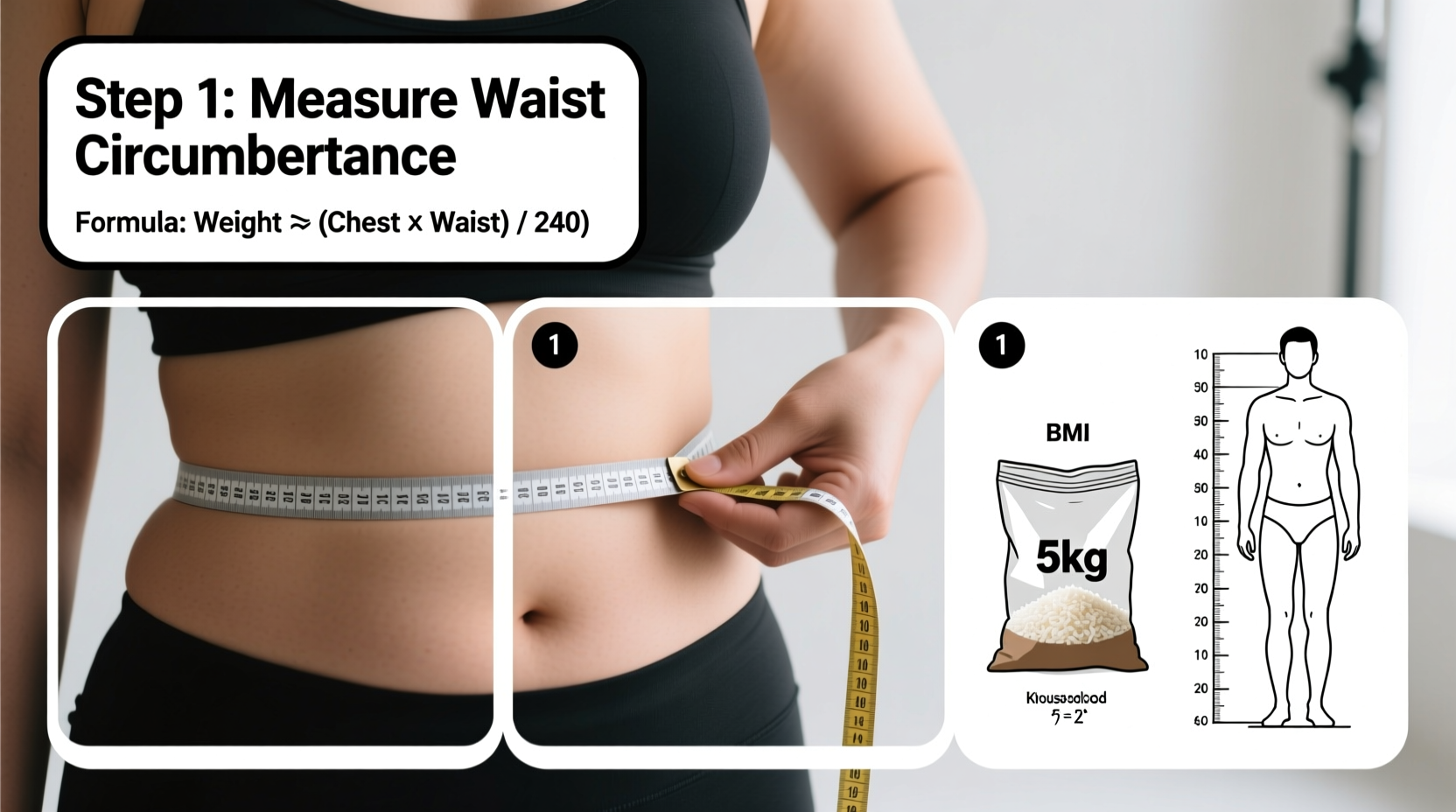
One of the most effective non-scale methods involves measuring key body circumferences and applying established formulas. The U.S. Army and Navy, for example, use neck, waist, and hip measurements to estimate body fat percentage—and by extension, changes in overall mass. While these don’t give exact weight, they can track trends and help infer whether you're gaining, losing, or maintaining.
To apply this method:
- Use a flexible tape measure to record your neck, waist (at the navel), and hips (for women).
- Ensure measurements are taken at the same time of day and under similar conditions.
- Plug the numbers into an online military body fat calculator, which will return an estimated body composition.
Over time, consistent increases or decreases in girth suggest corresponding shifts in body mass. For instance, a steady rise in waist circumference—without changes in activity—likely indicates weight gain.
2. Water Displacement Method (Archimedes’ Principle)
One of the oldest scientific methods for determining weight without a scale is based on buoyancy. Archimedes discovered that the volume of water displaced by a submerged object equals the volume of the object. With minor adjustments, this principle can be used to estimate human weight.
Here’s how to do it at home:
- Fill a large container (like a bathtub) to the brim with water.
- Carefully submerge yourself completely.
- Measure the volume of water that spills out—this is your body’s volume in liters.
- Multiply the volume by the average human body density (approximately 1.01 g/mL or 1.01 kg/L).
For example, if you displace 70 liters of water: 70 × 1.01 = ~70.7 kg (~156 lbs). This method works best when repeated under the same conditions and assumes average body density, which varies slightly by muscle and fat content.
“Water displacement offers a surprisingly accurate way to estimate volume-based mass, especially useful in field research.” — Dr. Lena Patel, Biomechanics Researcher, University of Colorado
3. Comparative Weighing with Known Objects
If you have access to objects with known weights—such as dumbbells, bags of flour, or luggage weights—you can use a balance technique to approximate your own weight. This requires a simple seesaw-like setup or a sturdy plank balanced over a fulcrum.
Step-by-step guide:
- Place a long, rigid board over a pivot point (like a brick or log).
- Sit on one end while placing known weights on the other until the board balances.
- Adjust weights incrementally until equilibrium is achieved.
- Add up the total weight on the opposite side.
This method relies on the principle of torque balance: weight × distance from fulcrum must be equal on both sides. For greater accuracy, ensure both you and the weights are equidistant from the center.
| Object | Common Weight | Usefulness in Estimation |
|---|---|---|
| Bag of sugar | 1 kg / 2.2 lbs | High – easy to stack and count |
| Dumbbell (standard) | 5–20 lbs | Very high – precise and durable |
| Backpack filled with books | Varies (estimate 10–15 lbs) | Moderate – less precise |
| Gallon of water | 8.34 lbs / 3.78 kg | High – very consistent weight |
4. Clothing Fit and Physical Feedback Indicators
Your wardrobe is a silent but powerful indicator of weight change. Clothes that once fit snugly may become loose or tight over time. While subjective, tracking fit across multiple garments increases reliability.
Monitor the following cues:
- Trouser waistband tightness or belt notch position
- Shirt collar comfort
- How sleeves or pant legs cover limbs (shortening suggests muscle gain or swelling)
- Difficulty tying shoelaces or reaching down (possible increase in abdominal mass)
A real-world example: Sarah, a 38-year-old teacher, lost access to her scale during a rural retreat. Over six weeks, she noticed her jeans buttoned more easily, her rings felt looser, and her energy during hikes improved. Based on these signs, she correctly inferred a 4–5 pound weight loss, later confirmed upon returning home.
Mini Case Study: Backpacker’s Weight Tracking in the Wild
Mark, an experienced hiker, embarked on a three-month trek through the Andes with no access to technology. To monitor his physical condition, he recorded daily observations: backpack strap tightness, shoe pressure, and morning ring fit. He also took weekly body measurements using a tailor’s tape. By comparing week one to week ten, he noted a 2-inch reduction in waist size and looser straps on his pack—indicating muscle loss and fat reduction. Upon returning, a clinic scale confirmed a 7% body weight drop, aligning closely with his field estimates.
5. Leverage Technology and Apps Without Direct Weighing
Modern fitness apps and wearables don’t always require a scale input. Many estimate body composition and weight trends using inputs like height, age, gender, activity level, and girth measurements. Tools such as:
- Fitness trackers (Apple Watch, Fitbit) that monitor calorie expenditure and movement patterns
- Apps like MyFitnessPal or Lose It! that correlate food intake with energy balance
- Smart mirrors or 3D body scanners (available in some gyms) that analyze shape changes
These systems use algorithms to project weight changes. While not lab-grade accurate, they’re effective for spotting directional trends—especially when combined with manual measurements.
Checklist: How to Track Weight Without a Scale
- ✅ Take weekly body measurements (waist, hips, neck, arms)
- ✅ Monitor clothing fit across multiple garments
- ✅ Use known-weight objects and a balance method for estimation
- ✅ Record physical performance (stairs climbed, endurance, strength)
- ✅ Log changes in jewelry or watch band tightness
- ✅ Apply water displacement for volume-to-mass approximation
- ✅ Input data into fitness apps for trend analysis
FAQ
Can I really estimate my weight accurately without a scale?
While not as precise as a calibrated scale, combining methods—like body measurements, comparative weighing, and clothing feedback—can provide a close approximation and reliable trend data over time.
How often should I take body measurements?
Once every 1–2 weeks is ideal. Daily fluctuations due to hydration or digestion make short-term changes misleading. Weekly consistency yields clearer patterns.
Does muscle weigh more than fat?
Pound for pound, muscle and fat weigh the same. However, muscle is denser, so increased muscle mass may not show on a scale but can alter body shape and measurement outcomes.
Conclusion
Determining your weight without a scale is not only possible—it can foster a healthier relationship with your body. By focusing on functional indicators like mobility, clothing fit, and physical endurance, you shift attention from numbers to real-life progress. Whether you're traveling, avoiding scale dependency, or simply curious, these practical methods empower you to stay informed and in control.




 浙公网安备
33010002000092号
浙公网安备
33010002000092号 浙B2-20120091-4
Comments
No comments yet. Why don't you start the discussion?