
Working online is no longer a luxury—it’s a viable career path accessible to anyone with internet access, basic digital literacy, and the right approach. Whether you're looking to replace your full-time income or earn extra cash on the side, remote work offers flexibility, autonomy, and global opportunities. But success doesn’t come from simply signing up for freelance platforms or creating a profile. It requires strategy, consistency, and a clear roadmap. This guide outlines practical, actionable steps to help beginners launch and sustain a successful online career.
1. Assess Your Skills and Choose a Profitable Niche
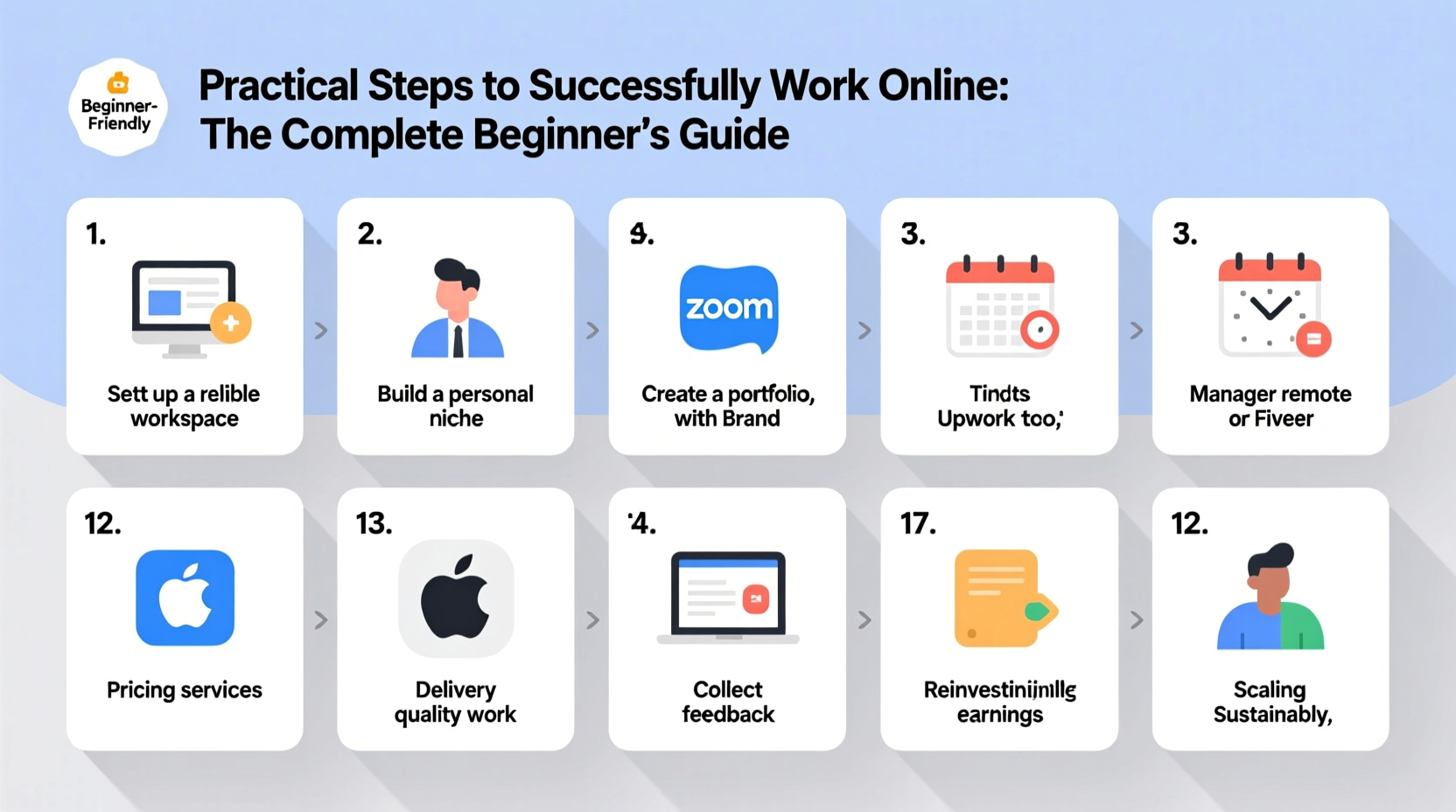
The first step in working online is understanding what you can offer. Many beginners make the mistake of jumping into high-demand fields without assessing their strengths or interests. Instead, conduct an honest self-audit: What are you good at? What do people often ask for your help with? What skills have you developed through past jobs, hobbies, or education?
Common beginner-friendly online skills include:
- Writing and editing (blogs, product descriptions, technical writing)
- Data entry and virtual assistance
- Social media management
- Graphic design (using tools like Canva or Figma)
- Customer service via chat or email
- Basic video editing or transcription
Once you’ve identified your strengths, research demand. Use platforms like Upwork, Fiverr, or LinkedIn to see which services are frequently requested and well-paid. Aim to position yourself in a niche that balances your ability with market need.
2. Set Up Your Digital Workspace and Tools
You don’t need expensive equipment, but you do need reliability. A stable internet connection, a functional computer or laptop, and essential software form the foundation of remote work.
| Tool Category | Recommended Tools | Why It Matters |
|---|---|---|
| Communication | Zoom, Google Meet, Slack | For client calls and team collaboration |
| Productivity | Google Workspace, Notion, Trello | To manage tasks, documents, and deadlines |
| Freelance Platforms | Upwork, Fiverr, Freelancer.com | To find initial clients and build reputation |
| Payment Processing | PayPal, Wise, Payoneer | To receive international payments securely |
| Time Tracking | Toggl, Clockify | To monitor productivity and bill accurately |
Keep your workspace distraction-free. Designate a quiet area, even if it’s just a corner of a room. Noise-canceling headphones and a second monitor can significantly boost efficiency over time.
3. Build a Professional Online Presence
Clients won’t hire you based on potential alone—they need proof of credibility. That starts with a professional presence.
Create a simple portfolio using free tools like Canva, WordPress, or Notion. Include samples of your work (even practice projects if you’re starting out), a short bio, and contact information. If you’re offering writing services, publish a few sample articles. If you’re a designer, showcase mockups or personal projects.
“We hire freelancers who present themselves like professionals—even if they’re new. A clean portfolio builds trust instantly.” — Sarah Lin, Remote Team Manager at TechFlow Inc.
Optimize your profiles on freelance platforms. Use a clear photo, write a compelling headline (e.g., “Detail-Oriented Virtual Assistant for Entrepreneurs”), and describe your services in terms of client benefits, not just tasks.
4. Step-by-Step Launch Plan: First 30 Days Online
Success online isn’t instant, but progress is possible within weeks if you follow a structured plan. Here’s a realistic 30-day roadmap for beginners:
- Day 1–3: Identify your top skill and define your service (e.g., “I offer blog writing for health and wellness brands”)
- Day 4–7: Set up accounts on two freelance platforms and create optimized profiles
- Day 8–10: Build a simple portfolio with 3–5 sample pieces
- Day 11–14: Apply to 5–10 entry-level jobs daily. Focus on quality applications, not quantity
- Day 15–21: Respond promptly to client messages. Accept lower-paying jobs if needed to gain reviews
- Day 22–30: Request feedback and testimonials. Reinvest first earnings into skill upgrades (e.g., a course on SEO writing)
This timeline prioritizes momentum over perfection. The goal is to land your first paid gig within the first month—any amount counts as validation.
5. Avoid Common Beginner Mistakes
Many newcomers struggle not because they lack talent, but because they fall into predictable traps. Recognizing these early can save months of frustration.
- Mistake: Trying to master too many skills at once.
Solution: Focus on one service until you’re consistently getting hired. - Mistake: Underpricing to attract clients.
Solution: Charge fairly. Low rates attract difficult clients and devalue your work. - Mistake: Ignoring contracts and payment terms.
Solution: Always use a simple agreement outlining scope, deadlines, and payment method. - Mistake: Working irregular hours.
Solution: Treat online work like a real job—set fixed hours to maintain discipline.
Real Example: How Maria Started Earning $500/Month in 8 Weeks
Maria, a former administrative assistant from Colombia, wanted to transition to remote work after her office closed. She had strong organizational skills and decent English but no formal experience.
She followed a focused plan: chose virtual assistance as her niche, created a Fiverr profile offering email management and scheduling, and used free templates to build a mini portfolio. In her first week, she applied to 12 jobs on Upwork, tailoring each proposal. She landed her first gig—$50 for organizing a small business owner’s inbox.
She delivered ahead of schedule, asked for a review, and gradually increased her rates. By week eight, she had five recurring clients and was earning $500/month part-time. Today, she works full-time remotely for three U.S.-based entrepreneurs.
Her advice? “Start small, be reliable, and treat every job like a reference. One happy client leads to three more.”
Frequently Asked Questions
Do I need a degree or certification to work online?
No. While certifications can help in fields like programming or digital marketing, most entry-level online jobs prioritize demonstrated skills over formal credentials. A strong portfolio and positive reviews matter more.
How much can a beginner expect to earn?
Earnings vary by skill and region. Beginners typically earn $10–$20/hour in roles like writing, data entry, or customer support. With consistent effort, many reach $1,000+/month within 3–6 months.
Are online jobs safe? How do I avoid scams?
Legitimate jobs never ask you to pay to work. Avoid offers that seem too good to be true, require upfront fees, or communicate only via personal email. Stick to reputable platforms and always verify client profiles.
Final Checklist: Are You Ready to Work Online?
- ✅ Identified your strongest marketable skill
- Focus on one to start.
- ✅ Set up a reliable workspace with internet and tools
- Test your setup before applying.
- ✅ Created a portfolio or profile showcasing your work
- Even practice samples count.
- ✅ Signed up on at least one freelance platform
- Upwork, Fiverr, or Toptal.
- ✅ Defined your hourly rate or project pricing
- Research market rates in your niche.
- ✅ Committed to applying for jobs daily
- Consistency beats luck.
Take Action Today—Your Online Career Starts Now
The barrier to working online has never been lower. Tools are free, demand is rising, and opportunities span industries and time zones. Success doesn’t require genius or luck—it requires action. Follow the steps outlined here, stay persistent through early rejections, and keep improving with every task. Within weeks, you can go from wondering “Can I do this?” to confidently saying “I’m building my future online.” Start today. Your first client is waiting.




 浙公网安备
33010002000092号
浙公网安备
33010002000092号 浙B2-20120091-4
Comments
No comments yet. Why don't you start the discussion?