
In today’s economy, relying solely on a single paycheck is no longer enough for many people. Whether you're aiming to pay off debt, save for a big purchase, or simply gain financial freedom, increasing your income is one of the most effective ways to improve your quality of life. The good news? You don’t need a high-risk startup or a six-figure job to see real results. With practical, consistent actions, you can create multiple streams of income that compound over time.
This guide outlines proven, low-barrier strategies anyone can implement—regardless of skill level or current income—to start earning more. These are not get-rich-quick schemes but sustainable methods grounded in real-world success stories and financial principles.
1. Leverage Your Existing Skills for Freelancing
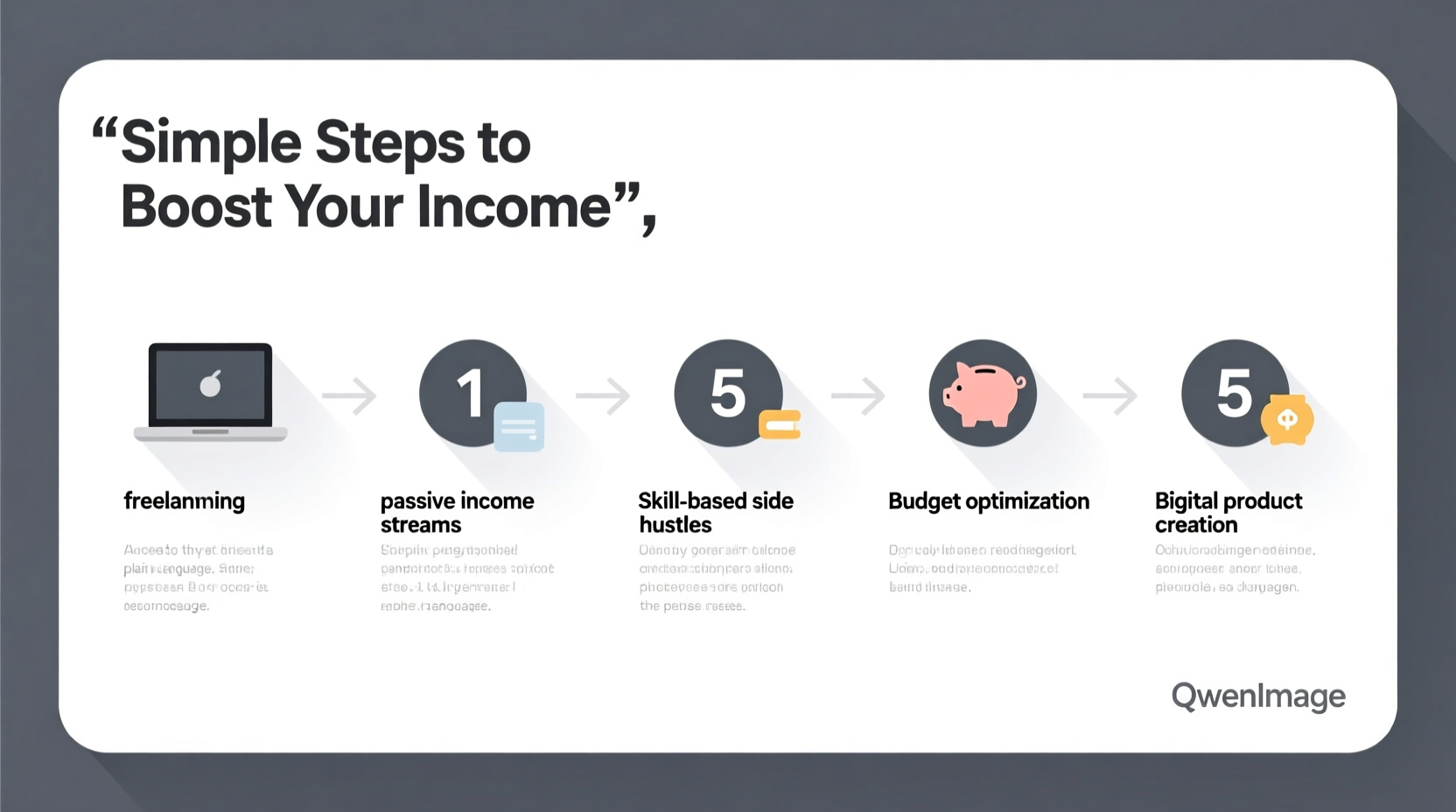
One of the fastest ways to increase income is by monetizing skills you already have. Whether it’s writing, graphic design, bookkeeping, coding, or social media management, platforms like Upwork, Fiverr, and Toptal allow you to connect with clients globally.
Start by identifying tasks you perform regularly at work or hobbies you enjoy. If you’ve helped coworkers format presentations or managed personal budgets, those are transferable services. Package them into clear offerings—like “Resume Editing – $50” or “Monthly Social Media Posts – $300”—and list them online.
Freelancing doesn’t require quitting your day job. Just two hours a night or five hours on weekends can generate an extra $500–$1,000 per month with consistency.
2. Create a Side Hustle Based on Market Demand
A side hustle is any income-generating activity outside your primary job. The key to profitability is aligning your idea with actual market demand—not just what you think might sell.
Popular low-cost options include:
- Digital product creation (e-books, templates, printables)
- Print-on-demand merchandise (T-shirts, mugs, stickers)
- Online tutoring or coaching
- Selling curated items on Etsy or eBay
For example, if you’re organized, create a budget planner PDF and sell it on Etsy. If you’re knowledgeable about fitness, offer 30-minute Zoom coaching sessions. The barrier to entry is low, and tools like Canva, Gumroad, and Shopify simplify setup.
“We often overestimate what we can do in a day and underestimate what we can do in a year.” — Jim Rohn, Personal Finance Mentor
Mini Case Study: From Hobby to $2,000/Month
Jamie, a school teacher from Portland, started designing motivational quote posters as a creative outlet. She uploaded a few designs to Etsy using free Canva templates and listed them as instant-download printables. Within three months, she had 200 sales averaging $7 each. By reinvesting profits into Pinterest ads and expanding her collection to include planners and habit trackers, her monthly income grew to $2,000 within a year—all while working less than 10 hours a week.
3. Optimize Your Current Job for Raises and Promotions
Before pursuing external income, maximize your current position. Many people leave thousands of dollars on the table by staying silent during performance reviews or avoiding salary negotiations.
Follow this step-by-step timeline to increase your earnings at work:
- Month 1: Document your achievements, responsibilities, and any extra projects you’ve handled.
- Month 2: Research average salaries for your role in your region using sites like Glassdoor or Payscale.
- Month 3: Schedule a meeting with your manager. Present your contributions and market data respectfully.
- Ongoing: Seek stretch assignments and certifications that qualify you for advancement.
Do’s and Don’ts When Asking for a Raise
| Do’s | Don’ts |
|---|---|
| Present data and specific examples of impact | Compare yourself negatively to colleagues |
| Choose a calm moment after a win | Threaten to quit unless paid more |
| Be open to alternative compensation (bonuses, remote days) | Make emotional appeals without evidence |
4. Automate Passive Income Streams
Passive income requires upfront effort but pays you repeatedly with minimal ongoing work. While true passivity is rare, these models scale well over time:
- Affiliate marketing: Recommend products you use and earn commissions via links (Amazon Associates, ShareASale).
- YouTube or blogging: Create evergreen content that earns ad revenue long after publishing.
- Digital courses: Record a workshop once and sell it indefinitely through Teachable or Podia.
- Rent out assets: List unused space (garage, parking spot) or equipment (camera, tools) on platforms like Neighbor or Fat Llama.
The power lies in compounding. A single $200 course sold to 100 people generates $20,000 with no additional labor.
Checklist: Launching a Passive Income Stream
- ✅ Identify a problem you can solve (e.g., “Beginners struggle with Excel”)
- ✅ Choose a format (video, PDF, audio)
- ✅ Build a simple sales page using free tools
- ✅ Set up payment processing (PayPal, Stripe)
- ✅ Promote via social media, email, or forums
- ✅ Collect feedback and improve the next version
5. Reduce Financial Leaks and Redirect Funds
Boosting income isn’t just about earning more—it’s also about keeping more. Small recurring expenses add up fast. Audit your subscriptions, memberships, and bills every quarter.
Common leaks include:
- Multiple streaming services ($15–20 each)
- Unused gym memberships ($30–80/month)
- Overpriced phone plans ($100+)
- High-interest credit card debt (costs far more over time)
Cut unnecessary costs and redirect that money into income-building activities—like taking an online course, buying domain names, or funding ad campaigns for your side hustle.
“Financial freedom is available to those who learn about it and work for it.” — Robert Kiyosaki, Author of *Rich Dad Poor Dad*
Frequently Asked Questions
How quickly can I start making extra money?
You can begin earning within days by signing up for freelance platforms or selling unused items online. Realistic first-month earnings range from $100–$500 with part-time effort. Consistency turns this into sustainable supplemental income.
Do I need to pay taxes on side income?
Yes. In most countries, all earned income must be reported. Keep records of earnings and expenses. Consider setting aside 25–30% for taxes if you're self-employed. Consult a tax professional to stay compliant.
Can I build extra income without risking my current job?
Absolutely. Most side hustles and passive income models can be managed outside work hours. Be mindful of employment contracts that restrict outside work, but many employers support side ventures as long as they don’t conflict with company interests.
Conclusion
Increasing your income doesn’t require luck or a radical career change. It starts with small, deliberate actions—using your skills, solving real problems, negotiating confidently, and building systems that pay you repeatedly. The most successful earners aren’t always the most talented; they’re the ones who take consistent action.
Start with one strategy. Freelance one hour a week. Pitch a raise. List a digital product. Each step builds momentum. Over time, these efforts compound into meaningful financial progress.




 浙公网安备
33010002000092号
浙公网安备
33010002000092号 浙B2-20120091-4
Comments
No comments yet. Why don't you start the discussion?