
Fulfillment isn’t a destination reached by chance—it’s built through consistent choices, self-awareness, and purposeful action. While many chase quick fixes or external validation, lasting transformation comes from integrating small, meaningful changes into daily life. These strategies are not about dramatic overhauls but about cultivating awareness, discipline, and alignment with what truly matters. By focusing on internal growth as much as external results, you create a foundation for deep, enduring satisfaction.
Clarify Your Values to Guide Decisions
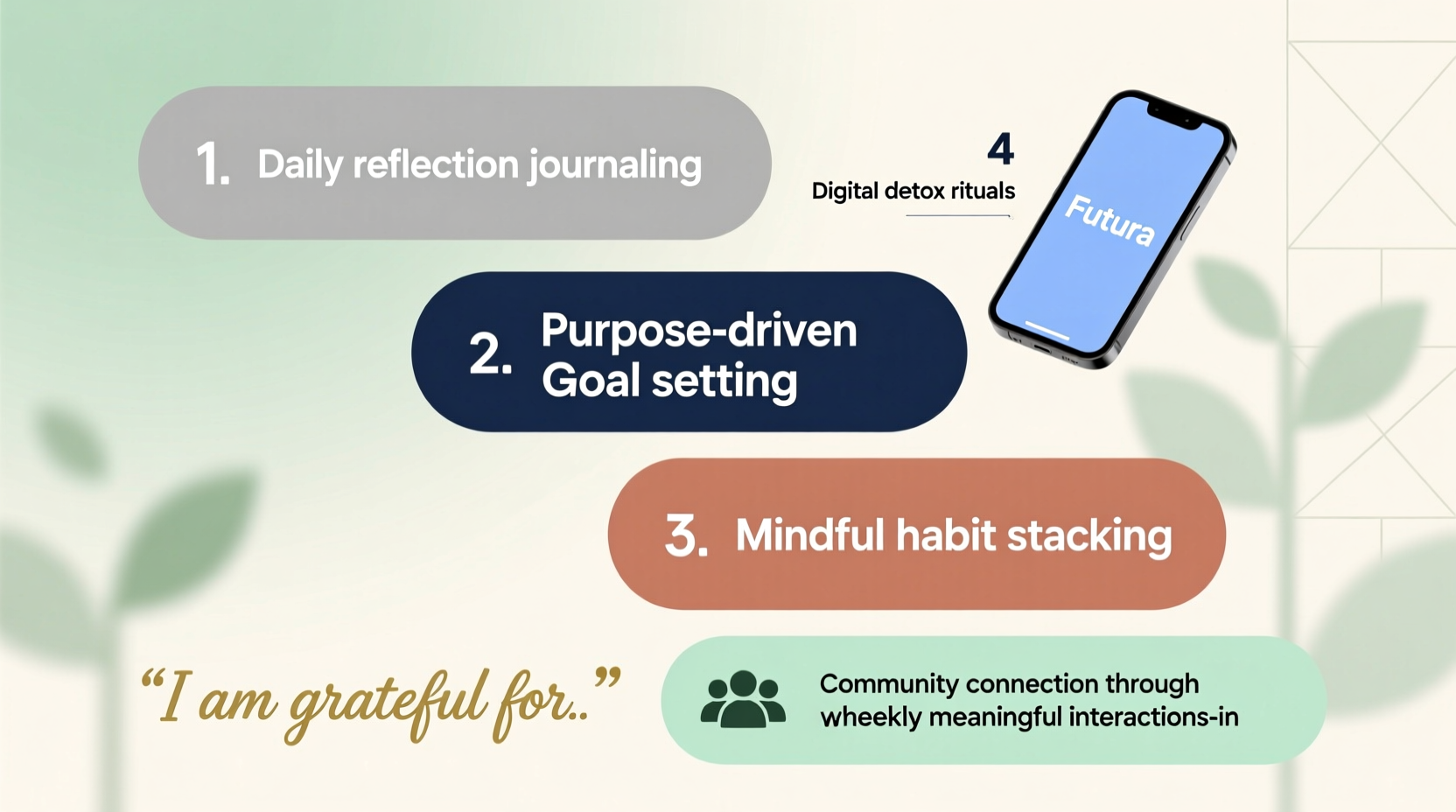
Living in alignment with your core values is one of the most powerful predictors of long-term fulfillment. When actions contradict beliefs—such as prioritizing career advancement at the cost of health or relationships—dissatisfaction grows, even if success is achieved externally.
Start by identifying what truly matters to you. Is it integrity? Creativity? Family? Growth? Service? Write down your top five values and reflect on how each currently shows up (or doesn’t) in your life.
Once clarified, use these values as filters for decisions. Ask: “Does this opportunity align with my value of growth?” or “Will saying yes here support my commitment to family time?” Over time, this practice builds coherence between who you are and how you live.
Design Daily Habits That Compound Over Time
Moments of inspiration rarely sustain change. What does? Systems of small, repeatable behaviors that accumulate into significant outcomes. James Clear, author of *Atomic Habits*, puts it clearly:
“Every action you take is a vote for the type of person you wish to become.” — James Clear, Habit Formation Expert
To build habits that stick:
- Anchor new behaviors to existing routines (e.g., meditate for 3 minutes after brushing your teeth).
- Start so small that resistance is nearly impossible (e.g., read one page per night).
- Track progress visibly—a habit tracker creates accountability and motivation.
For example, someone aiming to improve physical health might begin with two push-ups a day. The act itself is minor, but the identity shift—from “I’m not athletic” to “I am someone who exercises”—is profound.
Habit Design Checklist
- Identify one keystone habit to focus on (e.g., morning movement, journaling, digital detox before bed).
- Name the current trigger (time, location, emotion).
- Define the smallest possible version of the behavior.
- Schedule a weekly review to assess consistency, not perfection.
Reframe Your Relationship with Discomfort
Growth requires stepping into discomfort. Yet many abandon goals when initial excitement fades or obstacles arise. Lasting change demands a mental shift: discomfort is not a sign to stop, but a signal that you’re expanding your capacity.
Consider learning a new language. The first week may feel exciting; by week three, frustration sets in. This dip is normal. Those who persist don’t avoid discomfort—they expect it and interpret it as progress.
| Mindset Trap | Reframed Perspective |
|---|---|
| \"I should already be better at this.\" | \"Skill develops through repetition, not overnight.\" |
| \"If it feels hard, I must be doing it wrong.\" | \"Discomfort often precedes breakthrough.\" |
| \"I’ll start when I feel motivated.\" | \"Action comes before motivation—not the other way around.\" |
This cognitive reframing reduces the emotional weight of setbacks and strengthens resilience.
Build Fulfillment Through Contribution
Research consistently shows that people report higher levels of well-being when engaged in acts of service or contribution. It’s not about grand gestures, but regular moments of giving—mentoring a colleague, listening deeply to a friend, volunteering locally.
A real-world example: Sarah, a software engineer, felt stagnant despite professional success. She began dedicating two Saturday mornings a month to teaching coding basics to underserved youth. Within months, her sense of purpose grew—not because she changed careers, but because she added meaning to her routine.
Contribution doesn’t require sacrifice. It flourishes when integrated naturally into life. The key is intentionality—making space for generosity without burnout.
Create a Personal Growth Timeline
Rome wasn’t built in a day, and neither is a fulfilling life. Impatience undermines progress. A structured timeline helps manage expectations and maintain momentum.
- Month 1–3: Focus on awareness. Track habits, journal emotions, identify energy drains and sources.
- Months 4–6: Implement one major change (e.g., exercise routine, boundary setting at work) supported by micro-habits.
- Months 7–9: Expand into relational or creative domains—deepen connections or explore neglected passions.
- Months 10–12: Reflect, adjust, and solidify gains. Celebrate non-scale victories like improved patience or clarity.
This phased approach prevents overwhelm and allows integration. Each stage builds confidence for the next.
FAQ
How do I stay consistent when motivation fades?
Motivation is fleeting. Instead, rely on environment design and habit stacking. Make desired behaviors easy (e.g., lay out workout clothes the night before) and pair them with existing routines. Consistency grows from structure, not willpower.
Can fulfillment be built during challenging times?
Yes. Fulfillment isn’t dependent on perfect circumstances. Even in hardship, people find meaning through connection, growth, and contribution. Viktor Frankl, Holocaust survivor and psychiatrist, wrote: “Everything can be taken from a man but one thing: the last of the human freedoms—to choose one’s attitude in any given set of circumstances.”
What if my values conflict with my current job or lifestyle?
Begin with small realignments. Spend 30 minutes a week on a passion project. Set boundaries to protect personal time. Major transitions happen gradually. Use values as a compass, not a cudgel—progress, not perfection, is the goal.
Conclusion
Transforming your life isn’t about waiting for the right moment or achieving some distant milestone. It’s about making deliberate, daily choices that reflect who you want to be. Clarity of values, disciplined habits, resilience in discomfort, and meaningful contribution form the pillars of lasting fulfillment. No strategy works perfectly every day—but showing up consistently, even imperfectly, compounds into profound change.




 浙公网安备
33010002000092号
浙公网安备
33010002000092号 浙B2-20120091-4
Comments
No comments yet. Why don't you start the discussion?