
Transformation doesn’t require dramatic overhauls or overnight success. Lasting change begins with small, consistent actions that compound over time. Whether you're looking to improve your health, boost productivity, strengthen relationships, or gain clarity in life, the foundation lies in habit formation. The most effective changes are not forced through willpower alone but built into daily routines that align with your values and long-term goals. This guide explores proven, practical strategies grounded in behavioral psychology and real-world application to help you reshape your life—one sustainable habit at a time.
The Science of Habit Formation
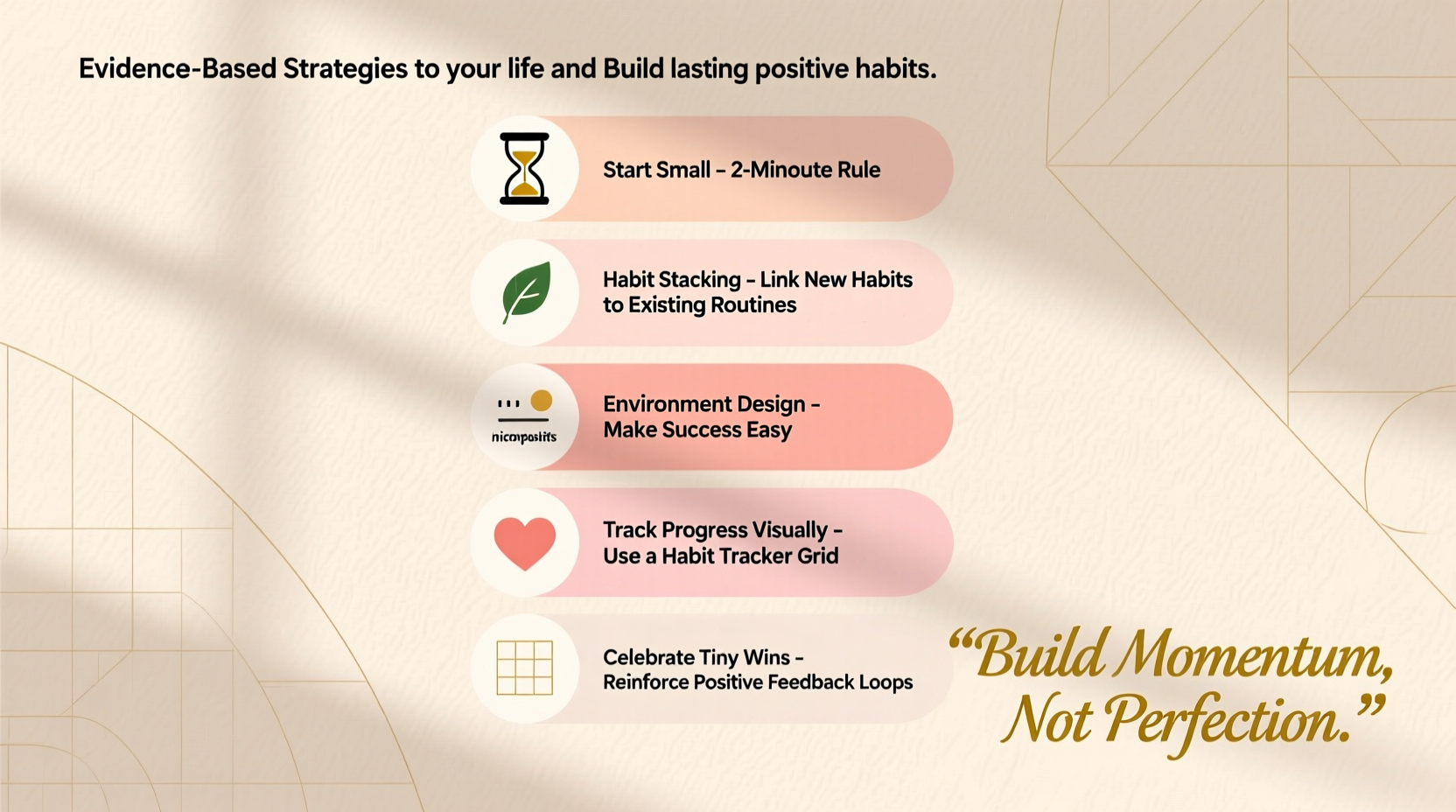
Habits are automatic behaviors triggered by cues in our environment. According to research by neuroscientists and psychologists, habits follow a three-part loop: cue, routine, and reward. The brain learns to associate a specific trigger (like waking up or finishing dinner) with a behavior (such as drinking water or journaling), which is reinforced by a positive outcome (feeling refreshed or mentally clear). Over time, this loop becomes automatic.
Dr. Wendy Wood, a leading researcher in habit psychology and author of *Good Habits, Bad Habits*, explains:
“People underestimate how much their environment shapes their behavior. It’s not about motivation—it’s about making the right actions easy and the wrong ones hard.” — Dr. Wendy Wood, Behavioral Scientist
This insight shifts the focus from relying on self-discipline to designing systems that support consistency. Instead of asking, “Can I do this every day?” ask, “How can I make this inevitable?”
Start Small: The Power of Micro-Habits
One of the most common reasons people fail to build habits is starting too big. Aiming to exercise for an hour daily or meditate for 30 minutes may sound ambitious, but it often leads to burnout or discouragement when missed.
Micro-habits—tiny, almost effortless versions of desired behaviors—solve this problem. For example:
- Instead of “exercise daily,” start with “put on workout clothes after breakfast.”
- Rather than “write 1,000 words,” begin with “open the document and write one sentence.”
- Swap “read 30 pages” with “read one paragraph before bed.”
Once the behavior becomes routine, you naturally expand it. The goal isn’t immediate results; it’s uninterrupted consistency. After two weeks of putting on workout clothes each morning, you’ll likely find yourself doing a quick stretch or walk without thinking. That’s momentum in action.
Design Your Environment for Success
Your surroundings silently shape your choices. Cluttered spaces invite distraction. A phone on the nightstand tempts late-night scrolling. Unhealthy snacks within reach increase mindless eating.
To build better habits, redesign your environment to reduce friction for good behaviors and increase it for bad ones.
| Habit Goal | Supportive Environment Design | What to Avoid |
|---|---|---|
| Drink more water | Keep a filled water bottle on your desk | Storing water in the fridge only |
| Read more books | Place a book on your pillow each morning | Leaving it on a distant shelf |
| Reduce screen time | Charge phone outside the bedroom | Keeping it nearby during sleep hours |
| Eat healthier | Cut vegetables and store them visibly in containers | Keeping junk food at eye level |
Environment design turns intention into inevitability. You don’t need more willpower—you need fewer obstacles between you and the behavior you want.
Step-by-Step Guide to Building a Lasting Habit
Follow this six-week timeline to embed a new habit into your life:
- Week 1: Choose one micro-habit – Pick something so simple it feels trivial. Example: “Floss one tooth.”
- Week 2: Anchor it to an existing routine – Pair the new habit with a current one. “After I brush my teeth, I will floss one tooth.”
- Week 3: Track it visually – Mark an “X” on a calendar each day you complete the habit. The chain effect builds motivation.
- Week 4: Add slight difficulty – Now aim to floss two teeth or both sides. Increase effort gradually.
- Week 5: Reflect and adjust – Review what worked. Did the cue fail? Was the reward missing? Tweak accordingly.
- Week 6: Expand or stack – Combine the habit with another. “After I floss, I will rinse with mouthwash.”
This method leverages habit stacking (popularized by James Clear in *Atomic Habits*) and the satisfaction of visual progress. By week six, the behavior feels natural, not forced.
Real-Life Example: From Burnout to Balance
Sarah, a 34-year-old project manager, felt overwhelmed, chronically tired, and disconnected from her personal goals. She wanted to start exercising and journaling but kept failing after a few days. Using these strategies, she began differently.
Instead of committing to “work out five times a week,” she started with “put on running shoes after breakfast.” She left them beside her bed the night before. Within a week, she was walking around the block. By week three, she added five push-ups after brushing her teeth.
For journaling, she placed a notebook and pen on her pillow each morning. After making her bed, she wrote one sentence about how she felt. Over time, those sentences grew into paragraphs. Three months later, Sarah was consistently jogging three times a week and maintaining a gratitude journal.
Her transformation wasn’t fueled by sudden motivation—it was engineered through simplicity and environmental cues.
Avoid Common Pitfalls
Even with the best intentions, people stumble. Here are frequent mistakes and how to overcome them:
- Mistake: Trying to change too much at once. Focus on one keystone habit—like sleep, movement, or mindfulness—that positively influences other areas.
- Mistake: Waiting for motivation. Action precedes motivation. Do the tiny version of the habit even when you don’t feel like it.
- Mistake: All-or-nothing thinking. Missing one day isn’t failure. Resume immediately. Progress isn’t linear.
Frequently Asked Questions
How long does it take to form a habit?
Contrary to the popular myth of 21 days, research shows it takes an average of 66 days for a behavior to become automatic—but it varies widely by person and complexity. Simpler habits form faster. Consistency matters more than speed.
What if I keep forgetting to do my new habit?
Use implementation intentions: “I will [BEHAVIOR] at [TIME] in [LOCATION].” Example: “I will meditate for one minute at 7:00 AM in my living room.” Pair this with a visual cue, like placing a cushion in view.
Can bad habits be replaced, not eliminated?
Yes—and it’s more effective. Instead of trying to stop snacking at night, replace it with herbal tea or a short walk. Replace the routine, keep the cue and reward.
Checklist: Build a Habit That Sticks
- ☐ Choose one micro-habit (small enough to do daily)
- ☐ Attach it to an existing routine (habit stacking)
- ☐ Modify your environment to support the behavior
- ☐ Track your progress with a calendar or app
- ☐ Review weekly and adjust based on what works
- ☐ Celebrate small wins to reinforce the reward loop
Conclusion: Change Is Built, Not Found
Lasting personal change isn’t sparked by inspiration—it’s constructed through deliberate, repeatable actions. You don’t need perfection. You need persistence. By starting small, shaping your environment, and trusting the process, you create a life where positive habits thrive without constant struggle.




 浙公网安备
33010002000092号
浙公网安备
33010002000092号 浙B2-20120091-4
Comments
No comments yet. Why don't you start the discussion?