
Self-control is not an inherited trait reserved for the disciplined few. It’s a skill—like riding a bike or learning a language—that can be developed with consistent practice. Whether you're trying to quit procrastinating, stick to a fitness routine, or avoid emotional spending, the ability to regulate impulses determines long-term success more than talent or intelligence. The good news? You can train your brain to resist temptation, make better choices, and build habits that last. Below are actionable, research-supported methods to strengthen self-control and create meaningful change.
The Science Behind Self-Control
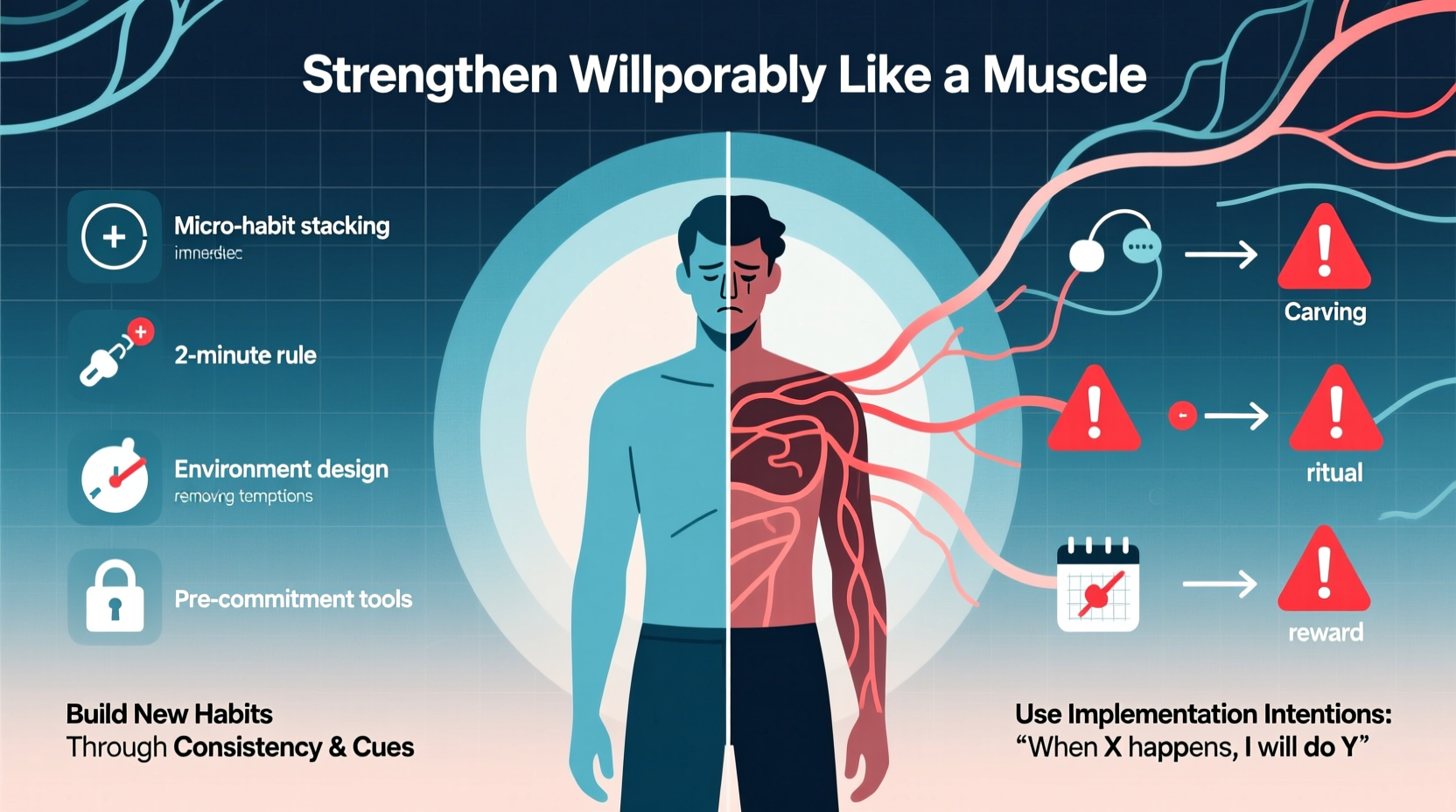
Self-control operates like a muscle: it fatigues with overuse but strengthens with regular training. Psychologist Roy Baumeister’s seminal work on \"ego depletion\" suggests that willpower is a finite resource in the short term. However, later studies show that beliefs about willpower matter just as much—those who view self-control as unlimited tend to perform better under pressure.
The prefrontal cortex, responsible for decision-making and impulse regulation, plays a central role. When this area is taxed by stress, fatigue, or distraction, self-control weakens. But through targeted practices, we can enhance its function and resilience.
“Willpower isn’t just a trait—it’s a state we can influence through environment, mindset, and behavior.” — Dr. Kelly McGonigal, Health Psychologist and Author of *The Willpower Instinct*
Step-by-Step Guide to Building Self-Control
Improving self-control doesn’t require heroic effort. Small, deliberate actions compound over time. Follow this six-step process to build lasting discipline:
- Identify your triggers. Track moments when you lose control. Is it late at night? After stressful meetings? Awareness is the first step toward intervention.
- Design your environment. Remove temptations before they test your willpower. Keep junk food out of the house if you’re dieting; uninstall social media apps during work hours.
- Create implementation intentions. Use the formula: “If [situation], then I will [action].” Example: “If I feel the urge to check my phone, then I’ll take three deep breaths instead.”
- Start small. Commit to two minutes of meditation, five push-ups, or one page of reading. Tiny actions reduce resistance and build momentum.
- Monitor progress daily. Use a habit tracker or journal to reflect on wins and setbacks without judgment.
- Recharge regularly. Sleep, nutrition, and mindfulness directly impact self-regulation. A depleted body cannot sustain strong willpower.
Habit Transformation: From Intention to Automaticity
Habits form through a loop: cue, routine, reward. To change them, you must interrupt the pattern. Charles Duhigg, author of *The Power of Habit*, emphasizes that you can’t eliminate a habit—you can only replace it.
For example, someone who snacks while watching TV (cue) may be seeking relaxation (reward). Instead of chips, they could try herbal tea or stretching. The cue and reward remain, but the routine shifts.
Research shows it takes an average of 66 days for a new behavior to become automatic—though it varies by individual and complexity. Consistency matters more than perfection.
Checklist: Building Better Habits
- Define one keystone habit (e.g., morning exercise) that positively influences other areas
- Anchor new habits to existing routines (“After I brush my teeth, I’ll meditate for 2 minutes”)
- Use visual cues (e.g., place running shoes by the bed)
- Track streaks to maintain motivation
- Celebrate small wins to reinforce the behavior
Common Pitfalls and How to Avoid Them
Even with the best intentions, people often fall into predictable traps. Recognizing these patterns helps prevent derailment.
| Pitfall | Why It Happens | Solution |
|---|---|---|
| All-or-nothing thinking | One slip leads to abandonment of the entire effort | Adopt a growth mindset: “Mistakes are data, not failure.” |
| Over-reliance on motivation | Motivation fluctuates; discipline is stable | Focus on systems, not feelings. Show up even when unmotivated. |
| Trying to change too much at once | Willpower is limited; multitasking drains resources | Pick one high-impact habit and master it first. |
| Neglecting recovery | Chronic stress depletes self-control capacity | Prioritize sleep, hydration, and mental breaks. |
Real-Life Example: Overcoming Late-Night Snacking
Sarah, a project manager, struggled with late-night eating despite eating well during the day. She tracked her behavior and noticed the pattern: stress from work emails triggered a craving for sweets around 9 p.m. Her initial attempts to “just stop” failed repeatedly.
Using habit-replacement strategy, she identified the real need: decompression. She replaced snacking with a 10-minute walk followed by chamomile tea. She also set a rule: no work emails after 8 p.m. Within three weeks, the urge diminished significantly. By addressing the root cause—not just the symptom—she transformed the habit sustainably.
Frequently Asked Questions
Can self-control be improved at any age?
Yes. Neuroplasticity allows the brain to adapt throughout life. Studies show that adults who practice mindfulness, goal-setting, and delayed gratification exercises improve their self-regulation skills regardless of starting point.
What should I do when I fail?
Treat setbacks as feedback, not defeat. Ask: What triggered the lapse? How can I adjust my strategy? Self-compassion increases long-term adherence more than self-criticism.
How do emotions affect self-control?
Strong emotions like anger, anxiety, or sadness impair prefrontal function. Emotional regulation techniques—such as labeling feelings (“I’m feeling overwhelmed”) or box breathing—help restore cognitive control.
Conclusion: Start Small, Think Long-Term
Strengthening self-control isn’t about white-knuckling through cravings or forcing unnatural discipline. It’s about understanding your mind, designing supportive environments, and building habits that serve your values. Lasting transformation comes not from occasional bursts of willpower, but from daily micro-decisions aligned with your goals.
You don’t need to be perfect. You need to be persistent. Begin with one small change—five minutes of focused breathing, a single healthier meal, or a ten-second pause before reacting. Each act of self-control strengthens your inner resolve. Over time, those choices accumulate into a life of greater freedom, purpose, and achievement.




 浙公网安备
33010002000092号
浙公网安备
33010002000092号 浙B2-20120091-4
Comments
No comments yet. Why don't you start the discussion?