
Supporting a child with autism in their learning journey requires more than traditional teaching methods. Autism Spectrum Disorder (ASD) affects communication, social interaction, and behavior, which means that educational approaches must be individualized, consistent, and rooted in empathy. Whether you're a parent guiding your child at home or an educator managing a diverse classroom, understanding effective techniques can transform challenges into meaningful progress. This guide offers practical, evidence-based strategies designed to foster growth, reduce anxiety, and promote independence.
Understanding the Learner: Core Principles of Autism Education
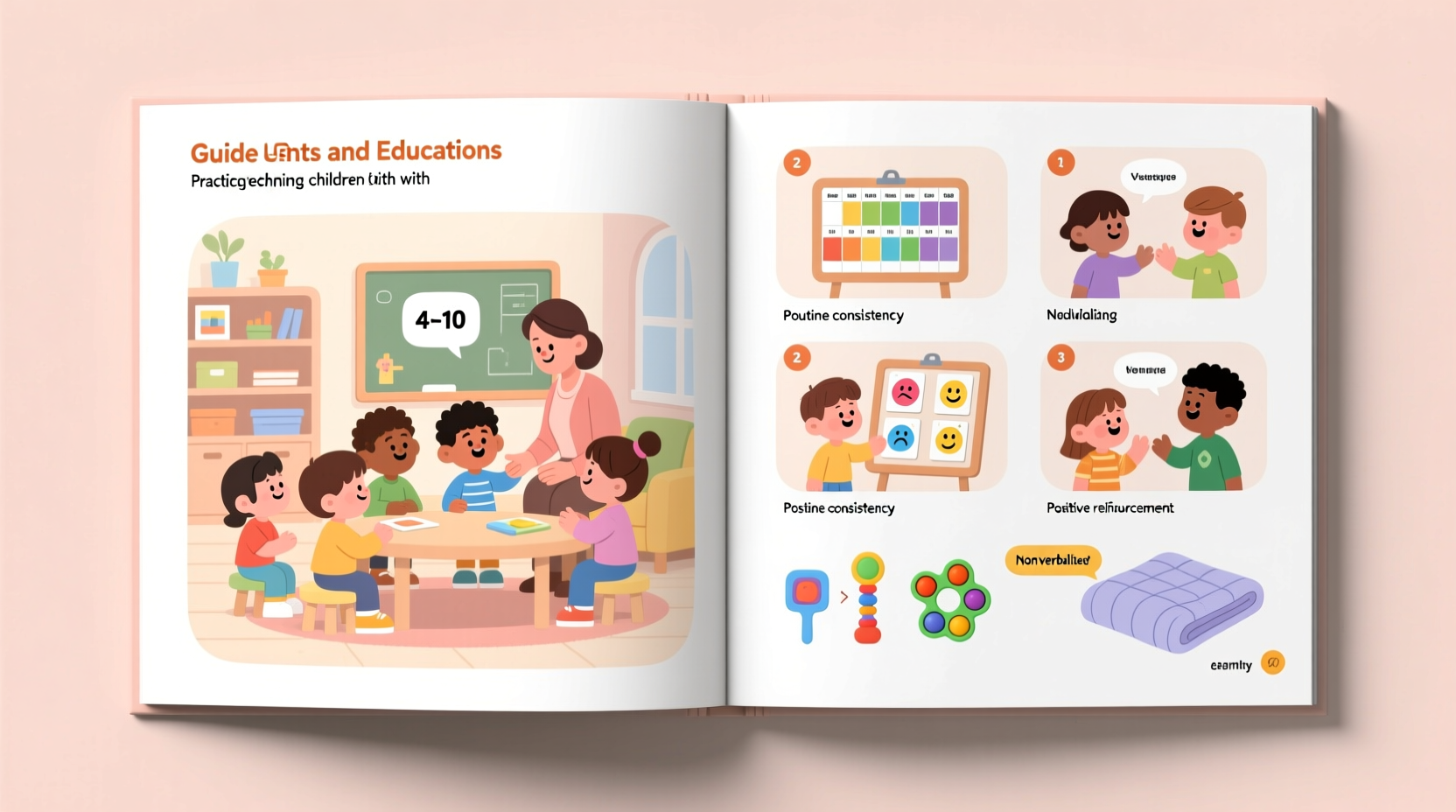
Children with autism process information differently. Many are visual learners who thrive on routine and struggle with unexpected changes. Sensory sensitivities—such as discomfort with loud noises or bright lights—can interfere with focus and engagement. Recognizing these traits is the first step in creating a supportive environment.
Effective teaching begins with observation. Note what captures the child’s attention, what triggers distress, and how they communicate preferences. Some children use speech, while others rely on gestures, picture cards, or assistive technology. The goal is not to force conformity but to meet the child where they are and build from there.
“Teaching a child with autism isn’t about changing who they are—it’s about removing barriers so they can show us who they can become.” — Dr. Temple Grandin, Professor of Animal Science and Autism Advocate
Structured Teaching Using Visual Supports
Visual supports are among the most powerful tools in autism education. They make abstract concepts concrete and provide predictability, which reduces anxiety. These tools include picture schedules, task strips, choice boards, and visual timers.
A morning routine might be broken down into steps using laminated photos: waking up, brushing teeth, getting dressed, eating breakfast, and leaving for school. Each completed task is checked off or turned over, giving the child a sense of accomplishment and control.
For older students, visual organizers like mind maps or flowcharts help break down academic tasks. For example, writing an essay can be divided into brainstorming, outlining, drafting, and editing, each represented by a simple icon.
Step-by-Step Guide: Creating a Daily Visual Schedule
- Observe the child’s daily routine and identify key activities.
- Select clear images or symbols for each activity (use apps like Boardmaker or free resources online).
- Arrange the visuals in sequence on a board or strip of paper.
- Review the schedule with the child each morning.
- Allow the child to remove or flip each card after completing the task.
- Update the schedule gradually as routines change.
Applied Behavior Analysis (ABA) Techniques in Practice
Applied Behavior Analysis is a widely used method that reinforces desired behaviors through positive reinforcement. While controversial in some circles due to outdated practices, modern ABA focuses on skill-building and consent-based learning.
For example, if a child learns to request a snack using a picture card, they immediately receive the snack along with praise. Over time, this strengthens communication and motivation. The key is consistency and immediacy—the reward must follow the behavior quickly to create the connection.
Challenging behaviors such as tantrums or self-stimulation are addressed by identifying the underlying cause. Often, these behaviors serve a purpose: escaping a difficult task, seeking sensory input, or expressing frustration. Instead of punishment, the strategy involves teaching a replacement behavior. If a child hits to avoid work, they can be taught to hand a “break” card instead.
| Behavior | Possible Function | Replacement Skill |
|---|---|---|
| Throwing materials during math | Escape task | Use a “help” card or take a short walk |
| Hand-flapping when excited | Sensory regulation | Acceptable; no replacement needed |
| Refusing to transition to class | Need for predictability | Use a countdown timer and visual cue |
Incorporating Sensory Integration Strategies
Many children with autism experience sensory processing differences. A buzzing light may feel unbearable, or certain textures may provoke strong reactions. Ignoring these issues can lead to meltdowns or shutdowns, often mistaken for defiance.
To support sensory needs, create flexible environments. Allow noise-canceling headphones in noisy areas. Provide fidget tools during seated tasks. Offer movement breaks—jumping, stretching, or wall pushes—before demanding cognitive work. These are not distractions; they are essential accommodations.
In classrooms, designate a quiet corner with soft lighting and calming items like weighted blankets or textured toys. At home, establish predictable transitions with warnings: “In five minutes, we’ll turn off the TV,” followed by a visual timer.
Mini Case Study: Supporting a 7-Year-Old in Elementary School
Jamal, a second-grader with autism, struggled with transitions between activities. He would often freeze or cry when asked to move from art to reading. His teacher introduced a visual timer and a “first-then” board: “First reading, then puzzle time.” She also allowed him to carry a small stress ball during transitions. Within three weeks, Jamal began moving independently between activities 80% of the time. The change wasn’t due to discipline—it was due to understanding.
Collaborative Checklist: Building a Support Plan at Home and School
Success depends on alignment between caregivers and educators. Use this checklist to ensure consistency:
- ✅ Identify the child’s primary communication method (speech, PECS, AAC device).
- ✅ Establish shared visual supports across settings (home, school, therapy).
- ✅ Agree on key behavioral goals and reinforcement systems.
- ✅ Schedule regular check-ins between parents and teachers (weekly or biweekly).
- ✅ Document progress with brief notes or video clips (with consent).
- ✅ Train all adults involved in using consistent prompts and responses.
- ✅ Review and adjust the plan every 6–8 weeks based on the child’s progress.
Frequently Asked Questions
How do I teach a nonverbal child to communicate?
Begin with simple choices using pictures or objects. Hold up two snacks and let the child point or hand one back. Pair this with a word (“You want apple!”). Gradually expand to sentence strips or speech-generating devices. The goal is functional communication, not speech alone.
What should I do during a meltdown?
During a meltdown, the child is overwhelmed and cannot reason. Avoid talking excessively or demanding compliance. Ensure safety, reduce sensory input (dim lights, lower voices), and wait it out. Afterward, review what triggered it and consider adjustments. Meltdowns are not manipulation—they are distress signals.
Can these techniques work for older children or teens?
Absolutely. While early intervention is beneficial, people with autism continue to learn throughout life. Adjust strategies to match developmental level—use age-appropriate visuals, focus on life skills, and involve the individual in setting goals. A teenager may use a digital planner instead of a picture board, but the principle of structure remains the same.
Conclusion: Empowerment Through Understanding
Teaching a child with autism is not about fixing deficits but nurturing strengths. Every child has unique ways of thinking, feeling, and connecting. By applying structured routines, visual tools, sensory awareness, and compassionate behavior support, parents and educators lay the foundation for lifelong learning and confidence.
The most effective technique is consistency—not perfection. Progress may be slow, but small gains compound over time. Celebrate effort, listen deeply, and collaborate openly. When adults align around respect and clarity, children with autism don’t just adapt—they thrive.




 浙公网安备
33010002000092号
浙公网安备
33010002000092号 浙B2-20120091-4
Comments
No comments yet. Why don't you start the discussion?