
Insulated cups are engineered to maintain beverage temperatures, but performance varies widely based on usage habits. Many people assume their high-end tumbler should keep coffee hot for 12 hours—yet often find it lukewarm after just a few. The truth is, even the best vacuum-insulated design can’t compensate for poor user practices. Temperature retention isn’t just about build quality; it’s about how you prepare, fill, handle, and maintain your cup. With the right techniques, you can consistently achieve optimal thermal performance, whether you're sipping iced tea on a summer hike or black coffee during a winter commute.
Understand How Insulation Actually Works
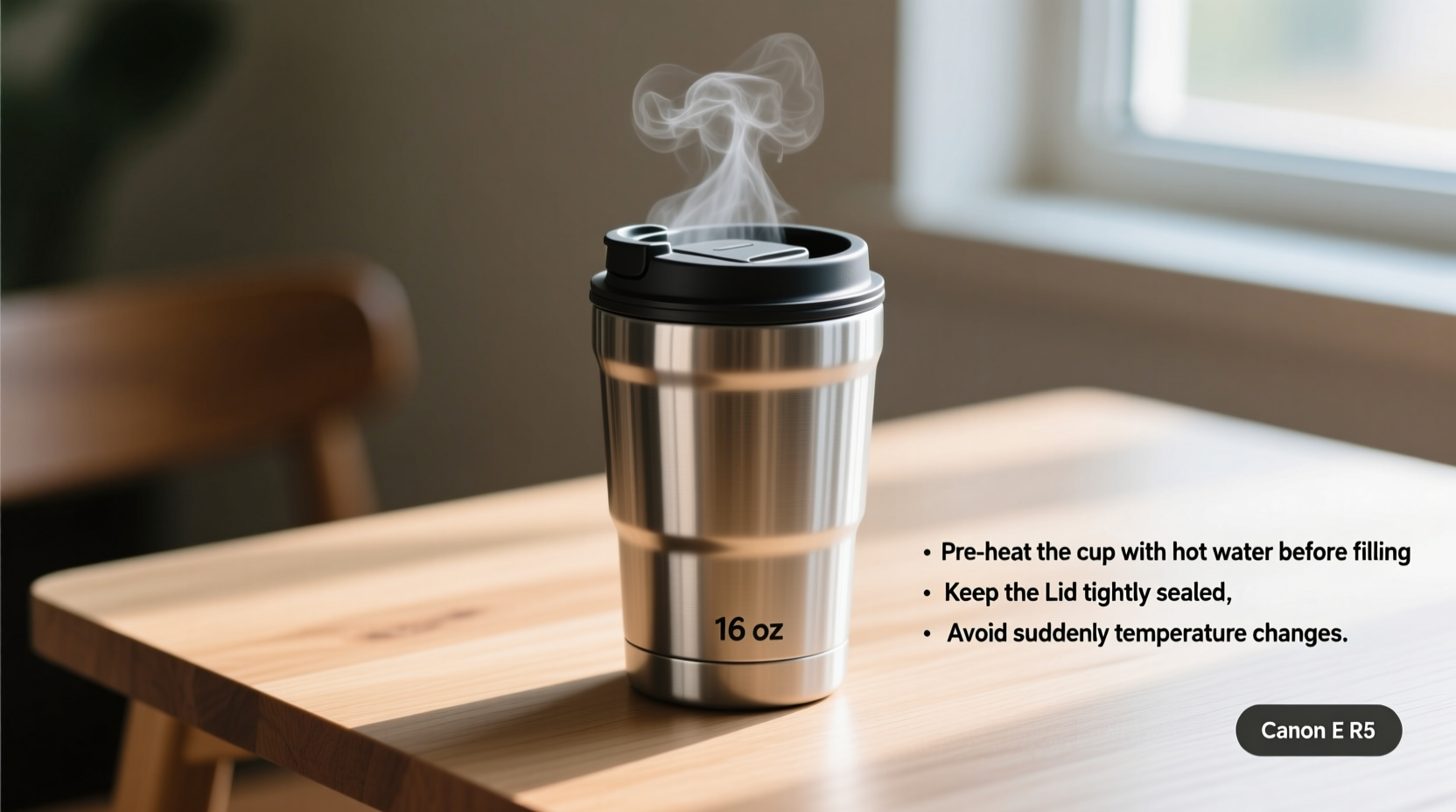
Vacuum insulation—the gold standard in modern drinkware—relies on a double-walled stainless steel construction with a vacuum-sealed gap between layers. This vacuum eliminates conduction and convection, two primary modes of heat transfer. However, heat still escapes through the lid, rim, and base, especially if not properly sealed or pre-conditioned. Radiation plays a minor role, but the biggest losses occur at contact points: the mouth of the cup, the cap seal, and external temperature exposure.
Manufacturers often quote ideal lab conditions: a full preheated cup in a controlled environment. Real-world use rarely matches those standards. To close the gap between promise and performance, users must take active steps to support the cup’s design.
“Most heat loss in insulated tumblers happens within the first 30 minutes. Preheating reduces that spike dramatically.” — Dr. Alan Tran, Materials Scientist & Thermal Dynamics Researcher
Preheat or Pre-Chill Your Cup Before Use
One of the most overlooked yet effective practices is pre-conditioning your cup. Pouring hot liquid into a room-temperature vessel causes immediate heat transfer from the drink to the metal walls. The same applies in reverse: cold beverages warm up faster when poured into a warm container.
To counteract this, always preheat or pre-chill your cup before filling:
- For hot drinks: Fill the cup with boiling water and let it sit for 5–10 minutes. Discard the water, then immediately add your hot beverage.
- For cold drinks: Fill with ice water and let it sit for 5–7 minutes. Drain and add your chilled drink or fresh ice.
This simple step stabilizes the internal surface temperature, minimizing initial thermal shock and extending overall retention by up to 40%.
Maximize Fill Level and Minimize Air Gap
The amount of air inside the cup directly affects temperature stability. Air is a poor insulator compared to liquid, and it allows convective currents to form, accelerating heat exchange. The more headspace (air gap), the faster your drink warms or cools.
Always fill your cup as close to the brim as safely possible—typically just below the bottom of the lid’s inner seal. If you’re using a straw lid, ensure the liquid level covers the straw intake to prevent air siphoning.
| Fill Level | Effect on Retention | Recommendation |
|---|---|---|
| Full (within 0.5 inch of top) | Optimal – minimal air, maximum thermal mass | Ideal for all beverages |
| Half-full | Poor – doubled air volume increases heat transfer | Avoid unless necessary |
| Nearly empty | Very poor – rapid temperature change | Replenish or transfer to smaller vessel |
Choose the Right Lid and Seal It Properly
Lids are the weakest point in any insulated cup’s thermal defense. Tumblers often come with multiple lid options—sliding lids, straw lids, flip lids—each with different sealing efficiencies. Solid lids with rubber gaskets provide the best insulation, while open-drinking ports allow constant heat escape.
Always ensure the silicone gasket is clean and seated correctly. A misaligned or dirty seal creates micro-gaps that compromise vacuum integrity. Replace worn gaskets promptly—they typically last 6–12 months with daily use.
- Use the tightest-sealing lid available when maximum retention is needed.
- Avoid leaving the lid partially open or propped during transport.
- Clean the lid assembly weekly to prevent residue buildup that disrupts sealing.
Control External Exposure and Handling
Your environment significantly impacts performance. Placing your cup on a cold car dashboard, near a heater, or in direct sunlight undermines its insulation. Similarly, frequent handling transfers body heat into cold drinks and draws warmth from hot ones.
Keep your cup in a stable ambient zone whenever possible:
- Avoid placing it on icy surfaces in winter or hot metal seats in summer.
- Use a neoprene sleeve in extreme conditions—not for insulation (the vacuum already handles that), but to protect the outer shell from thermal shocks.
- Minimize opening frequency. Each time you lift the lid, heat escapes rapidly.
“In field tests, tumblers opened every 10 minutes lost 30% more heat than those left sealed over a 2-hour period.” — Thermal Lab Report, Outdoor Gear Review Institute, 2023
Mini Case Study: The Commuter’s Coffee Conundrum
Sarah, a marketing executive in Chicago, complained her $40 insulated tumbler failed to keep coffee hot past 10 a.m., despite claims of 12-hour retention. After tracking her routine, she realized she filled the cup halfway with lukewarm coffee, skipped preheating, and used a straw lid throughout the morning. She also stored it on her cold car seat during winter commutes.
After implementing three changes—preheating with boiling water, filling to capacity, and switching to a solid lid until arrival—her coffee remained above 150°F (65°C) for over 5 hours. The difference wasn’t in the cup, but in how she used it.
Step-by-Step Guide to Optimal Temperature Retention
Follow this sequence every time you use your insulated cup for best results:
- Wash and dry the cup and lid – Ensure no residue interferes with sealing.
- Pre-condition the cup – Add boiling water (hot) or ice water (cold), swirl, wait 5–10 min.
- Drain and refill – Immediately pour in your beverage at peak temperature.
- Fill to near-capacity – Leave minimal air space.
- Select the appropriate lid – Use the most sealed option available.
- Screw lid on tightly – Confirm the gasket is flush and undamaged.
- Limit openings – Avoid unnecessary lid lifts during storage.
- Store in a stable environment – Keep away from extreme heat or cold sources.
Checklist: Daily Best Practices
- ✅ Preheat or pre-chill the cup before filling
- ✅ Fill to within 0.5 inch of the top
- ✅ Use the most sealed lid type available
- ✅ Check gasket condition and cleanliness
- ✅ Avoid placing cup on hot or cold surfaces
- ✅ Minimize lid openings during use
- ✅ Clean cup and lid weekly with mild detergent
Frequently Asked Questions
Does adding ice first improve cold retention?
Yes. Adding ice before the liquid helps lower the internal temperature of the cup walls, reducing initial warming of the drink. For best results, combine this with pre-chilling using ice water.
Can I put my insulated cup in the freezer?
No. Freezing liquids can cause expansion that damages the vacuum seal or deforms the base. Additionally, trapped moisture may freeze and crack welds. Always store your cup at room temperature when not in use.
Why does my drink taste metallic after a few hours?
This is usually due to residual cleaning agents or mineral buildup. Wash with warm water and mild soap, avoiding abrasive pads. For stubborn odors or tastes, soak with a mix of water and baking soda overnight, then rinse thoroughly.
Final Thoughts
Maximizing temperature retention isn’t about buying the most expensive tumbler—it’s about mastering the details. From pre-conditioning to proper sealing and mindful handling, each small action compounds into significantly better performance. These practices transform inconsistent results into reliable, long-lasting heat or cold preservation, no matter the brand or model.
Start applying these strategies today. Whether you rely on your cup for early-morning motivation or afternoon hydration, precision in use unlocks the full potential of your investment.




 浙公网安备
33010002000092号
浙公网安备
33010002000092号 浙B2-20120091-4
Comments
No comments yet. Why don't you start the discussion?