
The A5 diary has become a staple in planners, journals, and notebooks for professionals, creatives, and students alike. Measuring 148 x 210 millimeters (about 5.8 x 8.3 inches), it strikes a balance between compactness and usability. But choosing the right A5 diary isn’t just about size—it’s about matching form to function. Whether you’re tracking appointments, journaling daily thoughts, or managing projects, the ideal diary should support your habits, not hinder them.
Understanding the A5 Format: Why It Works
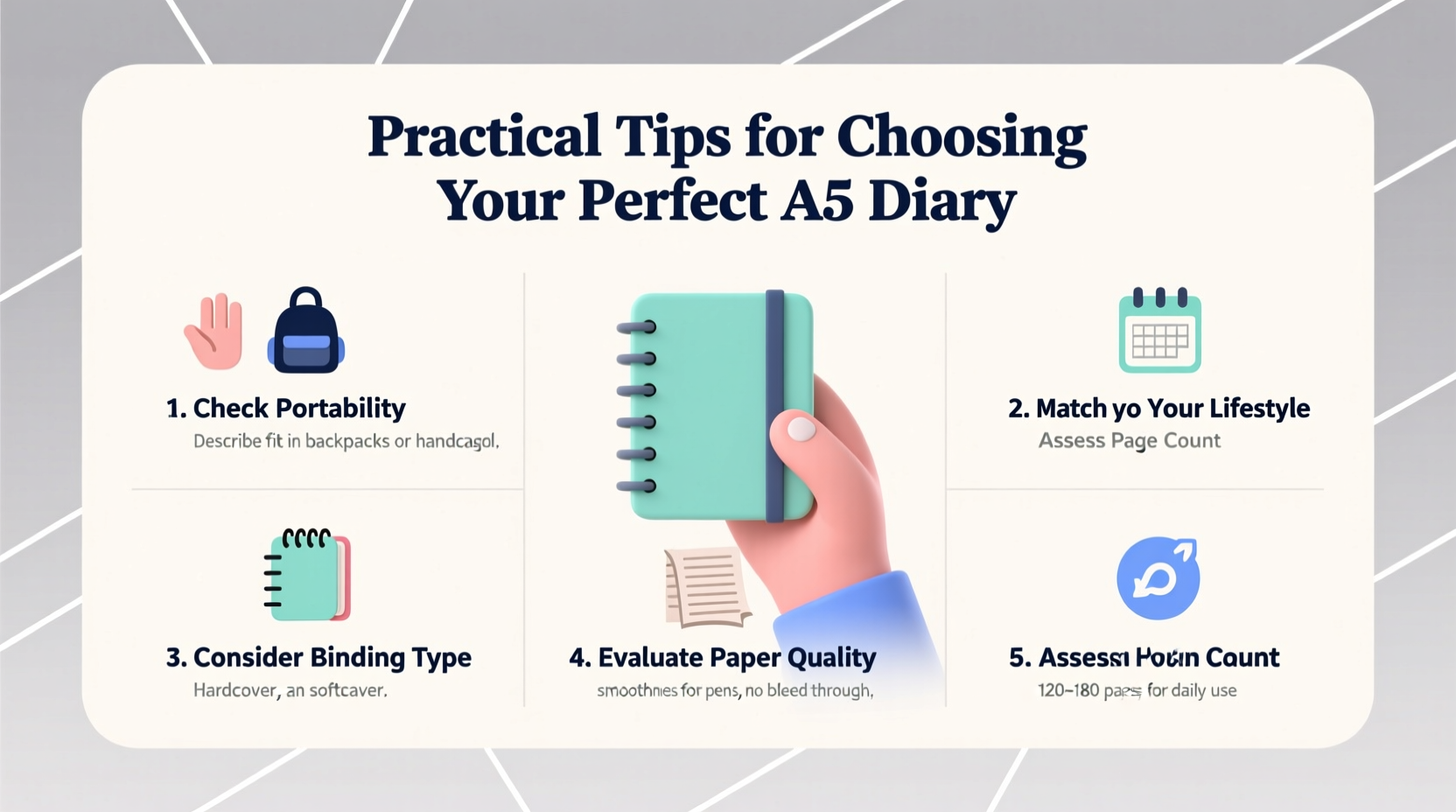
The A5 paper size is exactly half of an A4 sheet, making it one of the most versatile formats in stationery design. It's large enough to allow comfortable writing and layout planning, yet small enough to slip into most bags without adding bulk. This middle ground makes it especially appealing for people who want more space than a pocket-sized notebook offers but find full-sized A4 journals too cumbersome.
A5 diaries are commonly used for:
- Daily or weekly scheduling
- Goal setting and habit tracking
- Creative journaling and bullet journaling
- Meeting notes and project management
- Travel logging and memory keeping
Because of its popularity, the market is flooded with A5 options—from minimalist undated planners to highly structured academic organizers. The key is not just picking any A5 diary, but selecting one tailored to how you actually use it.
Assess Your Daily Carrying Habits
Your lifestyle determines whether an A5 diary will be a practical companion or a burden. Consider where and how often you carry your diary. Do you commute daily? Travel frequently? Work from multiple locations?
For example, someone using public transit might prioritize lightweight materials and slim profiles. A freelancer moving between co-working spaces may value durability and pen loops. Meanwhile, a student attending lectures might need a sturdy cover that can withstand being tossed into a backpack.
| User Type | Carrying Style | Ideal A5 Features |
|---|---|---|
| Commuter | Tote bag or briefcase | Lightweight, slim spine, quick-access pocket |
| Student | Backpack or messenger bag | Durable cover, elastic closure, internal pockets |
| Creative Professional | Satchel or tote | Lay-flat binding, premium paper, aesthetic design |
| Frequent Traveler | Carry-on or crossbody bag | Compact thickness, water-resistant cover, passport sleeve |
“An A5 diary should feel like a natural extension of your routine—not something you dread pulling out.” — Liam Tran, Productivity Consultant
Choosing the Right Layout for Your Workflow
Even within the A5 category, layout variety is vast. Some diaries offer hourly time blocking, while others focus on minimalist monthly overviews. Selecting the correct format depends on how you plan and reflect.
Common A5 diary layouts include:
- Daily spreads: Ideal for task-heavy users, often including morning/evening routines, to-do lists, and gratitude prompts.
- Weekly two-page spreads: Popular among professionals balancing meetings and priorities.
- Undated formats: Perfect for those who start journals mid-year or prefer flexible pacing.
- Bullet journal–friendly: Dotted or blank pages suited for custom trackers and creative layouts.
- Academic year editions: Often used by educators and students, starting in September or August.
If you're unsure which layout suits you, try a hybrid approach. Many brands now offer modular inserts—allowing you to switch between weekly, monthly, and goal-tracking spreads as your needs evolve.
Step-by-Step Guide: Matching Layout to Lifestyle
- Track your current planning method for one week—note what works and what feels missing.
- Identify your top three uses (e.g., scheduling, journaling, note-taking).
- Select a sample layout type that supports those functions.
- Test a printable template of that layout in an A5 notebook for five days.
- Evaluate comfort and efficiency before purchasing a full planner.
Material and Build Quality Matter More Than You Think
An A5 diary spends a lot of time in motion—jostled in bags, opened on café tables, flipped through during rushed moments. Its construction directly impacts longevity and usability.
Look for these quality indicators:
- Cover material: Vegan leather, fabric, or recycled cardboard each offer different trade-offs in weight, texture, and environmental impact.
- Binding: Lay-flat bindings (like Japanese stitch or twin-wire) make writing across the center seam easier.
- Page count and paper weight: 80gsm or higher prevents ink bleed-through, especially if using fountain pens.
- Extras: Ribbon bookmarks, pen loops, and back pockets add convenience but increase thickness.
While aesthetics matter, don’t sacrifice function for beauty. A stunning cover won’t help if the pages tear easily or the spine cracks after two months.
Mini Case Study: From Frustration to Flow
Sophie, a freelance designer, had cycled through four A5 planners in a year. Each failed her in different ways—one had thin paper that bled ink, another had a rigid cover that wouldn’t stay open, and a third lacked enough daily space for client notes. After auditing her usage patterns, she switched to a customizable system with thick, dotted inserts and a durable snap-closure cover. Within weeks, her consistency improved, and she stopped abandoning planners mid-year. The right build quality made all the difference.
Final Checklist Before You Buy
Before finalizing your A5 diary choice, run through this checklist to ensure it aligns with your real-world needs:
- ✅ Does the size fit comfortably in my everyday bag?
- ✅ Is the paper quality suitable for my preferred writing tools?
- ✅ Does the layout match how I naturally organize tasks and time?
- ✅ Can it lie flat when open, or does it fight to close?
- ✅ Are there functional extras I’ll actually use (bookmark, pocket, etc.)?
- ✅ Is it undated or dated in a way that fits my schedule?
- ✅ Does the design motivate me to open it daily?
Frequently Asked Questions
Can I use an A5 diary for bullet journaling?
Absolutely. A5 is one of the most popular sizes for bullet journaling due to its ample space and portability. Look for dotted or blank pages with thick, bleed-resistant paper for best results.
Is A5 too big for handbags?
Most standard handbags, tote bags, and work satchels accommodate A5 diaries easily. However, if you carry a very small clutch or mini bag regularly, consider testing dimensions first. The average A5 diary is similar in size to a paperback novel.
What’s the difference between A5 and B5 diaries?
B5 is slightly larger at 176 x 250 mm, offering more writing space but reduced portability. A5 remains the sweet spot for mobile professionals who want balance.
Making the Right Choice for You
Selecting the perfect A5 diary isn't about following trends or choosing the most expensive option. It’s about understanding your rhythms—how you move, write, plan, and reflect. The best diary becomes invisible in its usefulness: always there, easy to use, and seamlessly integrated into your day.
Take the time to assess your real needs, test layouts, and prioritize durability. When you find the right match, your A5 diary won’t just be a notebook—it will become a trusted tool for clarity, creativity, and progress.




 浙公网安备
33010002000092号
浙公网安备
33010002000092号 浙B2-20120091-4
Comments
No comments yet. Why don't you start the discussion?