
Attaching a panda keychain to your bag is more than just a decorative choice—it’s a personal statement. Whether it’s a gift, a souvenir, or a lucky charm, you want it to stay put through daily commutes, travel, and active use. Yet many people struggle with flimsy attachments, accidental detachment, or even damage to their bags. The good news? With the right tools and techniques, securing your panda keychain can be quick, easy, and completely reliable.
This guide walks you through proven methods, material considerations, and smart habits that ensure your keychain stays attached—without compromising the integrity of your bag or risking loss.
Choose the Right Attachment Method
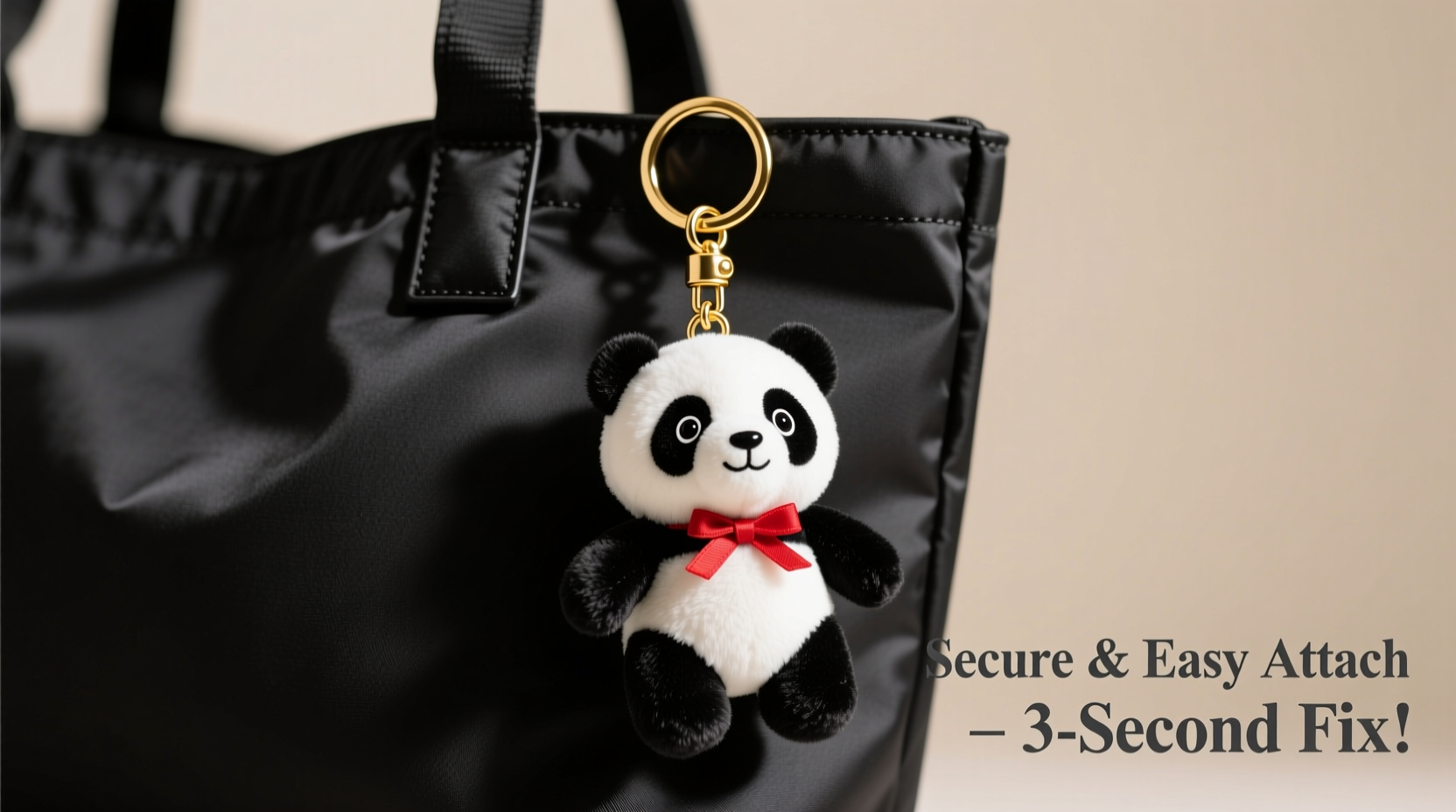
The foundation of a secure keychain attachment lies in selecting the appropriate method based on your bag’s design and the keychain’s hardware. Not all keychains are created equal, and not all bags offer ideal anchor points.
Most panda keychains come with one of three common connectors:
- O-ring or split ring: Common on cheaper models; prone to slipping if not secured properly.
- Lobster clasp: Offers strong grip and easy hooking; ideal for loops and zippers.
- Carabiner clip: Durable and reusable; excellent for heavier keychains or frequent removal.
Match the connector to your bag’s available anchor points—zipper pulls, D-rings, handle seams, or strap junctions.
Step-by-Step: How to Securely Attach Your Panda Keychain
Follow this five-step process to ensure a long-lasting, secure attachment:
- Inspect the bag’s structure. Look for sturdy metal rings, reinforced stitching points, or zipper sliders. Avoid attaching directly to fabric unless reinforced.
- Evaluate the keychain hardware. Check for signs of wear, weak springs (on clasps), or sharp edges that could fray fabric.
- Select the best anchor point. Ideal locations include D-rings on backpacks, zipper pulls on laptop sleeves, or belt loops on crossbody bags.
- Attach the keychain. Open the clasp or thread the ring through the chosen point. Ensure it closes fully and doesn’t wobble.
- Test for security. Gently tug the keychain from multiple angles. If it slips or rotates excessively, reposition or reinforce.
This routine takes less than a minute but can prevent months of frustration—or losing your favorite accessory.
Do’s and Don’ts When Attaching Keychains
To avoid common pitfalls, refer to this comparison table outlining best practices.
| Do’s | Don’ts |
|---|---|
| Use a lobster clasp or carabiner for heavy or frequently bumped keychains | Attach directly to thin fabric or non-reinforced stitching |
| Reinforce weak anchor points with a metal keychain fob or luggage tag ring | Overload a single point with multiple bulky charms |
| Check attachment weekly for wear or loosening | Use pliers to force a clasp shut if it doesn’t fit naturally |
| Rotate keychains seasonally to reduce strain | Leave keychains dangling where they can catch on doors or seats |
Real Example: A Commuter’s Fix for a Falling Keychain
Sophie, a graphic designer in Portland, kept losing her beloved panda keychain during her bike commute. It was attached to a leather tote via a split ring threaded through a thin fabric loop near the zipper. Each time she rode over bumps, the keychain would twist and slip off.
She solved the problem by replacing the split ring with a miniature stainless steel carabiner and relocating the attachment to the bag’s metal D-ring—originally intended for a shoulder strap. The new setup held firm through rain, wind, and daily use. Six months later, the keychain remains securely in place.
Her solution highlights two critical factors: upgrading hardware and choosing structurally sound anchor points.
Expert Insight: What Bag Designers Recommend
According to Marcus Lin, a product designer at an urban accessories brand, “We see customers attach keychains to areas we never intended—like drawstring cords or mesh pockets. While it seems harmless, constant tugging can weaken fibers and compromise durability.”
“We build D-rings and zipper pulls specifically to handle extra weight. Use them. And if your bag doesn’t have them, consider adding a removable charm holder.” — Marcus Lin, Urban Gear Co.
His advice underscores the importance of working with—not against—the bag’s original engineering.
Tips for Different Bag Types
Not all bags are the same. Here’s how to adapt your approach based on common styles:
- Backpacks: Use side compression straps or top haul loops. Many have dedicated gear loops perfect for keychains.
- Crossbody Bags: Clip to the zipper pull or the metal O-ring where the strap connects. Avoid hanging from the main strap unless it’s thick and reinforced.
- Tote Bags: Look for interior key leashes or exterior D-rings. If none exist, attach to a sturdy seam near the handle base—but only if the fabric is dense (e.g., canvas).
- Laptop Sleeves: Most have a small zipper pull. A tiny lobster clasp fits perfectly and keeps the keychain out of the way.
- Wristlets or Clutches: These lack external anchors. Use a detachable wristlet chain with a clasp and loop your keychain through it.
Essential Checklist for Secure Keychain Attachment
Before finalizing your setup, run through this checklist:
- ✅ Inspect the keychain’s clasp or ring for damage
- ✅ Identify a structurally sound anchor point on the bag
- ✅ Confirm the connector opens and closes smoothly
- ✅ Test the connection with a firm tug from multiple directions
- ✅ Position the keychain so it won’t snag on handles, doors, or seat belts
- ✅ Schedule a monthly check for wear or loosening
Completing this list ensures both immediate security and long-term reliability.
Frequently Asked Questions
Can I attach a panda keychain to a silk or delicate fabric bag?
Absolutely, but with caution. Avoid piercing or straining the fabric. Instead, use a removable ribbon or slim nylon loop threaded through the zipper pull, then attach the keychain to that. This distributes no stress on the material itself.
What if my bag has no D-rings or loops?
You have options. Use a lightweight zip charm that clips onto the zipper slider, or add a discreet metal ring via a small stitch near a handle. Alternatively, keep the keychain inside and loop it through your keys or wallet for indirect attachment.
How do I stop my keychain from scratching my phone or glasses in the bag?
Position the keychain externally or in a front pocket. If it must go inside, choose a silicone-covered chain or wrap the panda charm in a soft fabric sleeve. Regularly check for sharp edges on the hardware.
Final Thoughts: Make Security a Habit
Attaching a panda keychain might seem trivial, but doing it well reflects attention to detail and care for your belongings. A secure attachment prevents loss, protects your bag, and lets your personality shine without worry.
The best solutions combine the right hardware, smart placement, and regular maintenance. Whether you're commuting, traveling, or simply running errands, knowing your charm is firmly in place adds peace of mind to your day.




 浙公网安备
33010002000092号
浙公网安备
33010002000092号 浙B2-20120091-4
Comments
No comments yet. Why don't you start the discussion?