
In a world where screens dominate communication, productivity, and entertainment, stepping back can feel like stepping out of the loop. Yet mounting evidence shows that excessive screen time contributes to eye strain, disrupted sleep, increased anxiety, and reduced focus. The challenge isn’t just cutting down—it’s doing so without sacrificing connection. The goal isn't digital isolation, but intentional engagement. With thoughtful strategies, it's entirely possible to reclaim hours of your day while staying informed, present, and meaningfully connected.
Why Reducing Screen Time Matters—Without Losing Touch
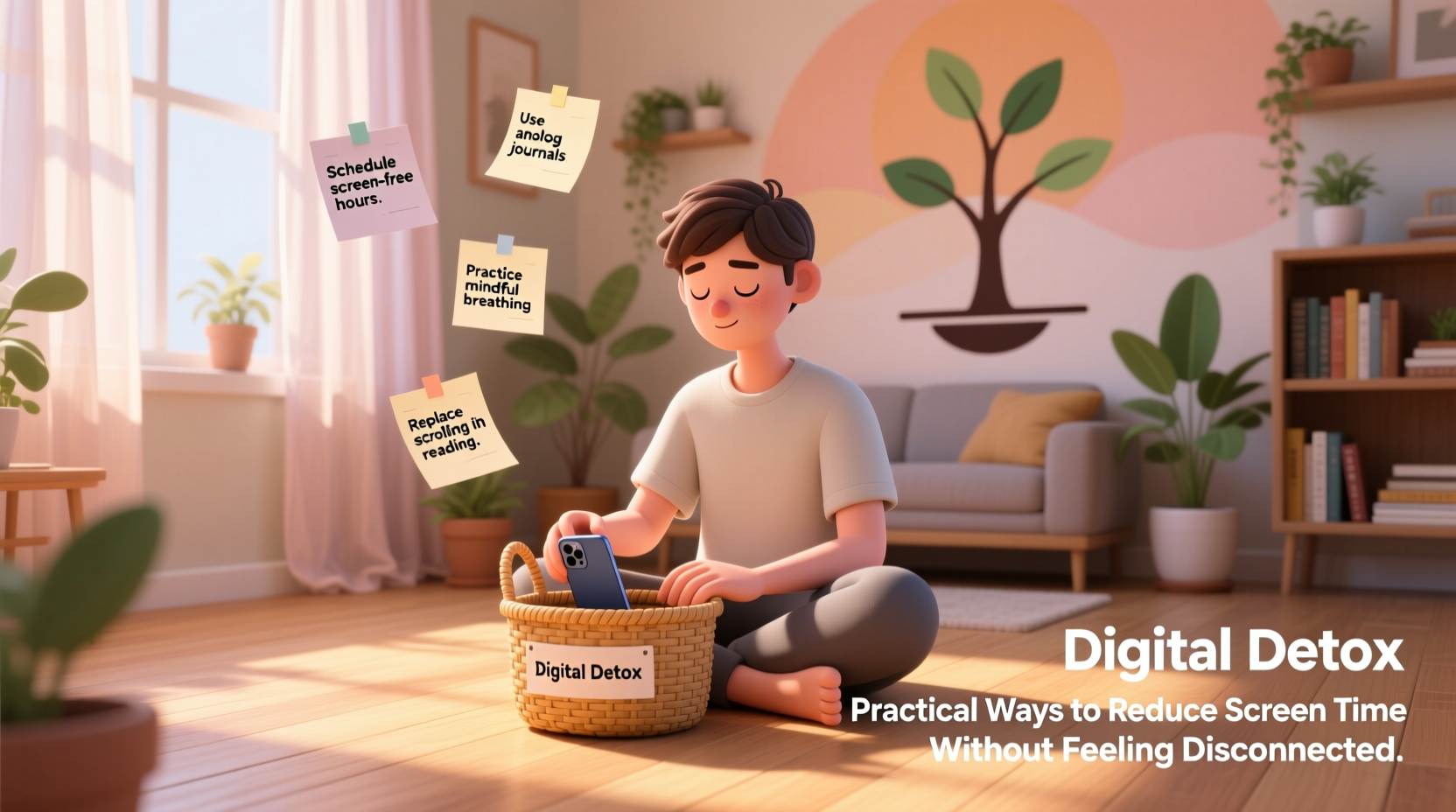
The average adult spends over six hours daily on screens outside of work—mostly on smartphones, social media, and streaming platforms. While these tools keep us updated and entertained, constant exposure fragments attention, reduces deep thinking, and often replaces face-to-face interaction. The key is not elimination, but recalibration. Reducing screen time doesn’t mean withdrawing from modern life; it means prioritizing quality over quantity in how we use technology.
Connection doesn’t require constant availability. In fact, deeper connections often emerge when we’re fully present—listening without notifications, engaging in conversation without glancing at our phones, or reading a book instead of scrolling through feeds. The aim is to create space for real-world interactions while maintaining access to essential digital tools.
Set Boundaries That Work With Your Life
Boundaries are the foundation of sustainable screen reduction. Instead of drastic measures like deleting all apps or going “full analog,” build realistic limits that align with your routine. For example, designate screen-free zones such as the bedroom or dining table. This not only reduces exposure but also reinforces habits tied to specific environments.
Another effective strategy is time-based filtering. Allocate fixed windows for checking email or social media—say, 30 minutes in the morning and evening—rather than responding to every alert. This prevents reactive scrolling and preserves mental bandwidth for focused tasks.
Consider using built-in digital wellbeing tools (like iOS Screen Time or Android Digital Wellbeing) to set app limits. These features provide insight into usage patterns and help enforce boundaries gently, rather than abruptly.
“Technology should serve human goals, not dictate them. The most effective screen reduction comes from intentionality, not deprivation.” — Dr. Lena Torres, Behavioral Psychologist
Replace Screen Habits With Meaningful Alternatives
Attempting to reduce screen time without replacing the habit often leads to boredom and relapse. The brain seeks stimulation, and if you remove one source without offering another, it will pull you back toward familiar digital comforts. Instead, consciously substitute screen-based routines with enriching offline activities.
For instance, if you typically scroll social media during lunch breaks, try listening to a podcast while walking. If late-night TV binges are hard to quit, replace them with reading fiction or journaling. Over time, these new behaviors become automatic and more satisfying than passive consumption.
- Swap bedtime scrolling with a printed book or gratitude journaling
- Replace weekend binge-watching with board games or outdoor exploration
- Use commute time for audiobooks or music instead of endless news feeds
- Attend local events or workshops to meet people in person
The substitution principle works because it addresses the underlying need—entertainment, learning, or connection—without relying on screens.
A Step-by-Step Guide to Gradual Screen Reduction
Rapid detoxes rarely last. A gradual, structured approach yields better long-term results. Follow this five-week timeline to reduce screen time sustainably:
- Week 1: Audit Your Usage
Track your screen time using device settings or third-party apps. Note which apps consume the most time and when you use them. Identify triggers—boredom, stress, habit—and write them down. - Week 2: Define Your Goals
Decide what \"reduced screen time\" means for you. Is it 30 fewer minutes per day? No phones during meals? Set one primary goal and two secondary ones. Make sure they’re measurable and realistic. - Week 3: Implement One Change
Choose the easiest boundary to adopt—such as no screens 30 minutes before bed—and stick to it. Use reminders or alarms if needed. Focus on consistency, not perfection. - Week 4: Substitute One Habit
Pick a frequent screen activity (e.g., checking Instagram after dinner) and replace it with an alternative (e.g., stretching or playing guitar). Practice daily until it feels natural. - Week 5: Expand & Reflect
Add a second boundary or substitution. Review your progress: How do you feel? More rested? Less anxious? Use insights to refine your approach.
This phased method builds confidence and avoids overwhelm. After five weeks, many find their baseline screen time has dropped significantly without major disruption.
Stay Connected Without Constant Checking
Fear of missing out (FOMO) is a major barrier to reducing screen time. People worry that turning off notifications means missing important messages, updates, or invitations. But constant connectivity often creates false urgency. Most digital interactions aren’t time-sensitive.
To stay informed without being overwhelmed:
- Turn off non-essential notifications (especially social media)
- Designate two “check-in” times per day for emails and messages
- Inform close contacts of your new habits (“I check messages at 9 AM and 5 PM”)
- Use status updates (“On low-screen mode this week—reply may be delayed”)
You’ll find that most people adapt quickly. In fact, they may appreciate your presence when you *are* engaged, since you're less distracted.
| Screen Activity | Frequency Suggestion | Alternative Action |
|---|---|---|
| Social Media Scrolling | Once or twice daily for 15 min | Call a friend or go for a walk |
| Email Checking | 2–3x per day, scheduled | Batch process and prioritize |
| News Consumption | Once daily, 20-minute limit | Subscribe to a morning newsletter |
| Streaming/TV | Max 1–2 episodes per night | Read or engage in a hobby |
| Work Screens | Follow Pomodoro technique | Take screen-free breaks every 50 min |
Real Example: How Sarah Regained Her Evenings
Sarah, a 34-year-old project manager, used to spend 3–4 hours each night on her phone—switching between work emails, news sites, and TikTok. She felt exhausted but couldn’t stop. After reading about digital fatigue, she decided to experiment.
She started by setting a hard rule: no screens after 8:30 PM. Instead, she began reading physical books and brewing herbal tea. The first few nights were tough—she caught herself reaching for her phone instinctively. But by week three, she looked forward to the quiet ritual. She also replaced her morning scroll with a 10-minute meditation and a handwritten to-do list.
Within two months, Sarah reported improved sleep, greater focus at work, and stronger conversations with her partner. She still uses her devices during the day but does so intentionally. “I didn’t cut out technology,” she says. “I just stopped letting it run my downtime.”
Checklist: Build Your Low-Screen Lifestyle
Use this checklist to implement lasting changes:
- ☐ Audit current screen time using built-in tools
- ☐ Identify top three time-consuming apps
- ☐ Set one screen-reduction goal (e.g., 45 minutes less per day)
- ☐ Choose one screen-free zone (bedroom, dining table, etc.)
- ☐ Replace one screen habit with an offline alternative
- ☐ Schedule two daily check-ins for messages/email
- ☐ Turn off non-essential notifications
- ☐ Try grayscale mode for one week
- ☐ Share your plan with someone for accountability
- ☐ Review progress weekly for four weeks
Frequently Asked Questions
Won’t reducing screen time make me less productive?
Not necessarily. While screens are tools for productivity, overuse leads to mental fatigue and distraction. By reducing non-essential screen time and focusing on deep work blocks, most people actually become more efficient. The key is distinguishing between active, purposeful use and passive consumption.
How do I explain my screen limits to friends or coworkers?
Be honest and positive. Say something like, “I’m trying to be more mindful about screen use, so I’m checking messages less frequently. I’ll respond within 24 hours.” Most people respect the effort and may even follow suit.
What if I work remotely and rely on screens all day?
Even in remote roles, screen reduction is possible. Focus on non-work hours. Avoid recreational screen use after work, take regular screen-free breaks, and establish clear end-of-day rituals. Use voice calls or audio notes instead of video when feasible to reduce visual load.
Conclusion: Reconnect With Your Real World
Reducing screen time isn’t about rejecting technology—it’s about reclaiming agency over your attention and time. When done thoughtfully, it enhances connection rather than diminishes it. You’ll likely notice richer conversations, deeper focus, and a renewed sense of calm. The goal isn’t perfection, but progress: small shifts that compound into meaningful change.
Start with one boundary. Replace one habit. Notice how it feels to put your phone down and truly listen, to read a book without interruption, or to sit quietly without reaching for a screen. These moments aren’t gaps to be filled—they’re spaces where life happens. Take the first step today, and discover how much more present—and connected—you can be.




 浙公网安备
33010002000092号
浙公网安备
33010002000092号 浙B2-20120091-4
Comments
No comments yet. Why don't you start the discussion?