
Every holiday season, millions of households face the same decision: buy a pre-lit Christmas tree or go with a traditional unlit model and string their own lights. The choice isn’t just about aesthetics—it’s about time, budget, maintenance, and personal expression. Pre-lit trees promise convenience, but they come at a premium. Unlit trees offer creative freedom but demand more labor. So, does the time saved by choosing a pre-lit tree truly justify its higher price and reduced customization?
The answer depends on your lifestyle, priorities, and how you celebrate the holidays. For some, the convenience of flipping a switch instead of untangling hundreds of bulbs is priceless. For others, decorating the tree—especially adding lights—is a cherished tradition that can't be replaced by efficiency.
The Convenience Factor: Time Saved vs. Long-Term Trade-Offs
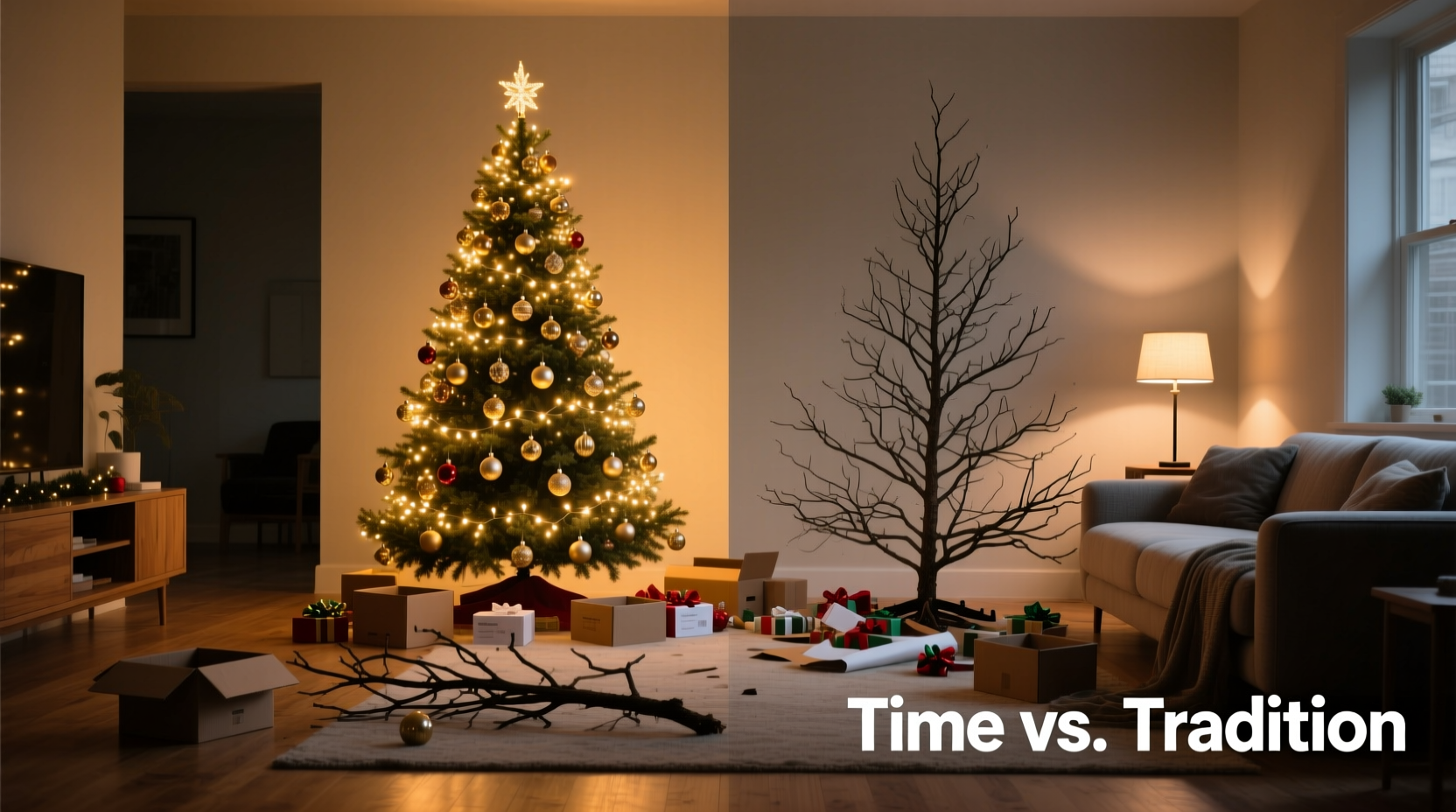
One of the most compelling arguments for pre-lit trees is the time saved during setup. A typical unlit artificial tree requires anywhere from 30 minutes to over two hours to fully decorate with lights, depending on size and density. This includes testing strands, wrapping branches evenly, hiding cords, and troubleshooting dead bulbs. In contrast, a pre-lit tree simply needs to be assembled and plugged in—often cutting setup time by 50% or more.
But time saved upfront doesn’t always translate to long-term satisfaction. Many pre-lit trees use proprietary light systems. If one bulb fails, it can short-circuit an entire section—or even the whole tree. Replacement strings are often unavailable or incompatible, leading to premature disposal. According to a 2023 consumer report by Holiday Living Trends, nearly 40% of pre-lit tree owners reported lighting malfunctions within three years of purchase.
“Pre-lit trees appeal to time-strapped families, but they’re often built with lower-grade wiring to keep costs down. You're not just buying convenience—you're betting on durability.” — Marcus Reed, Home Appliance Analyst at Consumer Insight Group
Meanwhile, unlit trees allow full control over light quality, color temperature, brightness, and spacing. You can mix warm white with cool white, add twinkle effects, or install smart LEDs controlled via smartphone. When a strand fails, it's easily replaced with any standard-size bulb set available at retailers.
Cost Analysis: Upfront Price vs. Total Ownership Expense
Pre-lit trees typically cost 25–50% more than comparable unlit models. A 7.5-foot unlit artificial tree might retail for $120, while a similar pre-lit version could range from $160 to $220. Some high-end pre-lit models with advanced features like remote dimming or color-changing options exceed $300.
However, the true cost comparison must include longevity and replacement frequency. Because many pre-lit trees fail due to irreparable wiring issues, consumers may need to replace them every 3–5 years. Over a decade, this could mean purchasing three trees instead of one durable unlit model paired with replaceable lights.
In contrast, a well-maintained unlit tree with modular lighting components can last 10–15 years or more. Even if light strands need replacing every few seasons, individual sets cost only $10–$25 each—far less than buying a new pre-lit tree.
| Cost Component | Pre-Lit Tree (10-Year Estimate) | Unlit Tree + Lights (10-Year Estimate) |
|---|---|---|
| Initial Purchase | $200 | $120 |
| Light Replacements | N/A (non-replaceable) | $80 (4 sets @ $20) |
| Tree Replacements | $400 (2 additional trees) | $0 (1 tree lasts) |
| Total Estimated Cost | $600 | $200 |
This projection assumes moderate usage and average durability. In reality, some pre-lit trees do last a decade, especially higher-end brands like National Tree Company or Balsam Hill. But these exceptions often come with price tags exceeding $400—putting them out of reach for many shoppers.
Customization and Aesthetic Flexibility
For many, the joy of Christmas decorating lies in personal expression. An unlit tree offers complete creative freedom: choose between clear, multicolor, vintage Edison-style, or programmable RGB LEDs. Wrap tightly for a glowing effect or space sparsely for a subtle shimmer. Add specialty pieces like net lights, icicle strands, or rope lights for dimension.
Pre-lit trees, on the other hand, lock you into a single lighting design. Most come with either warm white or multicolor LEDs permanently affixed. While newer models offer dual-color options (switchable via remote), you still can’t adjust placement, density, or style. Want icicle lights cascading from the top? Too bad—the lights are already fixed mid-branch.
Additionally, pre-installed lights often follow a uniform pattern that lacks visual depth. Without strategic layering—such as clustering brighter lights near the trunk or using different intensities—pre-lit trees can appear flat or overly bright.
“I used to love decorating our tree with my kids—choosing colors, testing different patterns. Switching to a pre-lit tree felt efficient, but it took away the ritual we looked forward to all year.” — Lisa Tran, parent of two, Ohio
A mini case study illustrates this trade-off: The Peterson family switched to a pre-lit tree in 2021 after both parents started demanding remote jobs. Setup time dropped from 90 minutes to 20, which helped during a busy December. But by 2023, two sections of lights had gone dark. Attempts to fix them voided the warranty, and customer service offered no replacements. They returned to an unlit tree in 2024, accepting the extra time to reclaim full control over their holiday look.
Practical Guide: Choosing the Right Option for Your Household
Selecting between pre-lit and unlit comes down to evaluating five key factors. Use this step-by-step assessment to make an informed decision.
- Evaluate your available setup time. If you have less than an hour during the holidays to dedicate to tree decorating, a pre-lit model may reduce stress significantly.
- Assess your technical confidence. Are you comfortable handling multiple light strands, testing connections, and managing cord clutter? If not, pre-lit simplifies logistics.
- Consider long-term ownership goals. Do you plan to keep the tree for a decade? Prioritize durability and repairability—favoring unlit or premium pre-lit models with replaceable bulbs.
- Determine your aesthetic vision. Want a cinematic glow with layered lighting effects? An unlit tree gives you full artistic control.
- Review your budget realistically. Factor in potential replacement costs. Spending more now on a repairable system often saves money later.
Checklist: What to Ask Before Buying
- ✅ Are the lights LED or incandescent? (LEDs last longer and run cooler)
- ✅ Can individual bulbs be replaced if one burns out?
- ✅ Is the light color adjustable or fixed?
- ✅ Does the tree come with a warranty covering light failures?
- ✅ Are spare fuses and bulbs included?
- ✅ How many tips per foot? (More tips = fuller appearance, better light diffusion)
- ✅ What is the expected lifespan based on brand reputation?
Frequently Asked Questions
Can I add more lights to a pre-lit tree?
Yes, but proceed with caution. Adding extra strands increases electrical load and fire risk if outlets are overloaded. Only daisy-chain lights rated for indoor use and within the manufacturer’s limits. Avoid covering existing pre-lit wires with additional cords, as this can trap heat.
Do pre-lit trees use more electricity?
Not necessarily. Most modern pre-lit trees use LED lights, consuming about 40–100 watts total—comparable to a single incandescent bulb. An unlit tree with 700 LED bulbs uses roughly the same energy. However, combining a pre-lit tree with supplemental lights can double consumption.
Which type is better for families with kids or pets?
Pre-lit trees can be safer because wires are pre-wired and less exposed. However, low-hanging strands on any tree pose risks. Use cord covers and secure loose ends. For maximum safety, choose LED lights (they stay cool) and place the tree away from high-traffic areas.
Final Verdict: Is the Time Saved Worth It?
The time saved with a pre-lit Christmas tree is real—and valuable, especially for busy families, elderly individuals, or those with physical limitations. Reducing setup from hours to minutes can preserve holiday joy rather than turning decoration into a chore.
Yet that convenience comes at a cost: higher initial pricing, limited repairability, and reduced creative control. For many, these trade-offs diminish the long-term value. A tree that fails after three seasons isn’t saving time—it’s creating recurring frustration and expense.
The ideal solution lies in the middle: consider a high-quality unlit tree paired with durable, easy-to-install LED light kits. Or, if opting for pre-lit, invest in a reputable brand known for modular lighting systems and strong warranties. Brands like Balsam Hill and Fraser Hill Farm offer pre-lit models with commercial-grade wiring and individual bulb replacement—a rare but worthwhile combination.
Ultimately, the best tree is the one that fits your life—not just this year, but for years to come. Whether you cherish the ritual of threading lights through pine boughs or crave the simplicity of plug-and-play elegance, make your choice intentional. The holidays are about meaning, memory, and moments. Let your tree reflect that.




 浙公网安备
33010002000092号
浙公网安备
33010002000092号 浙B2-20120091-4
Comments
No comments yet. Why don't you start the discussion?