
When it comes to decorating for the holidays, few decisions carry as much weight — or spark as much debate — as whether to buy a pre-strung artificial Christmas tree with 1,000 built-in lights or to start with a blank canvas and customize your own lighting and design. Each approach offers distinct advantages in terms of time, cost, aesthetics, and long-term satisfaction. Understanding the trade-offs helps ensure your holiday season is joyful, not stressful.
The rise of pre-lit trees has transformed how many families decorate. Market research shows that over 70% of artificial tree buyers now choose models with integrated lighting. Yet, a dedicated segment of decorators still swear by hand-stringing their own lights, believing it delivers superior visual impact and personal expression. Which side should you land on? The answer depends on your priorities, skills, and vision for your holiday space.
Convenience and Time Savings
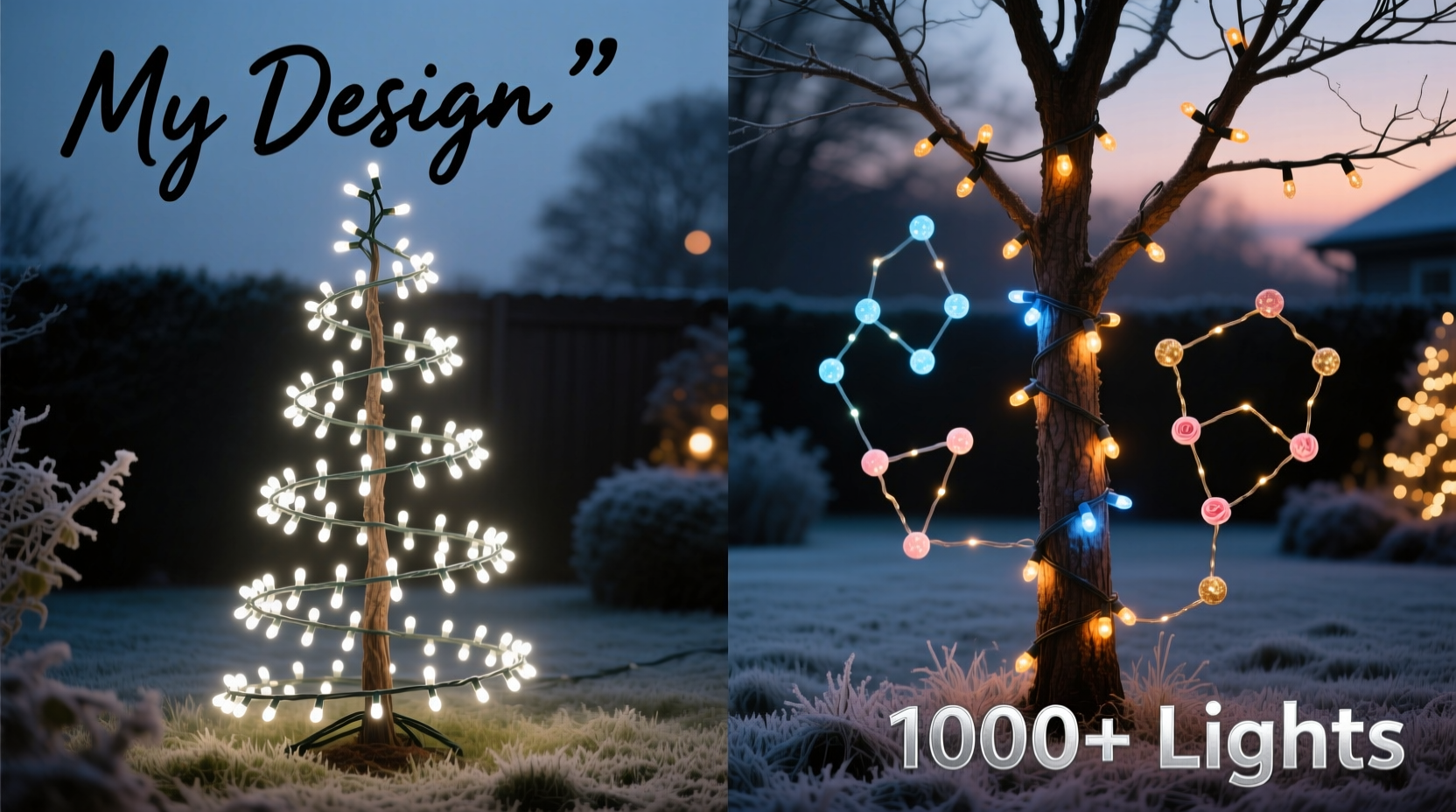
One of the most compelling arguments for a pre-strung tree with 1,000 lights is sheer convenience. These trees come fully assembled with evenly spaced LED bulbs already woven through the branches. Setup often involves little more than unfolding the tree, fluffing the branches, and plugging it in. For busy households, dual-income families, or anyone short on time during the hectic holiday season, this can be a game-changer.
Consider the alternative: stringing 1,000 individual lights by hand. Even at an optimistic rate of one light every 10 seconds, that’s nearly three hours of focused work — not counting untangling cords, replacing burnt-out bulbs, or stepping back to assess coverage. Add in the need for multiple bulb types, extension cords, and ladder use for taller trees, and the task becomes significantly more involved.
However, convenience comes with caveats. Pre-strung lights are only as reliable as their wiring. A single faulty bulb or broken connection can knock out entire sections, and troubleshooting internal wiring is notoriously difficult. Some models require removing panels or accessing hidden junction boxes, turning a simple fix into a frustrating ordeal.
Aesthetic Control and Design Flexibility
While pre-lit trees offer efficiency, they often limit creative freedom. Most come with warm white or cool white LEDs uniformly distributed across the tree. While elegant, this uniformity can lack the depth, rhythm, and dimension that skilled decorators achieve through custom lighting techniques.
Custom stringing allows for strategic layering — placing brighter clusters near the trunk to simulate internal glow, using cooler tones at the tips for a frosty effect, or mixing bulb sizes (like C7s and mini-lights) for texture. You can also incorporate color-changing LEDs, twinkle modes, or even synchronized music-responsive lighting systems that simply aren’t available in standard pre-lit designs.
Interior designer Laura Simmons, who specializes in seasonal home styling, puts it this way:
“Lighting is the foundation of holiday ambiance. A tree lit from within feels magical, but that magic comes from intentionality — where the light falls, how it flickers, and how it complements the room. Pre-lit trees give you light; customization gives you atmosphere.” — Laura Simmons, Interior Stylist & Holiday Design Consultant
Moreover, if you prefer themed trees — such as rustic farmhouse, vintage Hollywood glamour, or Nordic minimalist — a custom lighting scheme reinforces the narrative. Imagine soft amber Edison-style bulbs on a burlap-wrapped tree, or icy blue micro-lights on a silver flocked design. These effects are nearly impossible to replicate with off-the-shelf pre-lit models.
Cost Comparison Over Time
At first glance, pre-strung trees appear cost-effective. A typical 7.5-foot model with 1,000 LED lights retails between $150 and $300. In contrast, buying a bare tree ($80–$150) plus 1,000 premium lights ($60–$120) may seem more expensive upfront.
But long-term value tells a different story. Pre-lit trees are all-or-nothing investments. If the lights fail after five years, replacing the entire tree may be cheaper than repairing or rewiring it. Custom setups, however, allow modular upgrades. Burnt-out strands can be replaced individually. You can upgrade to smart lights without changing the tree. Over a decade, this flexibility can save hundreds of dollars.
Below is a breakdown of estimated costs over a 10-year period:
| Expense | Pre-Lit Tree (10 yrs) | Custom Tree + Lights (10 yrs) |
|---|---|---|
| Initial Tree | $250 | $120 |
| Lights | Included | $90 |
| Repairs/Replacements | $200 (full tree replacement) | $75 (strands, controllers) |
| Total | $450 | $285 |
The data suggests that while pre-lit trees win on initial ease, custom setups offer better durability and lower lifetime cost — especially for those who value upgrades and repairs over wholesale replacements.
Real Example: Two Families, Two Choices
Consider two real-world scenarios that illustrate the practical differences.
The Thompson Family — parents with two young children and demanding careers — purchased a 7.5-foot pre-lit tree with 1,000 warm white LEDs. Setup took under 45 minutes. They appreciated the consistency year after year and never had to deal with tangled cords. However, in year four, the top tier of lights stopped working. Customer service advised against repair, so they bought a new tree at full price — doubling their annualized cost.
The Rivera Household — empty nesters passionate about seasonal décor — invested in a high-density unlit tree and spent a weekend installing layered lighting: 400 warm white mini-lights on the interior, 300 cool white fairy lights on the outer tips, and 300 multicolor vintage-style bulbs wrapped spirally. They used zip ties and wire guides for precision. Though the initial effort was high, they’ve reused and refined the setup for eight years, replacing only one strand due to pet damage.
The Thompsons saved time but sacrificed long-term value. The Riveras invested time to gain control, creativity, and savings. Both approaches succeeded — but for very different lifestyles.
Step-by-Step: Building a Custom-Lit Tree
If you’re considering customizing your own lighting, follow this proven sequence:
- Choose the right tree. Opt for hinged or easy-assemble models with dense branch tips to hide wires. Look for “unlit” or “no lights” specifications.
- Select your lighting type. Decide between mini-lights, C7/C9 bulbs, fairy lights, or rope lights. Consider color temperature (2700K for warm, 5000K for cool), dimmability, and whether you want smart features (Wi-Fi/app control).
- Calculate coverage. Use the rule of thumb: 100 lights per foot of tree height. For a 7.5-foot tree, aim for at least 750–1,000 bulbs. Mix types for dimension.
- Test all strands. Before attaching anything, plug in each set to confirm functionality. Replace any flickering or dark sections.
- Start from the inside. Begin at the trunk and work outward, wrapping lights around central supports. Use the spiral method: clockwise on the way up, counterclockwise on the way down.
- Layer strategically. Add secondary strands to outer branches for depth. Use cooler tones on top for snow-like effect, warmer tones near the base for coziness.
- Manage cords. Route excess wiring down the center pole and plug into a centralized power strip or surge protector hidden beneath the stand.
- Final check. View the tree from multiple angles and seating heights. Adjust gaps or hotspots before adding ornaments.
This process takes 3–5 hours initially but becomes faster with practice. Many enthusiasts find it therapeutic — a mindful ritual that marks the true start of the season.
Frequently Asked Questions
Can I add extra lights to a pre-strung tree?
Yes, but do so carefully. Adding too many strands can overload circuits or create a cluttered look. Use low-voltage LED strings and avoid covering existing bulbs. Focus on enhancing specific zones, like the crown or lower tiers, rather than re-covering the whole tree.
Are pre-lit trees safer than custom-lit ones?
Both can be safe when UL-listed and used properly. Pre-lit trees undergo factory safety testing, but damaged wiring is harder to inspect. Custom setups let you choose high-quality components and replace them proactively. Always check for frayed wires, overheating, or loose connections regardless of method.
What happens if a bulb burns out on a pre-strung tree?
Many modern pre-lit trees use shunt-wired LEDs, meaning one dead bulb won’t darken the whole strand. However, locating the faulty bulb can be difficult due to internal routing. Some manufacturers provide spare bulbs and testers; others recommend professional repair or full replacement.
Tips for Maximizing Either Approach
- For pre-lit trees: Store with care. Use a tree bag with internal support to prevent crushing lights. Label the plug end for quick access.
- For custom trees: Keep a labeled kit with spare bulbs, zip ties, needle-nose pliers, and a mini-ladder. Document your wrapping pattern with notes or photos.
- Both: Unplug lights when leaving the house or sleeping. Use timers to automate on/off cycles and reduce energy use.
Conclusion: Choose Based on Your Lifestyle
The choice between a pre-strung tree with 1,000 lights and a fully customized alternative isn’t about which is objectively better — it’s about alignment with your values, schedule, and aesthetic goals.
If your priority is simplicity, speed, and consistency, a pre-lit tree delivers. It’s ideal for renters, small spaces, or anyone who views decorating as a means to an end. Modern models are increasingly durable and energy-efficient, making them a smart default for many households.
But if you crave creative expression, long-term savings, and the pride of craftsmanship, custom lighting offers unmatched rewards. The ability to evolve your design year after year — incorporating new tech, colors, or themes — turns your tree into a living tradition.
Ultimately, the best tree is the one that brings you joy without draining your energy. Whether you unbox a plug-and-play centerpiece or spend a weekend weaving light through branches, what matters is the warmth it creates in your home and heart.




 浙公网安备
33010002000092号
浙公网安备
33010002000092号 浙B2-20120091-4
Comments
No comments yet. Why don't you start the discussion?