
Selecting the right prelit Christmas tree can define not only the look of your holiday display but also how easily you adapt it across seasons, moods, and design themes. Among the most consequential decisions is choosing between a tree with color-changing lights and one with a fixed, single-hue illumination. While both options promise convenience and festive cheer, their long-term versatility differs significantly. Understanding these differences helps ensure your investment supports evolving tastes, interior styles, and even future home changes.
The Core Difference: Flexibility vs. Consistency
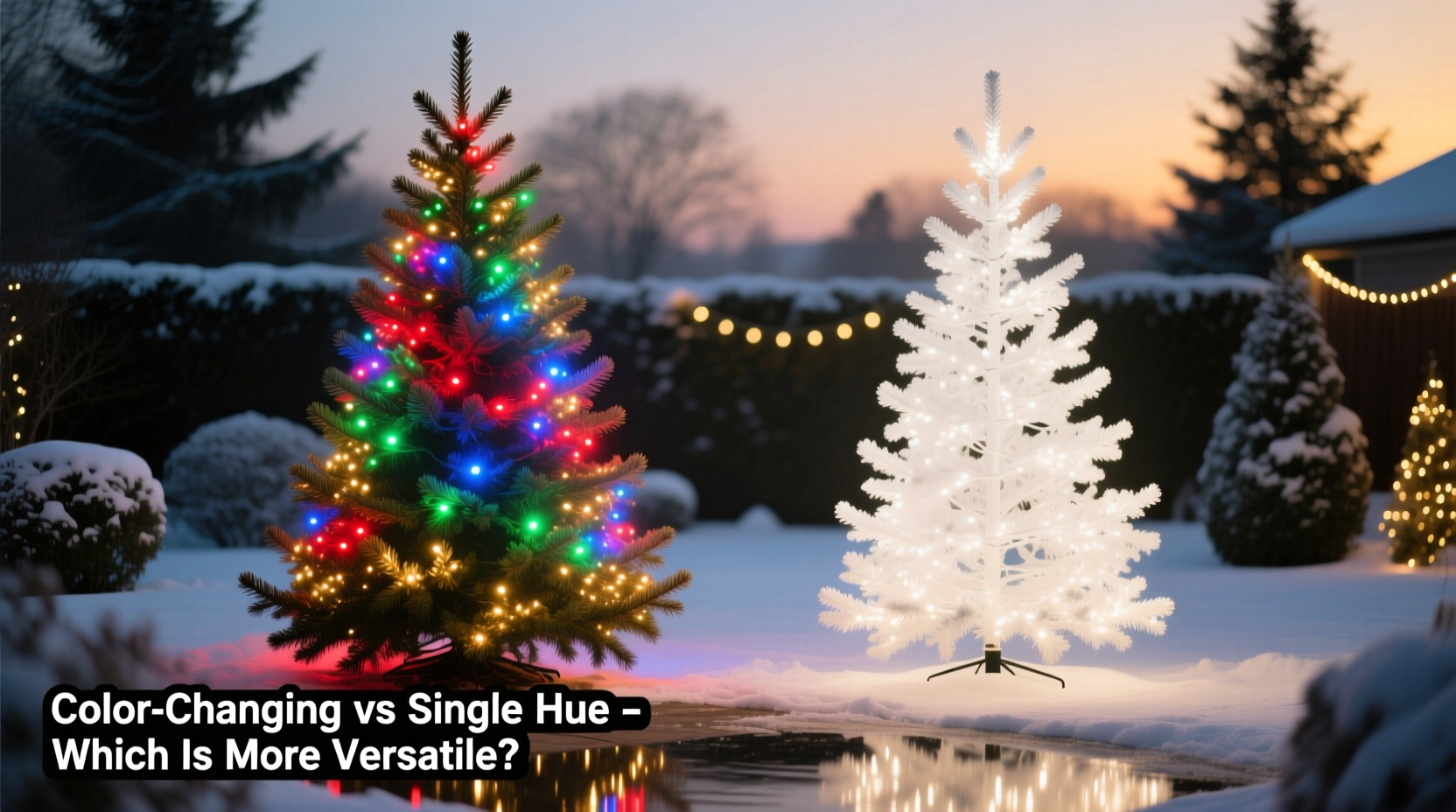
A prelit tree with color-changing lights uses LED bulbs that cycle through multiple colors—typically white, warm white, blue, green, red, purple, and multicolor modes—via remote control or manual switch. These trees are designed to offer dynamic lighting experiences, allowing users to shift the mood from traditional elegance to playful celebration at the touch of a button.
In contrast, a single-hue prelit tree features lights of one consistent color, such as warm white, cool white, or steady multicolor. These do not change; they provide a static ambiance meant to complement a specific aesthetic year after year.
The fundamental trade-off lies in flexibility versus cohesion. Color-changing trees prioritize adaptability, while single-hue models emphasize reliability and design harmony.
Versatility in Design and Decor Applications
Versatility isn’t just about variety—it’s about how well an item fits into different contexts over time. A truly versatile tree should support various decorating schemes without requiring replacement or extensive modification.
Color-Changing Trees: Adaptable by Design
Trees with color-shifting capabilities allow homeowners to match their lighting to themed decorations. For example:
- Use warm white during a classic rustic setup with plaid ribbons and pinecones.
- Switch to cool white for a modern, monochromatic silver-and-blue theme.
- Engage multicolor mode for family-centered, joyful displays with eclectic ornaments.
- Activate red and green pulses for a lively holiday party atmosphere.
This adaptability makes color-changing trees ideal for renters, small-space dwellers, or those who enjoy rotating decor styles annually. They reduce the need to purchase multiple trees for different aesthetics.
Single-Hue Trees: Precision Over Possibility
While less flexible in color output, single-hue trees excel in delivering a consistent, curated experience. A warm white tree, for instance, creates a cozy, inviting glow reminiscent of candlelight—perfect for farmhouse, vintage, or Scandinavian designs. Cool white suits contemporary spaces with metallic accents, while steady multicolor works best in nostalgic, child-focused environments.
However, if your home transitions from, say, a mid-century modern living room to a coastal cottage bedroom, a single-hue tree may clash with new surroundings unless its color aligns precisely with the palette.
“Versatility in holiday lighting isn’t just about color range—it’s about alignment with lifestyle. Families who entertain often benefit from dynamic options, while design purists value consistency.” — Lena Peterson, Interior Stylist & Holiday Decor Consultant
Functional Comparison: Features That Matter
Beyond visual appeal, practical factors influence which tree serves you better over multiple seasons. The table below compares key aspects relevant to long-term usability.
| Feature | Color-Changing Tree | Single-Hue Tree |
|---|---|---|
| Lighting Modes | 5–8 modes (steady, fade, pulse, twinkle, color cycles) | 1–2 modes (steady, twinkle) |
| Remote Control | Usually included | Rarely included |
| Energy Efficiency | High (LEDs with low draw per mode) | High (same LED technology) |
| Maintenance Complexity | Moderate (more components = higher failure risk) | Low (fewer electronic parts) |
| Lifespan Expectancy | 7–10 years (with careful handling) | 10+ years (due to simpler circuitry) |
| Style Adaptability | High (adapts to many themes) | Low to moderate (fixed tone) |
| Price Range (6–7 ft) | $180–$300 | $120–$200 |
From this comparison, it's clear that color-changing trees offer broader functionality at a higher cost and slightly reduced longevity. Single-hue trees win on durability and simplicity but lack transformative potential.
Real-World Use Case: Two Homes, Two Choices
Case Study: The Martinez Family – Urban Apartment Dwellers
The Martinezes live in a 900-square-foot downtown loft with an open-concept layout. Each year, they host a Friendsgiving dinner, a Hanukkah gathering, and a New Year’s Eve party. Their space demands multifunctional decor.
They chose a 6.5-foot prelit tree with color-changing lights. In November, they set it to warm white with soft twinkle mode for Thanksgiving. During December, they switch to alternating red/green pulses for holiday festivities. On New Year’s, they activate a slow rainbow cycle paired with gold ornaments.
“We don’t have room for more than one seasonal decoration centerpiece,” says Maria Martinez. “This tree does triple duty without looking out of place.”
Case Study: The Harrisons – Suburban Traditionalists
The Harrisons own a colonial-style home with a formal living room dedicated to Christmas decor. They follow a decades-old tradition of using heirloom ornaments and matching everything to a cream-and-crimson color scheme.
They invested in a 7-foot single-hue prelit tree with warm white lights. The consistent glow enhances the richness of their red velvet bows and antique glass balls. They never change the lighting because it’s integral to their established aesthetic.
“The moment we plug it in, it feels like Christmas,” says Robert Harrison. “Changing colors would ruin the magic for us.”
These examples illustrate how lifestyle dictates suitability. Versatility matters most when needs evolve; it’s less critical when traditions are fixed.
Step-by-Step: Choosing the Right Tree for Your Needs
Follow this decision-making process to determine which type aligns with your household’s expectations.
- Assess Your Decorating Frequency: Do you change your holiday theme yearly? If yes, lean toward color-changing.
- Evaluate Your Primary Room: Is it multipurpose (e.g., living-dining combo)? Dynamic lighting adds value.
- Consider Your Guests: Do you host diverse celebrations? Color options help honor different cultural tones.
- Review Storage Conditions: Color-changing remotes and controllers require safekeeping. Lose them, and functionality drops.
- Project Longevity: Are you looking for a decade-long fixture or a short-term solution? Simpler trees last longer.
- Set a Realistic Budget: Factor in not just purchase price but potential replacement costs down the line.
- Test Before Buying: If possible, view both types in person. Observe brightness, color accuracy, and transition smoothness.
Common Pitfalls to Avoid
Even informed buyers make mistakes when prioritizing novelty over function. Watch out for these issues:
- Overestimating Tech Reliability: Remote controls break, batteries die, and circuits fail. Don’t assume color modes will work indefinitely.
- Ignoring Light Quality: Some color-changing LEDs produce uneven hues—greens may appear sickly, blues too harsh. Check reviews for “true color” feedback.
- Underestimating Visual Noise: Constant cycling can feel chaotic in serene spaces. Opt for “steady color” modes if available.
- Neglecting Bulb Spacing: Poorly spaced LEDs create dark zones, undermining any lighting effect. Aim for at least 400 lights on a 6-foot tree.
Checklist: Final Decision Guide
Before purchasing, confirm the following:
- ✅ Does the tree offer a “warm white” option? (Most universally flattering)
- ✅ Is there a steady mode for each color, not just flashing?
- ✅ Are replacement bulbs or sections available?
- ✅ Does it come with a remote holder or storage compartment?
- ✅ Can it be used outdoors? (Only if explicitly rated)
- ✅ Is assembly intuitive? (Especially important for tall trees)
- ✅ Does the warranty cover light malfunctions?
Frequently Asked Questions
Can I replace color-changing LEDs with single-color bulbs?
No. Most prelit trees use proprietary wiring systems where individual bulbs cannot be swapped without breaking the circuit. Attempting modifications often voids warranties and risks electrical issues.
Do color-changing trees use more energy?
No. All modern prelit trees use LED technology, which consumes minimal power regardless of color mode. A typical 6-foot tree uses about 40–60 watts on high cycle mode—comparable to a single incandescent bulb.
Which is better for kids’ rooms?
It depends on the child’s preferences. Younger children often enjoy the excitement of shifting colors, while older kids or teens might find constant changes distracting. For nurseries or calming spaces, single-hue warm white is generally preferred.
Conclusion: Matching Versatility to Lifestyle
When weighing a prelit tree with color-changing lights against a single-hue model, the answer to “which is more versatile?” ultimately hinges on personal context. Technically, color-changing trees offer greater functional range—they adapt to themes, occasions, and moods with ease. But true versatility includes reliability, longevity, and integration into your life without friction.
If your holidays evolve—whether due to changing family dynamics, moving homes, or experimenting with decor—color-shifting capabilities unlock lasting value. However, if you cherish tradition, favor minimalist elegance, or prioritize hassle-free setup, a single-hue tree delivers unmatched consistency.
The most versatile choice isn’t always the one with the most features. It’s the one that continues to serve you well, year after year, without demanding compromise.




 浙公网安备
33010002000092号
浙公网安备
33010002000092号 浙B2-20120091-4
Comments
No comments yet. Why don't you start the discussion?