
In the ever-evolving world of casual fashion, the humble T-shirt remains a cornerstone of personal style. But as wardrobes grow and trends shift, a recurring question surfaces: should you reach for a bold printed tee or stick with a clean, minimalist plain tee? The answer isn't as straightforward as it once was. With streetwear embracing maximalism and minimalism making a quiet comeback, understanding the role each type plays in modern dressing is essential. This article breaks down the strengths, weaknesses, and stylistic implications of both printed and plain tees to help you make informed choices that align with your lifestyle and aesthetic.
The Rise and Resurgence of Printed Tees
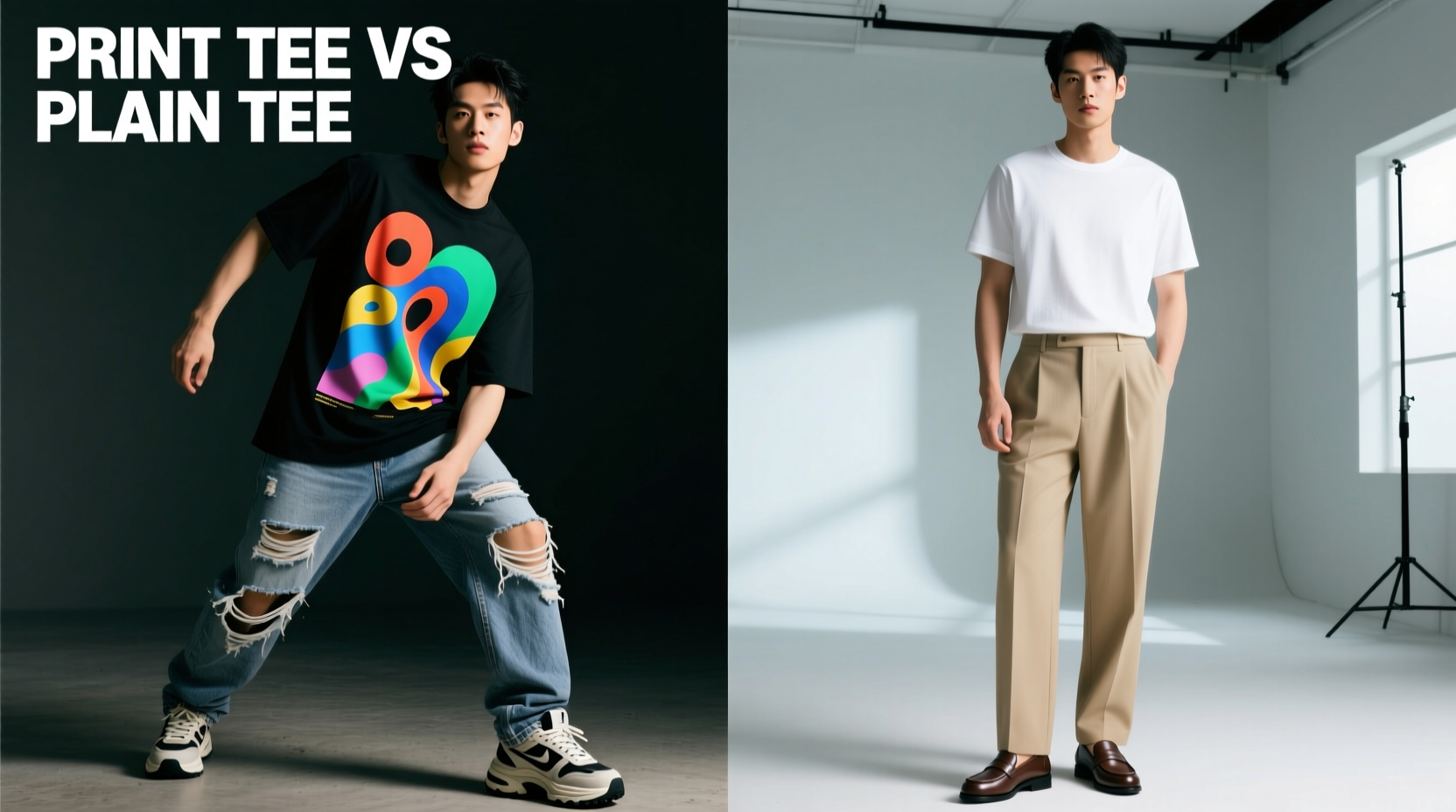
Printed T-shirts have long been a canvas for self-expression. From band logos in the '70s to graphic slogans in the '90s and meme-inspired designs today, they’ve served as cultural markers. In recent years, streetwear brands like Supreme, Off-White, and Stüssy have elevated printed tees from casual wear to high-fashion statements. Limited-edition drops and collaborations keep demand high, turning certain prints into collectibles.
Today’s printed tees go beyond basic logos. They feature intricate illustrations, abstract art, political messages, and even augmented reality-enabled designs. For many, wearing a printed tee is less about comfort and more about identity—declaring allegiance to a subculture, brand, or idea.
The Enduring Power of the Plain Tee
While printed tees shout, plain tees whisper—but they speak volumes. A well-fitted white, black, or neutral-toned plain tee is the ultimate wardrobe anchor. It pairs effortlessly with jeans, chinos, blazers, or layered under denim jackets and hoodies. Its strength lies in its neutrality, allowing other elements—footwear, accessories, outerwear—to take center stage.
Fashion experts often cite the plain tee as a “foundation garment.” Much like a white button-down shirt, it transcends seasons and trends. Brands like Uniqlo, Everlane, and James Perse have built cult followings around perfecting the cut, fabric weight, and durability of their basic tees.
“A plain tee is the most versatile item in any man’s closet. It can be dressed up or down, worn alone or layered—it’s fashion’s blank page.” — Marcus Reed, Menswear Stylist & Creative Director
Comparative Analysis: Print Tee vs Plain Tee
Choosing between a printed and a plain tee isn’t just about preference—it’s about function, occasion, and longevity. The table below outlines key differences to consider when building a balanced wardrobe.
| Factor | Printed Tee | Plain Tee |
|---|---|---|
| Versatility | Limited by design; harder to pair with patterned or bold items | High; works with almost any bottom, layer, or accessory |
| Style Impact | High; instantly draws attention and sets tone | Subtle; relies on fit and fabric quality for effect |
| Lifespan | Shorter; prints may crack, fade, or feel dated over time | Longer; timeless if made from quality cotton |
| Occasion Suitability | Casual, social events, concerts, themed gatherings | All casual settings, smart-casual, travel, layering |
| Trend Sensitivity | High; tied to current aesthetics and pop culture | Low; remains relevant across decades |
When to Choose Which: A Practical Guide
Understanding context is crucial. The right tee depends on where you’re going, who you’re meeting, and how you want to be perceived.
- For everyday wear: Lean toward plain tees. They’re easier to mix and match, require less thought, and age gracefully.
- For making a statement: A printed tee is ideal. Whether supporting a cause, showing fandom, or expressing humor, it adds personality.
- For layering: Always opt for a plain tee. Under an open shirt, jacket, or sweater, a print can clash or look messy.
- For professional-casual environments: Stick to plain. Even in relaxed offices, a logo-heavy or graphic tee can appear unprofessional.
- For travel: Pack mostly plain tees. They take up less mental space when coordinating outfits across days.
Mini Case Study: Alex’s Wardrobe Transformation
Alex, a 28-year-old graphic designer, used to wear only printed tees—band merch, witty slogans, artistic graphics. While his style stood out, he struggled to dress appropriately for client meetings or dinner dates. After consulting a stylist, he shifted to a 70/30 ratio: 70% plain tees (in white, gray, navy), 30% printed (reserved for weekends and creative events). The result? Greater confidence, more compliments on overall coordination, and easier mornings. His printed tees now feel intentional, not habitual.
How to Balance Both in Your Wardrobe
The goal isn’t to eliminate one in favor of the other, but to curate a balanced collection. Here’s a checklist to help you build a functional, stylish T-shirt rotation:
- Own at least 5 high-quality plain tees in neutral colors
- Limited to 3–4 printed tees that reflect enduring interests (not fleeting memes)
- Ensure all tees fit well—no bagginess or tightness
- Rotate prints seasonally to avoid overexposure
- Invest in heavyweight cotton or blends for durability
- Wash inside out in cold water to preserve prints and color
Are Printed Shirts Still Trendy?
Yes—but with caveats. Printed shirts remain trendy, especially in youth-driven markets and urban fashion scenes. However, the nature of what’s considered “cool” has evolved. Oversized band tees, vintage reissues, and artist collaborations continue to sell out. At the same time, there’s a noticeable shift toward subtlety. Logos are smaller, prints are tonal or monochrome, and irony has given way to minimalist graphics.
On platforms like Instagram and TikTok, influencers are pairing printed tees with tailored trousers or structured outerwear, blending casual and elevated styles. This signals that printed tees aren’t fading—they’re maturing. The trend now favors intentionality over randomness.
FAQ
Can I wear a printed tee to a semi-formal event?
Generally, no. Printed tees are too casual for semi-formal settings. If the event allows creative expression (e.g., a gallery opening), a sophisticated, understated print *might* work with dark jeans and leather sneakers. When in doubt, choose a plain tee under a blazer.
How do I stop my printed tees from cracking?
Wash them inside out in cold water, avoid bleach, skip the dryer, and don’t iron directly on the print. Screen-printed designs last longer than heat-pressed ones, so check manufacturing details when buying.
Is a plain black tee better than a white one?
Both have value. White tees are brighter and more versatile with colored bottoms. Black tees offer a sleek, slimming effect and work well with edgier styles. Own both for maximum flexibility.
Final Thoughts: Simplicity Wins—But Expression Matters
In the print vs. plain debate, simplicity often wins for longevity and adaptability. A wardrobe built on high-quality plain tees offers unmatched ease and elegance. Yet eliminating printed shirts entirely risks losing a vital form of personal storytelling. The modern approach isn’t choosing one over the other—it’s knowing when to use each.
Trends come and go, but style endures through balance. Let your plain tees form the foundation, and let your printed ones serve as punctuation—emphasizing moments, moods, and messages. Whether you're dressing for comfort, creativity, or connection, the right tee, worn with intention, always fits.




 浙公网安备
33010002000092号
浙公网安备
33010002000092号 浙B2-20120091-4
Comments
No comments yet. Why don't you start the discussion?