
When choosing decorative or functional pillows for your home, two popular options stand out: printed and embroidered designs. While both can elevate the aesthetic of a space, they differ significantly in construction, longevity, and tactile experience. The key differentiator? Stitching. But does that extra embroidery work truly matter beyond appearances? The answer lies in material integrity, maintenance demands, and long-term value.
The Core Differences: How They’re Made
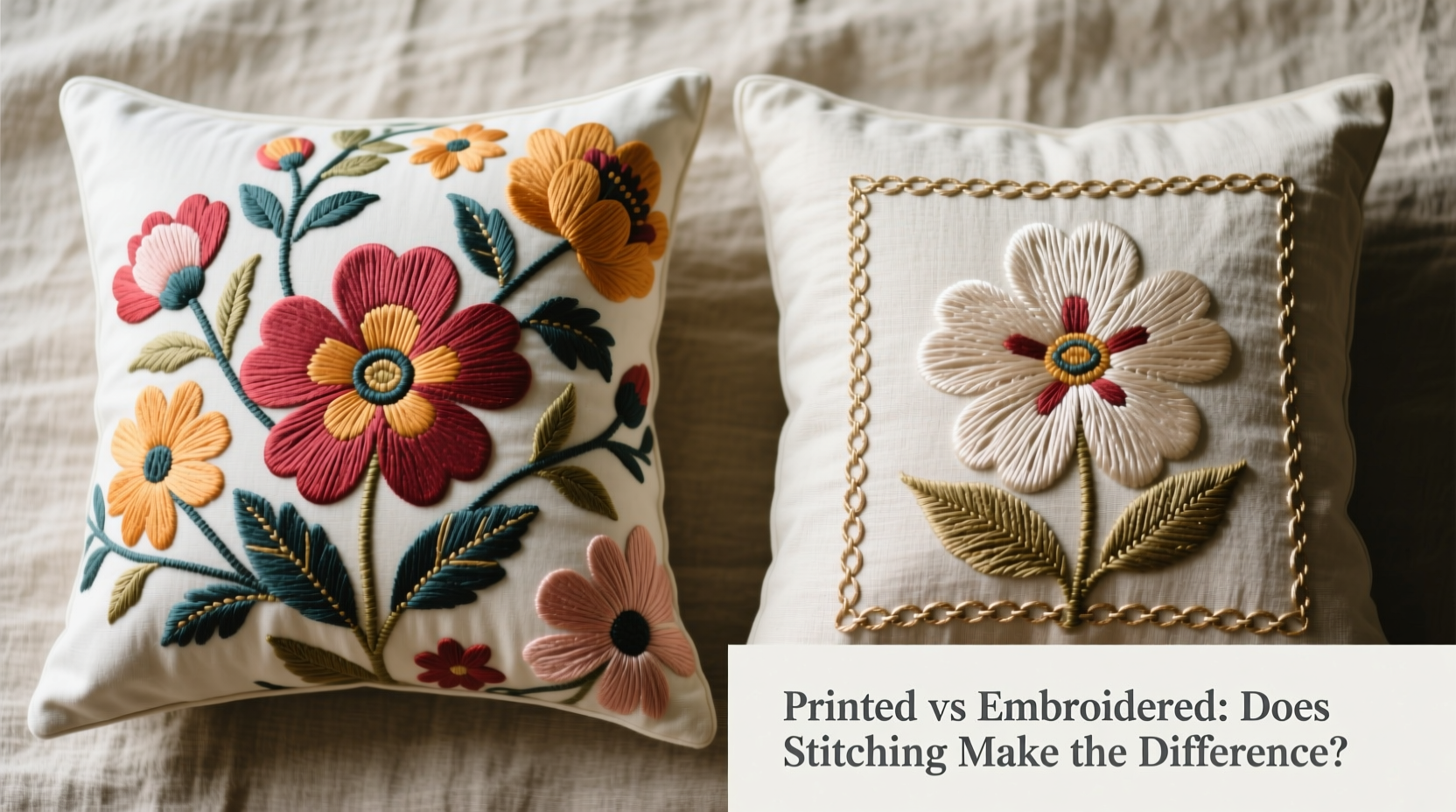
Printed pillows are typically created using digital or screen printing techniques. Ink is applied directly onto fabric—usually cotton, polyester, or a blend—allowing for vibrant colors, intricate patterns, and photorealistic imagery. The design becomes part of the surface layer but doesn’t alter the fabric’s physical structure.
In contrast, embroidered pillows use thread stitched into the base fabric to form designs. This process involves needles, bobbins, and precise programming (in machine embroidery) to build texture and dimension. Unlike printing, embroidery adds a new layer of material through mechanical reinforcement.
This fundamental distinction affects everything from durability to comfort. Printing is faster and cheaper; embroidery is slower and more labor-intensive—but it also changes the structural nature of the pillow.
Durability and Longevity Compared
One of the most tangible benefits of embroidery is its resilience over time. Printed designs are vulnerable to fading, especially with repeated washing or sun exposure. UV rays break down dyes, and detergents can accelerate color loss. After six months of regular use, a printed pillow may show noticeable wear around high-contact areas like edges and seams.
Embroidered designs, however, are integrated into the fabric itself. The threads are physically locked in place, making them far less prone to degradation from light or friction. A well-constructed embroidered pillow can retain its appearance for years—even decades—with minimal care.
“Embroidery isn’t just decorative—it’s structural reinforcement. Each stitch binds fibers together, reducing fraying and increasing tensile strength.” — Lena Patel, Textile Engineer & Home Goods Consultant
Comfort and Texture: Feel Matters
Beyond durability, tactile experience plays a major role in pillow selection. Printed fabrics maintain a smooth, consistent surface—ideal for those who prioritize softness and uniformity. This makes printed pillows particularly appealing for bedding ensembles or minimalist interiors where subtle textures dominate.
Embroidered pillows introduce raised elements. Depending on thread density and stitch type, these can range from barely noticeable to prominently textured. For some, this adds depth and luxury; for others, especially children or individuals with sensory sensitivities, the added roughness may be uncomfortable.
Consider placement carefully. Embroidered throw pillows on a living room sofa add elegance and visual interest. The same pillow on a toddler’s bed might feel too abrasive during close contact.
Wash Performance and Maintenance
Care requirements diverge sharply between the two types. Most printed pillows require gentle cycles, cold water, and air drying to prevent cracking or bleeding of ink. Harsh agitation can degrade the print layer, leading to peeling—a common complaint among users after only a few washes.
Embroidered pillows generally tolerate standard laundering better, provided the thread is colorfast and the backing stabilizer holds up. However, overly tight stitching without proper fabric support can pucker or distort when washed repeatedly.
| Feature | Printed Pillows | Embroidered Pillows |
|---|---|---|
| Fade Resistance | Low to moderate | High |
| Wash Tolerance | Requires delicate handling | Moderate to high (if well-made) |
| Texture Consistency | Smooth and even | Varies by design (can be raised) |
| Lifespan (with care) | 1–3 years | 5+ years |
| Initial Cost | Lower | Higher |
Design Flexibility and Customization
Printing excels in versatility. Full-bleed images, gradients, and multi-color scenes are easy to reproduce at scale. This makes printed pillows ideal for themed decor—think holiday motifs, travel photography, or pop culture references.
Embroidery has limitations in color transitions and fine detail. Complex shading requires multiple thread changes and advanced digitizing software. Yet, within its constraints, embroidery offers unmatched elegance for monograms, logos, floral motifs, and geometric patterns. It conveys craftsmanship and intentionality.
Custom orders highlight this divide. A client wanting their pet’s portrait on a pillow will likely choose printing. Someone commissioning wedding keepsakes with initials and wedding dates often prefers embroidery for its timeless appeal.
Mini Case Study: A Coastal Living Room Refresh
Sarah Thompson, an interior designer based in Charleston, recently updated a beachfront condo’s living area. Her client wanted nautical-themed pillows but was concerned about salt air and frequent guest use.
She tested two sets: one with printed wave patterns, another with embroidered anchors and rope borders. After eight months, the printed set showed fading along the edges and slight cracking on the creases. The embroidered versions remained intact, with no loosening threads or discoloration—even after being washed twice during seasonal turnovers.
“The embroidery held up not because it was fancier,” Sarah noted, “but because the stitching acted like armor. It resisted abrasion from sandy feet and humid conditions far better than ink on fabric ever could.”
Cost vs. Value: Is Extra Stitching Worth It?
At retail, embroidered pillows often cost 30% to 70% more than comparable printed ones. The price reflects labor, specialized equipment, and higher-quality materials needed to support stitching without distortion.
Yet, when evaluated over time, embroidery frequently delivers superior value. A $45 embroidered pillow lasting five years costs less per year than a $25 printed version replaced every 18 months. Additionally, well-made embroidered pieces often become heirloom items—passed down or repurposed rather than discarded.
That said, printed pillows have their place. For short-term decor rotations, seasonal displays, or budget-conscious projects, they offer flexibility without long-term commitment.
Checklist: Choosing Between Printed and Embroidered Pillows
- ✅ Assess usage frequency: High-use areas favor embroidery.
- ✅ Consider sunlight exposure: UV-prone spots degrade prints faster.
- ✅ Evaluate cleaning needs: Frequent washing favors stitched designs.
- ✅ Define design goals: Photorealism → print; elegance → embroidery.
- ✅ Set a lifespan expectation: Short-term → print; long-term → embroidery.
- ✅ Test texture: Run your hand over samples to gauge comfort.
- ✅ Check backing quality: Embroidered pillows need stabilizers to prevent puckering.
FAQ
Can you embroider over a printed design?
Yes, and it’s increasingly common in premium home goods. Combining both techniques allows for colorful backgrounds with detailed stitched accents. Just ensure the fabric can handle dual processing without warping.
Do embroidered pillows shed threads over time?
Poorly finished ones might, especially if low-grade thread or inadequate locking stitches are used. Reputable manufacturers secure thread ends with backstitching or sealing methods. Always inspect seams and reverse sides before purchasing.
Are printed pillows eco-friendly?
It depends on the ink and fabric. Water-based, non-toxic dyes on organic cotton are sustainable choices. However, many mass-market printed pillows use plastic-based inks and polyester blends that aren’t biodegradable. Embroidery, while more resource-intensive upfront, reduces replacement frequency—potentially lowering environmental impact over time.
Final Verdict: Does the Extra Stitching Make a Difference?
Absolutely. The extra stitching in embroidered pillows isn't merely decorative—it enhances structural integrity, extends lifespan, and improves resistance to environmental stressors. While printed pillows win in affordability and design range, they lack the endurance and tactile richness of their stitched counterparts.
The choice ultimately hinges on your priorities: fleeting trends or lasting quality? Immediate impact or enduring value? For spaces that see daily use, changing environments, or sentimental significance, embroidery proves its worth through performance and presence.




 浙公网安备
33010002000092号
浙公网安备
33010002000092号 浙B2-20120091-4
Comments
No comments yet. Why don't you start the discussion?