
When winter rolls around, few garments are as essential as the humble sweater. But with so many styles available, choosing between a printed sweater and an oversized one can be more complicated than it seems. Is one inherently warmer? Does one offer more versatility in styling? The answer isn’t as straightforward as fashion trends might suggest. Beyond aesthetics, the real differences lie in fabric, fit, layering potential, and how each style interacts with your body heat. Understanding these nuances helps you make smarter choices—ones that balance comfort, warmth, and personal expression.
The Science of Warmth: Fabric Matters More Than Style
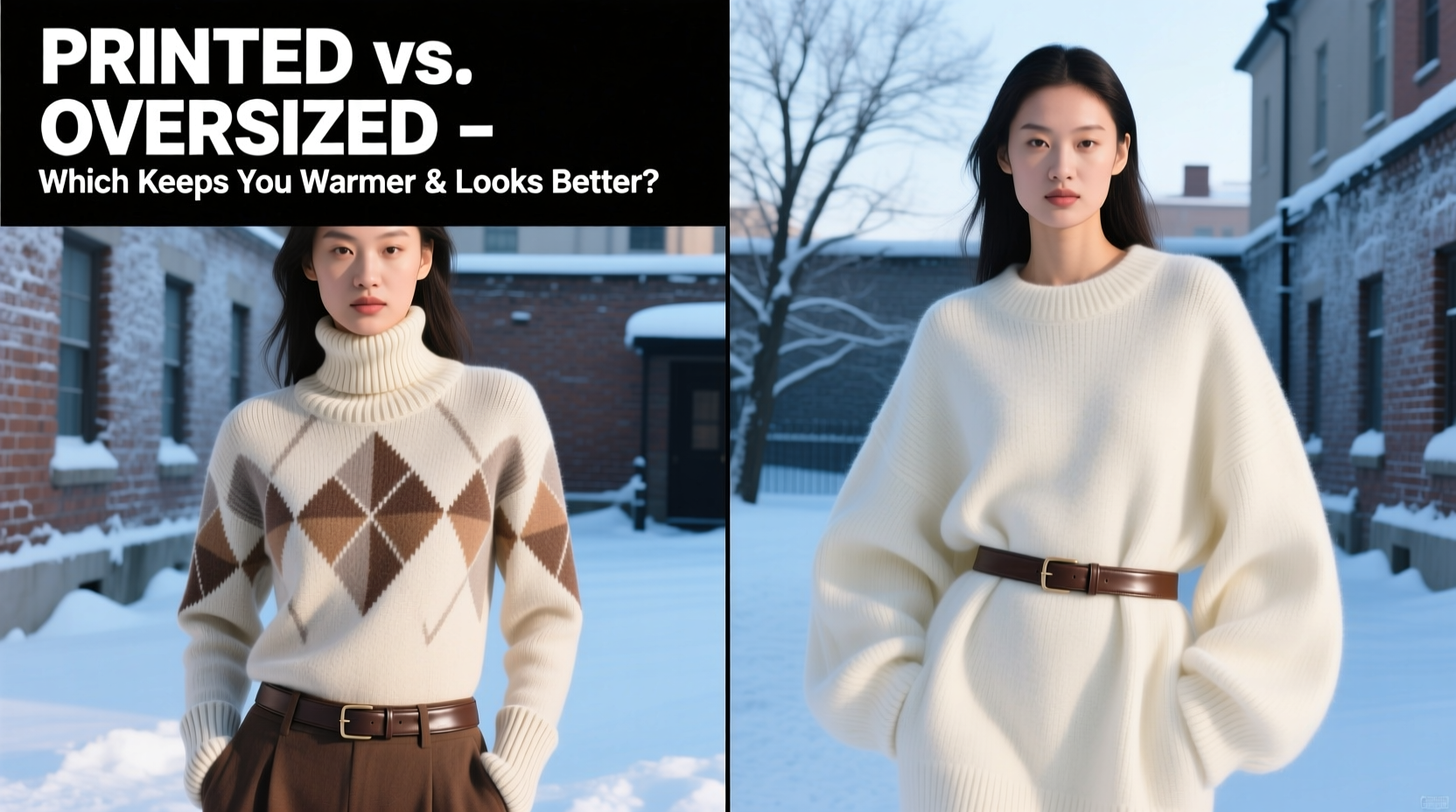
Before diving into prints or silhouettes, it’s crucial to understand what actually makes a sweater warm. Thermal insulation in clothing depends primarily on three factors: material density, air trapping, and coverage. Wool, cashmere, alpaca, and thick cotton blends retain heat by trapping warm air close to the skin. The weave and thickness of the knit also play a role—tighter knits generally offer better wind resistance, while looser weaves may allow more airflow but provide bulk for layering.
An oversized sweater naturally creates more dead air space between the garment and your body, which acts as an insulating buffer. This is why many cold-weather cultures favor voluminous woolens. However, if the sweater is too large or made from thin, loosely spun yarns, that same volume can become a liability when exposed to wind or movement, letting heat escape.
Printed sweaters, on the other hand, often prioritize design over structure. Many feature lightweight cotton or acrylic blends optimized for vibrant graphics rather than thermal performance. Sublimation printing or screen-printed designs usually don’t affect warmth directly, but the underlying fabric choice does. A tightly knit merino wool sweater with a subtle print will outperform a baggy, thin acrylic oversized piece in raw insulation value.
Fit vs. Function: How Silhouette Impacts Heat Retention
Oversized sweaters have dominated casual fashion for years, prized for their relaxed, effortless vibe. From slouchy turtlenecks to boxy cardigans, the loose fit allows for easy layering—worn over shirts, hoodies, or even light jackets. This layering capability is where oversized styles gain a functional edge. Multiple layers trap heat more effectively than a single thick garment, making them ideal for fluctuating temperatures.
However, excessive looseness comes with trade-offs. An overly baggy sweater can let cold air circulate inside, especially if worn without proper base layers. It may also restrict mobility or bunch up under coats, reducing overall efficiency. In contrast, a well-fitted printed sweater—especially one with ribbed cuffs and hem—seals in warmth more effectively by minimizing gaps at the wrists and waist.
That said, modern oversized designs now incorporate tailored elements like dropped shoulders, cinched waists, or thermal linings to improve heat retention without sacrificing style. The key is intentional design: volume alone doesn’t guarantee warmth; how that volume is structured does.
“Thermal efficiency in knitwear isn’t about size—it’s about controlled airspace and material integrity.” — Dr. Lena Torres, Textile Scientist, MIT Materials Lab
Style Showdown: Printed vs. Oversized – When Each Shines
Printed sweaters bring personality. Whether it’s a vintage band logo, a festive holiday motif, or abstract art, prints serve as conversation starters and mood enhancers. They work best in settings where self-expression matters: casual outings, creative workplaces, or social gatherings. Because they’re often designed with a standard fit, printed sweaters tend to pair easily with jeans, chinos, or skirts, offering a polished yet approachable look.
Oversized sweaters excel in minimalist or monochrome wardrobes. Their blank canvas nature lets the silhouette do the talking. Drape, drape, and more drape define this aesthetic. Neutral tones like oatmeal, charcoal, or camel dominate the category, allowing wearers to focus on texture and proportion. These pieces shine in urban environments, layered over turtlenecks or paired with leggings and boots for a cozy-chic effect.
Where printed sweaters risk looking dated or kitschy over time, oversized neutrals remain timeless. Yet, a bold print can elevate a simple outfit instantly, something minimalism struggles to achieve. Ultimately, the “better” look depends on context: occasion, body type, and personal style philosophy.
Choosing Based on Body Type and Proportion
- Taller individuals: Can carry oversized fits well, especially when balanced with slim bottoms.
- Shorter frames: May get swallowed by excess fabric; opt for slightly slouchy (not extreme) cuts or cropped oversized styles.
- Broad shoulders: Avoid boxy shapes that add width; consider V-necks or open-front oversized cardigans.
- Curvier builds: Soft draping from oversized knits can flatter; avoid tight printed sweaters that cling unevenly.
Comparative Breakdown: Printed vs. Oversized Sweaters
| Feature | Printed Sweater | Oversized Sweater |
|---|---|---|
| Warmth Potential | Moderate (depends on fabric) | High (with layering) |
| Style Flexibility | Low to moderate (design limits pairing options) | High (works with many outfits) |
| Layering Ease | Moderate (fitted cuts limit inner layers) | Excellent (designed for layering) |
| Durability | Varies (prints may crack over time) | Generally high (solid colors, sturdy knits) |
| Fashion Longevity | Short-term (trend-dependent) | Long-term (timeless appeal) |
Real-World Example: Two Days in the City
Consider Sarah, a graphic designer living in Chicago. On a Friday evening out with friends, she wears a vintage band-print sweater with black jeans and ankle boots. The night is chilly, but she layers a leather jacket over it. While stylish, she feels cold during outdoor transit because the fitted sleeves leave her wrists exposed and the thin cotton blend offers little insulation.
The following Sunday, Sarah opts for an oversized oatmeal-colored turtleneck. She wears it over a long-sleeve thermal shirt, tucks it into wide-leg corduroys, and adds a wool coat. Despite lower temperatures, she stays warm throughout the day—even during a long walk in the park. The combination of fabric weight, coverage, and strategic layering proves superior.
This scenario illustrates that while printed sweaters can be functional, they often require more careful planning to stay warm. Oversized styles, built for volume and comfort, inherently support practical layering systems.
Action Plan: Maximizing Warmth and Style Year-Round
- Assess your climate: In consistently cold areas, prioritize oversized woolens. In milder zones, printed sweaters can suffice with a coat.
- Invest in quality base layers: Merino wool thermals enhance any sweater’s warmth, especially under oversized fits.
- Mix textures: Pair a printed sweater with a chunky scarf or vest for added insulation without bulk.
- Wash with care: Use cold water and lay flat to dry—this preserves print integrity and prevents pilling in oversized knits.
- Rotate seasonally: Save bold prints for indoor events or transitional weather; reserve oversized pieces for peak winter months.
Frequently Asked Questions
Can I wear an oversized sweater professionally?
Yes, if styled thoughtfully. Pair a neutral oversized knit with tailored trousers, a collared shirt underneath, and closed-toe shoes. Avoid extreme volumes or slouchy hems that appear sloppy.
Do printed sweaters go out of style quickly?
Some do—especially trend-driven graphics. However, classic motifs (navy stripes, Fair Isle patterns, or heritage logos) maintain relevance across seasons. Focus on timeless designs if longevity matters.
Which sweater type is better for layering under coats?
Oversized sweaters can create bulk, making outerwear fit tighter. For coat-friendly layering, choose mid-weight oversized styles or go for a printed sweater with a snug fit that won’t add unnecessary volume.
Final Verdict: Function Meets Fashion
In the battle of printed versus oversized sweaters, there’s no universal winner. If your priority is warmth, an oversized sweater made from dense, natural fibers wins—especially when used in layered systems. Its structural advantages in heat retention and adaptability are hard to beat. But if self-expression and visual impact matter most, a well-chosen printed sweater brings flair that minimalism can’t replicate.
The smartest wardrobe doesn’t choose one over the other—it includes both. Rotate printed styles during milder months or indoor-centric days. Lean on oversized knits when the thermometer drops. Combine them strategically: wear a slim printed sweater beneath an open oversized cardigan for both warmth and personality.




 浙公网安备
33010002000092号
浙公网安备
33010002000092号 浙B2-20120091-4
Comments
No comments yet. Why don't you start the discussion?