
In today’s evolving workplace, the rigid dress code of yesterday is softening. While a tailored suit once symbolized professionalism across industries, many offices now embrace casual separates—blazers with chinos, blouses with trousers, or even smart knitwear. Yet knowing when to make that shift isn’t always clear. Wearing separates instead of a full suit can project confidence and adaptability, but misjudging the moment risks appearing underdressed or out of touch.
The key lies not in fashion trends alone, but in understanding context: industry norms, company culture, meeting type, and your role within the organization. The decision to ditch the suit should be strategic, not spontaneous. This article breaks down the nuances between professional suits and casual separates, offering practical guidance on when it's truly acceptable—and even advantageous—to go suitless.
Understanding the Power of the Suit
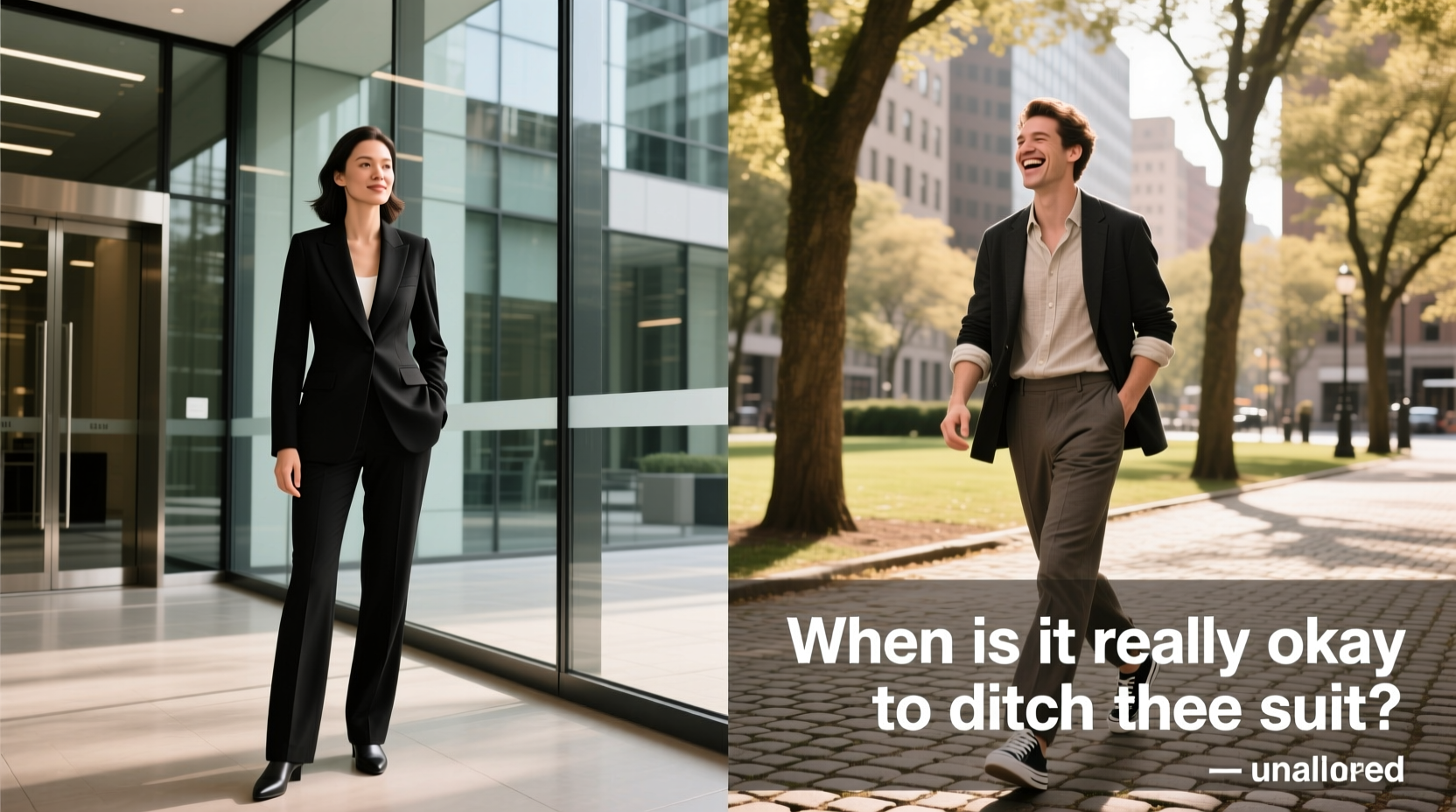
A well-fitted suit remains one of the most powerful tools in a professional wardrobe. It signals authority, preparedness, and respect for formal environments. In high-stakes scenarios—client pitches, court appearances, board meetings, or job interviews—the suit acts as a nonverbal cue of competence.
According to Dr. Karen Pine, professor of psychology and author of Dressed: The Psychology of Clothing, “Clothing influences both how others perceive us and how we perform. A suit triggers associations with leadership and structure, which can enhance cognitive focus and assertiveness.”
“The suit isn’t outdated—it’s contextual. It still commands attention in conservative fields like law, finance, and government.” — Marcus Langford, Corporate Image Consultant
In traditional sectors, the expectation remains strong. A survey by Robert Half found that 68% of executives believe formal attire positively impacts employee credibility during client interactions. That doesn’t mean you must wear a suit every day—but it does mean knowing when to reach for it.
Defining Casual Separates: More Than Just Comfort
Casual separates refer to coordinated individual pieces—such as a structured blazer paired with tailored trousers, a silk blouse with a pencil skirt, or a merino wool sweater over dark denim—that maintain polish without forming a matched suit. These combinations offer versatility and comfort while preserving professionalism.
The rise of hybrid work models and more relaxed corporate cultures has accelerated this trend. Tech startups, creative agencies, and progressive firms often encourage personal expression through clothing. But “casual” doesn’t mean sloppy. The distinction lies in intentionality: separates should still reflect thoughtfulness in fit, fabric, and coordination.
When It’s Okay to Ditch the Suit: A Practical Framework
Not all days demand the same level of formality. Below is a decision-making framework based on five critical factors:
- Industry Norms: Legal, banking, and consulting typically require suits for external-facing roles. Creative, tech, and nonprofit spaces allow greater flexibility.
- Company Culture: Observe leadership. If senior managers wear suits daily, follow suit (literally). If they rotate blazers and slacks, you likely can too.
- Meeting Type: Internal team check-ins? Separates are fine. Presenting to investors? Suit up.
- Client Expectations: Are clients conservative? Match their tone. Working with young entrepreneurs? You may align better in elevated separates.
- Your Role & Seniority: Junior staff often benefit from overdressing slightly. Executives have more leeway to set tone through style.
Real Example: Navigating a Hybrid Week
Sophia, a mid-level marketing manager at a financial technology firm, follows a hybrid schedule. On Mondays and Fridays, she works remotely and wears smart-casual separates—navy trousers, crisp white shirts, and loafers. For her in-office days (Tuesday–Thursday), she assesses her calendar.
- Tuesday: Team brainstorm – navy blazer with gray chinos.
- Wednesday: Client demo – full charcoal suit, white shirt, silk tie.
- Thursday: Internal presentation – light beige linen-blend jacket with matching trousers (not a suit), tucked-in silk shell.
By aligning her outfit choices with intent and audience, Sophia maintains credibility without over-dressing unnecessarily. Her approach reflects situational awareness—a hallmark of true professional maturity.
Do’s and Don’ts: Suit vs. Separates Comparison
| Scenario | Recommended | Not Recommended |
|---|---|---|
| Job interview in investment banking | Dark navy or black two-piece suit | Blazer with jeans or colored trousers |
| Creative agency pitch meeting | Elevated separates (e.g., tailored jacket + dark trousers) | Overly formal pinstripe suit |
| Internal team meeting | Polished separates or business casual | Wrinkled shirt or casual sneakers |
| Networking event after work | Blazer with dark jeans and dress shoes | Full suit in heavy wool (may seem stiff) |
| Court appearance | Conservative suit with minimal accessories | Any separates, especially casual fabrics |
Step-by-Step Guide: Transitioning from Suits to Separates
If you're considering shifting toward more separates, do so strategically:
- Observe for One Week: Note what colleagues and leaders wear across different situations.
- Start With Familiar Combinations: Pair your suit jacket with non-matching trousers or skirts.
- Invest in Coordinating Colors: Build a capsule wardrobe in neutral tones (navy, gray, beige, black).
- Elevate Fabric Quality: Choose wool blends, cotton twill, or crepe—materials that drape well and resist wrinkles.
- Test in Low-Risk Settings: Wear separates to internal meetings before using them externally.
- Seek Feedback: Ask a trusted colleague or mentor if your look appears professional.
Frequently Asked Questions
Can I wear separates to a job interview?
It depends on the industry. In tech, design, or startups, well-coordinated separates (e.g., blazer with tailored pants) are often acceptable. In law, finance, or government, a full suit is safer. When in doubt, err on the side of formality.
Is it unprofessional to never wear a suit?
Not inherently. In many modern workplaces, consistent professionalism matters more than suit-wearing. However, avoiding suits entirely may limit your perceived authority in conservative environments. Own a suit and use it when needed.
How do I make separates look as polished as a suit?
Focus on fit, fabric, and coordination. Ensure all pieces are tailored, colors complement each other, and footwear is closed-toe and clean. A structured bag and minimal accessories complete the look.
Building a Flexible Professional Wardrobe
The future of professional dressing isn’t about abandoning the suit—it’s about mastering both suits and separates to match the moment. Think of your wardrobe as a toolkit: the suit is your precision instrument for high-impact moments; separates are your versatile multi-tool for everyday effectiveness.
Start by owning:
- One dark suit (navy or charcoal)
- Two blazers in complementary colors (e.g., navy, tan)
- Three pairs of tailored trousers/skirts (black, gray, navy)
- Multiple crisp shirts/blouses in solid colors
- Quality leather shoes that work with both suits and separates
This foundation allows endless combinations while maintaining a sharp image. Over time, you’ll develop an instinct for when to suit up—and when to stand out in something more nuanced.
Final Thoughts: Dress for the Outcome You Want
Dressing professionally isn’t about following arbitrary rules—it’s about communicating respect, competence, and clarity of purpose. Whether you choose a full suit or a thoughtfully assembled set of separates, the goal is alignment: with your environment, your audience, and your ambitions.
The professionals who thrive aren’t those who blindly follow tradition or chase trends—they’re the ones who read the room, adapt with intention, and present themselves with confidence. So next time you reach for your clothes, ask not “Can I skip the suit?” but “What message do I want to send today?”




 浙公网安备
33010002000092号
浙公网安备
33010002000092号 浙B2-20120091-4
Comments
No comments yet. Why don't you start the discussion?