
Every holiday season, homes across neighborhoods compete in a silent contest of brightness, rhythm, and spectacle. At the heart of this festive arms race lies a small but powerful device: the programmable Christmas light controller. Once limited to simple timers and manual switches, today’s lighting systems can sync with music, respond to motion, and be controlled from thousands of miles away via smartphone apps. But does this level of sophistication enhance the joy of the season—or cross into technological overindulgence?
The debate isn’t just about aesthetics or convenience. It’s about value, effort, and whether the complexity adds meaning or merely noise. For some, programmable controllers unlock creative expression and precision that transforms a house into a holiday landmark. For others, they represent an unnecessary escalation—turning what should be a joyful tradition into a weekend-long tech setup.
To understand where these devices stand on the spectrum between brilliance and excess, it helps to examine how they work, who benefits most, and what real users experience when they plug them in for the first time.
How Programmable Christmas Light Controllers Work
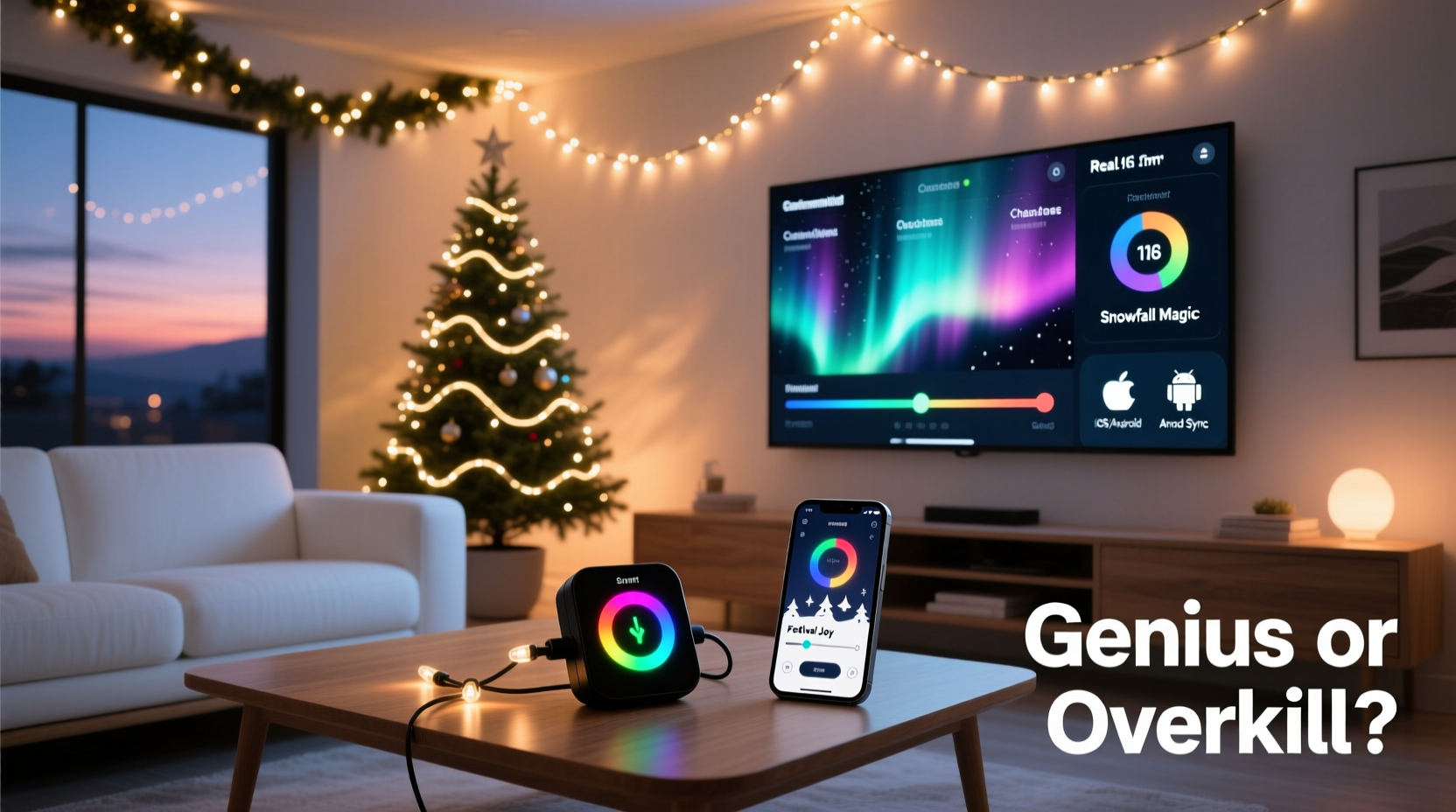
At their core, programmable Christmas light controllers are microprocessor-based devices that manage when, how, and in what sequence lights turn on and off. Unlike basic mechanical timers, these systems use digital programming to create dynamic effects such as fading, chasing, twinkling, or pulsing patterns.
Modern versions fall into two main categories:
- Standalone units – These plug into a wall outlet and control one or more strands of lights directly. Many include built-in programs and allow scheduling through buttons or dials.
- Smart or networked controllers – These connect to Wi-Fi or Bluetooth and are managed through mobile apps. Some integrate with voice assistants like Alexa or Google Assistant, enabling voice commands or automation based on location or time.
Advanced setups may use protocols like DMX or E1.31 for large-scale installations, allowing precise control over hundreds or even thousands of individual LEDs. These are common in public displays or among serious hobbyists.
Programming ranges from preset modes (e.g., “slow fade” or “twinkle”) to full custom sequences where each light is timed down to the millisecond. Software tools like xLights or Falcon Player let users map out entire displays and synchronize them to music tracks, creating immersive audiovisual experiences.
Benefits That Make Them Feel Like Genius
Despite concerns about complexity, programmable controllers offer tangible advantages that elevate holiday decorating beyond static strings of white bulbs.
Energy Efficiency and Automation
Controllers allow precise scheduling, ensuring lights only operate during desired hours. This reduces electricity consumption and extends bulb lifespan. A well-programmed system can turn on at dusk and shut off at midnight without manual intervention—even adjusting automatically for changing sunset times.
Dynamic Visual Effects
Static lights convey cheer; animated ones tell stories. With programmability, you can simulate falling snow, rippling waves, or fireworks. Some homeowners choreograph entire routines to classic carols, turning their front yard into a mini drive-through show.
Remote Management and Monitoring
If you forget to turn off your display while on vacation, a smart controller lets you do it from your phone. You can also receive alerts if a circuit fails or power is interrupted—useful for preventing fire hazards or extended outages.
Scalability for Growing Displays
As your collection grows—from three strands to dozens of net lights, icicles, and inflatables—a programmable hub becomes essential for coordination. Instead of juggling multiple timers, one central system manages everything in unison.
“Lighting used to be about coverage. Now it’s about storytelling. The right controller turns your home into a canvas.” — Daniel Reeves, Holiday Display Designer & Creator of Lights4Fun.com
When They Cross Into Overkill Territory
For all their potential, programmable controllers aren’t universally beneficial. In many cases, the added complexity outweighs the gains—especially for casual decorators.
Steep Learning Curve
Setting up a multi-zone synchronized display often requires learning new software, understanding electrical loads, and troubleshooting connectivity issues. Users report spending more time debugging than enjoying results—particularly with open-source platforms requiring configuration files and firmware updates.
Cost vs. Value Mismatch
A basic timer costs under $10. A high-end 16-channel smart controller with app support can exceed $200. Add extension cables, surge protectors, and mounting hardware, and total investment climbs fast. For families who simply want a warm glow during December, this may feel excessive.
Reliability Concerns
More technology means more points of failure. Network outages, app crashes, or firmware bugs can leave displays dark or erratic. One homeowner reported losing a full evening’s programming due to a failed cloud sync—something that wouldn’t happen with a mechanical switch.
Diminishing Returns on Effort
Studies on consumer satisfaction with holiday decorations suggest a plateau effect: enjoyment increases with initial improvements (adding color, symmetry), but additional complexity yields minimal emotional return. After a certain point, neighbors may admire the technical skill—but not feel more joy.
| Feature | Useful For | Risk of Overkill |
|---|---|---|
| Music Synchronization | Public displays, YouTube creators | High – rarely appreciated by passersby |
| App-Based Control | Frequent travelers, tech-savvy users | Moderate – depends on Wi-Fi stability |
| Multi-Zone Sequencing | Larger homes with varied lighting types | Low – valuable for organization |
| Real-Time Motion Response | Interactive installations | Very High – niche appeal |
Real-World Example: The Suburban Showdown
In Maple Ridge, Ontario, two neighbors took different approaches to holiday lighting. Mark, an IT consultant, invested $580 in a four-channel Wi-Fi controller, 12 strands of addressable RGB LED lights, and spent 17 hours installing and programming a music-synced display set to *Carol of the Bells*. He used xLights software to map each window and roofline, adding strobe effects timed to drum hits.
Across the street, Linda, a schoolteacher, used three $8 plug-in timers to run her existing multicolored lights from 5 PM to 11 PM nightly. Her setup included a rotating reindeer projector and string lights along the porch railing.
Both received compliments. Mark’s display went viral locally, drawing cars from neighboring towns. But he admitted frustration when his router crashed mid-December, requiring a full reconfiguration. Linda enjoyed her lights stress-free, turned them off promptly after New Year’s, and said she’d “never spend a Saturday debugging pixels again.”
The contrast highlights a key insight: programmable controllers amplify impact for those seeking recognition or creative fulfillment—but don’t necessarily increase personal enjoyment.
Who Should Consider a Programmable Controller?
Not everyone needs one. But for specific user profiles, these devices are less gadgetry and more essential tool.
✅ Ideal Users:
- Holiday hobbyists who treat lighting as a seasonal project.
- Content creators filming videos for social media or YouTube.
- Community organizers managing neighborhood-wide displays.
- Tech enthusiasts who enjoy integrating smart home ecosystems.
❌ Likely Better Off Without:
- Casual decorators satisfied with traditional plug-and-play setups.
- Renters or short-term homeowners unwilling to make long-term investments.
- Those prioritizing simplicity over spectacle.
Step-by-Step Guide to Evaluating Your Needs
Before diving into advanced lighting tech, follow this practical assessment:
- Inventory your current lights – Are they compatible with smart controllers? Older incandescent sets may not support dimming or color changes.
- Define your goal – Is it ambiance, entertainment, or competition? Honest answers prevent overspending.
- Map your layout – Sketch which areas will have lights and estimate circuits needed.
- Test one zone first – Buy a single smart outlet and experiment with scheduling or effects.
- Calculate ROI in enjoyment – Ask: Will I spend more time setting it up than appreciating it?
- Check local regulations – Some municipalities limit display duration or brightness due to light pollution.
FAQ
Can I use programmable controllers with regular Christmas lights?
Yes, for basic on/off or dimming functions, most standard LED or incandescent strings work with smart plugs or standalone controllers. However, complex effects like color shifting or pixel-level animation require addressable LED strips designed for programmability.
Do I need Wi-Fi for programmable controllers?
Not always. Standalone units with internal clocks function offline. Wi-Fi is only necessary for remote access, app control, or syncing with external data like sunset times. For reliability, consider hybrid models that work both online and offline.
Are programmable light controllers safe?
Yes, when used correctly. Choose UL-listed devices, avoid overloading circuits, and use weatherproof enclosures outdoors. Always ground multi-channel controllers and install surge protectors to guard against voltage spikes.
Final Verdict: Overkill or Genius?
The answer depends entirely on context. For someone who views holiday decorating as a form of artistic expression or community engagement, programmable controllers are nothing short of genius. They enable precision, creativity, and efficiency impossible with manual methods.
But for the majority of households—those aiming for warmth, tradition, and low-effort charm—these devices risk becoming overkill. The extra cost, setup time, and maintenance often deliver marginal returns in actual holiday happiness.
Technology should serve celebration, not overshadow it. The best lighting solution isn’t the most advanced—it’s the one that enhances joy without demanding constant attention.
Ultimately, there’s no shame in choosing simplicity. Nor is there fault in embracing innovation. What matters is alignment: does the tool match your intentions?
“The most magical displays aren’t the brightest—they’re the ones where you can feel the love behind them.” — Clara Mendez, Author of *The Heart of Holiday Traditions*
Take Action This Season
Instead of defaulting to last year’s setup—or jumping into a high-tech overhaul—take a moment to reflect. What do you truly want your lights to say? If the answer involves rhythm, surprise, or remote control from a ski lodge, go ahead and program away. But if it’s simply “welcome” and “joy,” sometimes the old plug timer does the job just fine.




 浙公网安备
33010002000092号
浙公网安备
33010002000092号 浙B2-20120091-4
Comments
No comments yet. Why don't you start the discussion?