
As holiday seasons grow more tech-savvy, the way we decorate our homes is evolving. No longer limited to simply plugging in strands of lights and flipping a switch, homeowners now have access to smart lighting systems, programmable controllers, and basic timer plugs that promise convenience, energy savings, and enhanced curb appeal. But with options ranging from $5 mechanical timers to full Wi-Fi-enabled light networks costing over $100, the real question emerges: are the advanced features of programmable Christmas lights truly worth the extra cost compared to traditional timer plugs?
The answer depends on your priorities—whether you value automation, customization, security, or simplicity. This article breaks down both options, compares their functionality, and helps you decide which solution fits your needs without overspending or overcomplicating your holiday routine.
Understanding the Core Differences
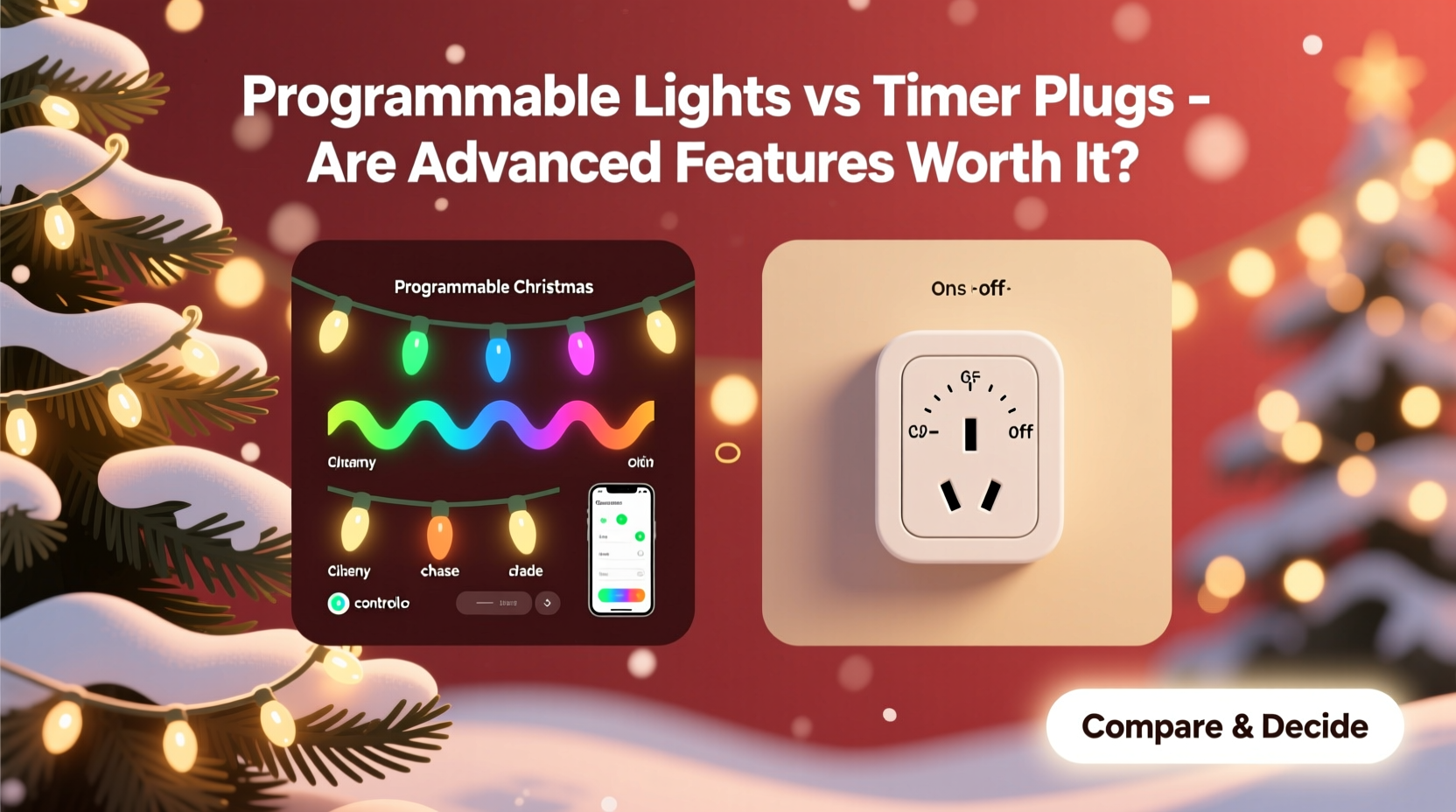
At first glance, both programmable Christmas lights and timer plugs serve the same purpose: turning lights on and off at scheduled times. However, their underlying technology, flexibility, and integration capabilities differ significantly.
Timer plugs are standalone devices that connect between your wall outlet and the power cord of your lights. Most operate via mechanical dials or digital interfaces, allowing users to set specific on/off times each day. They're inexpensive, widely available, and require no internet connection.
Programmable Christmas lights, on the other hand, often refer to LED strings with built-in microcontrollers or paired with smart hubs. These can be controlled via smartphone apps, voice assistants (like Alexa or Google Assistant), or integrated into home automation platforms. Some models allow per-light color changes, animation effects, music synchronization, and geofencing.
The key distinction lies not just in price but in control granularity, remote accessibility, and long-term usability beyond the holidays.
Feature Comparison: What You Gain (and Lose)
| Feature | Timer Plugs | Programmable Christmas Lights |
|---|---|---|
| Price Range | $5–$20 | $30–$150+ |
| Scheduling Precision | Daily on/off (±15 min accuracy) | Exact minute-based timing, recurring patterns |
| Remote Control | No | Yes (via app or voice) |
| Custom Light Effects | No | Yes (fade, twinkle, chase, etc.) |
| Color Customization | Limited to fixed-color bulbs | RGB options with millions of colors |
| Integration with Smart Home | No | Yes (IFTTT, Alexa, HomeKit) |
| Weather Resistance | Depends on model | Most outdoor-rated models are IP65+ |
| Setup Complexity | Plug-and-play | App setup, Wi-Fi pairing, firmware updates |
While timer plugs win on simplicity and affordability, programmable lights offer depth of control that appeals to tech enthusiasts, entertainers, and those aiming for high-impact displays.
Real-World Use Case: The Suburban Homeowner’s Dilemma
Consider Sarah, a working mother in Denver who decorates her home annually for Christmas. Her neighborhood has an informal \"lights competition,\" and she enjoys impressing neighbors and trick-or-treaters alike. She also travels during the holidays and worries about leaving lights on unnecessarily.
In past years, she used a basic timer plug set to turn lights on at 5 PM and off at 11 PM. It worked—but when she returned from vacation a day early, she found her display had been stuck in the \"on\" position due to a power flicker that reset the timer.
Last year, she invested in a set of programmable RGB lights synced with a smart hub. Using her phone, she could adjust schedules remotely, create animated snowfall effects, and even let her kids change colors from school. When a storm caused a brief outage, the system automatically resumed its schedule once power returned.
She paid $85 more than her old setup—but gained peace of mind, personalization, and bragging rights at the neighborhood party.
“Smart lighting isn’t just about convenience—it’s about reliability and emotional impact. A well-timed light show can lift spirits during dark winter months.” — Mark Tran, Residential Lighting Designer & Holiday Display Consultant
When Timer Plugs Are the Smarter Choice
Not every household needs dynamic light shows. For many, a reliable, low-cost solution is preferable. Timer plugs shine in scenarios where:
- You have a consistent daily routine and predictable sunset times.
- Your display is modest—e.g., a wreath, porch railing, or single tree.
- You’re renting and don’t want to invest in permanent smart infrastructure.
- You prioritize ease of use over customization.
- You're managing multiple seasonal decorations across different outlets.
Digital timer plugs now come with features like randomize modes (to simulate occupancy) and battery backup to preserve settings during outages—narrowing the gap slightly with smart alternatives.
Advanced Features Worth Considering
If you're leaning toward programmable lights, here are the standout capabilities that justify the premium for certain users:
1. Geofencing Automation
Some smart light systems detect when your phone enters or leaves a geographic radius around your home. This allows lights to turn on as you arrive—even if it's earlier than scheduled—enhancing safety and ambiance.
2. Music Sync and Motion Activation
High-end models like Philips Hue Holiday or Govee DreamView can pulse lights to music or react to motion. Ideal for parties or interactive displays visible from the street.
3. Sunrise/Sunset Scheduling
Instead of fixed clock times, smart systems can sync with local daylight data. Your lights turn on precisely at dusk, adjusting automatically throughout the season as days shorten.
4. Multi-Zone Control
Control different parts of your display independently—front yard trees on one schedule, roofline animations on another, indoor menorahs on a third—all from one app.
5. Energy Usage Tracking
Certain smart plugs and controllers report estimated wattage consumption, helping you monitor and reduce electricity costs over time.
Step-by-Step: Choosing the Right Option for Your Needs
- Evaluate your current setup. How many strands do you use? Where are they located? Are they indoors or outdoors?
- Define your goals. Do you want simple automation, energy savings, visual impact, or remote access?
- Assess your technical comfort level. Are you comfortable downloading apps, connecting to Wi-Fi, and troubleshooting connectivity issues?
- Check existing smart home integration. Do you already use Alexa, Google Home, or Apple HomeKit? Compatibility can streamline setup.
- Budget accordingly. Allocate funds based on expected lifespan (LEDs last 25,000+ hours) and reuse potential beyond December.
- Start small if unsure. Buy one programmable strand or a single smart plug to test before scaling up.
- Plan for storage and maintenance. Label cords, store in dry containers, and inspect annually for wear.
Cost Over Time: A Long-Term View
While a $10 timer plug seems cheaper upfront, consider longevity and versatility:
- A quality smart plug or programmable light system can be reused year-round—for Easter, Halloween, or Fourth of July—with different color themes.
- Energy-efficient LEDs used in programmable sets consume up to 80% less power than incandescent bulbs, reducing long-term utility bills.
- Smart systems depreciate slowly; firmware updates often add new features years after purchase.
In contrast, basic timers may fail after 2–3 seasons due to motor wear or weather damage, leading to repeated purchases.
Frequently Asked Questions
Can I use a timer plug with programmable lights?
Yes, but it defeats the purpose. Doing so disables remote access and dynamic scheduling. Use either the smart system’s native scheduling or the plug—not both.
Do programmable lights work during power outages?
Most lose settings briefly, but higher-end models have internal memory that restores previous configurations. Systems with battery backups maintain clock accuracy.
Are there privacy concerns with smart Christmas lights?
Any internet-connected device carries minimal risk. Ensure your Wi-Fi network uses WPA3 encryption, update firmware regularly, and avoid using default passwords on smart hubs.
Final Checklist Before You Buy
- ✅ Define your primary need: convenience, aesthetics, or security?
- Choose timer plugs for simplicity; smart lights for creativity and control.
- ✅ Confirm outdoor rating (IP65 or higher) for exterior use.
- Water resistance prevents short circuits and extends lifespan.
- ✅ Check app reviews and brand support.
- Poorly maintained apps can render hardware useless over time.
- ✅ Consider future-proofing.
- Will you reuse these lights next year? Can they integrate with upcoming smart home plans?
- ✅ Test compatibility with voice assistants if desired.
- Ask, “Alexa, turn on the Christmas lights,” should work seamlessly.
Conclusion: Balancing Innovation and Practicality
The choice between programmable Christmas lights and timer plugs ultimately comes down to how much value you place on control versus cost. For straightforward, hands-off operation, a $15 digital timer plug delivers excellent return on investment. But if you crave customization, enjoy technology, or want your home to stand out in the neighborhood, programmable lights offer transformative possibilities.
Advanced features aren't universally necessary—but for those who embrace them, they redefine what holiday lighting can be. From synchronized dances to mood-enhancing color therapy in January, these systems extend far beyond December 25th.




 浙公网安备
33010002000092号
浙公网安备
33010002000092号 浙B2-20120091-4
Comments
No comments yet. Why don't you start the discussion?