
The holiday season is defined by light—twinkling strands draped across rooftops, wrapped around trees, and lining doorways. As technology evolves, so do the tools we use to illuminate our celebrations. Today, the choice isn’t just between warm white and cool white; it’s a full-scale customization battle between programmable LED Christmas lights and traditional static color sets. One promises dynamic effects and personalized displays, while the other delivers simplicity and consistency. Understanding the strengths and trade-offs of each can help you make an informed decision that aligns with your aesthetic goals, technical comfort, and budget.
The Rise of Programmable LED Lights
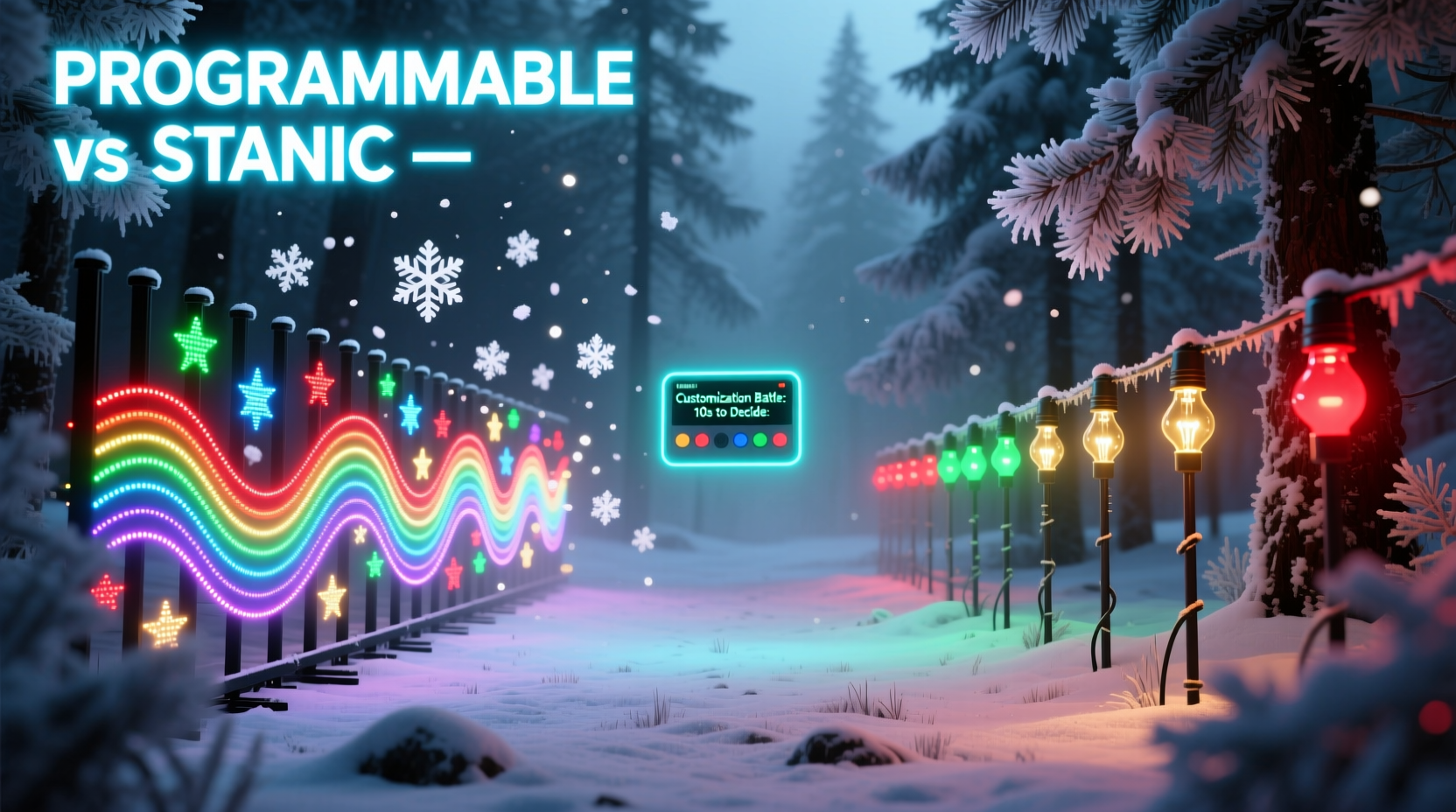
Programmable LED Christmas lights have revolutionized seasonal decor. Unlike their predecessors, these smart lighting systems allow users to change colors, patterns, brightness, and even synchronize lights to music—all via smartphone apps or remote controls. Built on addressable LED technology (such as WS2812B or NeoPixel), each bulb can be individually controlled, enabling complex animations like chasing, fading, and wave effects.
These lights are typically powered by microcontrollers such as Arduino or ESP32, or pre-programmed IC chips embedded in consumer-grade kits from brands like Philips Hue, Luminara, or Twinkly. Many models support Wi-Fi or Bluetooth connectivity, allowing integration with voice assistants like Alexa or Google Assistant for hands-free control.
Homeowners now create immersive light shows visible from blocks away, timed to classic carols or modern hits. Some neighborhoods have even turned synchronized light displays into community events, drawing visitors and boosting local spirit.
Static Color Lights: The Timeless Classic
Static color LED Christmas lights remain a staple for many households. These strings emit a single, unchanging hue—common options include warm white, cool white, multicolor, red, blue, green, or purple. While they lack dynamic functionality, their appeal lies in reliability, affordability, and ease of use.
Manufacturers often design static lights with durability in mind. Many are rated for indoor and outdoor use, built with shatter-resistant bulbs, and engineered to withstand moisture and temperature fluctuations. Because they don’t require data signals or software, setup is plug-and-play: connect, hang, and enjoy.
For decorators who value tradition, minimalism, or subtlety, static lights offer elegance without complexity. A string of warm white LEDs along a mantel evokes nostalgia. Multicolor strands on a tree bring cheerful vibrancy without overwhelming the senses.
“Sometimes less is more. Static lights focus attention on craftsmanship and composition, not distractions.” — Daniel Reyes, Lighting Designer & Holiday Display Consultant
Customization Face-Off: Features Compared
The core of the debate lies in customization. What exactly can you do with each type? Below is a detailed comparison based on key factors influencing user experience.
| Feature | Programmable LED Lights | Static Color Lights |
|---|---|---|
| Color Options | Millions of colors via RGB mixing | Fixed per strand (e.g., red, green, warm white) |
| Light Effects | Chasing, strobe, fade, twinkle, sound sync, custom animations | Limited to steady-on or basic flicker/twinkle modes |
| User Control | App-based, remote, voice-enabled, scheduling | Manual switch or timer plug only |
| Installation Complexity | Moderate to high (requires power, data, app setup) | Low (plug and play) |
| Cost (per 50-light strand) | $20–$50+ | $5–$15 |
| Durability | High, but sensitive to voltage/data issues | Very high; fewer components to fail |
| Energy Efficiency | High (same as standard LEDs) | High |
| Scalability | Excellent with controllers supporting hundreds of nodes | Limited by outlet capacity and daisy-chaining rules |
While programmable lights dominate in versatility, static lights win on accessibility and predictability. They’re ideal for renters, seniors, or anyone unwilling to navigate apps or troubleshoot firmware updates.
Real-World Scenario: The Johnson Family Light Show
The Johnsons live in a suburban neighborhood known for its festive decorations. For years, they used simple multicolor static lights on their roofline and porch. In 2022, inspired by viral videos, they invested in a programmable LED system with 1,200 addressable bulbs, a Wi-Fi controller, and a music synchronization feature.
After a weekend of installation and configuration, they launched “Winter Wonder Lights,” a two-minute show synced to *Carol of the Bells*. Neighbors gathered nightly. Local news covered the display. Donations poured in for a children’s hospital charity they supported.
But challenges emerged. The system crashed twice during peak viewing hours due to router interference. One section went dark after a squirrel chewed a data wire. Updates required monthly app maintenance. By January, Mrs. Johnson admitted, “It’s stunning, but exhausting.”
The next year, they adopted a hybrid approach: programmable lights for the front yard spectacle, static warm white LEDs for the backyard tree and railings. This balance preserved magic without burnout.
Step-by-Step Guide to Choosing Your Setup
Deciding between programmable and static lights doesn’t need to be overwhelming. Follow this timeline to make a confident choice tailored to your needs.
- Week 1: Define Your Goals
Ask: Are you aiming for a subtle glow, a bold statement, or an interactive experience? Sketch your vision or collect inspiration photos. - Week 2: Assess Technical Comfort
Rate your familiarity with apps, networks, and DIY electronics. If syncing lights stresses you, static may be better. - Week 3: Set a Budget
Calculate total linear feet needed. Remember: programmable lights cost 3–5x more per strand. Include controllers, timers, and extension cords. - Week 4: Test a Small Section
Purchase one strand of each type. Install them in different areas. Live with them for a few evenings. Note ease of use and visual impact. - Week 5: Decide and Scale
Choose one primary type or blend both. Order supplies early to avoid holiday shortages.
Expert Tips for Maximizing Customization
Whether you go fully programmable, stick with static, or mix both, these strategies enhance your results.
- Use zoning: Divide your home into lighting zones (roof, tree, porch, path). Apply different styles per zone for depth.
- Layer effects: Combine steady warm white with twinkling RGB strips for dimension.
- Control brightness: Dimmable lights reduce glare and extend bulb life. Most programmable systems allow brightness adjustment.
- Plan for maintenance: Label wires, use waterproof connectors, and keep spare bulbs/sections on hand.
- Think beyond Christmas: Program seasonal themes—pastels for Easter, red/blue for July 4th, orange/purple for Halloween.
Frequently Asked Questions
Can I connect programmable lights to static lights?
No, not directly. Programmable LEDs require data signals and specific voltage regulation. Mixing types on the same circuit can cause malfunctions. However, you can operate both simultaneously using separate power sources and controllers.
Do programmable lights last longer than static ones?
LED lifespan is similar (typically 25,000–50,000 hours), but programmable systems have more failure points—controllers, data lines, solder joints. With proper care, both can last 10+ seasons.
Are programmable lights safe outdoors?
Yes, if rated for outdoor use (look for IP44 or higher). Ensure all connections are sealed and elevated off the ground. Avoid submerging and use GFCI-protected outlets.
Checklist: Preparing Your Holiday Lighting System
- ☐ Measure total length of areas to be lit
- ☐ Choose between programmable, static, or hybrid setup
- ☐ Verify Wi-Fi strength near installation site (for smart lights)
- ☐ Purchase compatible power supplies and controllers
- ☐ Test all strands before installation
- ☐ Plan cable routing and concealment
- ☐ Schedule daily on/off times or shows
- ☐ Create a backup plan for outages or failures
Conclusion: Let Your Vision Shine
The battle between programmable LED Christmas lights and static color sets isn’t about declaring a winner—it’s about matching technology to intention. Programmable lights empower creators, tech enthusiasts, and showstoppers to craft unforgettable experiences. Static lights honor tradition, simplicity, and timeless charm. The most beautiful displays often emerge not from choosing one over the other, but from knowing when to use each.
As you prepare for the holidays, consider what kind of atmosphere you want to create. Do you crave innovation and interaction? Go programmable. Do you seek warmth and ease? Embrace static. Or, like many savvy decorators, blend both to achieve balance and brilliance.




 浙公网安备
33010002000092号
浙公网安备
33010002000092号 浙B2-20120091-4
Comments
No comments yet. Why don't you start the discussion?